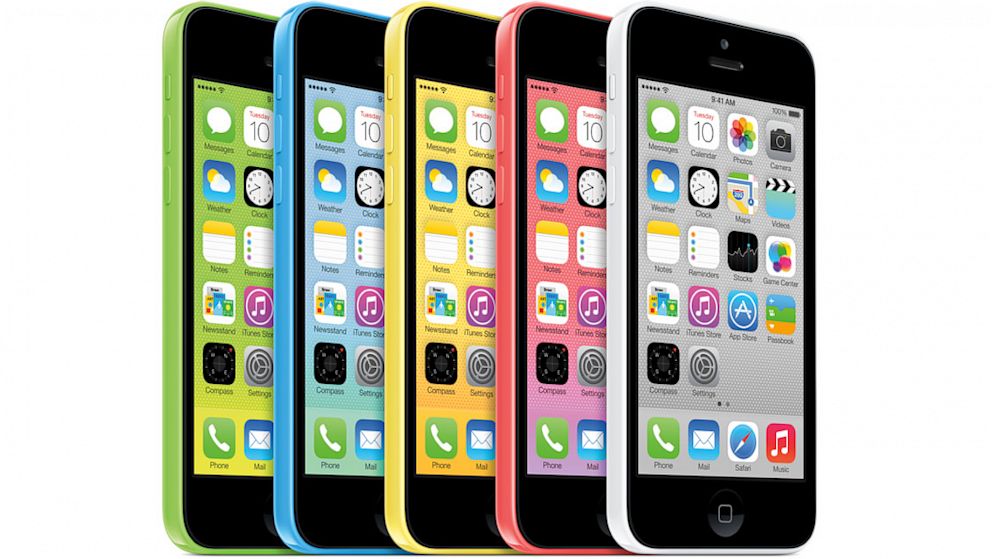

Barking Up the Wrong Technology

Where Are We Headed with Technology?

When I was a student at Dartmouth, I taught myself how to use the new Basic programming language on the college’s General Electric computer. That was at some time in the mid 1960s. Little did I know that much of my post-graduate life would be involved with computers.

In March 1968, I was hired for the Lexicography & Discourse project at System Development Corporation in Santa Monica. My job involved proofreading and correcting the transcriptions of two Merriam-Webster dictionaries. The project was funded by the Advanced Research Projects Agency (ARPA) of the U. S. Air Force. That was the same agency which created the forerunner of the Internet, which was created to communicate with other computer nodes spread across the country even if several U. S. cities were destroyed by nuclear bombs.

The technology of the late 1960s was clunky, but it enabled us to land on the moon in 1969!

I went on to become a computer programmer and informational technology (IT) specialist for two accounting firms. During that time I saw technology change from a kind of intellectual priesthood into a pursuit for the masses. Everybody wanted in.

It all started with the Apple Macintosh, which supposedly made computing accessible to everyone. Then, the Internet was for everybody, via Prodigy and America Online. Kids were playing computer games.

A major hurdle was passed when touch-screen interfaces were invented. You didn’t need to remember commands with their complicated parameters: You simply pointed, and, if you were lucky, your choice was registered and acted upon. Of course, this went hand in hand with poor language skills. Who needed spelling and grammar when all you had to do was point at the options you wanted.

On one hand, there were many advantages to this; but techno continued to evolve with cryptocurrencies and artificial intelligence (AI). Money was now worth what you wanted it to be worth. And, with AI, you didn’t have to think any more. These are ominous developments. If technology continues to evolve along these lines, I expect no good to come of it.

AI Gets Stupid

I was doing some research on a film, so I decided to ask Google if there were any movie sequels to City Across the River (1949). At the top of every Google response is what is called the “AI Overview.” What I got in this overview made me guffaw:

There are no direct movie sequels to the 1949 film City Across the River, but other films with similar themes, like the 1956 film Don’t Knock the Rock [Not similar at all], shared some elements or settings with the movie. There is also a more recent film, Across the River and Into the Trees (2022), which may be what you are looking for [It isn’t], although it is not a sequel.

Here are some other movies with “River” in their titles that might be relevant:

Across the River and Into the Trees (2022): a more recent film that might be the one you are thinking of. [No!]
Take Me to the River: New Orleans: The second film in the award-winning series “Take Me to the River” which celebrates the musical history of New Orleans and Louisiana. [NO!!!!!]
The River (1984): A film starring Mel Gibson about a farming couple in the face of economic hardship. [No No No]
Deliverance (1972): A film starring Jon Voight and Burt Reynolds about a canoe trip that goes horribly wrong. [Correct me if I’m wrong, but is “River” in the title?]
The River Wild (1994): A film starring Meryl Streep as a woman whose family is taken hostage during a river rafting trip. [Nope]

All of the titles suggested by Google’s AI are totally off the mark. City Across the River is about a teenage gang in 1940s Brooklyn. The word “River” is in the title, but has no bearing on the film’s story.

As it happens, there was—sort of—a sequel to the film. It was called Cry Tough (1950), though it changed the locale and virtually everything else that was in Irving Shulman’s sequel. Instead of Jewish Brooklyn, the story is set in Spanish Harlem with a Puerto Rican gang.

Now if I had believed Google’s bumbling AI overview, I would have been laughed at. And I would have richly deserved it.

On Being a Slave to Technology

Something happened to me as I approached retirement age. I mean besides getting old. What I mean is that I began to feel highly critical about several technologies that were beginning to assume a dominant position in our society.

Touch Screen

Although I use an Amazon Kindle to read several books a month, I do not like the imprecision of touch screen interfaces—especially when I have to enter data without a large-sized keyboard. I do not have fingers that measure five millimeters across, so an onscreen keyboard is as difficult for me as using tweezers to move an anvil.

Smartphones

In addition to my dislike of touch screen interfaces, I find smartphones irritating in the extreme. I have a flip cellphone, but I don’t carry it around with me everywhere I go. For one thing, I will not answer the phone while driving, as I wish to continue living and operating an unwrecked car. My cellphone is for outcalling only, except by prior arrangement. Most of the time, it is powered off and sits comfortably on my computer desk.

The other thing is that I already have to carry around a number of things in my pockets:

  • An eyeglass case with reading glasses
  • A ballpoint pen
  • My wallet
  • My keys
  • Change for parking meters
  • Selected medications, including insulin for diabetes

E-Scooters

Why was this ever invented? I have already seen a half dozen nasty accidents involving e-scooters. And besides, I’ve always thought people looked silly operating them.

Artificial Intelligence (AI)

I know that we are living in a world where artificial intelligence is regarded as the coming thing. In my opinion, AI is a way of sacrificing truth for convenience. Please accept my assurance that I do not use AI in producing my blog posts. We have enough half truths and lies all around us without my adding any more to the mix.

GPS

Here I admit I’m on shaky ground. I do not have any GPS device in my car because I do not like to be distracted while driving. Also, I am still a bit skeptical about their accuracy, particularly while traveling in foreign countries. I suppose that for people who don’t know where they’re going, GPS can be a blessing of sorts.

The nice thing about being my age is that I can pick and choose which technologies to adopt. I do not have to turn myself into a rabid fanboy because Apple or some other tech giant is releasing a new product. I believe it was Alexander Pope who wrote the following couplet:

Be not the first by which the new are tried
Nor yet the last to lay the old aside.

The Parts of 2023 I’d Gladly Jettison

In the Biz Bag With Him and His Followers!

Looking back over the past year, there are a lot of persons, places, and phenomena I would gladly not have to confront in 2024—indeed, ever again.

First and foremost is America’s mumbling incompetent dictator-in-waiting. Currently, he is attempting to turn the death of a thousand cuts in court into victories. They aren’t and never will be. That goes for all his minions, those drooling red-hatted loons seated behind him at his rallies.

Mega-Billionaires, especially those in the tech sector, who want to enrich themselves by making everyone else miserable with their social media or artificial intelligence.

Time to shitcan crypto-currency once and for all. A form of anonymous, unregulated currency, it is of use only to evil dark web goons.

Quasi-celebrity influencers who foment flash mobs and twonky fashions. Like Paris Hilton, who in today’s issue of the Los Angeles Times is quoted as saying: “I also like butter and strawberry jelly on toast, then sometimes toasted bagels with strawberry cream cheese, which I’m like obsessed with.” If you come across something of that ilk in this blog, you are justified in disemboweling me.

And that’s only the beginning, but space is limited and I want to get to bed before midnight. I wish for you and yours a tolerable New Year. (Let’s not kid ourselves.)

An Experiment in AI

El Castillo at Chichén Itza Being Struck by Lightning

Except for this first paragraph and the photo caption above, this post was created by ChatGTP. I wanted to see what the program could do with a topic I proposed (“Discuss the many dialects of the Maya language”) accompanied by a picture of a Maya pyramid being struck by lightning. Let’s take the picture first: ChatGTP seems to think that the Castillo at Chichén Itza is the only Maya pyramid. Personally, I would have chosen the Temple of the Dwarf at Uxmal. In the AI discussion of Maya dialects below, ChatGPT starts with the patently false statement that Maya is also known as Yucatec Maya. Not so, Yucatec Maya is the most populous dialect of Maya, but the statement confuses a part with the whole. The rest is not objectionable, except that ChatGPT does not attempt to quantify the number of speakers of each dialect.

The Maya language, often referred to as Yucatec Maya, is a language spoken by the indigenous Maya people in Mexico, Belize, Guatemala, and Honduras. While Yucatec Maya is the most widely spoken and recognized dialect, there are actually many dialects within the Maya language family. These dialects exhibit variations in vocabulary, pronunciation, grammar, and even some differences in syntax.

Here are some notable dialects of the Maya language:

  • Yucatec Maya: This is the most prominent dialect and is primarily spoken in the Yucatán Peninsula of Mexico, including the states of Yucatán, Campeche, and Quintana Roo. Yucatec Maya has the largest number of speakers among the Maya languages.
  • K’iche’ Maya: K’iche’ is one of the largest Maya language groups, spoken mainly in Guatemala. It has several regional variations, and the dialect spoken in the city of Quetzaltenango (Xela) is considered the standard. K’iche’ Maya gained recognition for being the language of the Popol Vuh, a sacred book of the Maya.
  • Tzotzil Maya: Tzotzil is spoken in the Chiapas region of Mexico, primarily in the highlands. It is one of the most widely spoken indigenous languages in Mexico, and it has a significant number of speakers.
  • Tzeltal Maya: Another major Maya language of the Chiapas region in Mexico is Tzeltal. It is closely related to Tzotzil and shares some similarities. Tzeltal is spoken by a sizable population and has various dialectal variations.
  • Mam Maya: Mam is spoken in Guatemala and parts of Mexico. It is known for having a considerable number of speakers and is recognized as one of the major Maya languages.
  • Q’anjob’al Maya: Q’anjob’al is spoken in Guatemala, mainly in the western highlands. It has a significant number of speakers and is recognized as an official language in Guatemala.
  • Ch’ol Maya: Ch’ol is spoken in the state of Chiapas in Mexico. It has a substantial number of speakers and is considered a separate branch of the Maya language family.
  • Itzá Maya: Itzá is spoken by the Itza people in the Petén region of Guatemala. Itzá is considered a distinct dialect within the Yucatec Maya branch.

These are just a few examples of the diverse Maya language family, and there are many more dialects and variations within each branch. Each dialect has its own unique characteristics, influenced by regional differences and historical factors. The preservation and revitalization of these dialects are crucial for maintaining the rich cultural heritage and identity of the Maya people.

On Ranting

The Opposite of Conversations

I have a friend who has been pretty much out of circulation for a quarter century. On an average of once a week, I give him a call. When I do, I have to brace myself for a series of rants on various subjects that are currently galling him. I would say he does about 90% or more of the talking, deftly segueing from one subject to another. He is capable of going on for hours if not stopped, usually by me—I am not overly fond of long telephone conversations.

At the same time, he is my best and oldest friend; so there is a reason why I continue calling him. Fortunately, this behavior mostly manifests itself over the phone. In person, surrounded by his family, the conversation is more of the give-and-take variety, which I prefer.

One of the dangers of living an isolated life is a tendency to go off into rants. If I did it, Martine would tell me in no uncertain terms to shove it. I guess he feels I am a safe person on whom to vent his grievances. And, as we age, the number of those grievances only increases.

I will continue to call him and listen—but not uncritically—to his rants. As soon as he mentions some subjects, such as artificial intelligence, or AI, I just ask him not to go there. He has nothing to say that he has not said a hundred times or more. But, as long as the grievance sticks in his craw, it will attempt to migrate to my ears as well.

Perhaps that’s just in the nature of friendship.

The Missing Link, Going Forward

Man May Prevail, But With What “Modifications”?

Man May Prevail, But With What “Modifications”?

I am always amused about talk of a “missing link” between what was recognizably ape and what is recognizably human. But once we have Homo sapiens down, what about changes to our species that may be as significant—if not more significant—to those which we have traditionally associated with the concept of a missing link?

Today, I had lunch at a local Thai restaurant. In the next booth sat a woman who was part of a larger party that had not yet all met up. No sooner did she get seated than she had a long painful conversation with another member of the party which was supposedly looking for the restaurant but had trouble finding it. At no point did she get the name of the restaurant correct (she kept calling it simply “Thai Café”) and never thought to supply the exact street address. All her instructions were with regard to the identities of nearby retail establishments. If her friend was several blocks away, he would have no more luck finding the “Thai Café” than the stores in its immediate vicinity.

The thought suddenly hit me that the smart phone has introduced new ways of thinking. No longer is any sort of advance preparation required for anything. One can simply make a phone call and use relational markers to home a friend in to the desired location employing fuzzy logic of a sort.

Man has developed increasingly sophisticated tools for tens of thousands of years, but for the first time we are approaching the point where we are using tools to change ourselves and our very thought processes. It is possible, for example, that the smart phone may be as significant for the human race as Gutenberg’s invention of moveable type. If we ever improve robots to the point that we can communicate with them, that may be even more significant. In both cases, man is delegating his own brain powers to a device that parses, stores, and possibly communicates commands.

What do you suppose the effect of that will be on the human brain? Perhaps it will begin to atrophy. Once one has a truly smart phone, one does not have to think for oneself any more.

I’m not sure I would like that development, or should I say retrogression?