

Bobby Fischer (1943-2008), Former World Chess Champion
To be sure, Bobby Fischer was no exemplar for anyone’s behavior. His was the classical example of what can happen when you achieve your fondest wish, in his case to become the world chess champion after the Russians controlled the number one spot from 1937 to 1972.
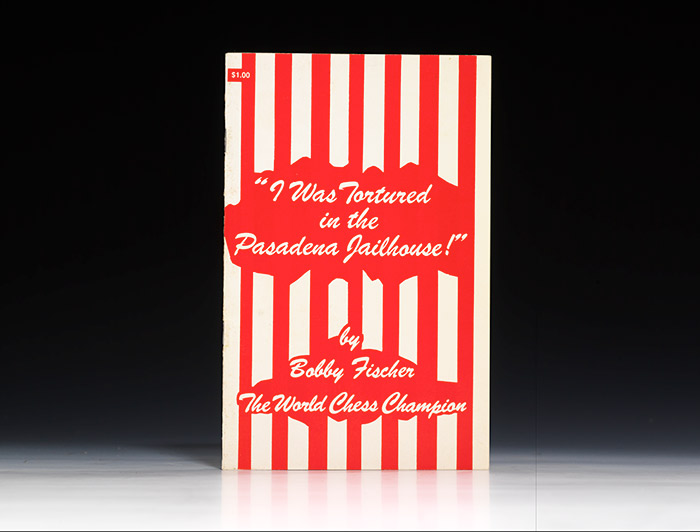
I just finished reading a pamphlet Fischer published after he was picked up by the Pasadena, California police in May 1981 and horrendously mistreated because of his “bad attitude.” He was kept without clothes in an icy cell, deprived of the right to make a phone call, robbed of the cash in his wallet, and denied sufficient food and water during his incarceration. Below is a photo of his pamphlet’s cover:
Why do I appear to be so obsessed with Bobby Fischer? The main reason is that I love chess, and Bobby was one of two American world champions—both of whom went off the rails after their moment of glory. I will post a blog about Paul Morphy (1837-1884) within the next day or so.
Also, I am appalled because this would not have happened to Fischer had he been Russian. Unless for some reason he defied the powers that be in the Soviet Union, he would have lived well with a generous pension from Mother Russia. America doesn’t always know how to treat its heroes. And Fischer was a real hero, possibly the best chess player who ever lived.
Another reason: Fischer’s birth father was NOT Hans-Gerhardt Fischer, whose name appeared on Bobby’s birth certificate, but Paul Neményi, a distinguished Hungarian mathematician whom whom his mother Regina had an affair during the war. See for yourself:

Left: Bobby Fischer, Right: Paul Neményi.
It warms my Magyar heart to know that Bobby was one of my countrymen, both as a Hungarian and as an American.

 Tarnmoor
You must be logged in to post a comment.