
Prose Poem

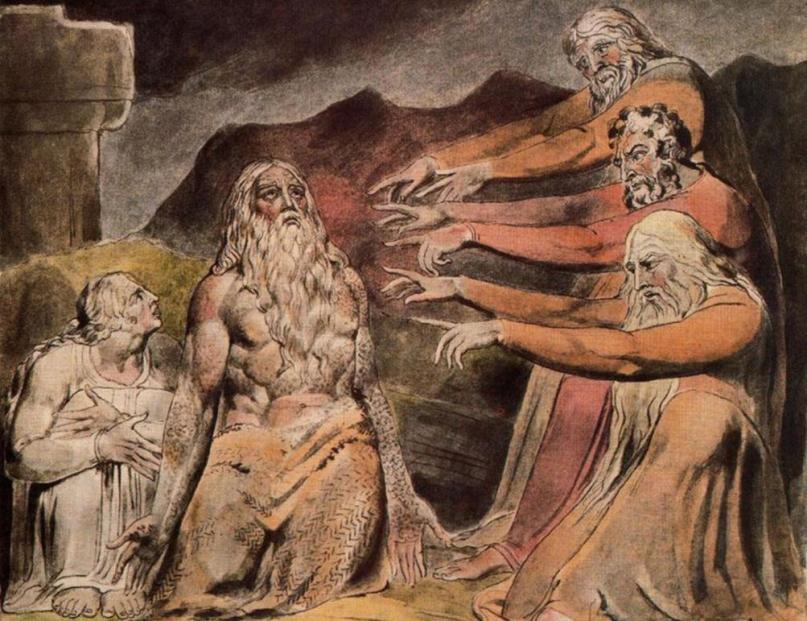
William Blake Illustration from the Book of Job

The following prose poem by Wisława Szymborska is the best treatment I have ever read of the Old Testament Book of Job.

SYNOPSIS

Job, sorely tried in both flesh and possessions, curses man’s fate. It is great poetry. His friends arrive and, rending their garments, dissect Job’s guilt before the Lord. Job cries out that he was righteous. Job does not know why the Lord smote him. Job does not want to talk to them. Job wants to talk to the Lord. The Lord God appears in a chariot of whirlwinds. Before him who had been cloven to the bone, He praises the work of his hands: the heavens, the seas, the earth and the beasts thereon. Especially Behemoth, and Leviathan in particular, creatures of which the Deity is justly proud. It is great poetry. Job listens: the Lord God beats around the bush, for the Lord God wishes to beat around the bush. Job therefore hastily prostrates himself before the Lord. Events now transpire in rapid succession. Job regains his donkeys and camels, his oxen and sheep twofold. Skin grows over his grinning skull. And Job goes along with it. Job agrees. Job does not want to ruin a masterpiece.

—Wisława Szymborska. Poems New and Collected 1957-1997

Job, God, and the Devil

Something About This Old Testament Book ...

Something About This Old Testament Book …

When I first read the Book of Job from the Old Testament, I didn’t think much of it. I still don’t. There was God getting together with Satan to play poker or dominoes or whatever, and making a bet that affected the happiness of one of his most devoted followers. Then, too, there were those “friends” of Job who were zero consolation to the poor man.

I don’t like the idea of a God who is, instead of being the God of Love, some sort of Parimutuel Deity. He “makes it up to” Job in the end, but not before killing off his wife and children and sending him into what for anyone else would have been the pit of despair. We can speculate that the original Mrs. Job was a hag and a shrew; and the first set of children, all strung out on meth; and the replacement wife, a blonde hottie. But we have no grounds for thinking that.

When I was a student at Dartmouth College some time before the Pleistocene Era, I saw a play by Archibald Macleish that brought together the Book of Job with Death of a Salesman. It was called J.B. I would love to have seen the stage version directed by Elia Kazan and starring Raymond Massey, Christopher Plummer, and Pat Hingle (as the Job character). In 1959 it won the Pulitzer Prize for drama.

I know that Job was held up to be the model worshiper, a man who trusted in God through the most incredible adversities. But the God he worshiped was way too snarky for me.

Incidentally, the above illustration is from William Blake’s illustrations of the Book of Job.