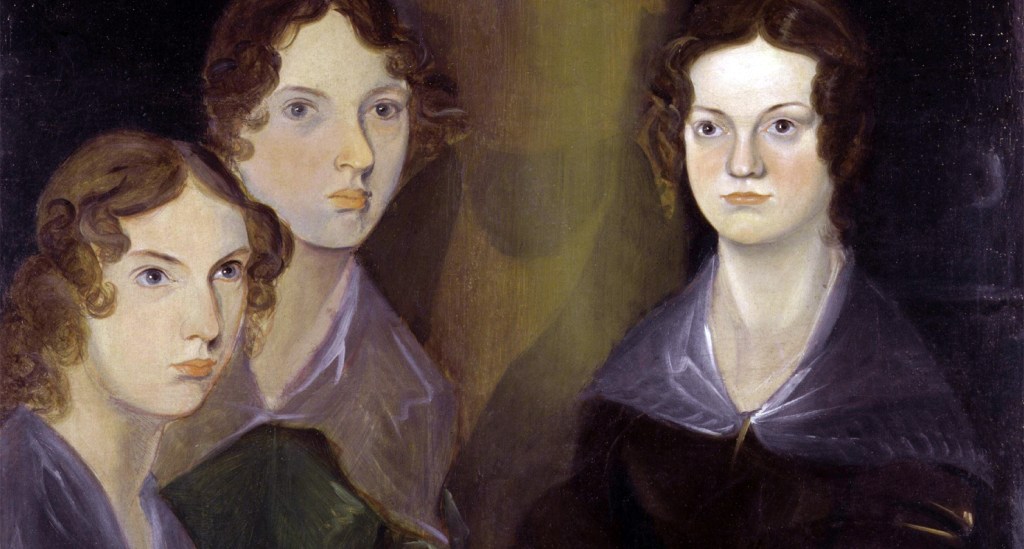
Anne, Emily, and Charlotte Brontë
The above painting of the Brontë sisters was done by none other than their brother, Patrick Branwell Brontë. Originally, his own image appeared in the space between Emily’s and Charlotte’s portraits; but for various reasons, his image was painted over. For an interesting discussion of the original image in London’s National Portrait Gallery, click here.
I am including here a poem by Emily paying tribute to an unnamed person of mixed reputation who has died:
Stanzas to ————
Well, some may hate, and some may scorn,
And some may quite forget thy name;
But my sad heart must ever mourn
Thy ruined hopes, thy blighted fame!
‘Twas thus I thought, an hour ago,
Even weeping o’er that wretch’s woe;
One word turned back my gushing tears,
And lit my altered eye with sneers.
Then “Bless the friendly dust,” I said,
“That hides thy unlamented head!
Vain as thou wert, and weak as vain,
The slave of Falsehood, Pride, and Pain–
My heart has nought akin to thine;
Thy soul is powerless over mine.”
But these were thoughts that vanished too;
Unwise, unholy, and untrue:
Do I despise the timid deer,
Because his limbs are fleet with fear?
Or, would I mock the wolf’s death-howl,
Because his form is gaunt and foul?
Or, hear with joy the leveret’s cry,
Because it cannot bravely die?
No! Then above his memory
Let Pity’s heart as tender be;
Say, “Earth, lie lightly on that breast,
And, kind Heaven, grant that spirit rest!”

 Tarnmoor
You must be logged in to post a comment.