Sawtelle Days

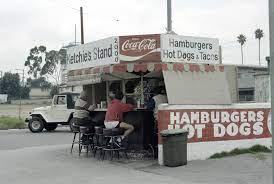
Ketchie’s Stand at Sawtelle and Missouri

The third place I lived in Los Angeles was the first that I had picked out for myself. The apartment on Sunset Boulevard was picked by my roommate and best friend, Peter; and my father picked out the hot-box on Darlington where I sweltered from a total lack of ventilation.

In the fall of 1967, I was diagnosed with idiopathic aseptic necrosis of the left femoral head. My orthopedist at UCLA thought I would be placed in traction for months, so I hightailed it back to Cleveland to stay with my parents. It turned out that the treatment was for me to be on crutches for a couple of years.

Around New Years of 1968, I returned to L.A. and, with the help of my friend Norm, found a studio apartment on Mississippi Avenue a half block west of Sawtelle Boulevard. It was and, to some extent, still is a Japanese neighborhood. And this was at a time that I was gaga over Japanese films and cuisine and culture. I dreamt of meeting some Nisei cutie who looked like Toho film star Mie Hama.

Toho Film Cheesecake Star Mie Hama

Of course, I didn’t—and, besides, what kind of dating scene can a guy on crutches have who doesn’t have either a car or a driver’s license? For me, that was still in the future….

But it was interesting living in a Japanese neighborhood and eating teriyaki and donburi regularly at the O-Sho Restaurant and the Futaba Café, which were right around the corner on Sawtelle. And there was Ketchie’s Stand at Missouri and Sawtelle where the friendly Okie chef cooked up some very creditable hamburgers and tacos.

I was still attending graduate school in film at UCLA and wound up taking two Santa Monica buses to and from classes, unless I just decided to walk the five blocks from Santa Monica Boulevard and Sawtelle.

Around this time, I joined my film friends from UCLA in making regular treks to the Japanese movie theaters in town. At the time, there were five of them: the Toho La Brea, which showed films from Toho; the Kokusai and Sho Tokyo, from Daiei Studio; the Kabuki, from Shochiku; and the Linda Lea, from Tohei. At the time, I think the Japanese film industry was consistently making the best films anywhere. Needless to say, those theaters are no more.

I lived in the Mississippi apartment for about a year before moving to the first of my two Santa Monica apartments on 12th and 11th Streets respectively. But that is a story for another time.
Chiclayo and Sipán

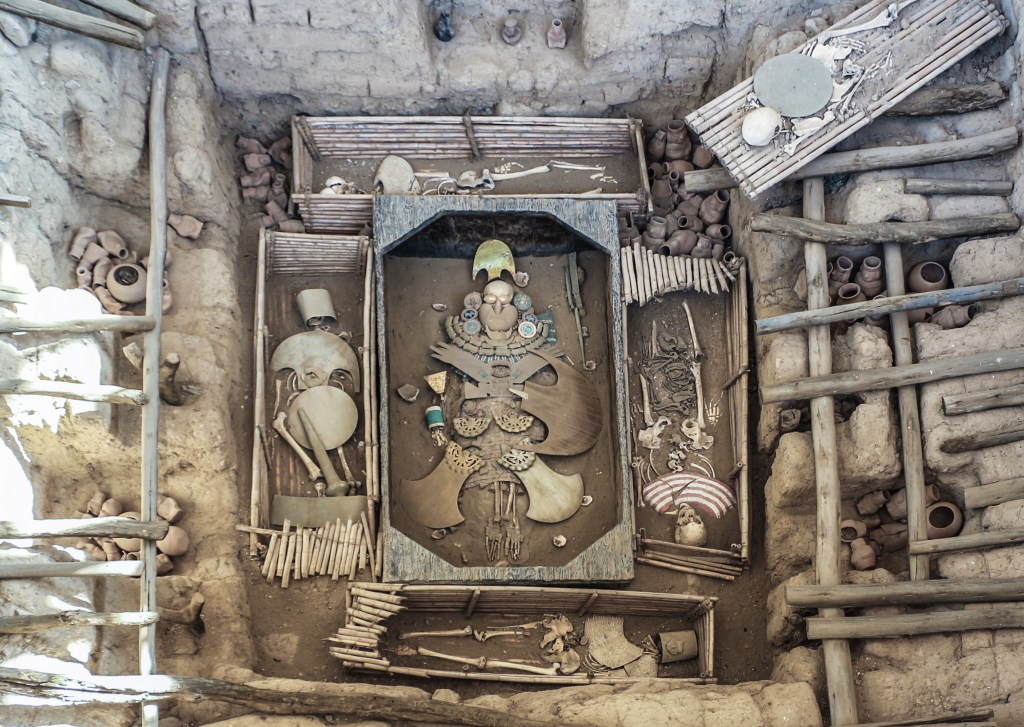
Tomb of the Lord of Sipán

After Chachapoyas, my Northern Peru has one more destination to its farthest point, back to the coast to Chiclayo. The bus ride to Chiclayo is nine hours. Nine easy hours. No two mountain passes at Himalayan-like altitudes to cross on a dicey road hovering at the edge of a precipice like the one between Cajamarca and Chachapoyas.

Also, we are in the land of the Moche, whose lifelike sculptures I have noted in an earlier post. As with Trujillo, there are numerous ruins, particularly those of Sipán, and museums to visit at Lambayeque, Ferreñafe, and Túcume.

And then it will be time to return to Lima. Chiclayo has an airport, but it is not an international one, so I will have to fly out of Lima’s Jorge Chávez Airport. So I could fly to Lima via Avianca or LATAM. Or I could even take a 12-14 hour bus trip arriving in Lima with a burst bladder.

What will I have accomplished with this trip, should I decide to eventually take it? Peru, Guatemala, and Southern Mexico were the homes of great urban civilizations—none of which had managed to invent the wheel. The Maya of Mexico and Central America did, however, develop a form of hieroglyphic writing. The civilizations of Peru did not, but they were nothing short of amazing with all their closely packed mountain civilizations. In the end, there is far, far more to Peru than just the Inca. They were just the final pre-Columbian civilization before the Spanish Conquistadores rode into town and took over.

Riding the Error3 Bus

I had a strange dream last night. I was waiting for the bus to Siegmaringen. The name was clearly imprinted in my mind even though I don’t think I knew anything about the South German city. But then, that’s dream logic for you. That is to say, no logic.

A bus came by and stopped in front of me. The destination noted on the display above the front window of the bus said only “Error3.” I asked the driver whether it was headed for Siegmaringen. He nodded yes and I boarded. End of dream.

In many ways, that’s me all over. I wasn’t deterred by the “Error3” destination and forged ahead. Did I get there? Both the ride and my putative arrival in Siegmaringen were not part of the dream. So if you see me riding the Error3 bus, please don’t forget to wave.

Tuesday at the Getty Center

On the 781 Metro Bus to the Getty Center

In my retirement years, I sometimes drive where I’m going; sometimes I just take public transportation. The two Getty museums in Los Angeles are a good example of the advantage of traveling by bus. There is no admission fee, but parking at each museum costs twenty dollars. Compare that with an outlay of seventy cents for a round trip between Sepulveda & Exposition and the Getty Center. A big plus is that the 781 Metro bus runs every few minutes, so that waiting is not a big factor.

The reason for my visit is an exhibit entitled “William Blake: Visionary,” which closes on January 14. Organized with the cooperation of London’s Tate Museum, it includes a large number of Blake’s prints. I even dished out the money for the exhibit book. It costs a fortune, but I know I would have kicked myself had I passed up the opportunity.

In the next few days, I will write several posts about my visit to the Getty, particularly relating to William Blake, who is probably the only human being who is at one and the same time a great poet and a great visual artist.

The Getty’s Cactus Garden with Westwood and the 405 Freeway in the Background

I like to visit the Getty whenever they have a special exhibit that interests me. This time, I saw only the Blake exhibit and also a large selection of great photographs by Arthur Tress. (The Getty Center always has interesting photographic exhibits.)

Later this month, I will also trek to the Getty Villa in Pacific Palisades to see an exhibit on the Egyptian Book of the Dead. Unlike the Getty Center, the Getty Villa concentrates on ancient Greek and Roman art in a building whose design is a re-created Roman country home within view of the beach.

Barrancas del Cobre

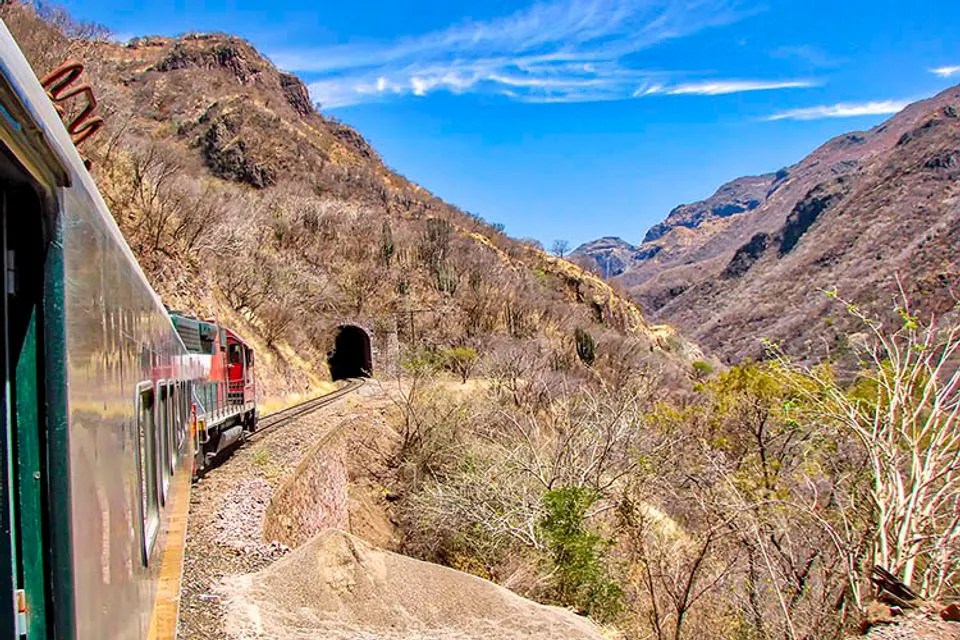
One of Many Tunnels on the Copper Canyon Route

It has been almost forty years since i took the Ferrocarril Chihuahua al Pacifico (now known as El Chepe) from Los Mochis in Sinaloa to Divisadero high in the Sierra Madre Occidental. It was one of the most fantastic train rides of my life, going where there are no roads other than a single track between Chihuahua and Los Mochis.

American engineers were consulted by the Mexican government to map out a rail route over the Sierra Madre Occidental, but they came back and said it just wasn’t feasible. So Mexican engineers went and built it anyway, all the way from Constitutión across the Rio Grande from Presidio, Texas, to the port of Topolobambo on the Sea of Cortez. Now the train runs a shorter route, but it includes 100% of the fantastic mountain scenery.

I went only as far as Divisadero, where at the time a lone motel stood next to the edge of a junction of three canyons, each of which was reputedly as deep as Arizona’s Grand Canyon. And there wasn’t just Copper Canyon, but altogether six canyons along the route.

One Slip and You’re Toast

Standing at the edge by Divisadero, I was amazed to see eagles flying over a thousand feet below me.

Altogether I spent two nights at Divisadero, and on the return trip spent a night at Bahuichivo. That was only the beginning of a long trip which included Mazatlán, Durango, Guanajuáto, Querétaro, Patzcuaro, Uruapán, Guadalupe, and Puerto Vallarta. As I recall, I was traveling around by bus and train for a whole month on that trip.

Back from O’ahu

The Lyon Arboretum in Honolulu’s Manoa Valley

Martine and I returned from Hawaii late on Tuesday, somewhat the worse for wear. We both had a low-level cold during the entire week of our vacation. In my case, it ratcheted up into a full-blown cold when I woke up yesterday morning.

Still, it didn’t prevent u8s from enjoying ourselves in Hawaii. We went everywhere by bus (except to Lyon Arboretum) since we both still had our HOLO cards for TheBus [sic]. Unlike most tourists, who spend of $1,000 or more for a rental car and hotel parking, our total transport expenses were $40.00 for a one month senior citizen pass for TheBus.

Honolulu is an endlessly fascinating city—which most tourists don’t realize, mainly because their main focus is on Waikiki. Some 83% of all hotel rooms in the Honolulu area are on the two-mile-long peninsula of Waikiki, on the Diamond Head side of the city. Most tourists who don’t have rental cars take expensive and overcrowded shuttles to a handful of tourist sites. Martine and I were on the more comfortable and air-conditioned public buses which most tourists didn’t know how to take.

More’s the pity, because there’s a lot to see downtown, in Chinatown, and on the western (Ewa) side of the city. And I don’t just mean Pearl Harbor.

It’s a pity that most Honolulu tourists end up ghetto-ized in Waikiki, and maybe just taking an exploratory jaunt to the Ala Moana Shopping Center. I guess most vacationers would rather not overthink their pleasures. Me, I overthink everything. For me, the preparation just extends the fun beyond the time I am in the islands.

Third Time’s a Charm

Martine at Kapiolani Park in September 2022

As I mentioned in my post yesterday, Martine and I are headed back to Honolulu for another visit. Looking back at last year’s pictures, I noticed that Martine looked genuinely happy in most of them. Returning to L.A., Martine has had a difficult year—especially when she broke her wrist in two places after a fall at home. And recovery has been painfully slow, especially since the cast which she war was too tight and affected her ability to bend her fingers once it was removed.

Although I would probably be happier traipsing off to Latin America, Martine’s happiness matters to me; and I can certainly enjoy myself in Hawaii provided I stay away from most mainland tourists of the luau-frequenting variety.

We will be staying at the same hotel we stayed in last year, the Malia. Last year, it was a hotel in the Outrigger chain; now, it is the Waikiki Malia, apparently no longer part of a chain. It is not exactly on the beach, but that is no matter to us as we are not beach types. We prefer the corner of Kuhio and Lewers because of its convenient access to public transportation.

The big success story of last year’s trip was our discovery of the Honolulu bus system, the best we have seen in any American city. As senior citizens, we picked up a Senior Citizens discount Holo card, which enables us to unlimited rides for the entire month of September for $20.00 US for each of us. Compare that with high car rental fees and hotel parking rates of up to $50-60 US per night.

Amazingly, the Honolulu buses go not only all around the city, but along the Southeast (Hanauma Bay, Hawaii Kai), the Windward Coast (Kailuka, Kaneohe, La’e), the North Shore (Waimea, the Banzai Pipeline), and Central O’ahu (the Dole Pinapple Plantation). Where we would need a car would be the Leeward Coast (Ko Olina) and certain trailheads on mountain trails. If you’re thinking of going to Hawaii on a budget, I firmly recommend the public transportation and a non-luxury-priced hotel, preferably on Kuhio Avenue.

We booked our trip through the Southern California Auto Club, which I also recommend.

Back to O’ahu

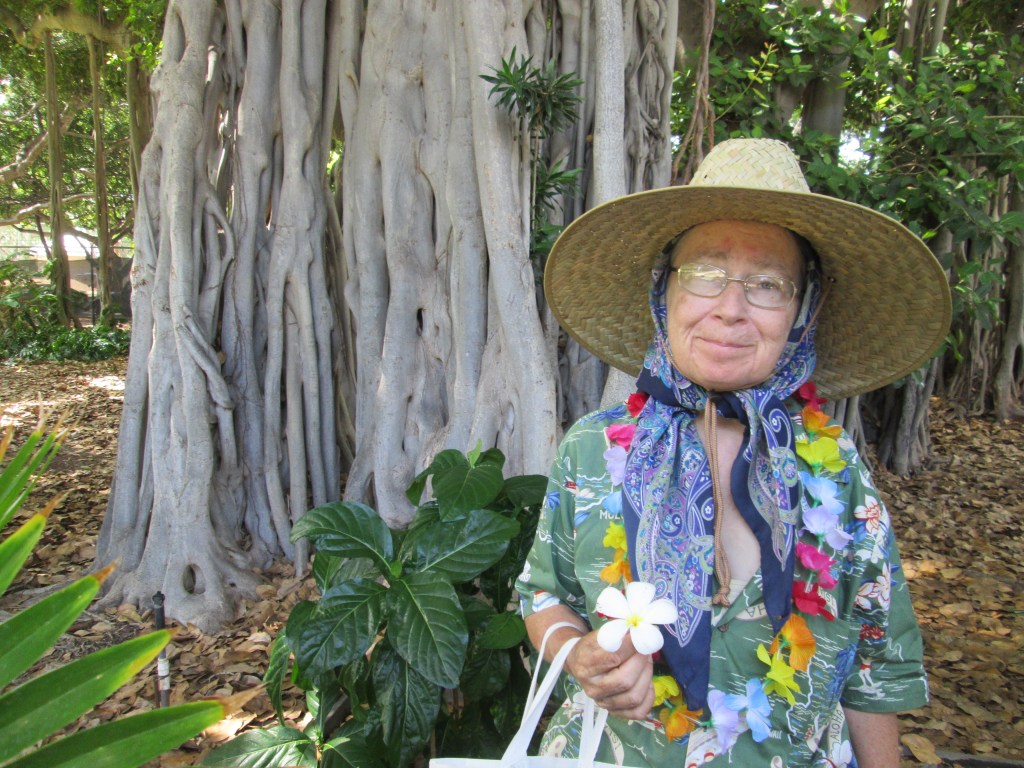
Martine by a Banyan Tree in Kapi’olani Regional Park

This fall, Martine and I are returning to Honolulu. If I had my druthers, I would prefer tracking down obscure Maya ruins in Yucatán, but if I did, I would have to do it alone. And I am getting to an age where that is becoming a bit on the dangerous side for me. Also, as I enjoy traveling with Martine to places that she likes, it adds an extra level of enjoyment for me.

Last year, we concentrated our efforts visiting the Iolani Palace, the Bishop Museum, the Zoo, the Aquarium, and the Foster Botanical Garden. This time, we could visit Queen Emma’s Summer Palace, the Lyons Botanical Garden, the military museum at Fort DeRussy (Martine worked for years as a civilian Army employee), and any number of other places—possibly including another visit to the ethnological riches of the Bishop Museum.

Tomorrow morning, Martine and I will drive down to the Auto Club in Culver City and pick a flight and hotel. I wouldn’t mind staying at the Malia again, even though it is no longer owned by Outrigger Hotels. The area of Waikiki around Kuhio Avenue and Lewers Street may be a few blocks from the beach; but as we are not beach people, we don’t mind. It is right by the bus stop at that intersection which will take us anywhere we want to go.

We still have our HOLO senior ride discount cards for the Honolulu bus system. We just have to add a few dollars of stored value to our cards. That way we can avoid the expense of renting a car and paying big bucks to garage it at our hotel.

Taking the Bus

Route #2 Took Us to Most of Our Destinations

As I planned for our trip to Hawaii, I had a bad feeling about the cost of renting and parking a car during our trip. I know that Americans as a rule tend to avoid public transportation like the plague, but Martine and I do not subscribe to that feeling. I figured that it would cost us well over $100 a day to rent a car, especially with liability and collision insurance. Added to that, most hotels charged between $25 and $50 a day to park the car overnight. Then add more bucks for gas and daytime parking. In no time at all, the cost would exceed $1,000.

Martine and I adopted a solution that cost a grand total of $30 for our transportation on O’ahu for the entire vacation!

How was that possible? First of all, both of us are seniors. Secondly, to use a Hawaiian pidgin term, we decided to be akamai (smart) about saving money. On our first day in Honolulu, we took the #2 bus from Waikiki to the Kalihi Transit Center at the end of the line and got two senior HOLO cards. They were ready in a few minutes, and I forked over the $30 in cash. And that was that!

We would simply tap our HOLO card on a special reader as we boarded the the bus and take our seats. The buses were comfortable and air-conditioned. At the Transit center, we had picked up all the schedules we needed, and the rest was pure gravy.

Are you on the mainland now and doing research for a trip? Go to TheBus.Org for schedules and route maps as well as more information on the different kinds of HOLO cards.

It Is Done

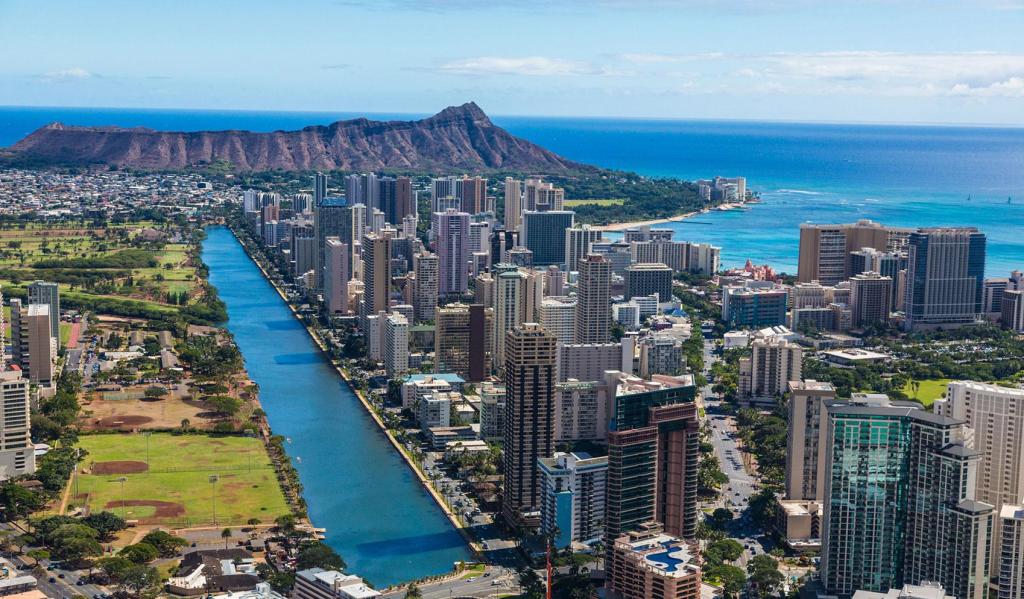
Waikiki, the Ala Wai Canal, and Diamond Head

Today I made the final payment on our September vacation in Honolulu. We got a good price on a package deal including the flight, transfer to and from the airport, and the hotel. All that remains are meals, admission fees, shopping, and public transportation.

Notice, I do not include an automobile. When Martine and I stayed at the Pacific Beach Hotel in 1996, a rental car was included, with no parking fees at the hotel. Today, car rental fees have gone through the roof, and hotels charge anywhere from $35 to $45 a night just for parking on their grounds.

How much will Martine and I pay for public transportation on Honolulu’s bus system? For both of us, the total will come to a mere $12.00 total. Right after we check in at our hotel, we head to the nearby Ala Moana shopping center and pick up a HOLO card for seniors, free of charge, at the office of the Satellite City Hall there. Thereafter, once we have dished out $12.00 in fares (three round rips for two people at $2 each), the bus is free.

Americans hate taking public transportation. Neither Martine nor I mind it. In 1996, we drove all around the island; consequently, we don’t feel we have to repeat it.

In future posts, I will describe the places we plan to visit.