
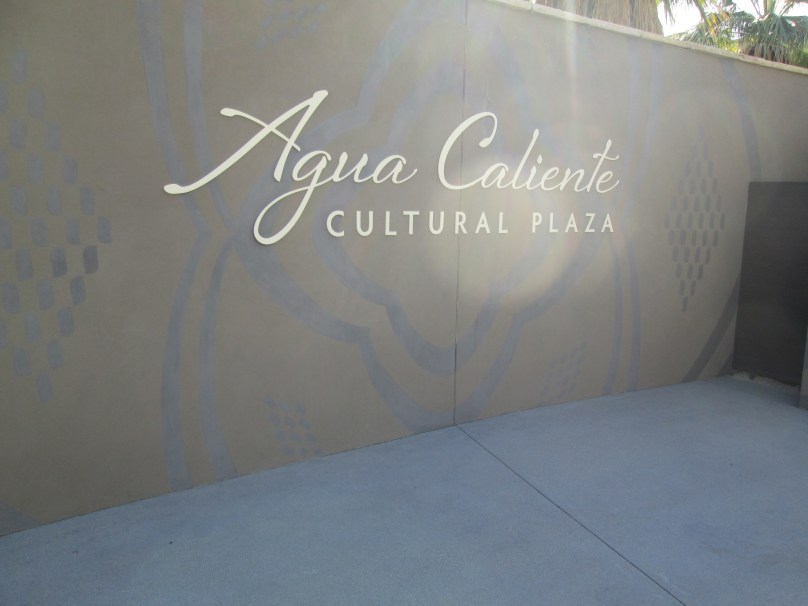
I had a good time visiting my brother and sister-in-law in Palm Desert this last weekend. On Saturday, Dam took me to the Agua Caliente Cultural Plaza, which is, in effect, a museum of the beliefs and history of the Agua Caliente Band of Cahuilla Indians.
What impressed me most about the museum was a display of a ceremonial hut that played a video about how the Agua Caliente Cahuillas substantially gave up on their culture, language, and religion around 1950 after years of being pressured by white society to be more like them.
The tribe owns large chunks of Palm Springs in a checkerboard pattern as shown in the following map:
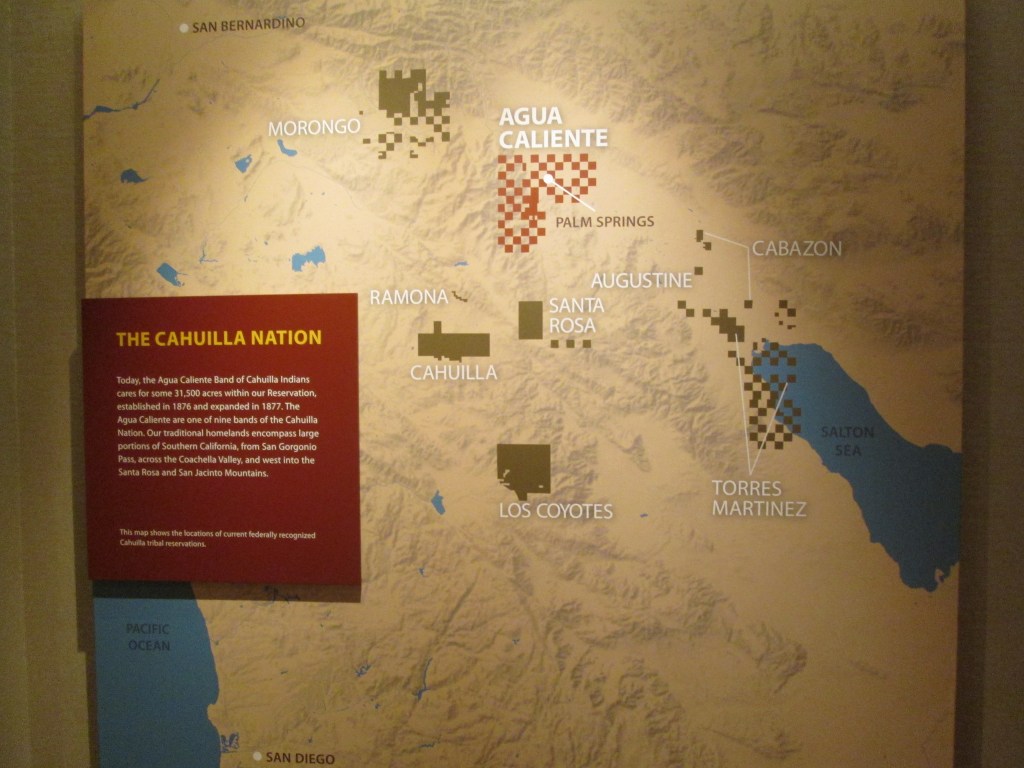
The Nine Tribes of the Cahuilla Nation
Also shown are the lands belonging to the eight other Cahuilla peoples and where they are located::
- Augustine Band of Cahuilla Indians (Coachella)
- Cabazon Band of Mission Indians (Indio)
- Cahuilla Band of Mission Indians of the Cahuilla Reservation (Anza)
- Los Coyotes Band of Cahuilla and Cupeño Indians of the Los Coyotes Reservation (Warner Springs)
- Morongo Band of Cahuilla Mission Indians of the Morongo Reservation (Banning)
- Ramona Band of Cahuilla (Anza)
- Santa Rosa Band of Cahuilla Indians (Between Palm Springs and Anza)
- Torres-Martinez Desert Cahuilla Indians (Thermal)
Dan and I were impressed by the tribe’s presentation of their history and beliefs. Because they own a substantial chunk of Palm Springs, the Agua Caliente Cahuillas (ACC) are considerably better off than the eight other tribes. They all live in the desert, but the ACC have Mount San Jacinto and the hot springs of Palm Springs.This gives them wealth in the sense that our culture values wealth, but at the cost of losing much of what made them who they are.
It is always fascinating to me when I am confronted with another culture. And there are so many cultures in North America. Some are strong like the Hopi and Navaho. Others, like the ACC are but a shadow of what they once were.
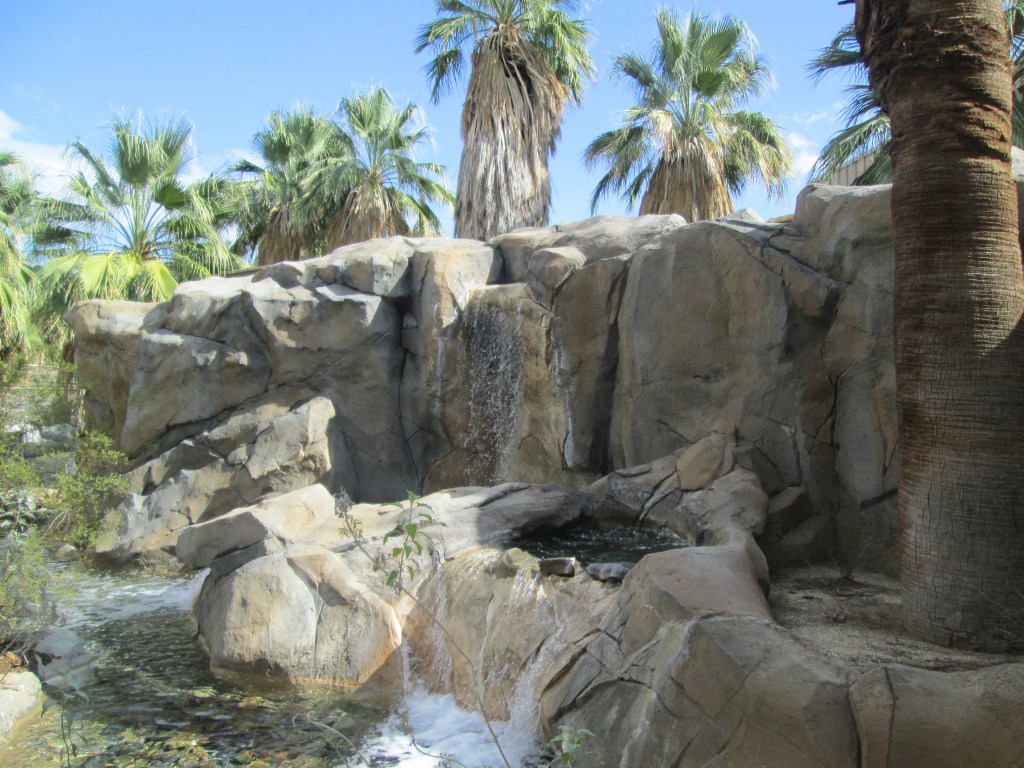
The Agua Caliente Cultural Plaza is well worth visiting. Afterwards, walk around in the ACC recreation of a desert landscape just outside the museum building.


 Tarnmoor
You must be logged in to post a comment.