Temperate Rainforest

Forest Near Tofino on Vancouver Island, BC

Until I saw it with my own eyes, I did not know there was such a thing as a temperate rain forest. They are relatively rare, but you can find them in the Pacific Northwest and even in the Eastern Appalachians. Basically, they have an average temperature range between 39° and 54° Fahrenheit (4° and 12° Celsius) and are characterized by annual precipitation over 50 inches, dense canopies, and a proliferation of ferns, lichens, and mosses.

My encounter with one such temperate rain forest was close to the Vancouver Island town of Tofino. I was able to take a guided hike through it and take pictures.
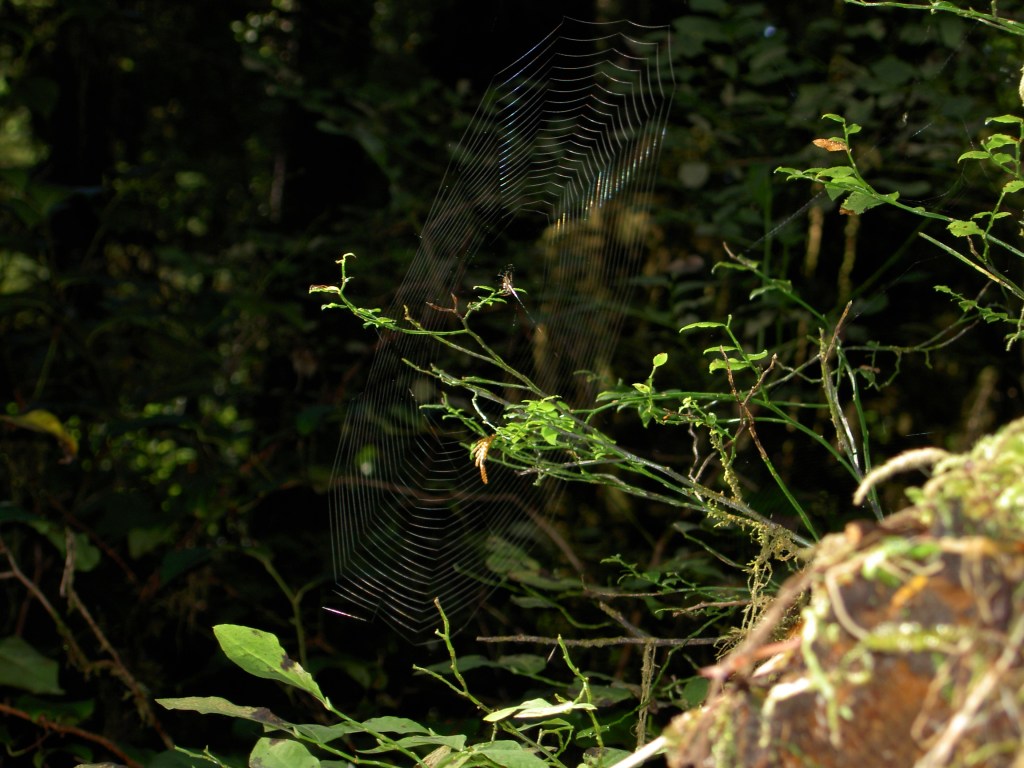
Notice the Large Spider Web

Walking through the woods, I was reminded of my mother’s made-up fairy tales, which were always set in a sötét erdő (dark forest) and involved a tündérléány (fairy princess). I was walking not only through an actual forest but the land of my childhood dreams.

O Canada

Floating Post Office on Vancouver Island

It was 2004. I was on an old packet boat called the Lady Rose that went back and forth on the Alberni Inlet on Vancouver Island between Port Alberni and Bamfield. It was a beautiful day, and I was surrounded by a congenial group of Canadians.

The Lady Rose has since been decommissioned, but my memories of that trip will last a lifetime. The next day, I took another ship to Ucluelet, from which I took a bus to Tofino, where I stayed for several days.

I would love to spend some more time in British Columbia. Andrew Marvell had it right: “Had we but world enough and time ….”

There is something about Canada that Martine and I love—from Nova Scotia and Quebec to Alberta and B.C. Martine loves practicing her French (she was born in Paris) in Quebec; and she loves the fact that Canadian food is generally non-threatening. I know that she would accompany me to Canada in a heartbeat, whereas Latin America is more problematic.

I know our current President (I forget his name) has a grudge against Canada, but that’s his problem.

Glacier Tourism

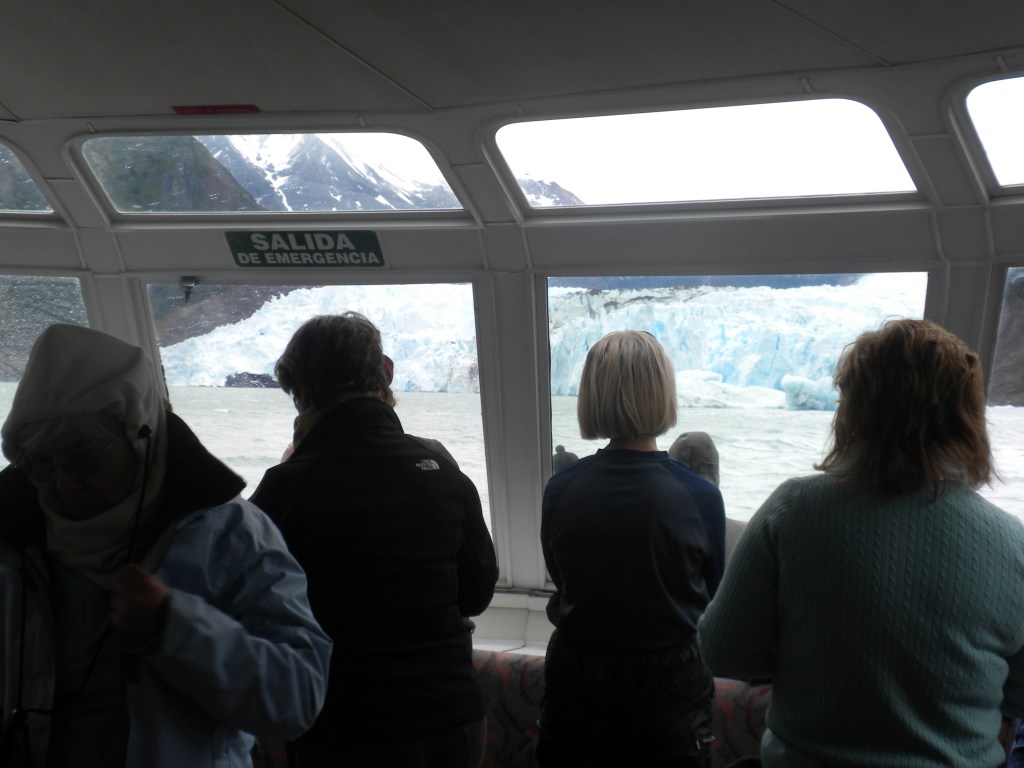
Spegazzini Glacier in Argentina’s Los Glaciares National Park (2011)

As the Earth continues to heat up, I can foresee that more and more tourists will try to see fewer and fewer glaciers. Martine and I have been atop Canada’s Athabasca Glacier in Alberta and in Southern Argentina we have visited the Perito Moreno, Spegazzini, and Upsala Glaciers. By myself, I have ridden a Ski-Doo on Iceland’s giant Vatnajökull Glacier. I hope I can rustle up enough cash to go with Martine to visit the most spectacular glaciers in the U.S., all of which are in Alaska.

It is amazing to think that, at one time, glaciers covered much of the lower forty-eight states and most of Canada, as shown in the following map:

It is possible that in the lives of your children, or of your children’s children, the glaciers will no longer be around. Not only that, but parts of the U.S. coast will be under water, particularly Florida. And as the ocean levels continue to rise, I would not be surprised that some of the most beautiful beaches in the world will disappear under water.

I remember my visit to Iceland in 2001. I stayed at a hotel on the edges of Skaftafell National Park. I walked on a trail as close as I could get to Skaftafell Glacier. As I neared the front edge of the glacier, I saw numerous pools of water and heard a groaning sound as the glacier pushed forward millimeter by millimeter. It was an awe-inspiring experience.

See it while you can.

Annapolis Royal

An Amazing Collection of Botanical Art

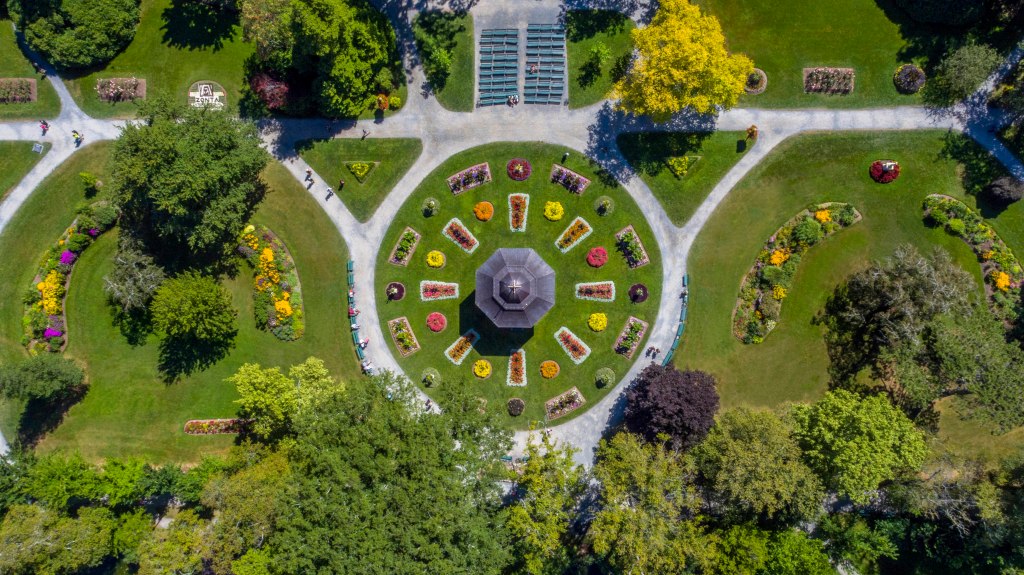
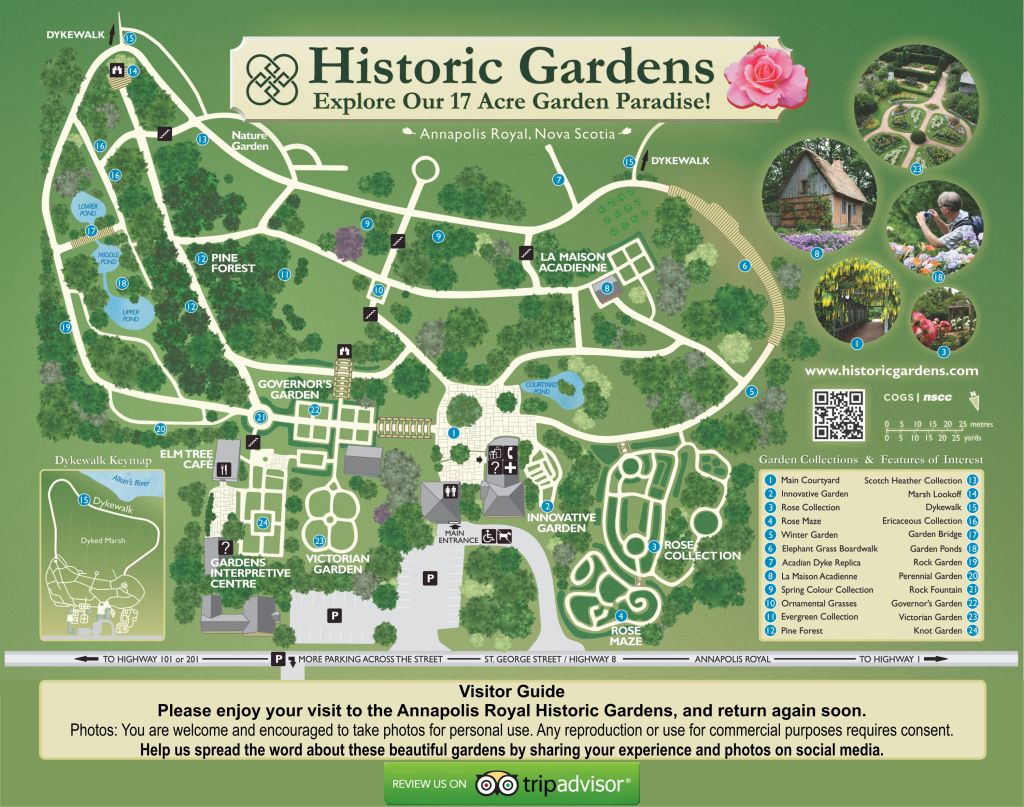
A few days ago, I wrote about Butchart Gardens on Vancouver Island. I have always enjoyed visiting botanical gardens. Two of the best are on opposite sides of Canada. Martine and I also loved visiting the Annapolis Royal Historic Gardens in Annapolis Royal, Nova Scotia. What I found interesting is that the Canadian gardens looked equally good rain or shine, while the ones in California looked best in sunny weather.

Also, the Canadians did a much better job in labeling the different plants than the American gardens we’ve visited.

One of the neat features of Annapolis Royal is that is only a few footsteps away from Fort Anne, originally built in 1629 to protect shipping. It saw action in five wars, terminating in the French and Indian War (1754-1763). On the northern part of the island is the extensive Fortress of Louisbourg, built by the French in 1713, which played a major role in the French and Indian War.

In general, Nova Scotia was our favorite part of Eastern Canada, followed by the City of Québec. We loved the lobster dinners and the French Acadian culture of towns like Chéticamp, where moose could be viewed from the window of our B&B.

Paradise from an Old Quarry

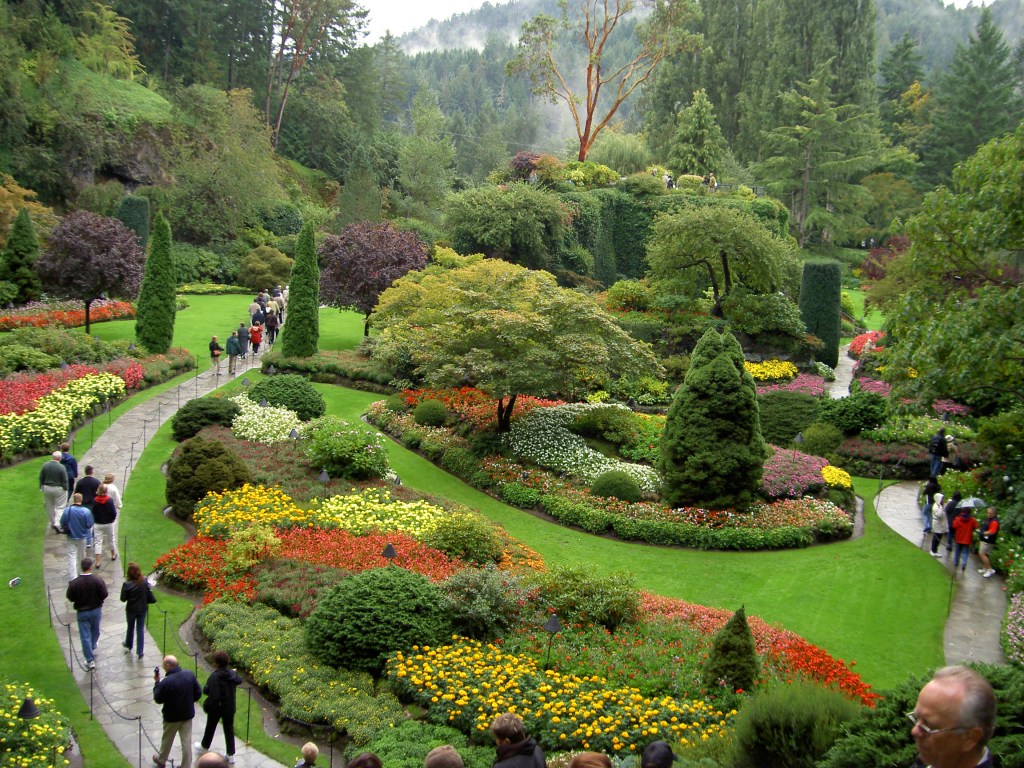
Butchart Gardens in Brentwood Bay, British Columbia

Eighteen years ago, I took a solo trip to Victoria and Vancouver, British Columbia. One of the highlights of my trip was my first visit to Butchart Gardens, fifty-five acres of botanical paradise a short distance from Victoria. Usually, botanical gardens look their best in bright sunshine. Curiously, Butchart shone as much in the rain as it did, later that afternoon, in bright sunshine.

I spent hours exploring the grounds, rewarding myself with a delicious English tea for lunch.

Back in 1904, the grounds were part of a large limestone quarry that looked dismal, until the wife of the owner Click here to see how Jenny Butchart turned that ruined earth into a small paradise. Today it is a National Historic Site that draws thousands of visitors from around the world.

A few years later, I returned with Martine, who also fell in love with the place.

Come to think of it, Butchart Gardens was one of two botanical gardens we visited in Canada. The other one was in Annapolis Royal, clear on the other side of Canada. I will write about it at some point in the coming week or so.

Jökulsárlón

A Hypnotic Glacial Lagoon in Southeast Iceland

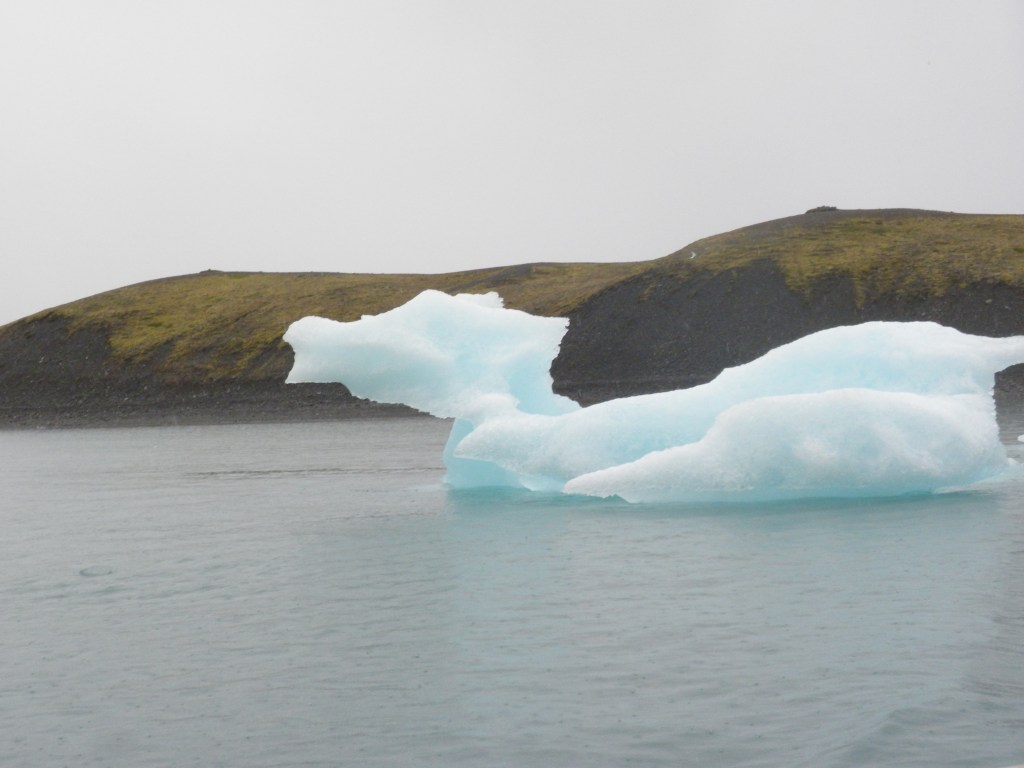
On both of my trips to Iceland (in 2001 and 2013), I stopped by the glacial lagoon at Jökulárlón to see the strangely-shaped and colored little icebergs. The second time, I even took a boat ride around the lagoon.

The lagoon is a must-see on the road between Höfn and Kirkjubæjarklaustur, neither of which could be correctly pronounced by visiting tourists. It is an outlet to the biggest glacier in Europe, Vatnajókull, which occupies approximately 8% of the total land area of Iceland.

Fanciful Shapes Abound, Like This Duck

Never mind that the sun doesn’t seem to shine much at Jökulárlón, the sight of all those odd ice shapes tinted electric blue catches and holds your attention. All the buses in South Iceland make a point of stopping there for a half hour on their way either east or west.

I even had a taste of glacial ice from our guide, who fractured a pane of ice and passed it around among the tourists. It was delicious, having been frozen for millennia.

Although the Vatnajókull glacier is, like most glaciers, receding, it still occupies a large chunk of real estate. While I was staying at Hófn, I even played around on the glacier’s surface on a Ski-Doo snowmobile.

Atop the Glacier

I have been atop two glaciers in my lifetime, Vatnajókull and the Athabasca Glacier in Canada’s Jasper National Park. Something tells me that this is an activity that future generations will not be able to enjoy.

My First Trip Ever

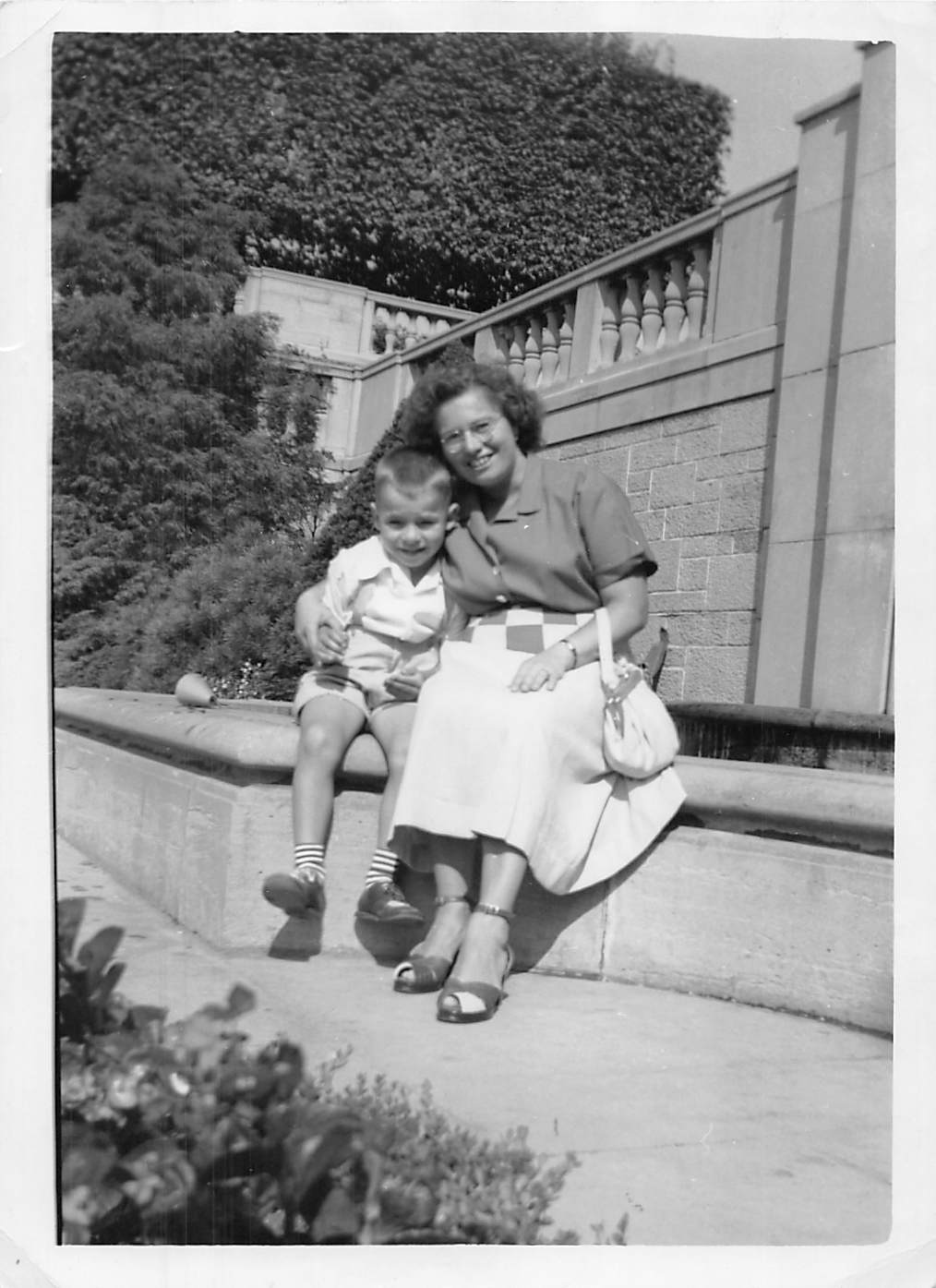
My Mom and Me at Niagara Falls Circa 1950

Some time before my brother was born in April 1951, my Mom, Dad and I went for a couple of days to Niagara Falls, which is just a few hours from Cleveland. This was before the Interstate Highway System made such trips routine. At the time, my Dad had a 1949 Mercury Coupé which had precious little room behind the front seat. I must have sat on my mother’s lap in those pre-seatbelt days.

I remember taking a ride on the Maid of the Mist of that era and getting splashed by the falls as we approached them. As I recall, the above picture was shot at a park opposite the falls on the Canadian side.

Yes, this was my first foreign jaunt, at the tender age of five or six. During all my years in Cleveland, the only trips we ever took were to:

  • Niagara Falls
  • Detroit to visit one of my mother’s distant relatives (and that included a visit to the Henry Ford Museum and Greenfield Village)
  • Schoenbrunn, Ohio—the first pioneer settlement in the state
  • A flight one summer, at the age of fourteen, to West Palm Beach, Florida where we stayed in nearby Lake Worth

As my horizons broadened from my extensive reading, not only of books but of maps and atlases, I felt increasingly claustrophobic living all year round in my home town. So when it came time to choose a college, my preference was for out of town, even though I did apply to Western Reserve University (now Case Western Reserve) if all my preferences rejected me. My preferred choices: Harvard, Yale, Dartmouth, and Bowdoin College in Brunswick, Maine. Harvard kept losing my transcript. Yale accepted me without a scholarship; and Dartmouth and Bowdoin both offered full scholarships.


Ten Years Ago

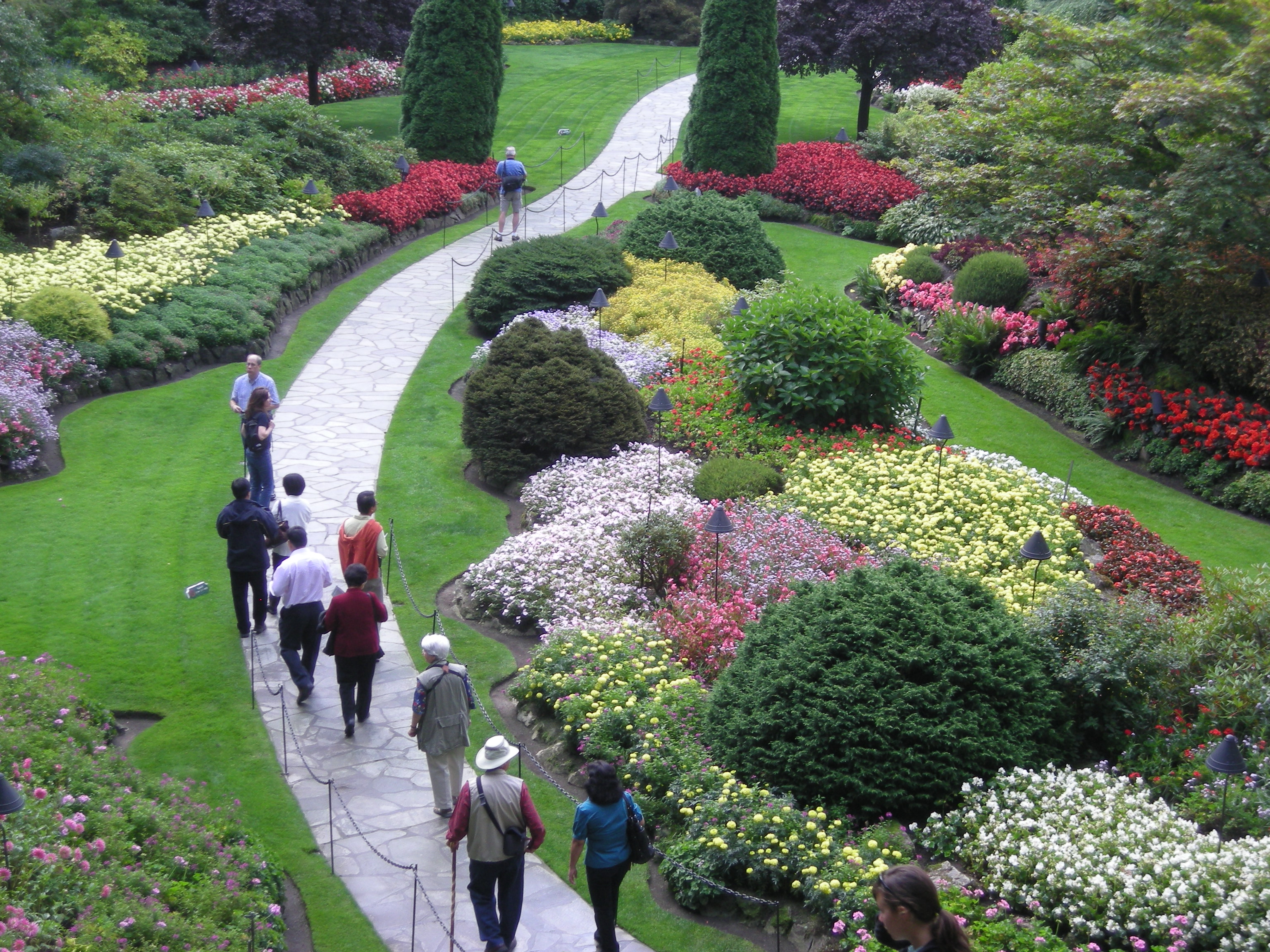
The Sunken Garden at Victoria, BC’s Butchart Gardens

I have over twenty thousand photographs stored in the cloud at Yahoo Flickr. Sometimes, when I don’t know what to write about, I just scan through some of my older pictures. This time I decided to look back ten years. My vacation that year was to Seattle and British Columbia. The pictures of me at that time showed me to be much heavier, probably close to 230-240 pounds. Now, thanks to diabetes, I am closing in on 200 pounds.

The pictures of Martine show her to be much happier. Ever since 2013, when she started complaining of back pain, she has been less willing to travel. The last good trip we took together had been in 2011, when we spent three weeks in Argentina and Uruguay. There was a period of several years recently when she has been depressed and made several attempts to live elsewhere on her own. Lately, she has been less depressed and even laughed on occasion. Still, she has let her passport expire and shows no interest in traveling abroad any more.

Probably Canada has been her favorite foreign destination, to Victoria, Vancouver, Ottawa, Montreal, Quebec, and particularly New Brunswick and Nova Scotia.

My favorite destination in the trip we took ten years ago was Butchart Gardens just north of Victoria. Both Martine and I love botanical gardens, and Butchart is a world-class place for people like us. My favorite part is the Sunken Garden, which used to be a quarry. It took nine years to convert the five acres of disused quarry into a faerie-like collection of beautiful flowers, trees, and shrubs. And, because we are much farther north, the nature of the plants is so different from what we have in Southern California’s Mediterranean climate.


Two Ships: The Lady Rose and the Modesta Victoria

Aboard the MV Lady Rose in 2004

I have always liked Canada. While we were losing our minds and preparing for a second Civil War, Canada remained itself—calm, reasonable, sane. One of the highlights of my 20014 trip to British Columbia was an all-day cruise from Port Alberni to Bamfield and back. The Alberni Inlet and Barkley Sound extends for many miles of isolated houses and logging camps, many of which were supplied by the packet freighter MV Lady Rose. I understand the ship is no longer being used for that purpose. On the plus side, she is at Tofino awaiting restoration at Jamie’s Whaling Station.

There is something about small ships that intrigues me. In Argentina, I took the Modesta Victoria on Lago Nahuel Huapi to Los Arrayanes National Park. The Modesta Victoria was built around the same time as the MV Lady Rose, though in the Netherlands rather than Glasgow. The Modesta victoria has recently celebrated 75 years of navigation on Lago Nahuel Huapi, which sits in the foothills of the Andes in Argentinian Patagonia.

The Modesta Victoria at Anchor

My day cruises aboard both ships were among the highlights of both vacations. The Alberni Inlet was lovely, abounding in bears and other wildlife. And the Modesta Victoria’s cruise to Los Arrayanes was spectacular. It is said (though probably this is a myth) that the orange trunks of the Arrayanes trees were the inspiration for the forest in Walt Disney’s Bambi.