Chiclayo and Sipán

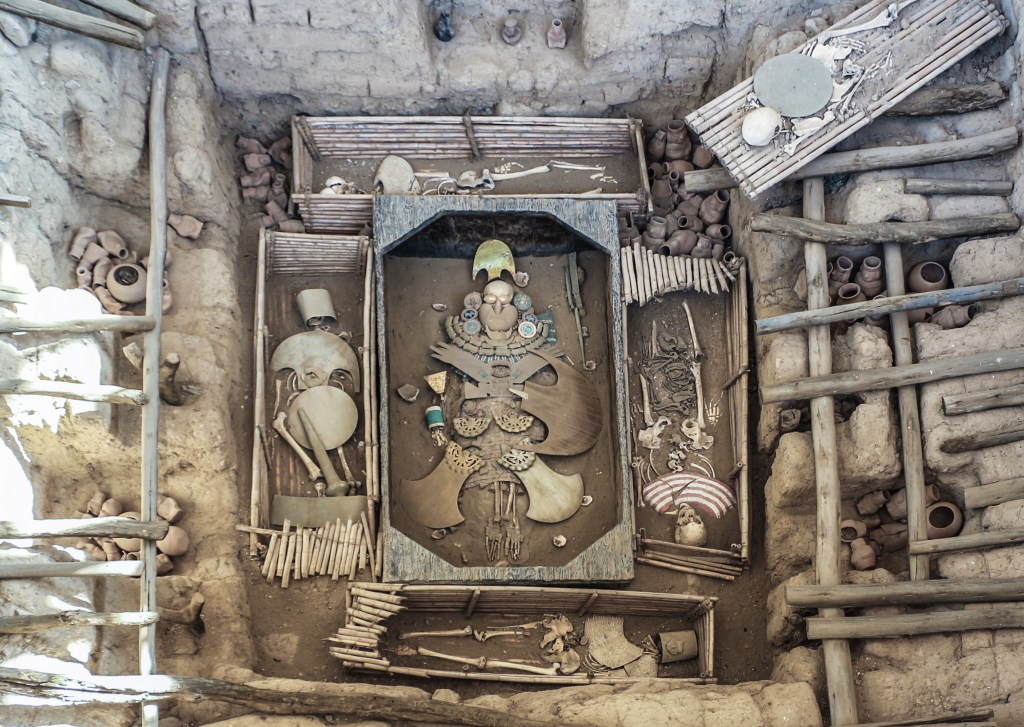
Tomb of the Lord of Sipán

After Chachapoyas, my Northern Peru has one more destination to its farthest point, back to the coast to Chiclayo. The bus ride to Chiclayo is nine hours. Nine easy hours. No two mountain passes at Himalayan-like altitudes to cross on a dicey road hovering at the edge of a precipice like the one between Cajamarca and Chachapoyas.

Also, we are in the land of the Moche, whose lifelike sculptures I have noted in an earlier post. As with Trujillo, there are numerous ruins, particularly those of Sipán, and museums to visit at Lambayeque, Ferreñafe, and Túcume.

And then it will be time to return to Lima. Chiclayo has an airport, but it is not an international one, so I will have to fly out of Lima’s Jorge Chávez Airport. So I could fly to Lima via Avianca or LATAM. Or I could even take a 12-14 hour bus trip arriving in Lima with a burst bladder.

What will I have accomplished with this trip, should I decide to eventually take it? Peru, Guatemala, and Southern Mexico were the homes of great urban civilizations—none of which had managed to invent the wheel. The Maya of Mexico and Central America did, however, develop a form of hieroglyphic writing. The civilizations of Peru did not, but they were nothing short of amazing with all their closely packed mountain civilizations. In the end, there is far, far more to Peru than just the Inca. They were just the final pre-Columbian civilization before the Spanish Conquistadores rode into town and took over.

Kuelap

The Chachapoya Ruins at Kuelap

As with the bus trip from Cajamarca to Chachapoyas, I am not sure I am in good enough physical shape to visit the mountaintop ruins of Kuelap. While the city of Chachapoyas presents no particular challenges, the journey to Kuelap consists of multiple parts:

  1. Bus from Chachapoyas city to the Kuelap Cable Car Station (approximate time: one hour)
  2. Take a private bus to the cable car platform (included in cost of ticket)
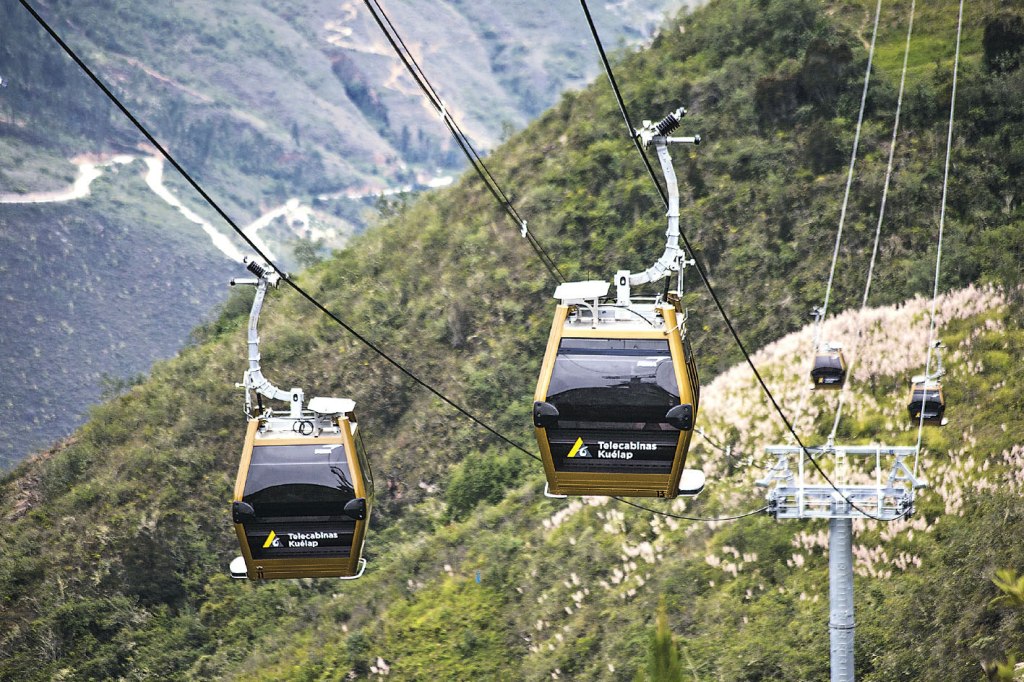
  3. Ride the cable car 4,400 meters (14,435 feet) to the station at the top of the cable car route
  4. Either walk or ride horseback to the entrance to the ruins

i

Two Kuelap Cable Cars Passing Each Other

What is so interesting to justify an arduous all day trip to ma mountaintop ruined city? Although they were conquered by the Incas, the Chachapoyas were an amazing people. These so-called cloud warriors controlled the swath of land around the city of Chachapoyas for a thousand years, until the Inca overcame them. Kuelaps’s “were thought to be great warriors, powerful shamans, and prolific builders who were responsible for one of the most advanced civilizations of Peru’s tropical jungles” (Lonely Planet).

I was hooked when I saw an episode of Lost Cities Revealed with Albert Lin in which the host used a drone and special archeological software to study the extent of Chachapoya civilization that digitally eliminated the foliage cover of the mountains to reveal ancient building sites.

Peru is eager to make Kuelap a popular tourist destination, as Machu Picchu is being worn away by the crush of foreign tourism. This whole itinerary as envisaged by me is a search for alternative destinations, some of which in their own way are as spectacular as Machu Picchu or perhaps even more so.

The Road to Chachapoyas

The Road from Cajamarca to Chachapoyas

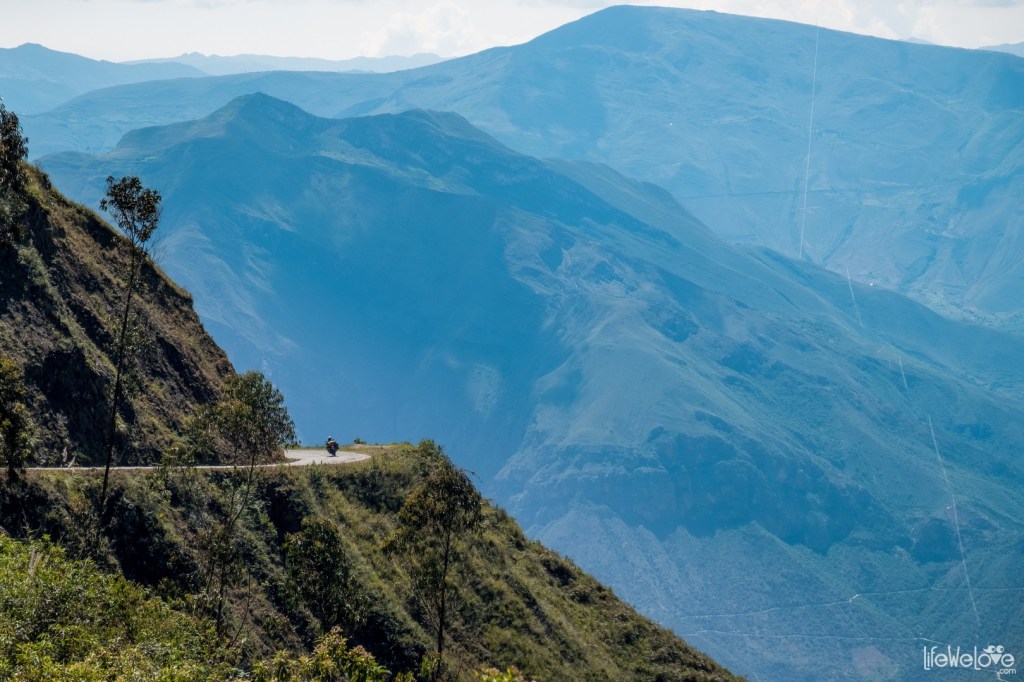
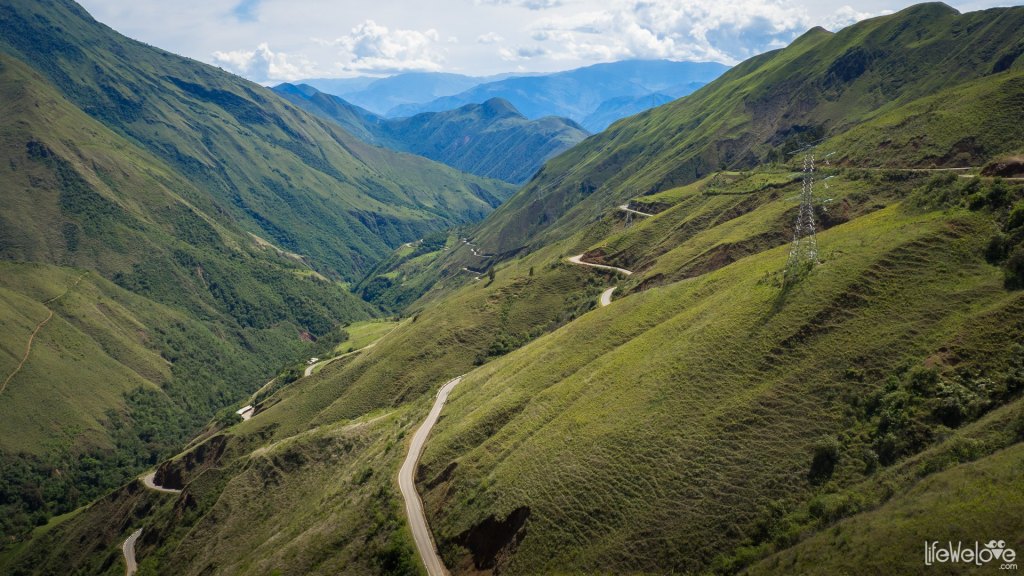
In my perhaps pipe dream (perhaps actual) plans to visit the pre-Columbian ruins of Northern Peru, the one big question is the side trip to Chachapoyas. The Andes at that point consist of a number of parallel mountain ranges. From Cajamarca (at 2,750 meters or 9,022 feet), one goes over a mountain pass of 3,085 meters (or 10,121 feet) to Balsas before tackling Abra de Barro Negro (“Black Mud Pass”) at 3,678 meters or 12,067 feet. From there, one can see the Rio Marañon, which is a tributary of the Amazon. A quick look at the map for this part of the trip will give you a general idea:

The Wiggly Line of Route 88

An even more specific look at the route:

Yup, It’s the Same Road

From what I understand, Route 88 is paved all or most of the way, but there are frequent floods and landslides during the rainy season, which runs from November to April. There is, I believe, one bus per day along this route from Cajamarca to Chachapoyas at 4 :00 AM using the Virgen del Carmen bus line.

This road is by no means the end of my troubles, as you shall see when the discuss the ruins of Kuelap. In fact, I will probably overnight at Leimebamba on the way, visiting their famous museum. My nerves will be plenty jangled by then, especially if I sit on the left hand side of the bus.