
Rain in the Offing

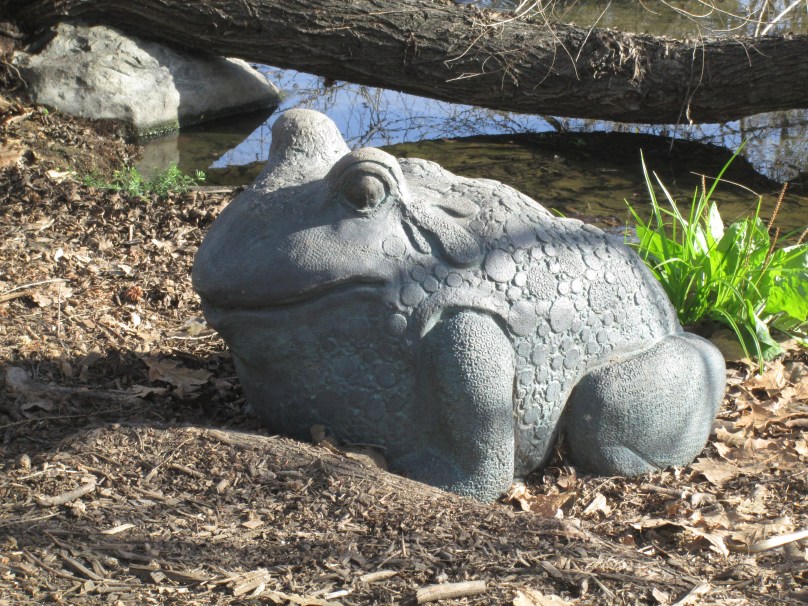
Statue of a Frog at the LA Arboretum

This being Valentine’s Day and facing a prediction of several days of rain, I took Martine to the Los Angeles Arboretum in Arcadia. Our last visit there was in 2017. As I looked at the many turtles basking on the shore of Baldwin Lake and the statue of a frog in the Meadowbrook section of the park, the thought of rain was not far from my thoughts. To my mind, turtles and frogs were symbols of wet weather to come.

A less mythical harbinger of rain were the fluffy stratus clouds I noticed as I looked up. To me, that meant that I should curl up with a good book and enjoy the storm, which the local weathermen are already referring to as an “atmospheric river.”
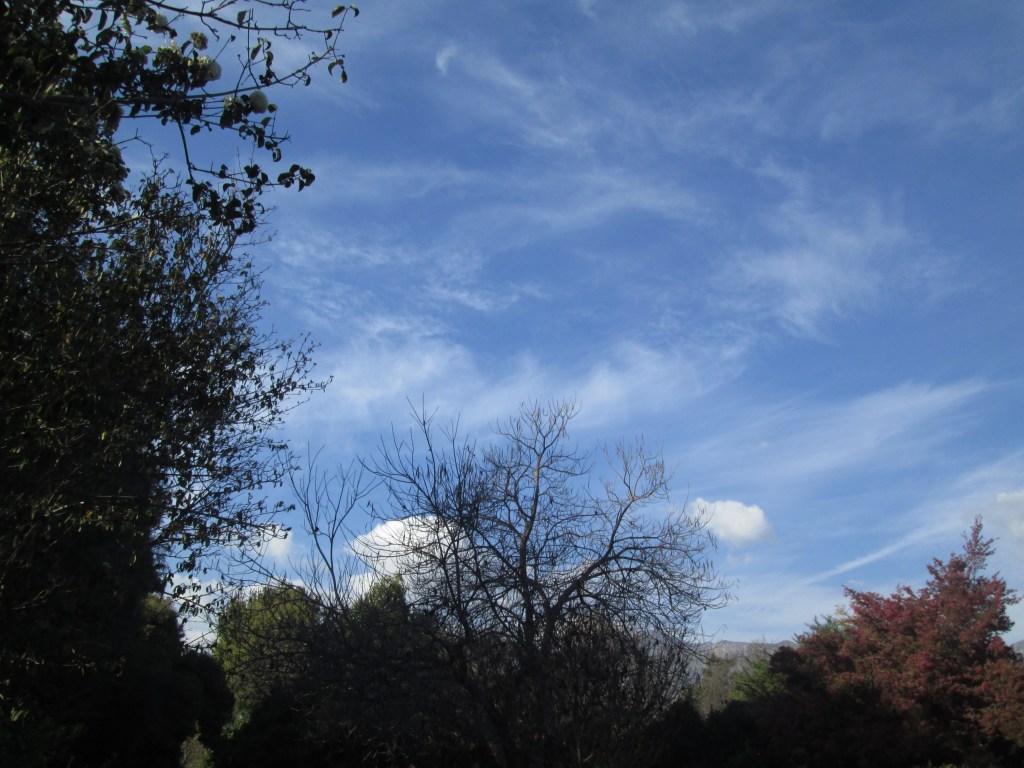
Stratus Clouds Over the Arboretum

Because I am not so mobile as Martine is, at several points along the trail I picked out a shady bench and finished reading Peter Harris’s excellent edition of Zen Poems. Meanwhile, Martine walked around and explored the many sections of the Arboretum. This way, we both got the most out of our visit.

Rain does not deter me as it used to. Now I see a rainy winter as not only a protection against raging wildfires, but a brush that paints the surrounding hills and mountains green and dots them with lovely wildflowers. Otherwise, Southern California takes on a desertlike tinge of brown and gives us hot summers smelling of burnt dust.

Un Hueco en el Cielo


It Means “An Opening Into Heaven”

It Means “An Opening Into Heaven”

I have been reading Tom Miller’s The Panama Hat Trail, about the author’s search for where Panama hats are made. (Hint: It’s not Panama.)

In the first chapter, he quotes the residents of Quito, Ecuador, as saying that their city is un hueco en el cielo, an opening into heaven:

“What does un hueco en el cielo mean to you?” an Indian from Ambato asked me. Well, I replied, that here you are so close to God, physically and spiritually, you can virtually peak into heaven. She smiled. “That’s what most North Americans and Europeans say. To the Indians it means that God could look down upon us.”

That is an interesting point of view in this most Catholic of countries. It enables God to look down and see His creation more clearly.

Miller continues:

At ninety-three hundred feet, Quito’s air is so rarefied that the sun’s rays beat down with deceptive strength. A brisk midday walk in the equatorial Andes leaves you sweating profusely. Near dusk, garúa—intesne fog—rolls through the city, limiting vision to an arm’s length. “The man who doesn’t like clouds has no business coming to Ecuador,” wrote the Belgian Henri Michaux in 1928. “They’re the faithful dogs of the mountains.” Clouds go through gymnastics at this altitude, first low hugging the ground, then high embracing Mount Cayambe or Pichincha, then settling briefly in the Chillos or Tumbaco valleys before finally returning again to ground level.

Compared to Argentina, Chile, or Peru relatively little has been written about Ecuador. Between now and our departure date this fall, I plan to read everything I can find. Since tax season is over, I’ll have no trouble finding the time.