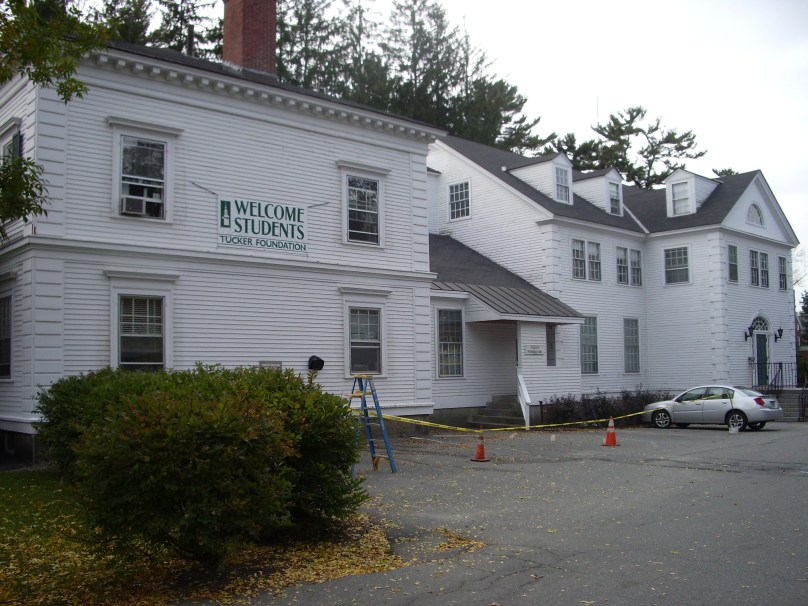
Fairbanks Hall

Fairbanks Hall As It Is Today

In the picture above, the left half of the building shown was added some time after I graduated from Dartmouth College in 1966. To see the Fairbanks Hall that I knew and loved, put your hand over the left half of the picture.

When I was a freshman at Dartmouth, I paid a visit to Fairbanks Hall in its old location just north of Baker Library. I heard that Dartmouth Films, which occupied the building, was showing free films. One day, I wondered into the small auditorium and saw Carl Theodor Dreyer’s 1943 masterpiece Day of Wrath (Vredens Dag) about witchcraft in the 17th century. The Danish film electrified me. I had seen a handful of foreign films back in Cleveland, but nothing this good.

That year, the Hopkins Center for the Arts had its grand opening, and the Dartmouth Film Society was able to screen films in the center’s large and fancy auditorium. At the time, I was planning on being an English major; but suddenly new possibilities opened up. The Film Society inaugurated the Hopkins Center auditorium with the world premier of John Huston’s Freud.

In my sophomore year, the college lifted Fairbanks Hall from its north campus location and plunked it down in the middle of the parking lot between Massachusetts Hall and the Hanover, New Hampshire cemetery. I started hanging out there, having long conversations with Blair Watson, who headed up Dartmouth Films, and David Stewart Hull, his assistant.

By my junior year, I was an active member of the Dartmouth Film Society; and the next year, I was its assistant director. By that time, my pituitary tumor was causing intense pain, usually in the form of frontal headaches which started just before noon and (for some reason) ended around midnight. In between those hours, I figured I could screen films for myself on the 16mm projector. I dropped in daily to see what films had been received for screening in classes around campus and threaded the projector if any of them looked interesting. There was a small screening booth I could use for the purpose.

Among the highlights of the films I saw that year were the Frank Capra Why We Fight films made to show Americans why we were fighting in the Second World War; Nelly Kaplan’s great documentary about the films of Abel Gance; René Clair’s French musicals Sous les toits de Paris and Le million; and a whole host of other highly miscellaneous films.

While in Fairbanks, I usually ran into my friend Peter, who was busy editing one of the films he had shot. Today, he lives some twenty-five miles south of me.

Fairbanks Hall had a major influence on my choice of graduate school. I had received a citation for excellence in a class on film history; and I decided to apply to the UCLA film school for an advanced degree in motion picture history and criticism.
Orozco at Dartmouth

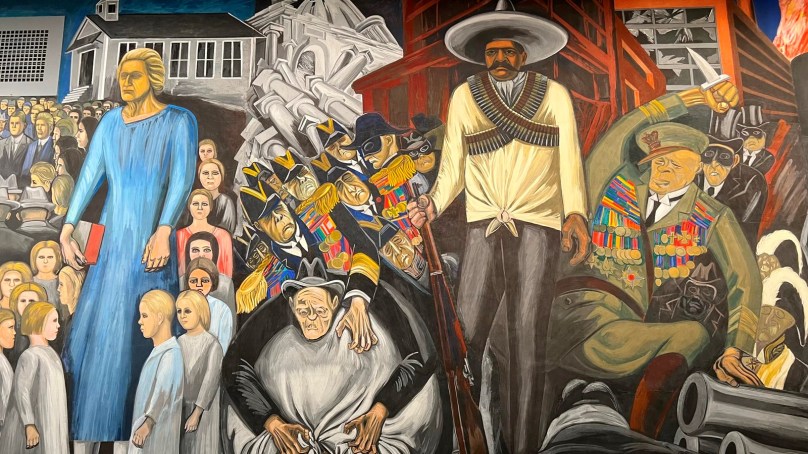
Panel of Orozco’s Epic of American Civilization

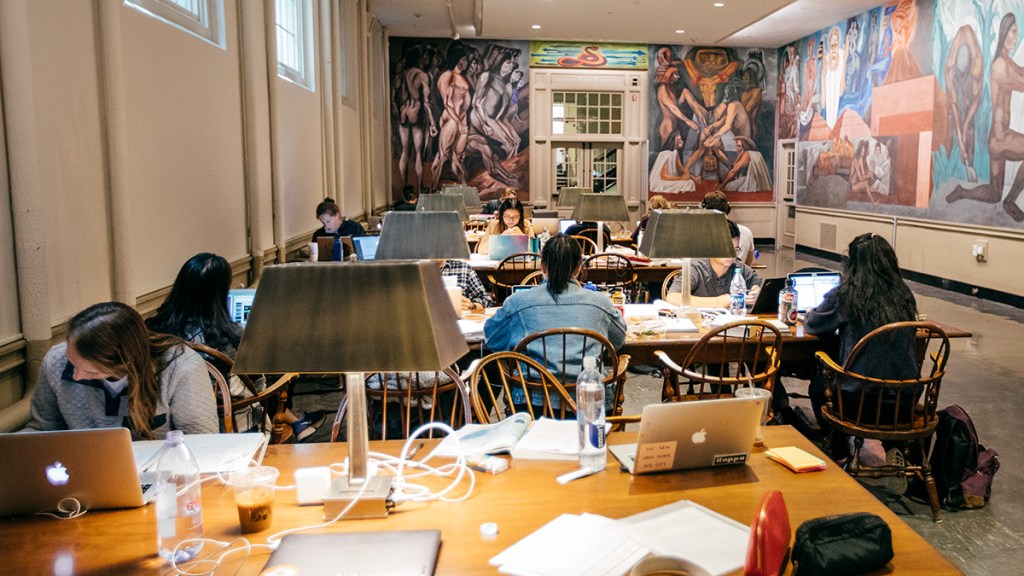
One of the things I most loved about my years at Dartmouth College was studying in the Baker Library’s Reserve Room, as it was then called. The Mexican artist José Clemente Orozco (1883-1949). Between 1932 and 1934, he painted a series of murals entitled “The Epic of American Civilization” in the college’s Baker Library.

There is a detailed discussion of Orozco’s mural put out by Dartmouth’s Hood Museum describing all the panels.

The Reserve Room

Sometimes I think it is those murals which first got me interested in going to Mexico. Nine years after I graduated, I finally made it to Yucatán and visited the ruins at Uxmal, Chichén Itzá, Mayapan, and Kabah during a two-week trip in November 1975.

Until I saw Orozco’s work, Mexico and the Pre-Columbian civilizations of the Americas just weren’t on my radar. Afterwards, they became a major preoccupation.

Quetzalcoatl in a Panel of the Orozco Murals

Little did I know in my college years that my interest in the murals would eventually lead me not only to Mexico, but also Argentina, Guatemala, Honduras, Uruguay, Chile, Peru, and Ecuador.

My Libraries

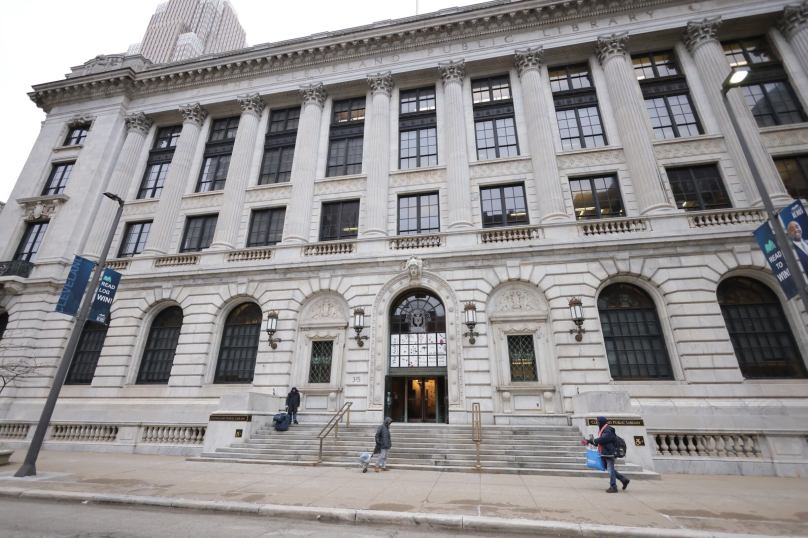
The Main Branch of the Cleveland Public Library Downtown

Books and libraries have always played an important part in my life.

When I was a toddler, my mother took me to the branch of the Cleveland Public Library on East 109th Street (now Martin Luther King Drive). Not that I could read, but I could indicate based on the illustrations the books I would be most interested in. She would check them out and read them to me in Hungarian, probably embroidering a bit. The one book I remember from that period was Dr. Seuss’s The King’s Stilts, which I now have in my collection.

In 1951, after my brother Dan was born, we moved to the Lee-Harvard Area on the East Side of Cleveland. For many years, I went to the Lee-Harvard branch which was located on Lee Road, first north of Harvard, and then south of it. The head librarian was a fellow Hungarian, Mr. Matyi, who played the oboe in the Cleveland Philharmonic Orchestra.

During my college years at Dartmouth, I spent many hours at Baker Library, which was modeled after Independence Hall in Philadelphia. What I loved most about it were the frescoes in the reserve room that were painted in the 1930s by José Clemente Orozco.

Jose Clemente Orozco, Murals at Baker Library Reading room, Dartmouth College, Hanover NH; The Machine

Once I moved to Los Angeles, I spent some time at the UCLA University Library, but I liked going to the main branch of the Santa Monica Public Library—which satisfied me until an opportunity opened up with the construction of the E (for Expo) Line of the Metro Rail. Driving and parking downtown was always a major pain. But now I was able to whiz downtown for 35 cents in three quarters of an hour.

I am now hooked on the Central Branch of the Los Angeles Public Library. Not only because of the library’s holdings, but various events sponsored by the library, especially the guided Thursday mindful meditation sessions.

The one library I forgot to mention is my own personal library of some 6,000 volumes, which I am slowly trying to thin by donations.

Boy Jeezus, That’s a Pissah!

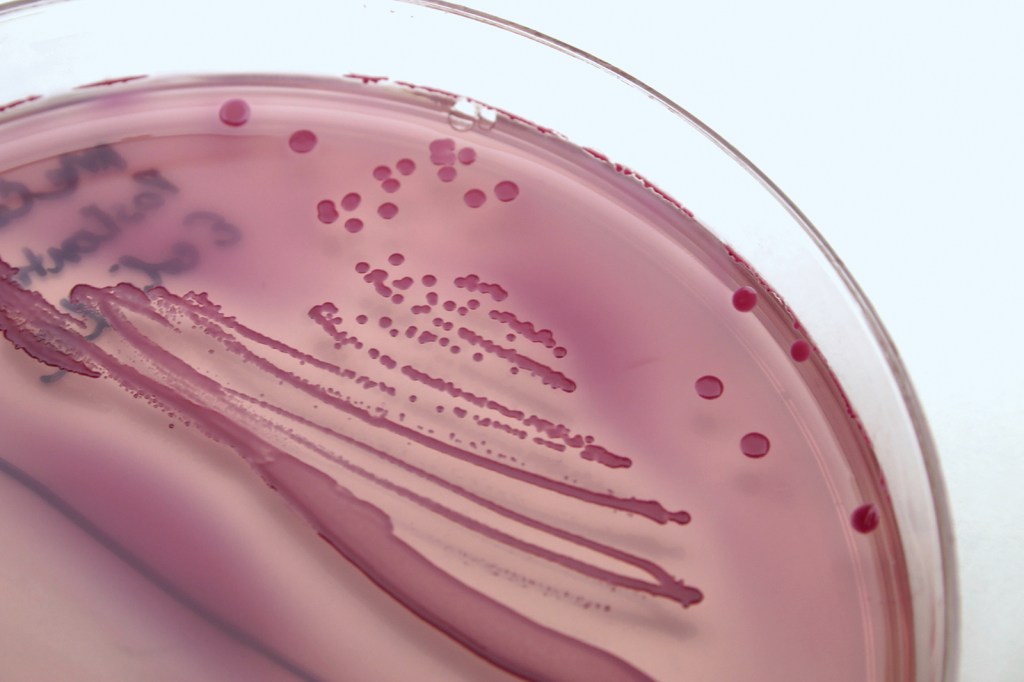
Bacteria in a Urinary Tract Infection

When I was a student at Dartmouth, we all made fun of the local New Hampshire employees, whom we called emmets. The most typical speech mannerism was the same as the title of this posting. At the time, I never realized the irony of that phrase.

After I graduated from college, and days before I was to head out for graduate school in Los Angeles, I got the mother of all headaches and lapsed into a coma. It turns out that I had a pituitary tumor, called a chromophobe adenoma. Making the right diagnosis in 1966 was a flipping miracle: Remember that MRIs and CAT Scans weren’t around then. All they had to go on were fuzzy X-Rays, and sheer deduction based on miscellaneous hard-to-interpret factors.

With luck, I not only survived, but I made medical history. The only problem is that I paid for it with a scarred urethra caused by some ICU staffer who forced a catheter up my urethra at a time when, groggy with drugs, I thought I was being attacked and resisted what I perceived was violence.

Well, boy Jeezus it was a pissah! For several years, my scarred urethra tended to shut down, forcing a procedure variously called a dilation or a cystogram tray. I have undergone that procedure about eight times over the last fifty-five years, and I’m going to have to undergo it again on Tuesday because I currently am recovering from a urinary tract infection.

This weekend, I leaked so bad I went around in Depends adult diapers. I either peed into the diaper, or had to carefully aim my instrument at the toilet while the stream tried to go in every which direction. The dilation will be a sort of quick fix, but it will result in copious if painful urination for about two weeks until the urethral scars tend to close up again.

There is no pain I have endured in this life compared to a dilation. It’s like fifteen or twenty minutes of being whipped with a cat-o-nine tails.

With luck, the pain will eventually go away, and the urethra will open up slightly … until the next time.

Now, wasn’t that fun?