Tulpomanie

That’s Dutch for “Tulip Mania”

That’s Dutch for “Tulip Mania”

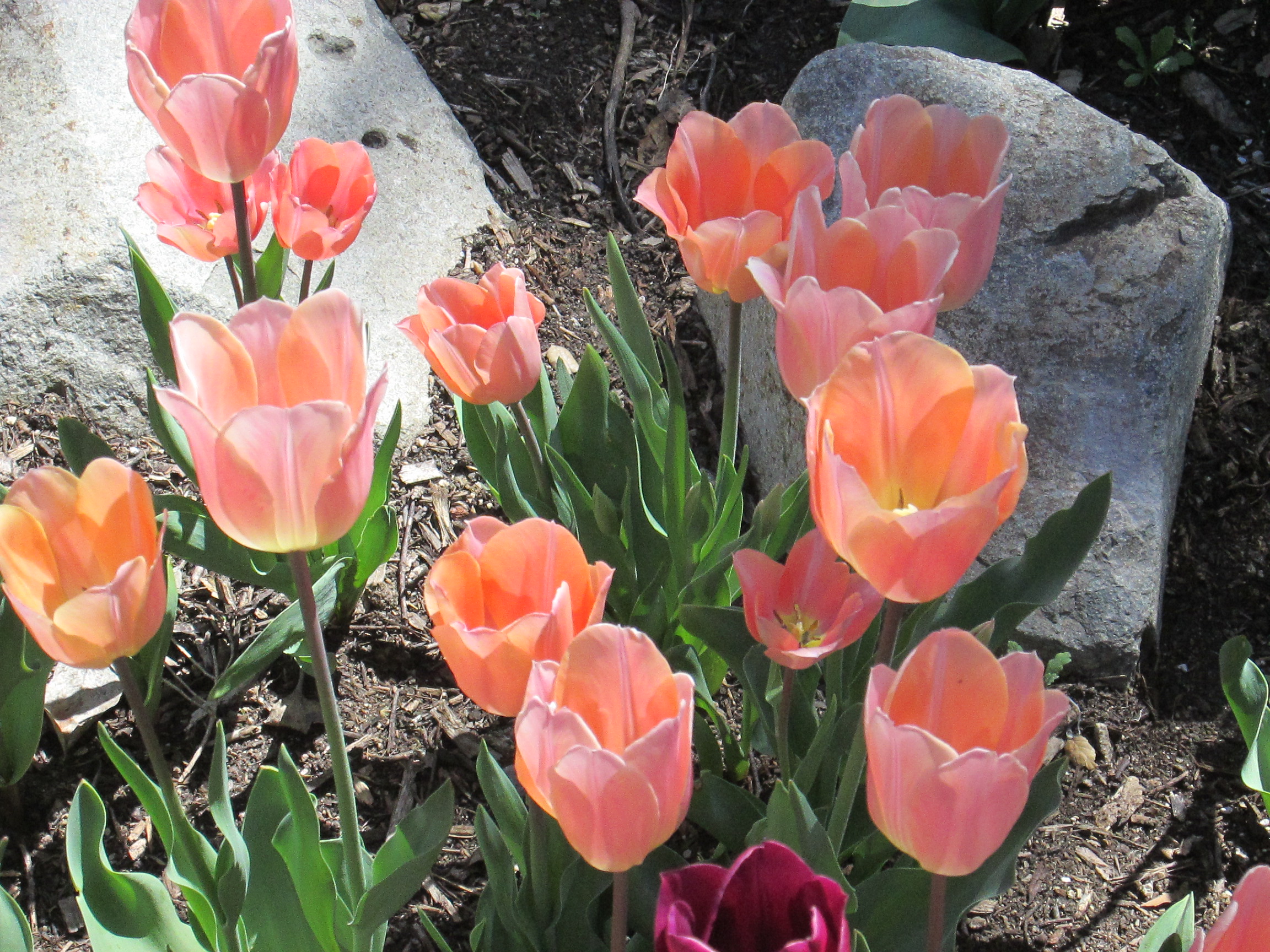
Tulips are my favorite flowers. Sadly—in Southern California anyhow—they are in bloom only during the months of March and April. Wouldn’t you know it: That’s just when I am most occupied doing overtime work on taxes. When I got an e-mail from Descanso Gardens saying the tulips were in bloom, I wasted no time getting out there with my camera. Even though Martine has not been feeling good lately, the flowers and the warm weather made her feel a little better. As for me, it was a major lift for my spirits.

There was a time in the Seventeenth Century that tulips were big business in the Netherlands. Introduced to Europe late in the previous century from Turkey, tulips spread like wildflower (sorry about the pun). British journalist Charles Mackay wrote a book in 1841 called Extraordinary Popular Delusions and the Madness of Crowds, in which there was a chapter about Dutch tulip mania, or tulpomanie. At its height around 1637, a single bulb for the tulip called “The Viceroy” (see below) cost between 3,000 and 4,200 guilders—this while the average skilled tradesman made around 300 guilders for an entire year.

Catalog Picture of “The Viceyoy” Tulip

Catalog Picture of “The Viceroy” Tulip

If you are interested in reading more, you can still find the Mackay book around, and you may be even more interested in reading Alexandre Dumas Père’s The Black Tulip, which dramatizes the whole tulip mania period in Holland. When the City of Haarlem offers 100,000 guilders to anyone who can produce a black tulip, all hell breaks loose.

“Heart of Oak”

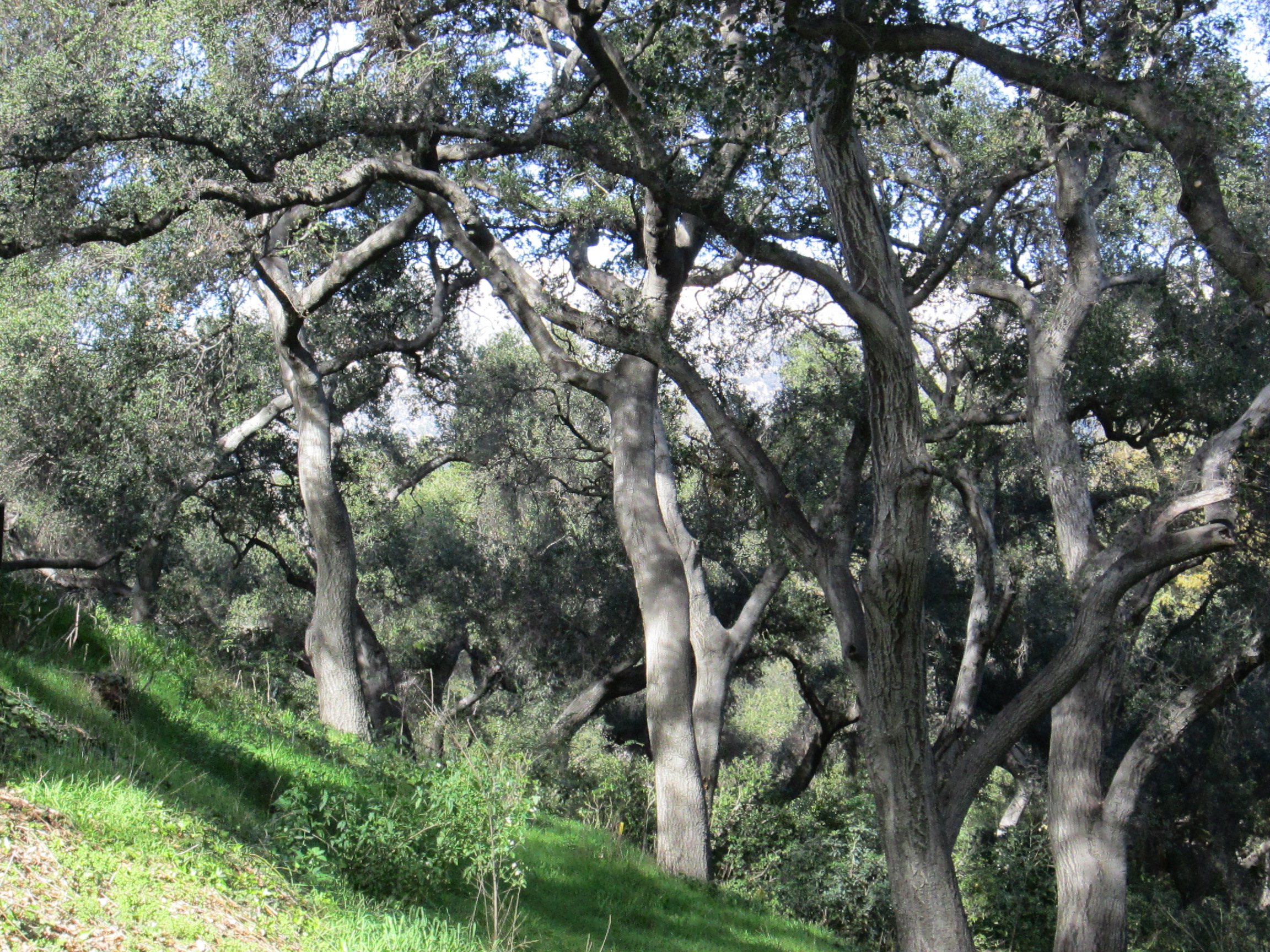
The Oak Forest at Descanso Gardens

The Oak Forest at Descanso Gardens

“Heart of Oak” is and has for more than 200 years been the official march of the Britain’s Royal Navy. If you want to hear the lyrics, see below:

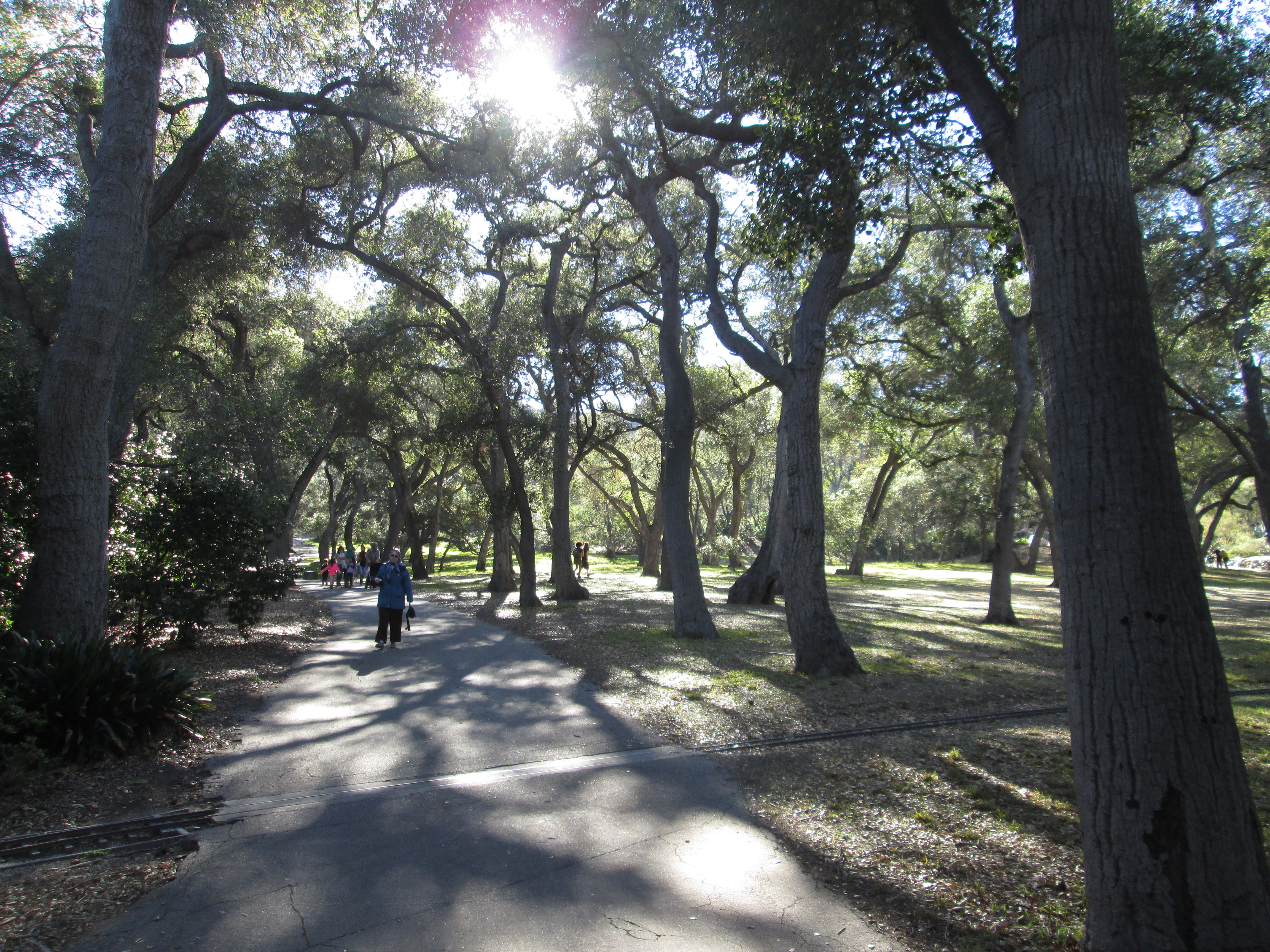
For me, the connotation is somewhat similar: There is something about oak trees that exude both strength and beauty. At Descanso Gardens in La Cañada-Flintridge, there is a massive oak canopy protecting a host of other plants, most particularly the acres of camellias that Descanso is famous for. According to the park website:

Experience the giants in the Descanso landscape, the Coast live oaks (Quercus agrifolia). These trees, some centuries old, are the remainder of a forest that once blanketed the region. The Coast Live Oak typifies the natural Southern California coastal landscape. These trees are flowering plants and belong to the beech family (Fagacea). There are 19 species of Quercus native to California. The Coast Live Oak is an evergreen tree oak. Its natural distribution ranges from California’s Mendocino County along the Coast Ranges down to northern Baja California.

The Coast Live Oak is known as a “keystone species,” meaning that the tree supports the existence of hundreds of other species, including mammals, birds, insects, fungi, plants, and even reptiles and amphibians. The Tongva [Gabrielino] people who made this region their home relied on acorns as an important food source. The importance of the Coast live oak in the interconnected web of life cannot be overstated.

For me, the oak forest is the principal year-round draw. Because California is in the middle of a drought, the camellias are not as lush as in previous years, but the oaks are always evergreen. The pattern of intersecting branches as in the above photo are Zen-like in heir intensity and always make my heart glad.

This Bud’s for You

Camellia Buds at Descanso Gardens

Camellia Buds at Descanso Gardens

Today, in the dead of winter, Martine and I visited Descanso Gardens in La Cañada-Flintridge. There wasn’t much to see, except perhaps a foretaste of things to come. Usually by this time the camellias are in full bloom, but this has been the driest rainy season on record thus far, with less than an inch of rain over the last six months. The number of camellia blossoms was way below normal, but there were a few nice blossoms, and quite a few buds (such as the above) waiting for better conditions.

Sometimes I wonder what the global climate change has in store for Southern California. Will we become like the Atacama Desert of Chile and Peru, where the annual rainfall is measured in millimeters? And this while the Eastern, Southern, and Midwestern parts of the country are suffering from record precipitation!

The Rose Garden was surrounded by a fence to protect the bushes from hungry mule deer that find their way into the gardens and devour up to twenty pounds of plants a day. There didn’t seem to be many, if any, roses; so any damage the deer might do would be mostly to future plants.

Even in a dry season, Descanso was beautiful. It contains the largest camellia forest in North America, shaded by some of the most spectacular oaks on the West Coast. We watched the koi form patterns, as if they were ink strokes in God’s own pictographic language. What He was communicating, I don’t know, but it looked nice.

Koi at Descanso

Koi at Descanso

Leaves and Concrete

My Preferred Walking Surface

My Preferred Walking Surface

One of my meditations at Descanso Gardens related to the type of surface we walk on. For us city-dwellers, most of our lives are spent walking on artificial surfaces such as concrete, asphalt, wood, or padded carpets. Yesterday, I cut through the 150-acre wood consisting mostly of oak trees and camellias, roughly from a point just south of the lilac garden to the cactus garden on the other side of the park.

During most of that time, I was treading on a lush carpet of dead leaves and fallen camellia blossoms as pictured above. It was the most resilient surface on which I have ever walked. So much death all around me! But was it really? How much of our skin and hair do we slough off every day of our lives? Yet they are renewed (well, except maybe the hair), as are the leaves and camellia blossoms. It is a little death among so much life. And it made me think that, perhaps, we ourselves are like leaves or blossoms of a much larger living entity.

We hardly ever see ourselves that way, what with our gimme gimme now now lives and somewhat tawdry needs. Going to Descanso always makes me think about our role in the larger life of the planet. We have destroyed so many of the green spaces that make us realize our part in the universe; and, as a result, we have become unhappier and more disconnected.

Eschscholzia californica

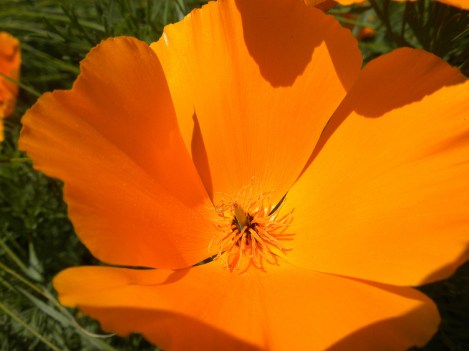
Macro Image of a California Poppy

Macro Image of a California Poppy (Eschscholzia californica)

We got an extra day off from work today, so Martine and I drove to Descanso Gardens in La Cañada-Flintridge, perched in the hills above Glendale. We have always associated the gardens with peace of mind, and today was no exception. Martine and I usually split off for a couple of hours and meet at the front gate just before closing time. While she wanders to her favorite sites, I look to get lost on the lesser known trails and perhaps do a bit of meditation.

The plethora of California poppies—the official state flower—kept distracting me. I took a number of close-ups, including the picture above, There is something so simple and yet so splendid about these blossoms that they kept interrupting my meditations. One never knows when one will run into a clump of these.

If it weren’t for tax season, I would have made a point of visiting the Antelope Valley California Poppy Preserve about fifteen miles west of Lancaster. Some 1,745 acres are full of California poppies and other native wildflowers, and there is a small visitor center maintained by the California Department of Parks and Recreation. (Of course, with the state’s current budgetary problems, I don’t even know if the park is still being funded.)