

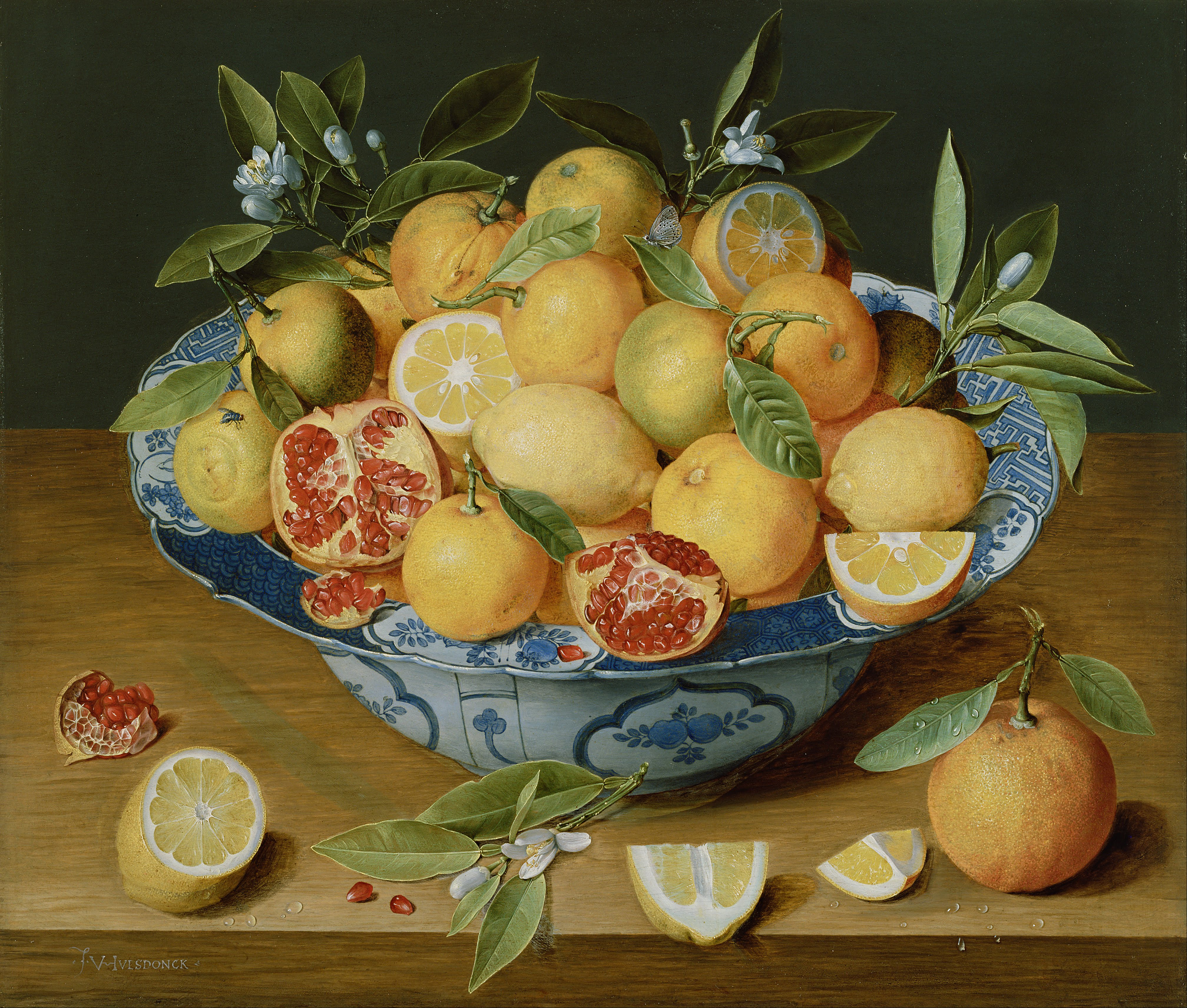
Jacob van Hulsdonck’s “Still Life with Lemons, Oranges, and a Pomegranate”
I have always found classical Dutch still life paintings to be interesting. In many of them, one can find insects devouring the fruits and flowers depicted. But even if insects are not present, as in Jacob van Hulsdonck’s fruit bowl above, there is an implied message that the fruits depicted will be only around for a while.
According to the Getty Center’s website description of the painting:
The still life attests to the fragile and fleeting properties of the natural world. The dimpled skin of the lemons and oranges; the juicy, glistening insides of the pomegranate held gently together by the thin white tissue of the pulp; the leaves and blooms still attached to fruit; and the shiny droplets of water in the foreground are all brilliant, short-lived effects captured on panel.
Ever since I first noticed this tendency, I have always spent extra time viewing Dutch still life paintings. Even if it’s not a Rembrandt, it is a message to us from four centuries ago that tempus fugit. The message is underlined by the fact that the fruit sits in a Ming dynasty bowl of the sort that could be found in a prosperous merchant’s house.

 Tarnmoor
You must be logged in to post a comment.