
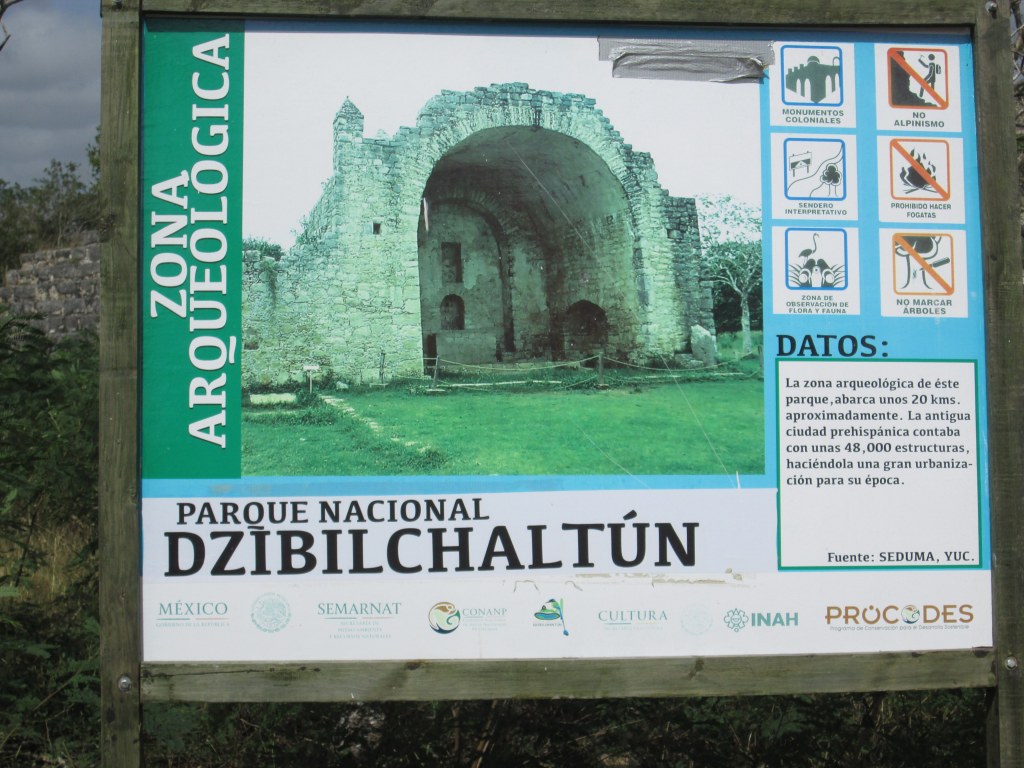
There are untold thousands of Meso-American archeological sites scattered through Mexico, Guatemala, Belize, and Honduras. Sometimes, it’s fun to visit some of the lesser-known sites. I have particularly fond memories of Dzibilchaltún, which is about 10 miles (16 kilometers) north of Mérida. It was the first Maya ruin I visited back in 1975 with my guide Manuel Quiñones Moreno. We set on the steps of a temple and played several games of chess, which I lost handily.
So it was fun to visit it again in 2020. Now there was an entrance hall, an admission fee, and a rather nice museum. Plus, the cenote was filled with children diving into the limestone-cooled waters.
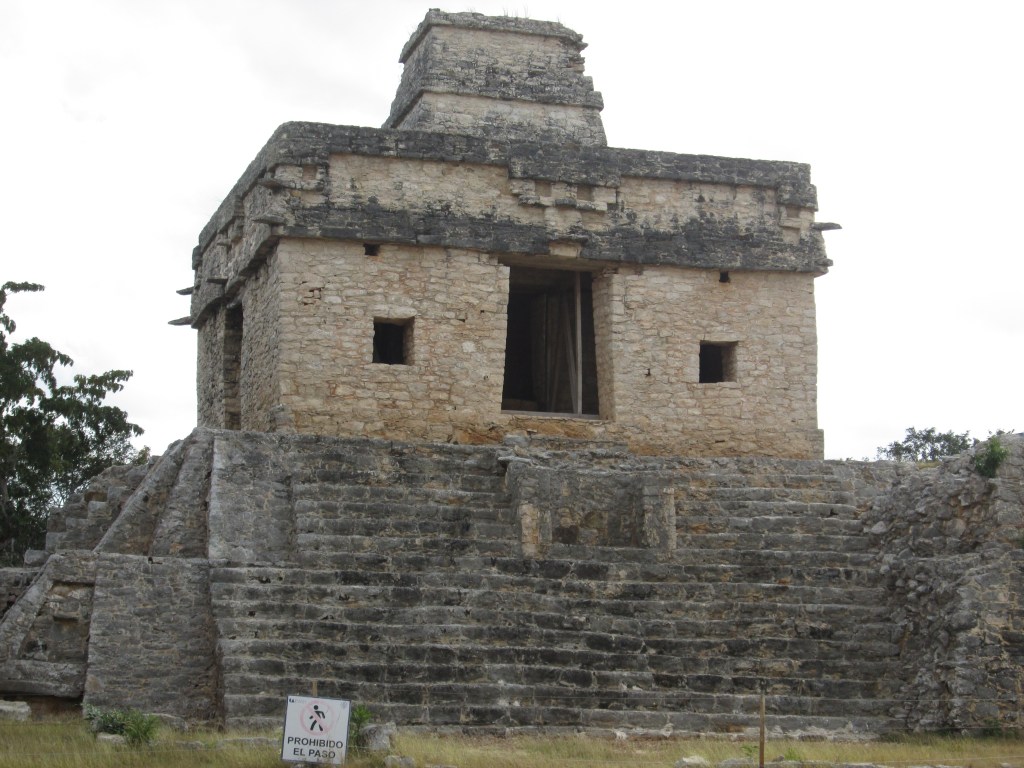
Above is the most famous structure at Dzibilchaltún, the Temple of the Seven Dolls, named after a number of figurines that were found by archeologists buried under one of the altars.
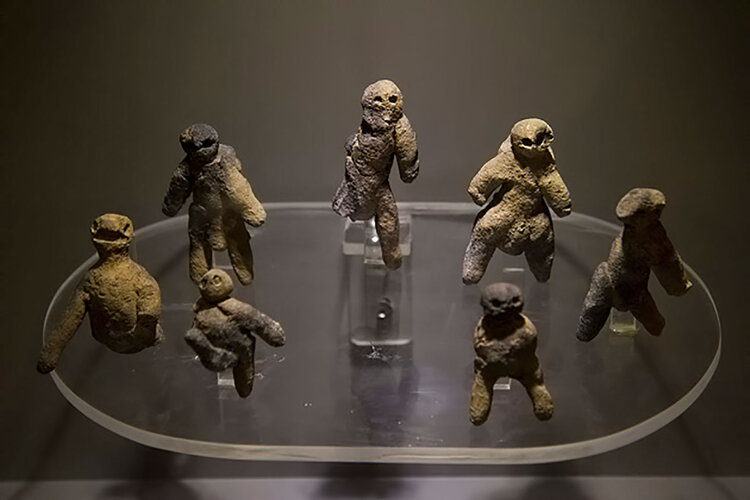
Dzibilchaltún is not a world class beauty like Uxmal, Chichén Itza, Copán, or Tikál, but it helps fill in vital parts of the Maya story. Although it doesn’t have a lot of first-class structures, the city was inhabited for over a thousand years. It was close to the coastal salt flats that led to the one item most frequently used in the coastal trade with other peoples, namely: salt.
And I have happy memories because this is one of the places where I began my travels as a young man.

 Tarnmoor
You must be logged in to post a comment.