
East Is East

Budapest Parliament

Whenever things go blooey here in Sunny California, as they are wont to do from time to time, I remind myself that I am at the center of my being an Eastern European. I may have been born in Cleveland, Ohio, but the language that spoke most intimately to my emotions was Magyar (Hungarian).

My life has been a series of shifts from east to west and back again. That has prevented me from being depressed at setbacks that have occurred. We Eastern Europeans are used to suffering. But we have our own insane pride that prevents us from falling apart.

Consequently, I love reading literature that has been translated from Hungarian, Czech, Polish, Serbian, Romanian, Ukrainian, and Russian. And whatever my politics are—and they are certainly not on the side of Vladimir Putin—I see the stories, novels, dramas, and poems the product of a people, not a political system. The people are all right, however the politics might suck.

I have always dreamed of riding from Moscow to Vladivostok on the Trans-Siberian Railroad. To see a vast country unrolling before my eyes on the long trip to the Sea of Japan. I also see myself as reading long Russian novels during that trip. Alas, I think I am now too old for such an adventurous journey.

Currently, I am reading Eugene Vodolazkin’s The Aviator, which makes me feel these things more intensely.
Horizons East

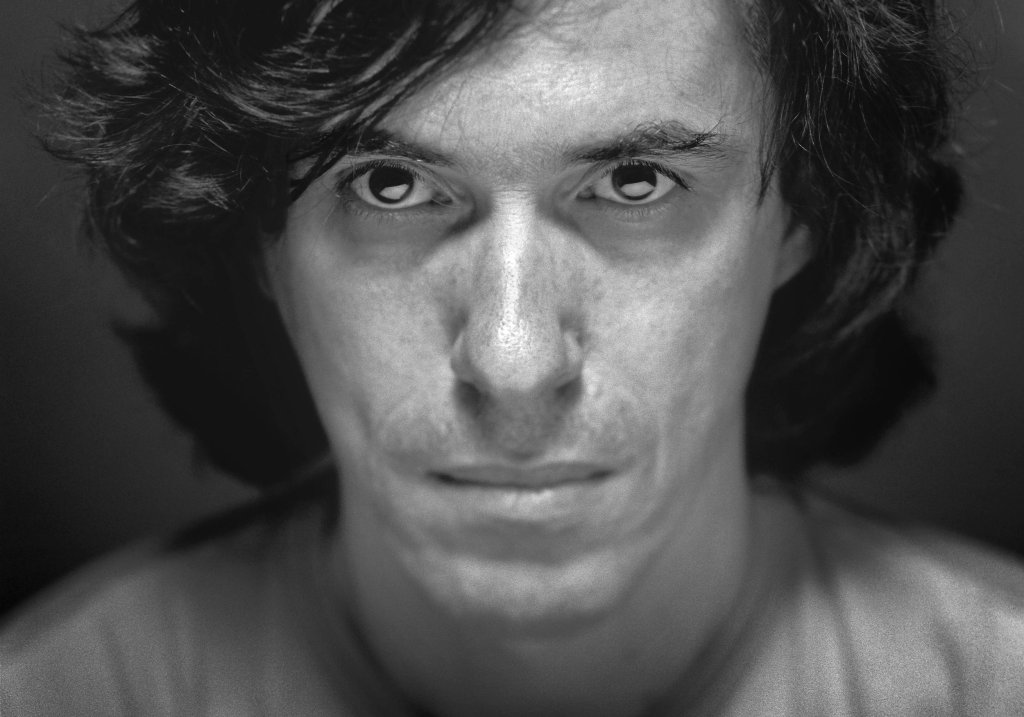
Romanian Writer Mircea Cărtărescu

For their reading, Americans tend not to look beyond English-speaking North America and the countries of Western Europe. As a Hungarian, I have always delighted in the literature of Eastern Europe. In this post, I will give you a list of some of my favorite recent fiction from the former Soviet satellites, including one Ukrainian author, because Vladimir Putin is trying to turn his country into a Russian satellite.

I do not include any Russian authors—not because of any prejudice against—but because the field is so rich it deserves a separate post. Here’s the list in alphabetical order by author:

Ivo Andrić (Bosnian 1892-1975)

Won the Nobel Prize in 1961 for his novel The Bridge on the Drina about the Bosnian city of Viśegrad under the Ottomans and the Austro-Hungarians who succeeded them.

Ádám Bodor (Transylvanian Hungarian b. 1936)

His The Sinistra Zone (1992) is a delightfully funny story of one man’s quest to find his adopted son in a Romanian bear sanctuary and military zone near the Ukrainian border and spirit him return home with him.

Mircea Cărtărescu (Romanian b. 1956)

I am on the point of finishing his novel Solenoid (2015), which is a wonderful work strongly influenced by Kafka, Borges, and Boris and Arkady Strugatsky. He has been shortlisted for the Nobel Prize and is likely to win it soon.

Bohumil Hrabal (Czech 1914-1997)

I have read several great novels from this Czech writer, including Dancing Lessons for the Advanced in Age (1964), I Served the King of England (1973), and Too Loud a Solitude (1977). His gentle humor is catching.

Franz Kafka (Czech Jew 1883-1924)

Although he wrote in German and died a hundred years ago, his work is a major influence on many of the Eastern European authors. My favorites: The Trial (1925) and his short stories.

Gyula Krúdy (Hungarian 1878-1933)

I have read most of his work that has been translated into English, but my favorites were The Crimson Coach (1913) and his journalism collected in Krúdy’s Chronicles (published in 2000).

Andrey Kurkov (Ukrainian b. 1961)

He wrote most of his works in Russian (a larger audience and more $$$), but after Putin has vowed to switch to the Ukrainian dialect. My favorites: Death and the Penguin (1996) and Grey Bees (2018).

Stanislaw Lem (Polish 1921-2006)

Yes, I know he is a sci-fi writer, but his work, especially Solaris (1961) and The Futurological Congress (1971) are of high literary quality.

Olga Tokarczuk (Polish b. 1962)

Won the 2018 Nobel Prize. So far, I’ve read only one of her novels, namely, House of Day, House of Night (1998), which is one of the best books I’ve read so far this year.

Bosniaks

Old Fort, Travnik, Bosnia

I have spent half of the last week recovering from Covid-19, and half reading a superb novel about Bosnia in the early 19th century written by a Bosnian Serb named Ivo Andrić. Bosnian Chronicle describes life in the North Bosnian backwater town of Travnik when France opens a consulate there, and Austria follows suit, around 1807.

Described in loving detail by Andrić are the staffs of the two consulates and their families and aides; the three Ottoman Pashas in charge during the period covered and their aides; the local begs (first families) of the town; the religious leaders of the Islamic, Catholic, Jewish, and Orthodox Christian factions; the local doctors; and various peasants. The net result is a layered picture of Bosnian society and various French and Austrian “interlopers” during the height of the Napoleonic Era.

The book ends with Napoleon’s capture and exile on Elba, necessitating the closing of the French consulate, followed in short order by the closing of the Austrian consulate.

My Hungarian upbringing tends to make me more interested in Central and Eastern Europe than most other Americans. Fortunately, there is no lack of great literature east of Vienna: Ivo Andrić, for instance, a native of Travnik and a Bosniak himself, won the Nobel Prize for Literature in 1961 for The Bridge of the Drina. I have also read his Omar Pasha Latas: Marshal to the Sultan, which is available in a New York Review edition.

I turn to the East to look for literary treasures, and I have not been disappointed.

Go East Young Man

PARIS – JUNE 07: (FILE PHOTO) Bohumil Hrabal poses while in Paris,France on a promotional visit on the 7th of June 1995. (Photo by Ulf Andersen/Getty Images)

England and Western Europe do not have a monopoly on great literature. I love prospecting for interesting writers from Eastern Europe. Perhaps that has something to do with the fact that I am Hungarian (and Czech and Slovak), and that I feel that the writers of the East have gotten short shrift from the American literary establishment.

I have just finished reading Bohumil Hrabal’s Why I Write? and Other Early Prose Pieces, which consists of his early work, much of which was circulated via samizdat, or underground typescript distribution to bypass strict censorship. There is a freshness to most of the stories within and a sharp attention to dialog as it is actually spoken by common people. Several whole stories consist of stream of consciousness ramblings of Hrabal’s Uncle Pepin, who goes on for pages shifting from one topic to another. Footnotes explain many of the obscure local references to Bars in Prague and people unknown outside of the Czech Republic.

From Ukraine, there is Andrey Kurkov, whose Death and the Penguin fills us in on the absurdity of life in Kiev. His Ukraine Diaries bring us up to date on the tensions with Putin’s Russia.

The former Soviet Union is another good source, such as the literary journalism from Svetlana Alexievich of Belarus, who won the Nobel Prize for Literature in 2015. I was appalled by her book of interviews on the Russian War in Afghanistan, called (in English) Zinky Boys. I also read Voices from Chernobyl, which gives a Russian perspective on that disaster.

Anna Politkovskaya’s criticisms of Putin cost her her life. She was murdered at her block of flats upon returning from grocery shopping. Her books on Chechnya (especially A Small Corner of Hell: Dispatches from Chechnya) and Putin’s Russia earned her the enmity of Putin, who cynically staged a show trial of several stooges who probably didn’t have anything to do with her killing.

Every month I try to read at least one Eastern European book. Often, they are the best things I’ve read that month.

East

Are We Wearing Blinders When We Look at European History?

Are We Wearing Blinders When We Look at European History?

Our understanding of history is based on what happened in England and France, with an occasional detour to Spain, Germany, or Italy. We think of the First World War as having begun in 1914 and ended in 1918, and the Second World War as having begun in 1939 and ended in 1945. That those were merely the dates in which Western Europe and the United States were involved somehow doesn’t make it into our textbooks, let alone our consciousness.

We are so inundated with books and films about the Second World War that we forget that the whole Western European involvement was only a sideshow. Once Hitler had begun Operation Barbarossa and invaded Russia in June 1941, it was the beginning of the end for his dreams of a Thousand Year Reich. Things looked up for a while for the Panzer invaders, but soon they were dying by the millions—after having caused millions of civilian and military casualties in the Ukraine and Belarus.

Also, long before 1939, the Japanese had invaded Manchuria and Southern China, and the Germans had marched into Austria and Czechoslovakia. That wasn’t war?

Perhaps because I am increasingly conscious of my Hungarian roots, I prefer to not concentrate on the usual Western sequence of Hundred Years War, Crusades, Magna Carta, Renaissance, Reformation, Thirty Years War, Enlightenment, French Revolution, Napoleon, Metternich, and so on. There was also history occurring when Hungary was conquered by Suleiman the Magnificent and his Janissaries at the battle of Mohacs in 1526, when Poland was partitioned three times in the eighteenth century, when two Balkan Wars were fought in 1912-1913 leading up to the “main event” after Archduke Ferdinand was assassinated in Sarajevo, when Greece invaded Turkey in the early 1920s and was soundly defeated by Kemal Ataturk, resulting in thousands of Greek refugees being forced out of Smyrna and the rest of Ionia.

There is ever so much more: the war between the Reds and the Whites after the October Revolution of 1917, Stalin’s purges of the late 1930s, the Hungarian Revolution of 1956, the brave Polish resistance to Communist rule under the leadership of men like Adam Michnik and Lech Walesa, and Tito’s repudiation of Stalin.

The next time you are tempted to read a history book, remember that there are probably large lacunae in your knowledge. Instead of another book on the cockamamie British royalty, read Robert D. Kaplan’s Balkan Ghosts or Antony Beevor’s Stalingrad or The Fall of Berlin. Read poetry by Czeslaw Milosz, Russian novels like Vasili Grossman’s Life and Fate, or the journalism of the Hungarian Gyula Krúdy in Krúdy’s Chronicles.

But mostly, recognize that there is a whole world out there with which you may not be acquainted, but which will influence the course of history to come for generations to come.