
Four Englishmen Do Mexico

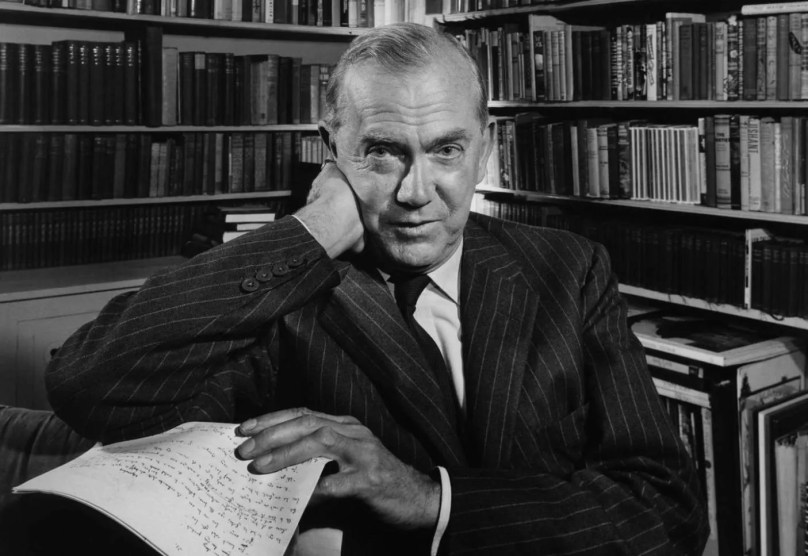
British Writer Graham Greene (1904-1991)

In the 1920s and 1930s, Mexico suddenly came to the attention of the English. There had been a messy revolution, numerous political assassinations, persecution of the Catholic Church, and the nationalization of the country’s petroleum assets. English writers seemed to want to understand Mexico, even if it meant an investment of several weeks to do so.

The results were pretty much a hodge-podge. Probably the most interesting works were by Graham Greene in his novel The Power and the Glory (1940) about the religious persecution in Tabasco and Chiapas and The Lawless Roads (1939), a travel book in which the author admits to loathing Mexico. “No hope anywhere. I have never been in a country where you are more aware all the time of hate,” this after he broke his glasses while on the road.

Also interesting is Aldous Huxley (1894-1963) with his tour of Mexico and Central America published in 1934 called Beyond the Mexique Bay.

D. H. Lawrence was hot and cold on the subject of Mexico. His Mornings in Mexico (1927) shows that he knew how to appreciate Mexico, whereas The Plumed Serpent (1926) is a weird and unconvincing novel.

Worst of the books was Evelyn Waugh’s Robbery Under Law: The Mexican Object-Lesson (1939), in which it is apparent that he is in a permanent snit on the subject of Mexico, and his sources were all obviously fascistic jackals. I read the first half of the book with its endless complaints of Lazaro Cardenas’s nationalization of the petroleum industry (was he possibly a disappointed investor?) and the United States’s hamfisted interventions during the Mexican Revolution. At no point did I feel that Waugh was seeing with his own eyes. (And yet, he was such a brilliant novelist. Go figure!)

Serendipity: London Fog

Waugh’s Ambrose Silk Misses the Old Days

The following is taken from a monologue by one Ambrose Silk at London’s Café Royal. It can be found in Evelyn Waugh’s wonderful satire of England in the first days of the Second World War, Put Out More Flags.

“The decline of England, my dear Geoffrey,” he said, “dates from the day we abandoned coal fuel. No, I’m not talking about distressed areas, but about distressed souls, my dear. We used to live in a fog, the splendid, luminous, tawny fogs of our early childhood. The golden aura of the golden age. Think of it, Geoffrey, there are children now coming to manhood who never saw a London fog. We designed a city which was meant to be seen in a fog. We had a foggy habit of life and a rich, obscure, choking literature. The great catch in the throat of English lyric poetry is just fog, my dear, on the vocal cords. And out of the fog we could rule the world; we were a Voice, like the Voice on Sinai smiling through the clouds. Primitive peoples always chose a God who speaks from a cloud. Then, my dear Geoffrey,” said Ambrose, wagging an accusing finger and fixing Mr. Bentley with a black accusing eye, as though the poor publisher were personally responsible for the whole thing, “then, some busybody invents electricity or oil fuel or whatever it is they use nowadays. The fog lifts, the world sees us as we are, and worse still we see ourselves as we are. It was a carnival ball, my dear, which when the guests unmasked at midnight was found to be composed entirely of impostors. Such a rumpus, my dear.”

Ten years after Put Out More Flags was published, in 1952, a killer fog hit London that killed 4,000 Londoners and hospitalized 150,000.

On a much smaller scale, I remember the smog of Los Angeles in the 1960s and 1970s, when I developed a nasty case of asthma, which appears only at rare intervals now. I remember hearing the foghorn from Santa Monica Pier when I used to live on 11th Street early in the Seventies. I have not seen fog in Santa Monica for almost 30-40 years now.