
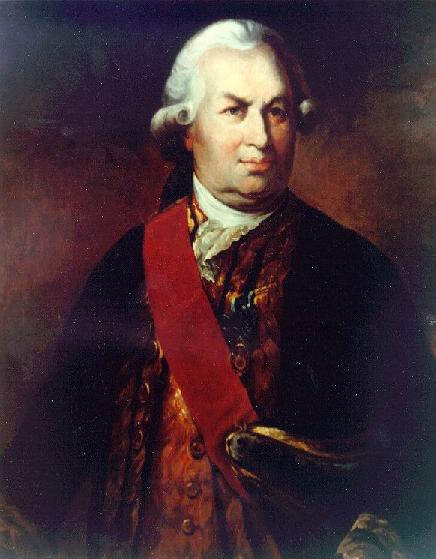
General Georges Boulanger, “The Man on Horseback”
The period between the Revolution and the First World War in France is virtually unknown to the Anglo-American world.I am currently reading Frederick Brown’s For the Soul of France: Culture Wars in the Age of Dreyfus. It is an excellent book that has helped me to “connect the dots” from French literature and films. For instance, I knew about France’s humiliation at the hands of the German army in the Franco-Prussian War of 1870, in which it lost the provinces of Alsace and Lorraine. I knew about the Commune and its destruction at the hands of Adolph Thiers’s government at Versailles. What I did not know was that France was left a deeply divided country. On one hand stood Paris and the larger cities; on the other, La France Profonde, what we in America would refer to as “The Heartland” or “Flyover Country.”
It was a period reminiscent of 21st century America, with its war between religion and liberalism—except in France, religion meant the Catholic Church. Liberalism was associated with those Commie Communards who were shot to death by the French army at the Mur des Fédérés at Paris’s Père Lachaise Cemetery. As the 1870s shaded into the 1880s, Paris was not unlike present-day Washington in its seemingly irreconcilable divisions.
At this time, there arose a would-be Messiah, General Georges Boulanger, “The Man on Horseback,” beyond whom many of the irreconcilables were mysteriously reconciled. As Maurice Barrès said, “The important thing about popular heroes is not so much their own intentions but the picture of them that people create in their own minds.”
It is not that Boulanger had an undistinguished military career. He fought successfully in Algeria, Tunisia, Viet Nam, and Italy. He was wounded (and addicted to the morphine used to relieve him from the pain). And he enjoyed the adulation of crowds. As Frederick Brown writes:
While Boulanger marked time, Boulangism marched forward and continued to raise alarms. Jules Ferry, who understood the revolutionary impetu of revanchism in what was becoming a widespread movement, deplored its brutish character. “For some time we have been witnessing the development of a species of patriotism hitherto unknown in France,“ Ferry declared. “It is a noisy despicable creed that seeks not to unify and appease but to set citizens against one another…. If one believes its spokesmen, love of country belongs to one party alone, or to one sect within that party, and all who do not think as they do, who would not wish to substitute … the impulse of irresponsible crowds for the free and reflective action of public powers, all who do not worship their idols and trot alongside behind the the chariot … are all held indiscriminately to be partisans of the foreigner!”
How like our own time! We may not have a “Man on Horseback” to support, but the prevalent disgust at the divisions between left and right are, I feel, ripe for exploitation.
What ever happened to Boulanger? Although he seemed to be the coming thing, he was outmaneuvered politically by a nobody named Ernest Constans and forced to flee to Belgium. The charge was “plotting to subvert the legally constituted government.” From Belgium, Boulanger exiled himself to Saint-Hélier on the Isle of Jersey. When his wife Marguerite sickened and died, Boulanger blew his brains out in front of the headstone of her grave at Ixelles Cemetery in Brussels.
As one of his former adherents proclaimed, “General Boulanger didn’t deceive us. It was we who deceived ourselves. Boulangism is failed Bonapartism. To succeed, it needs a Bonaparte, and Boulanger as Bonaparte was a figment of our imagination.”
Isn’t that the way it always is?



 Tarnmoor
You must be logged in to post a comment.