
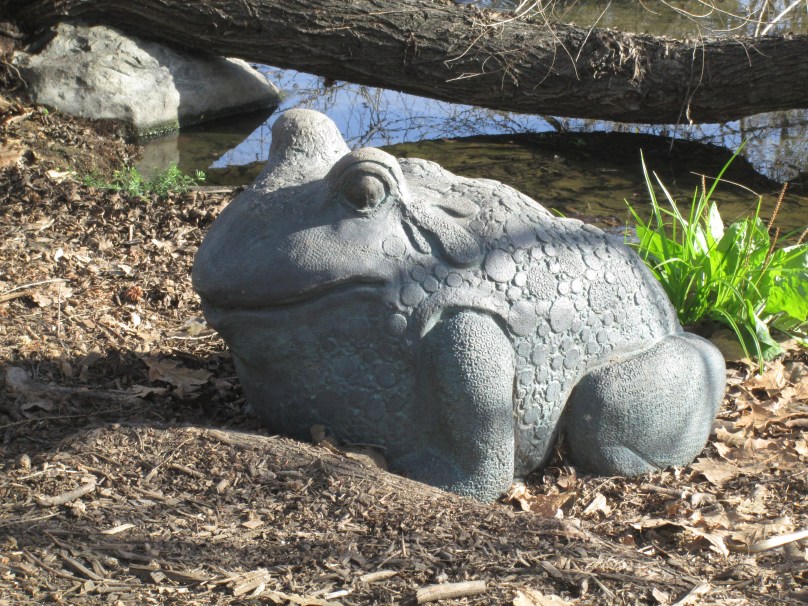
Statue of a Frog at the LA Arboretum
This being Valentine’s Day and facing a prediction of several days of rain, I took Martine to the Los Angeles Arboretum in Arcadia. Our last visit there was in 2017. As I looked at the many turtles basking on the shore of Baldwin Lake and the statue of a frog in the Meadowbrook section of the park, the thought of rain was not far from my thoughts. To my mind, turtles and frogs were symbols of wet weather to come.
A less mythical harbinger of rain were the fluffy stratus clouds I noticed as I looked up. To me, that meant that I should curl up with a good book and enjoy the storm, which the local weathermen are already referring to as an “atmospheric river.”
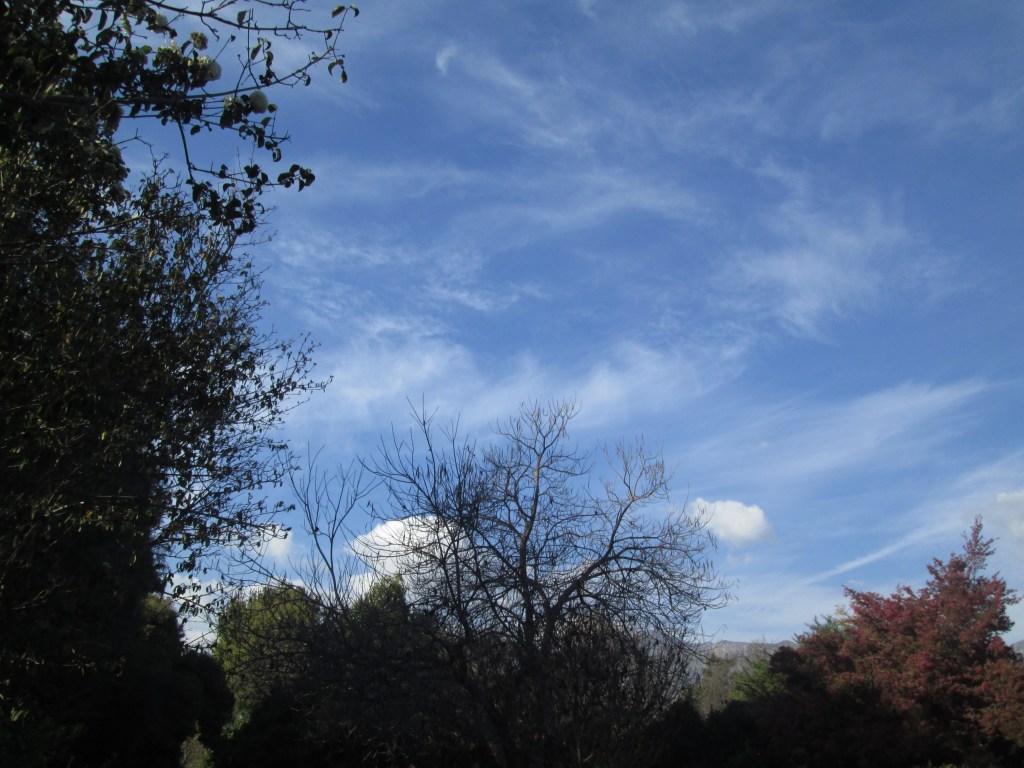
Stratus Clouds Over the Arboretum
Because I am not so mobile as Martine is, at several points along the trail I picked out a shady bench and finished reading Peter Harris’s excellent edition of Zen Poems. Meanwhile, Martine walked around and explored the many sections of the Arboretum. This way, we both got the most out of our visit.
Rain does not deter me as it used to. Now I see a rainy winter as not only a protection against raging wildfires, but a brush that paints the surrounding hills and mountains green and dots them with lovely wildflowers. Otherwise, Southern California takes on a desertlike tinge of brown and gives us hot summers smelling of burnt dust.

 Tarnmoor
You must be logged in to post a comment.