
Disability

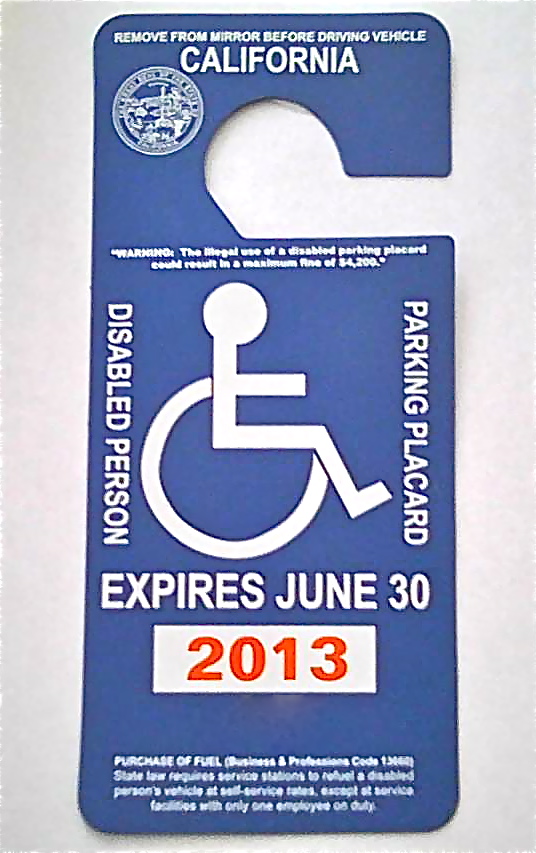
Early this week, I filled out an application for a handicapped parking placard and left it with my physician to fill out the info on my disabilities. It’s difficult to admit it, but I am a little wobbly on my pins. Years ago, I had hip replacement surgery; and, lately, my knees has resisted any attempt to stand up and walk normally. So now, at the age of eighty-one, I now regard myself as disabled. And it doesn’t look as if I’ll qualify for the 2028 Los Angeles Olympics.

No matter. I realize I can no longer regard myself as a young man. In fact, I never really could. Ever since my brain tumor at the age of twenty-one, I have seen myself as somehow outside of time. Am I really over eighty years old? The numbers don’t lie, so I won’t either.

The only difference the handicapped placard will make is that parking will be much easier. I don’t mind walking a bit, but I hate having to walk three blocks to catch a train downtown from the Bundy-Exposition Station because construction workers building a giant condo complex are taking up all the non-handicapped spaces. And it will be nice not having to carry a roll of quarters in my car for parking meters. (In California, I can now park by any on-street parking meter without having to pay.)

Does that mean I am now officially an old fart?
Handicap

Originally a Good Idea, Until the Abuses Started

I am writing this blog post at Martine’s behest. She frequently takes walks around the neighborhood and is disgusted by the large numbers of cars indicating a handicap driver, where neither the driver nor the passengers are in fact disabled. One of the problems of living in West Los Angeles or neighboring communities filled with people who feel themselves entitled to free parking. On some of her walks, up to 75% of the parked cars sport handicap placards. Only twice in the last few days has she actually seen disabled people emerge from those vehicles, one with a walker and the other with a cane.

There is something wrong with people who assume they are entitled to free parking because, well, they are special. It is easy to convince a physician to write a note giving them the right to purchase such a placard. From that point on, until the placard expires, they can park without paying for the privilege.

These same drivers frequently cut me off in traffic, whether I am driving or am a pedestrian. They frequently drive expensive cars such as Porsches, BMWs, Mercedes-Benzes, or—worst of all—Range Rovers.

If there is any single symbol of inequality in our society, it is a luxury car with a handicap placard when there is no disability involved. And yet there are whole parts of Southern California where many or most of the luxury cars sport the blue placard. Everlasting shame to them!

When I had severe osteoarthritis sixteen years or more ago, my orthopedist suggested that I get one. I refused, telling him that my habitual practice was to park far and walk, even though I was in excruciating pain. But then, even then, I walked several miles every weekend with Martine and my friends.

As actress Teri Garr once said: “When you hear the word ‘disabled,’ people immediately think about people who can’t walk or talk or do everything that people take for granted. Now, I take nothing for granted. But I find the real disability is people who can’t find joy in life and are bitter.” To which I add people who assume they are entitled to do whatever they want.