Where Wood Is Scarce

Sod-Roofed Farmhouses at Reykjavík’s Árbær Open Air Museum

There is an old joke that goes: What do you do if lost in an Icelandic forest? Answer: Stand Up.

Because of the Arctic winds that scour the island of Iceland, there are no substantial forests. At one time there were more than there are now., but the early settlers burned them for fuel. Even then, in no case was there enough wood of the right kind to build structures, unless the wood was shipped over at ruinous cost from Scandinavia.

Notice in the above photo the sparing use of wood on the short sides of the above structures. The photo was taken at the Árbær Open Air Museum in Reykjavík, which includes buildings that had been moved to the museum from other parts of the city and country.

Shown below is the layout of the turf house at Stöng in Southwest Iceland:

Farmhouse Layout at Stöng

The single largest room consists of two rows of benches where the residents slept. There was no living room as such, though there was a combined dining room/kitchen on the left. Add a storeroom and a lavatory, and that’s pretty much it.

If you read any Icelandic literature, such as Halldór Laxness’s Independent People, you will find that, before independence, the lives of Icelanders were grim to say the least. Now Iceland is enjoying prosperity due mostly to tourism.

It’s an expensive country to visit, but note that the tourist season is only three months long: from June through August. Some people visit in the winter, mostly to see the Northern Lights, but the weather can be forbidding.

“Live and Feel and See”

Iceland 10,000 Kronur Note Showing Jónas Hallgrímsson

Poems from Iceland are not frequently encountered outside the island nation. The following poem is from Jónas Hallgrímsson (1807-1845).

On New Years Day 1845

Thus the years open, each of them in turn,
endlessly blooming flowers of transiency.
Their ceaseless passing is of no concern,
for time no longer means a thing to me.

I have a treasure of eternal worth:
a guardian heart which—girded against harm—
gazes on heaven but is content with earth,
and views the threatening fog without alarm.

“Always be tough!” they tell me. “Hold your own!”
But I would rather live and feel and see—
even when this earns me men’s antipathy—

than be a hollow half-decayed sheepbone,
hidden by pack-train boys in piles of stone,
stuffed full of slander and obscenity.

The Svinafell Troll

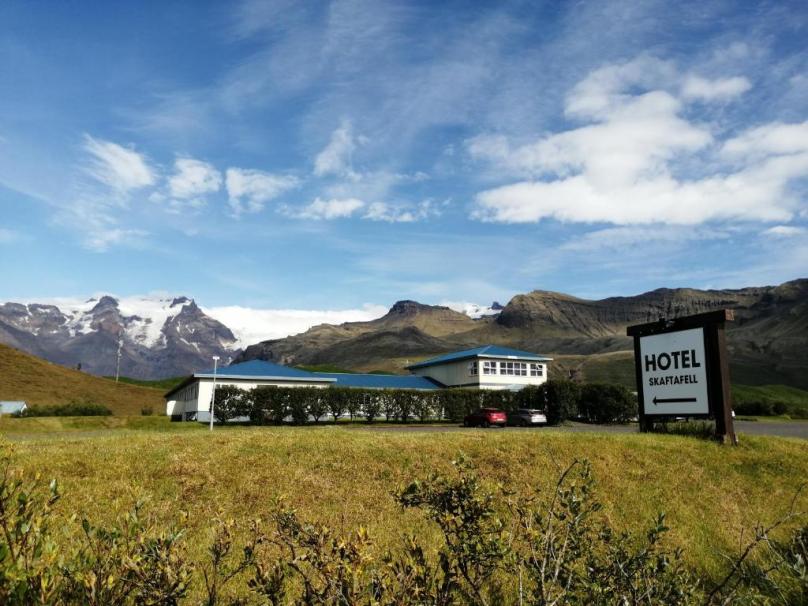
Iceland’s Skaftafell Hotel Hard by Svinafell

It was August 2001. I was spending a couple of nights at the Skaftafell Hotel in Svinafell pictured above. While I was eating dinner in the hotel’s restaurant, I was bothered by a rowdy crew of Americans who were yucking it up at a nearby table. When the leader of the crew stepped out to the restroom, the remaining members started talking about him.

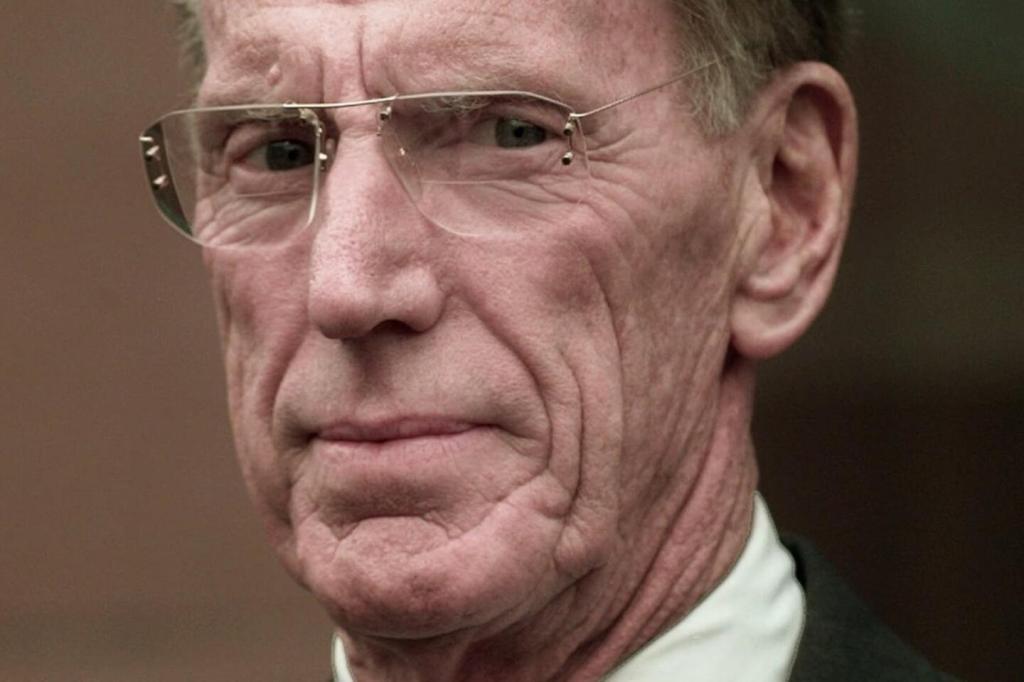
Apparently, the missing partyer was none other than Charles H. Keating, Jr., described by Wikipedia as “an American sportsman, lawyer, real estate developer, banker, financier, conservative activist, and convicted felon best known for his role in the savings and loan of the late 1980s.”

When he returned to the table, he saw that I was looking somewhat disgruntled. To make up for the noise his party was making, he invited me to join them and pay for my meal. I respectfully declined, not wanting to associate myself with someone who was a real estate developer, crooked banker, and worse.

The group was traveling around Iceland in a guided minibus tour of the country.

Charles H. Keating, Jr. (1923-2014)

As a saw the white minibus drive away with its noisy contingent, I though back to the one mention of Svinafell in The Njáls Saga. According to Medievalists.Net:

One of the most prominent sexual insults is when Skarpheðin calls Flosi the bride of the troll of Svinafell, this implies that he is used sexually by the troll. This insult is a form of nið, an insult intended to imply that the object is ragr, a passive homosexual or is used in this way by a man, animal or supernatural creature.

Having followed the saga of Lincoln Savings & Loan in the press, I thought he would make a good partner for the Svinafell Troll. Since he is no longer among the living, that is quite possibly what he is doing now.

Conspiracy of Silence

Costumes of the Knights of Calatrava

Around the time when Ferdinand and Isabella jointly ruled the Kingdoms of Aragon and Castile, there were three independent orders of knights: those of Santiago, Alcántara, and Calatrava. One of the commanders of the Knights of Calatrava, Fernán Gómez, is the feudal overlord of the village of Fuente Ovejuna (“The Well of Sheep”).

When Gómez goes on a rampage of torturing the peasants and raping the women of the village, the villagers resolve to assassinate him—first having promised not to reveal the names of the perpetrators, even under torture. When an investigative judge sent by the monarchy asks for the names of the murderers, all the villagers say, “Fuente Ovejuna did it!” Faced with a conspiracy of silence the villagers are let off the hook.

Around 1612, Spanish playwright Lope de Vega wrote a play called Fuente Ovejuna which memorializes the event.

There have been two interesting examples of similar events in which the unanimity of the populace prevented a judgment against the actual perpetrators.

In 1970, a group of Icelandic farmers took matters into their own hands when a governmental agency planned a dam that would affect a large swath of land along the Laxá River near Lake Mývatn in the north of the country. According to the Reykjavík Grapevine, this is what happened:

More than a hundred farmers officially claimed responsibility for the explosion, which annihilated a small dam in the river on August 25, 1970. The area’s inhabitants were determined to prevent the construction of a much bigger dam, which would have destroyed vast quantities of this natural area, as well as most of the surrounding farmlands.

The upshot was pretty much the same as in the Lope de Vega play:

“What makes the Laxá conflict peculiar is that those who resisted also succeeded,” Grímur says. “The planned dam was never built and the area was saved.” Four years later, parliament passed a law securing the protection of Laxá and Mývatn, contributing to the explosion’s status as “the most remarkable and powerful event in the history of environmentalism in Iceland,” as Sigurður Gizurarson, the bomber’s defence lawyer, put it.

Closer to home is the case of Ken McElroy, a small-town bully who regularly committed crimes against the inhabitants of Skidmore, Missouri, without serving time for his depredations. Until one day in 1981. The Wikipedia entry on McElroy tells the story:

On July 9, 1981, he appeared in a local bar, the D&G Tavern, armed with an M1 Garand rifle and bayonet, and later threatened to kill Bowenkamp [the local grocer].] The next day, McElroy was shot and killed in broad daylight as he sat with his wife Trena in his pickup truck on Skidmore’s main street. He was struck by bullets from at least two different firearms, in front of a crowd of people estimated as numbering between 30 and 46. Despite the many witnesses, nobody came forward to say who shot him. To date, no one has been charged in connection with McElroy’s death.

As I read Lope de Vega’s play, the other incidents came to mind. I found it interesting that they closely mirrored the Spanish events of some 500 years earlier.

13 Principles for 2025

I don’t usually post to this blog from e-mails I have received. Today is an exception. The e-mail is from Ragnar Tómas Hallgrimsson, a journalist writing for The Iceland Review. In it, he writes:

The end of the year is a time to reflect: to weigh what went well over the past 12 months – and what went poorly, and to revise one’s rules for life. In the spirit of the season, here is an updated list of my principles. (In case you need ideas.)

What are your principles?

1 Begin each day with the thought: “What if this was the last time …?”

A cliché to be sure, but the additional caveat from thinker Sam Harris: “because one day it will be,” adds a measure of urgency. What if this really was your final ride down the stream of consciousness (with the people whom you love most?) How would you spend it?

2 You can work on a problem – but you cannot worry about it.

Worrying is the most useless “implement” in the toolbox of man. When confronted with a difficult problem, break it down into small, manageable steps – and then schedule those steps for tomorrow.

3 Every misfortune must be conceived of as an opportunity.

Arguably the hardest principle to follow. How in the world is one supposed to reframe an unexpected traffic jam as a brilliantly disguised opportunity?

4 Keep a record of your days and thoughts with a diary.

Even the mind, with all its stubborn complacency, will be forced to reckon with its mistakes and bad habits when confronted with them daily in written form.

5 If something upsets you, set a stopwatch for 24 hours.

Negative thoughts are like trains: once they start rolling, they’re harder and harder to stop – even if they have no basis in reality. One becomes irritated by a person, starts justifying that irritation, and keeps layering on arguments. If one makes the mistake of voicing these thoughts while the narrative train is at full speed, one usually regrets it.

6 Exercise every day, or, at least every other day.

Good physical health provides a solid foundation for good mental health. Negative emotions are like unfaltering assassins – but a moving target is hard to hit.

7 Put your stamp on all things.

People only remember the things you did YOUR way.

8 Music, every day.

Nothing teases out the important emotions like music, which is stoicism’s twin sibling. Stoicism mitigates and reframes difficult but unwanted emotions; music strengthens desired but muted emotions.

9 Be slow to anger, quick to forgive.

Being upset with people who behave irrationally or inconsiderately is futile. Their behaviour harms them most of all. If people were capable of better behaviour, they’d act better.

10 Be honest, speak plainly, and, for God’s sake – avoid emojis.

Emojis are the hieroglyphics of a civilisation in decline.

11 Restore balance to that which you offset.

Strive to leave the world in a better place than you found it. No matter which corner of the world you currently occupy.

12 There is but one law: be better than you were yesterday.

In the immortal words of Barack Obama: “Better is good,” and you can’t judge better without measurement (“if you can’t measure it, you can’t improve it”). Work hard.

13 Work is a means of coping – nothing more.

Life’s about coexisting with problems: doing just enough each day to keep them at bay. The game is lost when you start dwelling on problems, letting them distract you from the grandeur of life. (An American banker famously didn’t take a single day off from work, only to lose everything in the 1873 financial crash. A few days off wouldn’t have prevented the crash – but they might have changed his life.

The above principles make a hell of a lot more sense than most New Years’ resolutions. By the way, if you are ever interested in visiting Iceland, I highly recommend The Iceland Review. It is an attractive quarterly magazine with outstanding articles and photography, and, yes, it is written in English.

Icelandic Mystery

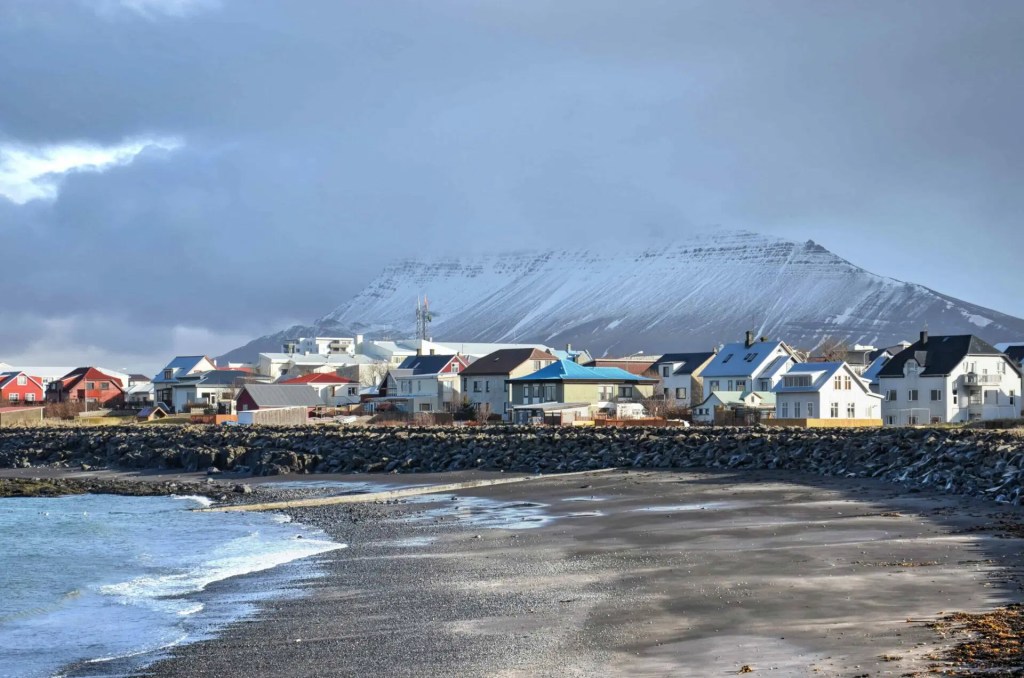
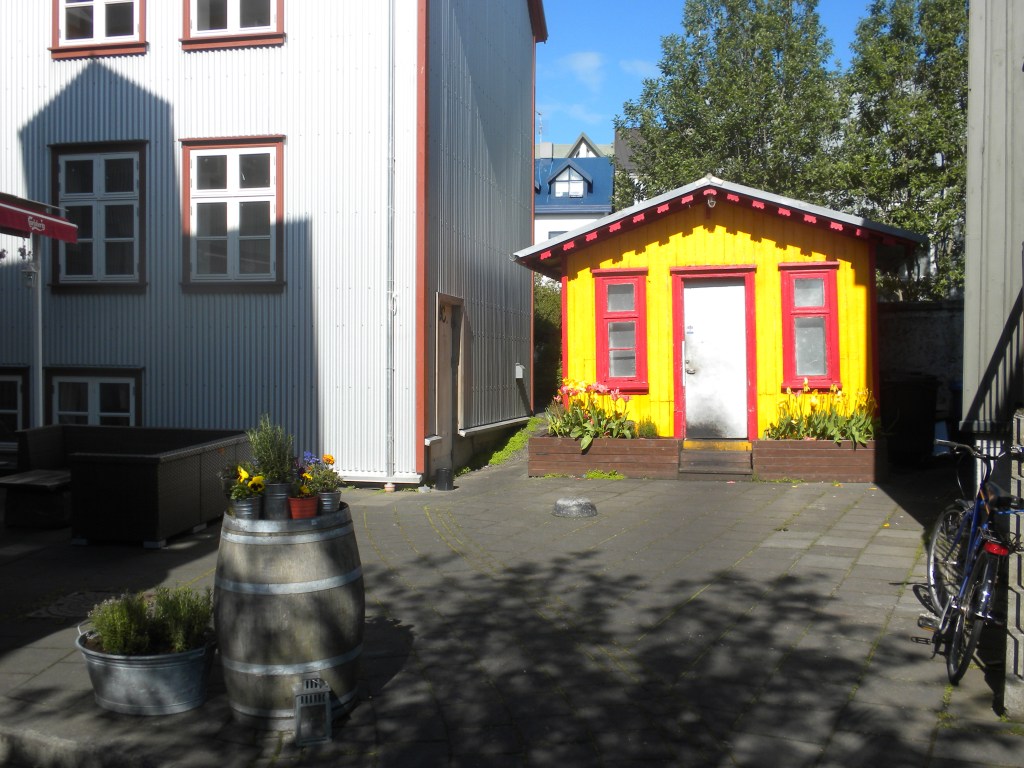
The Town of Akranes, Setting for Eva Björg Ægisdottir’s Novels

It’s difficult to think of Iceland as a “scene of the crime” involving murder. The entire nation has a population under 400,000, with approximately half living in or near the capital of Reykjavík. Yet I know of three mystery authors who write about more Icelandic murders than could have occurred within the last half century..

The writers, in the order that I discovered them, are:

  • Arnaldur Indriðason
  • Yrsa Siguðardottir (who also writes children’s books)
  • Eva Björg Ægisdottir

All three are excellent writers. Below are my favorites among their works:

  • Hypothermia and Reykjavík Nights by Arnaldur Indriðason
  • Ashes to Dust and My Soul to Take by Yrsa Siguðardottir
  • Girls Who Lie and Night Shadows by Eva Björg Ægisdottir

These are just some of my favorites, but I haven’t read a single stinker by any of these authors.

My Cities: Reykjavík

Street Scene in Iceland’s Capital City

It’s not a terribly large city, only about 140,000 residents as of 2023. But when you add in the outskirts, it becomes 248,000, more than half the population of the entire island. It’s one of the most expensive cities in Europe, but one of the most approachable.

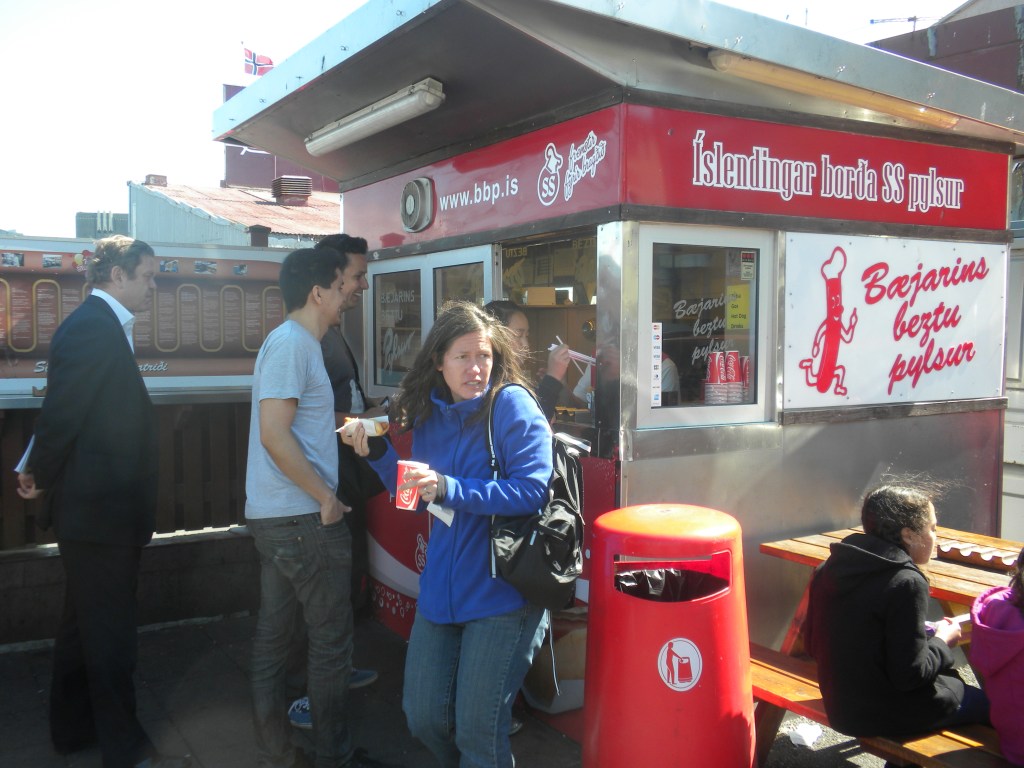
No, you don’t have to speak Icelandic—a version of medieval Norse—to understand the people, most of whom under the age of 80 speak English. One of the most beloved eating places in town is the hot dog stand pictured below:

Bææjarins Beztu Pylsur: The City’s Best Sausages

Its most famous customer was Bill Clinton, who famously asked for a hot dog with mustard only. To this day, if you order a Clinton at BBP, that’s what you get. I’d rather order the works, which include mustard, remoulade sauce, ketchup, raw onion, and fried onions.

If you like American fast food, you will find plenty of it not only in Reykjavík but around the island as well. That includes pizza, hamburgers, and hot dogs (pylsur), to name a few. There’s no McDonalds or Starbucks, but you will find Domino’s and Subway.

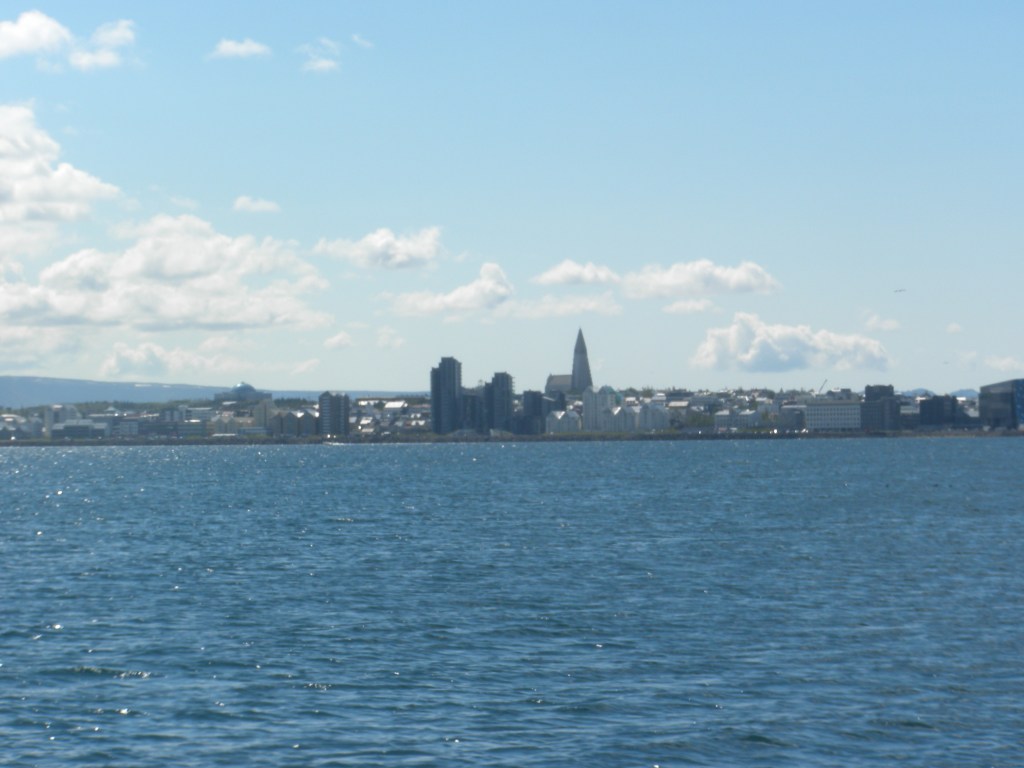
Where Are All the Skyscrapers?

Above is a view of central Reykjavík from a boat on a harbor puffin cruise. You can walk the heart of the city from one end to the other in about forty minutes. But I’ll bet you can’t do it without stopping a dozen places for coffee, books, souvenirs, ice cream, or beer.

I’ve been to Iceland in 2001 and 2013. I hope I can visit it again. It’s fun. It’s low key. And the fish is effing fantastic.

Jökulsárlón

Weird Ice Floes at Jökulsárlón in Southeast Iceland

My mind keeps going over the places I’ve seen In Iceland duri9ng my two trips there in 2001 and 2013. One of the most amazing was the glacial lagoon at Jökulsárlón between Vík í Myrdal and Höfn. The lagoon was full of hundreds of ice floes that had broken off the giant glacier of Vatnajökul. Some were white, others had strange blue highlights; and some were coated with debris picked up en route to the lagoon.

The lagoon at Jökulsárlón is probably one of the top ten sights to see in Iceland. It’s too far from Reykjavík to do in a day trip (though it is offered by some tour operators). Usually, it’s a sight that only travelers who are doing the Ring Road (Route 1) around Iceland get to see. It is possible to take a boat ride around the lagoon.

Equally worth seeing is the black sand beach called Breiðamerkursandur that is just across the highway from the lagoon.

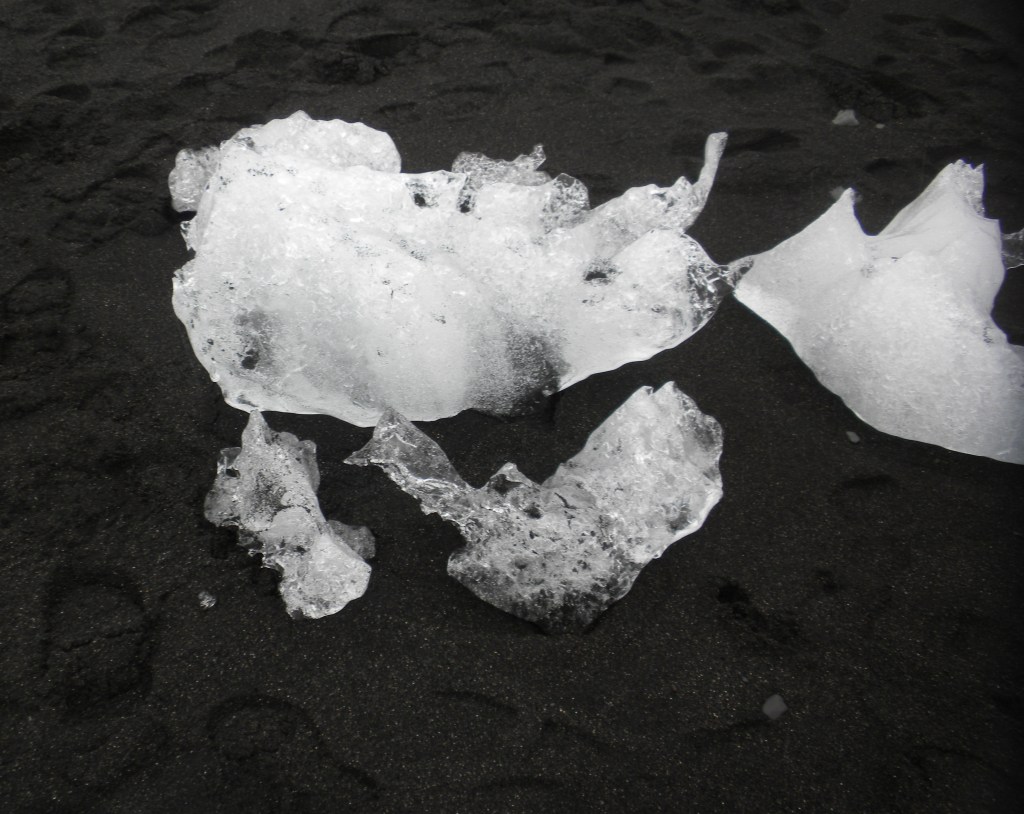
Glacial Ice on Breiðamerkursandur

As you walk along the black sand beach, you see chunks of ice from broken-up ice floes scattered along the sands like diamonds. Travelers have to be careful, because the area is known for occasional “sneaker waves” that could carry travelers off to an icy and wet death.

Water from the Limpopo

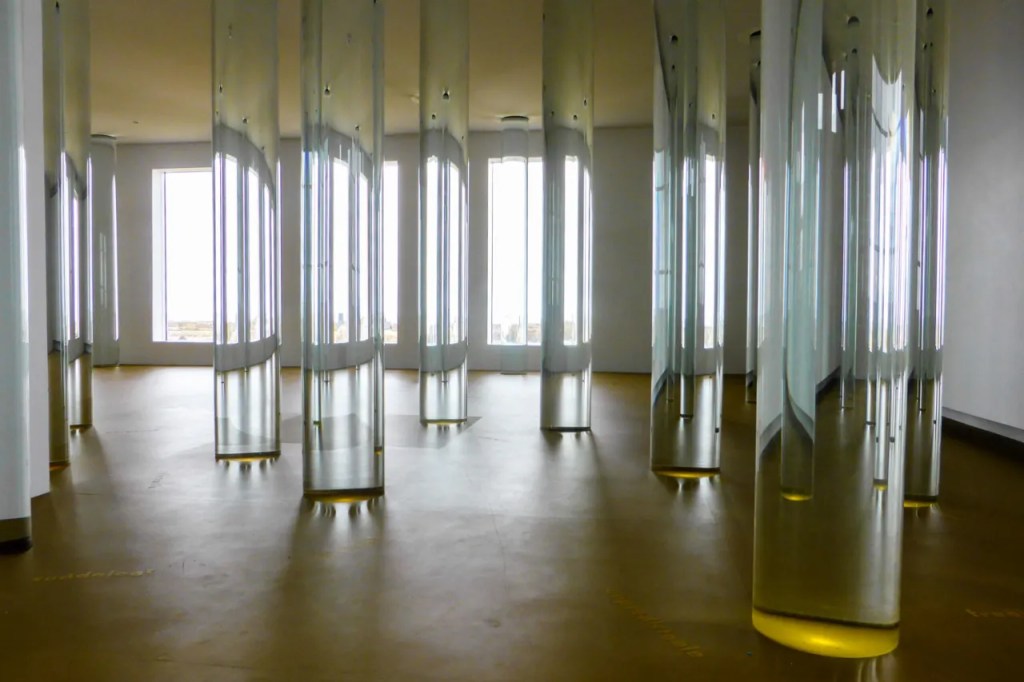
The Library of Water in Stykkishólmur, Iceland

I have just finished reading the first volume of Konstantin Paustovsky’s Story of a Life. In Chapter 14, we are introduced to a geography teacher at the high school Kostik (short for Konstantin) attends in Kyiv named Cherpunov. Paustovsky describes his collection:

Bottles filled with yellowish water, corked and sealed with sealing wax, stood in rows on the classroom table. They had labels, inscribed in an uneven elderly hand: ‘Nile,’ ‘Limpopo,’ ‘Mediterranean.’

There were bottles of water from the Rhine, the Thames, Lake Michigan, from the Dead Sea and the Amazon, but however long we looked at them they all remained equally yellow and uninteresting.

Curiously, there is one such collection in Stykkishólmur, Iceland, on the Snæfellsness Peninsula. It is called the Library of Water. Although I have been in Stykkishólmur twice, I have never bothered to visit it. Perhaps because I suspected what Paustovsky was to find out after Cherpunov’s young wife ran off and the old teacher quit.

‘Do you remember Cherpunov?’

‘Yes, of course.’

‘Well, I can tell you now that there was never anything in his bottles except ordinary water from the tap. You’ll ask me why he lied to you. He rightly believed that he was stimulating your imagination. He attached great value to it. I remember him telling me that it was all that distinguished man from the beasts. It was imagination, he said, that had created art, it expanded the boundaries of the world and of the mind, and communicated the quality we call poetry to our lives.’

Oops! I’m Running for President!

The Residence of the President of Iceland (Center)

I read an amusing story in the current edition of the Reykjavík Grapevine. It appears that it is so easy to run for the presidency of Iceland using a handy website that a number of people accidentally put their names in for nomination. According to the Grapevine article:

As the upcoming presidential elections draw near, more and more viable candidates are entering the race. Potential contenders need to collect at least 1500 signatures before April 26 to be eligible for election. This is the first time the entire process is conducted online, leading some people to unintentionally run for president on island.is with the push of a button.

On March 24, approximately 80 people had put their names forward, formally entering the presidential race. RÚV [the Icelandic English-language news service] reports that 40 candidates subsequently removed their submissions, with at least six individuals unknowingly entering the 2024 presidential race. The National Election Board has remedied the technical glitch.

53 candidates are currently in the process of collecting signatures, with voters choosing the next President of Iceland on June 1.