Snæfellsnes: Iceland in Miniature

Twice I have had my toes touching the Snæfellsnes Peninsula of Iceland, but got no further than Stykkishólmur each time. The first time, in 2001, I was on a day trip from Reykjavík; the second time, in 2013, I took a ferry to Flatey and Brjánslækur in the Westfjords and returned to Reykjavík by land via Hólmavík.

I would dearly love to go to Iceland again and see some of the sights I have missed. These include:

  • Most of the Snæfellsnes Peninsula west of Stykkishólmur
  • The area along the Ring Road (Route 1) between Borgarnes and Akureyri
  • The Tröllaskagi Peninsula
  • The Sprengisandur Route through the center of Iceland

As I understand, there is no longer any public transportation on the Sprengisandur Route; and it requires an oversized 4×4 vehicle that can ford glacial rivers.

Map of the Snæfellsnes Peninsula

What interests me about the Snæfellsnes Peninsula is that, within little more than a hundred miles (or 160 kilometers), it includes just about everything that Iceland has to offer, including mountains, waterfalls, a famous glacier (which inspired Jules Verne’s Journey to the Center of the Earth), attractive fjords, puffins, black sand beaches, postcard pretty fishing villages, and even the site of a famous medieval saga: The Eyrbbygja Saga.

I know there are a lot of long, complicated Icelandic names in this post. It is only because I love Iceland so much I want to make it easy for anyone who reads this to find out what I am talking about. A few minutes on Google Images would show you what I mean.
Taking a Bite Out of Heimaey

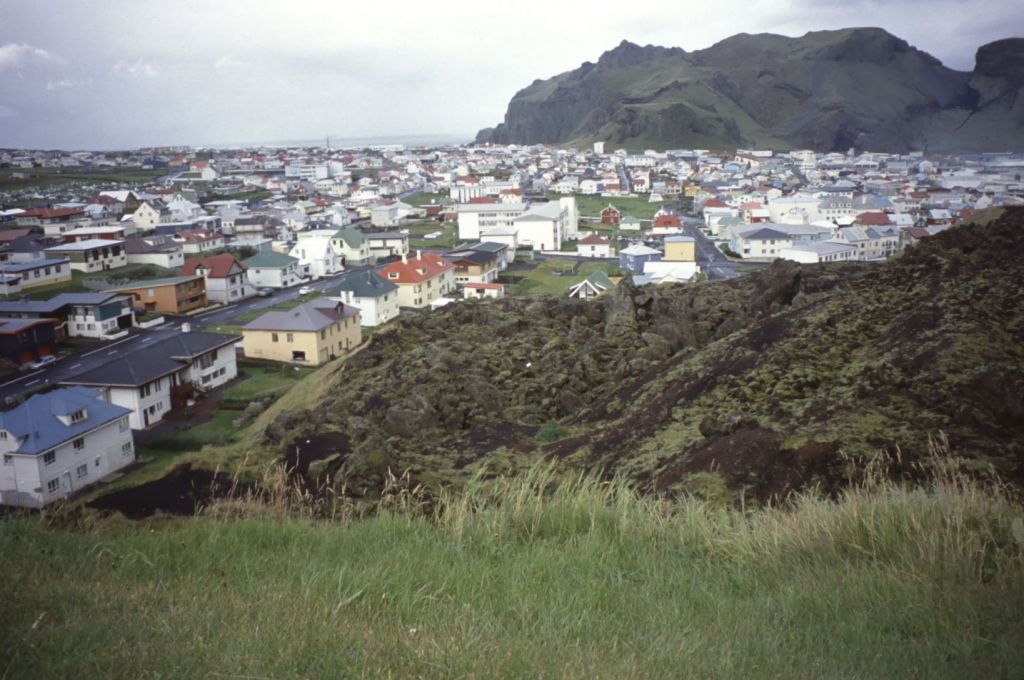
What the Volcano Eldfell Left of Heimaey (2001)

On January 21, 1973 the volcano Eldfell in Iceland’s Westman Islands began a sustained eruption that destroyed a large part of the town of Heimaey. I visited the island twice, in 2001 and 2013. During the second visit, I hiked around the massive lava flow that ate up some 400 buildings and several entire streets.

If you are interested in reading about the heroic fight to save Heimaey, I urge you to read John McPhee’s book, The Control of Nature (1989), which contains an essay entitled “Cooling the Lava.” The Icelanders saved most of the town by spraying sea water at the lava to cool it. Never before had this method been used against this type of disaster. Of course, there are not many towns of any size so close to an active volcano.

The Summit of Eldfell in 2013

As one hikes atop the lava that buried so many homes, one can still see signs indicating the streets that were lost. One such can be seen in the lower left-hand corner of the above photograph. In 2013, work was under way on a museum called Eldheimar for which several houses covered by the lava were excavated.

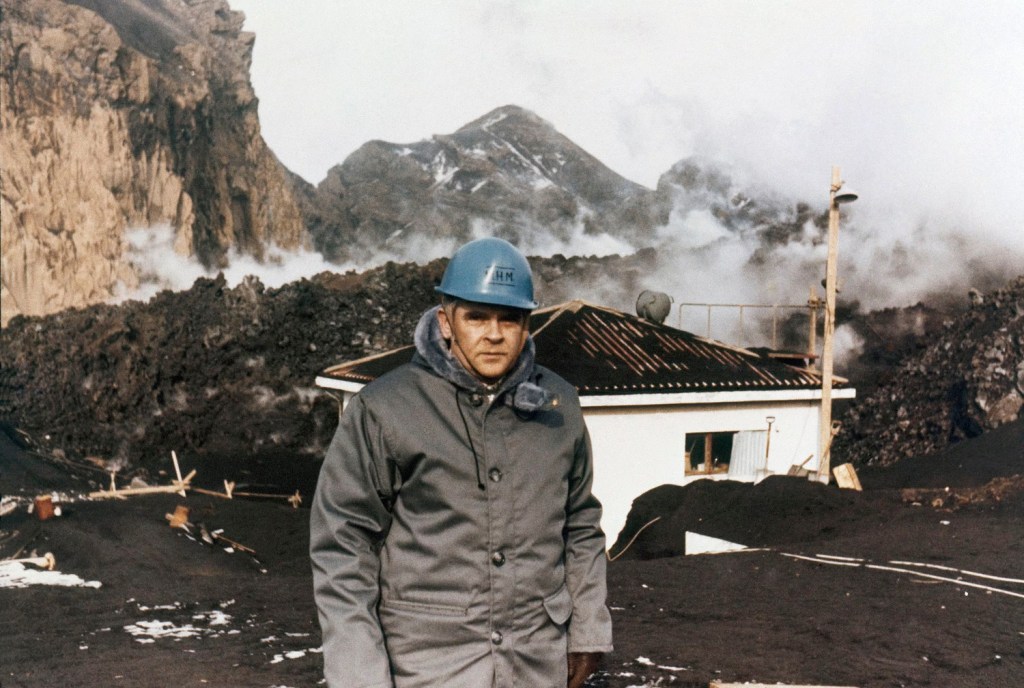
Just to give you an idea of the horror faced by the Icelanders, here is a picture taken during the eruption:

Pictured here is Mayor Magnus Magnusson of the finishing port of Heimaey, Iceland, who has been fighting to save the harbor from a relentlessly advancing wave of lava from the volcano Eldfell, March 3, 1973. (AP Photo)

Exit Bobby Fischer

Bobby Fischer’s Grave in Laugardælir Churchyard in Iceland

He was quite possibly the greatest chess player who ever lived. In 1972, he contended against Boris Spassky for the world title, and won it handily. Even Spassky, who had to put up with a lot of shit from his minders back in the Soviet Union, applauded his victory.

Then things suddenly went bad for Bobby. He hooked up with the Church of God in Pasadena, California; decided not to defend his title against challenger Anatoly Karpov; and even spent time in jail for vagrancy in Pasadena. (He wrote a pamphlet about it which I will share with you in a future post.)

In any case, he didn’t play chess competitively any more With one exception: He played Boris Spassky again, and won again. But neither his games nor Spassky’s were judged to be up to their best. More importantly, the match in Yugoslavia was held in the Federal Republic of Yugoslavia, which was being boycotted by the United Nations (and the United States) for war crimes against the breakaway republics of Croatia, Bosnia, and Kossovo. In fact, Fischer learned that a warrant was out for his arrest.

Where to go? Fischer wound up in custody in Japan, but was saved from further embarrassment by Iceland, which granted him citizenship in appreciation for the first match against Spassky, which was held in Reykjavík.

The last years of Fischer’s life were spent in Iceland. But by this time Fischer was embittered and a prey to conspiracy theories about the United States, the Jews (ethnically, he was one on both sides of his family), the bomb, and you name it. He lost most of the friends he had gained and died sooner than he had to because he refused dialysis.

He is buried in the small hamlet of Laugardælir near Selfoss.

Land of Waterfalls

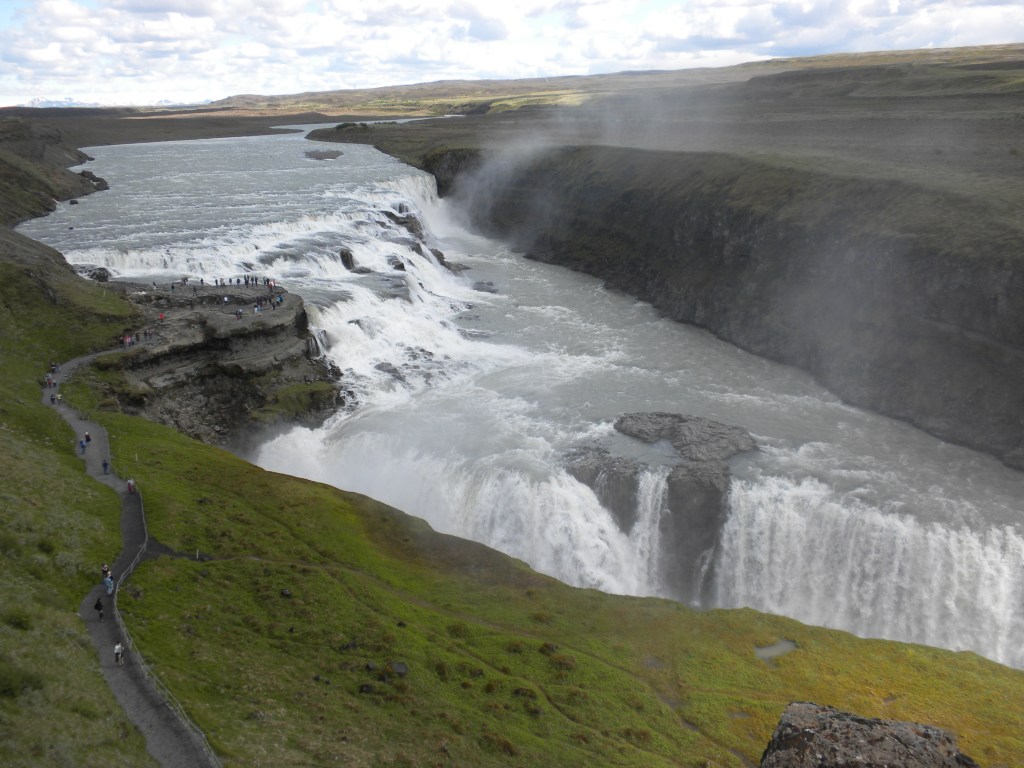
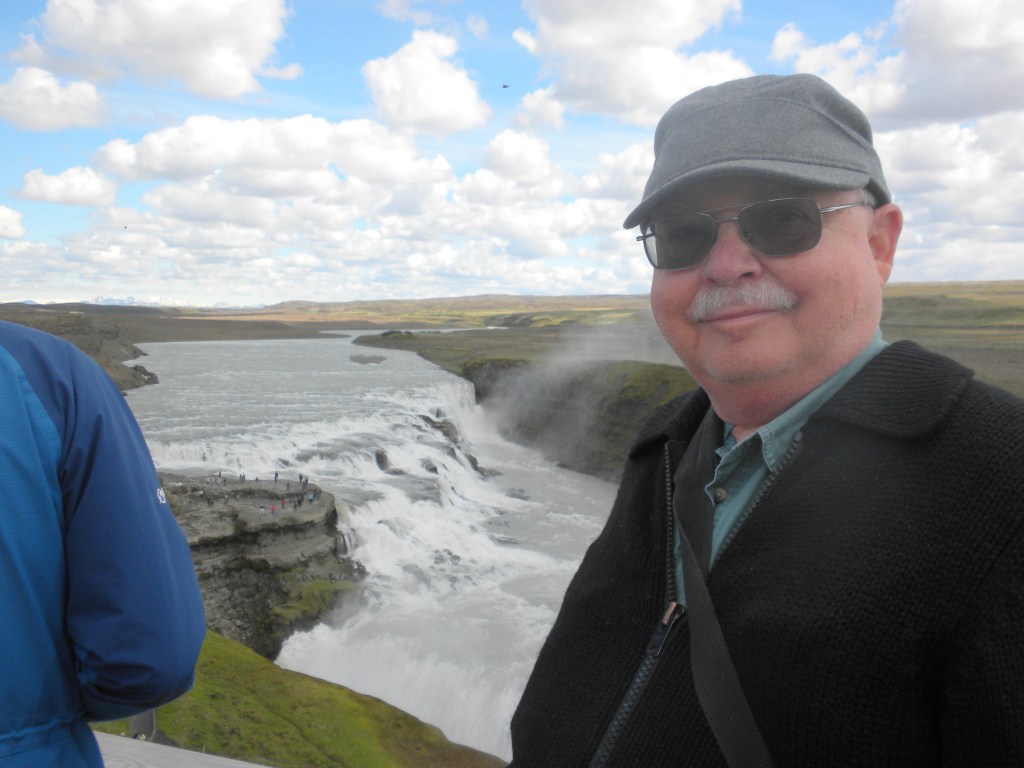
Gullfoss in Southwest Iceland

In my two vacations in Iceland (2001 and 2013), I have seen literally hundreds of waterfalls. Some, like Gullfoss above, were utterly spectacular. I am sure that the snow melt that occurs during the Icelandic summer, when I visited, displayed the force of the falls at their height.

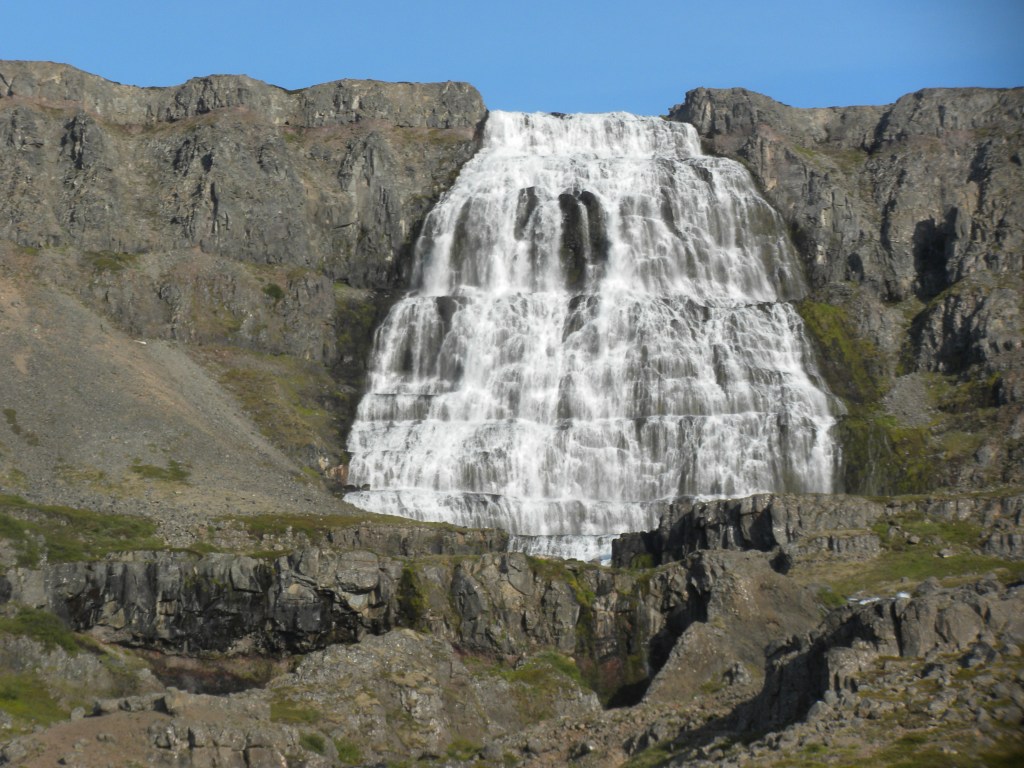
Below is one waterfall that is not visited so frequently, as it is in the remote Westfjords. I am referring to Dynjandi, illustrated below:

Dynjandi Falls in the Westfjords

The most powerful falls on the island is Dettifoss on the Jökulsá á Fjöllum River which flows north from the Vatnajökull Glacier to the Greenland Sea. I visited in during my first trip, in August 2001.

Dettifoss From the East Bank of the Jökulsá á Fjöllum River

I will never forget the roar of that mighty 144-foot (44-meter) plunge of the falls. That was an incredible trip, which began at Lake Myvátn and took us along the Jökulsá á Fjöllum River to the forest at Ásbbyrgi Canyon, then on to Husavík and back to the Lake.

10 Years Ago in Reykjavík

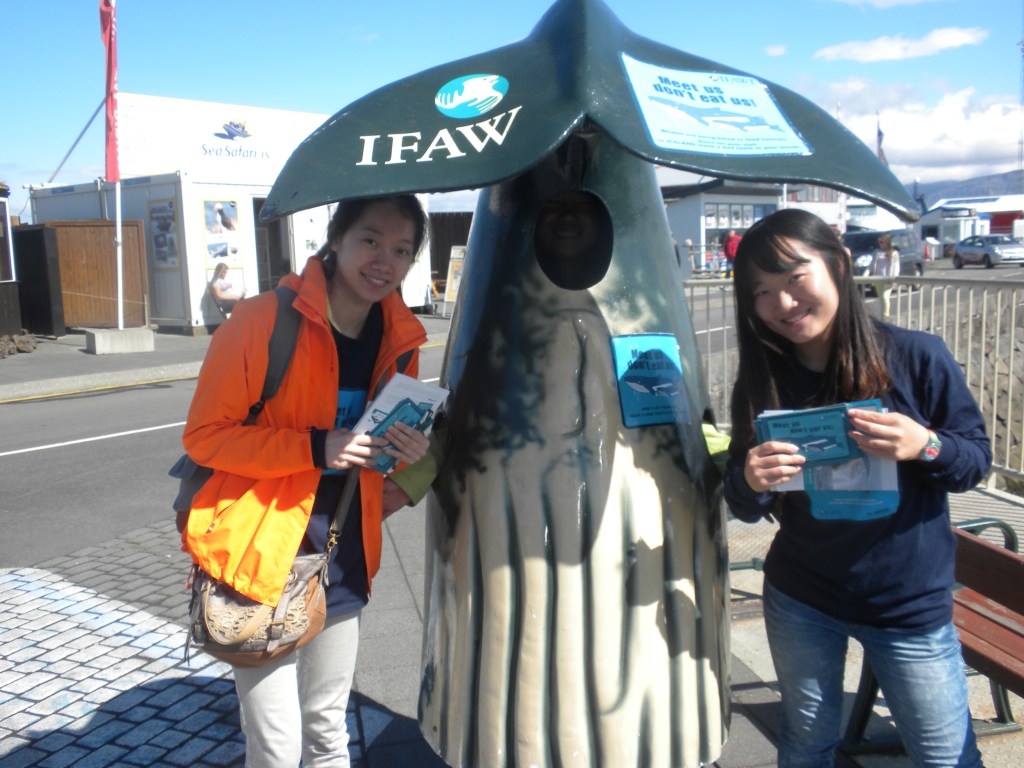
I had just landed in Iceland. Because I was eight hours ahead of Pacific Time (Los Angeles), I decided to hang out at Reykjavík Harbor for several hours and go to bed around midnight Iceland time. I was met by two cute Japanese girls who were collecting funds for the International Fund for Animal Welfare (IFAW), specifically to save the whales. At that time (2013), Iceland was one of two countries which hunted whales for food. The other was Japan.

In the U.S., only Native Americans are allowed to hunt whales, and the average number of kills is 300-500 Belugas and 40-70 Bowhead a year.

I was happy to contribute to the protection of the whales. And while I was in Iceland, I did not eat any whale meat, though I saw it in several markets.

Fortunately, I was able to keep my eyes open until 8 AM Los Angeles time and did not suffer from jet lag in the subsequent days. Flying back to California was, alas, a different story.

On Iceland’s Ring Road

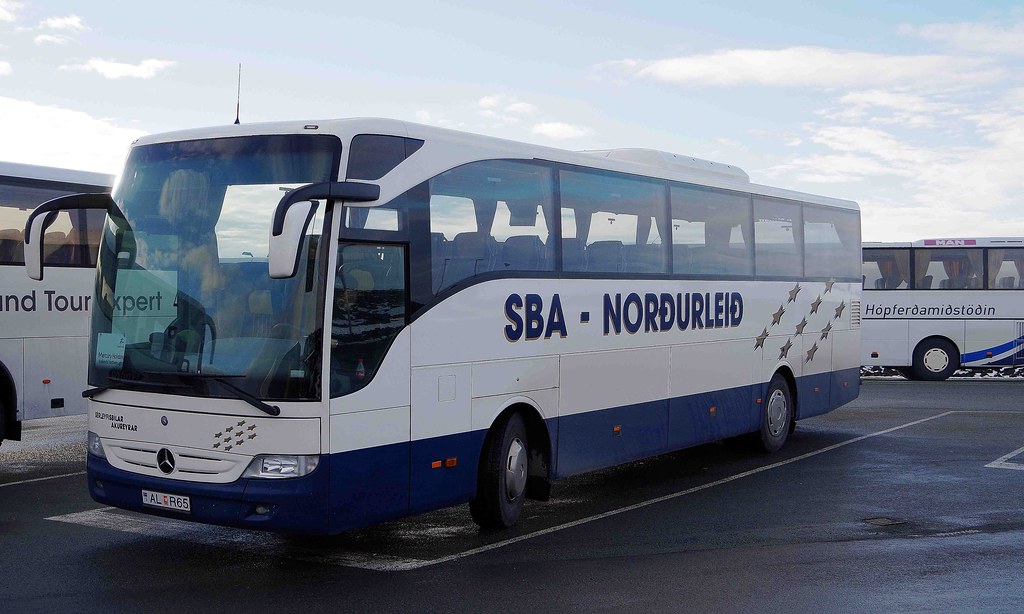
In 2001 when I traveled to Iceland, I purchased a bus ticket for one-way travel along the famous ring road that manages to hit most of the top sights on the volcanic island. I started by taking a bus to Akureyri through the center of Iceland through what is known as the Kjölur Route. From there, I traveled by bus along to Ring Road to Lake Mývatn, Egilsstaðir, Höfn, Kirjubærclaustur, Hvollsvöllur, Selfoss, and on into Reykjavík.

The majority of the population of Iceland lives along the Ring Road. There are no cities in the whole country that are not either on or close to the coast. As for the unpopulated interior, there are only two roads, the Kjölur Route and the Sprengisandur Route, and no towns of any size. In fact, no towns at all.

The Bus to Akureyri Along the Kjölur Route

When I returned to Iceland in 2013, I spent some time in the Northwest in Isafjordur, as I had skipped the entire Westfjords area on my previous visit.

When you get out of the city, Iceland is a country of waterfalls, rainbows, volcanoes, and geysirs. From one point of view, much of it is a wasteland; but, if so, it is a beautiful one.

Snorri

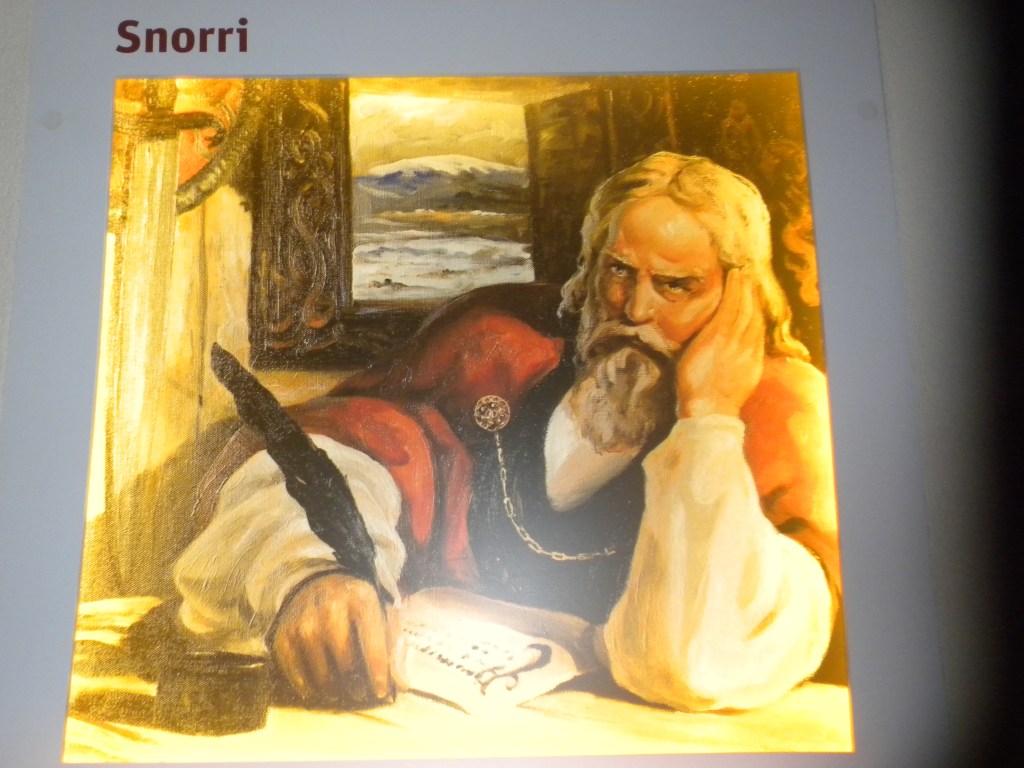
Icelandic Writer of Sagas Snorri Sturluson (1179-1241)

One of the least-known great writers of the Middle Ages was an Icelander, Snorri Sturluson. When I was in Iceland in 2013, I visited Reykholt, where he was assassinated by thugs hired by Haakon IV, King of Norway. There is a museum on the site dedicated to his life and work.

He is known for having authored the Prose Edda, the Heimskringla (a history of Norwegian kings), and possibly Egils Saga, one of the greatest of the Icelandic family sagas. There are other great Icelandic sagas, but Snorri is the only writer of sagas whose name has come down to us.

There wasn’t much competition in the literature of the time. The Arthurian legends were just getting started with Geoffrey of Monmouth’s History of the Kings of Britain (ca 1136). Around the same time, little Iceland had a fully developed literature which told the stories of actual families who settled there and how they resolved disputes. Geoffrey’s book about Arthur, on the other hand, was mostly made out of whole cloth and is considered unreliable as history. The Icelandic sagas are mostly about real people.

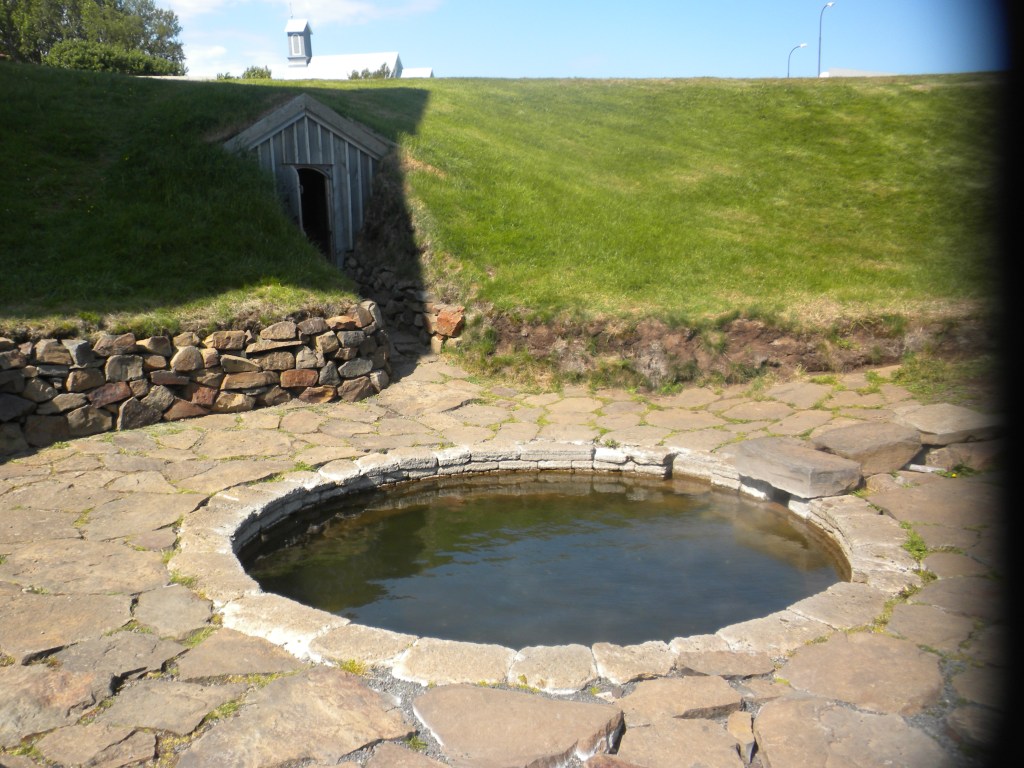
Below is the pool at Snorri’s house in Reykholt where he was murdered on September 22, 1241:

Glacier Tourism

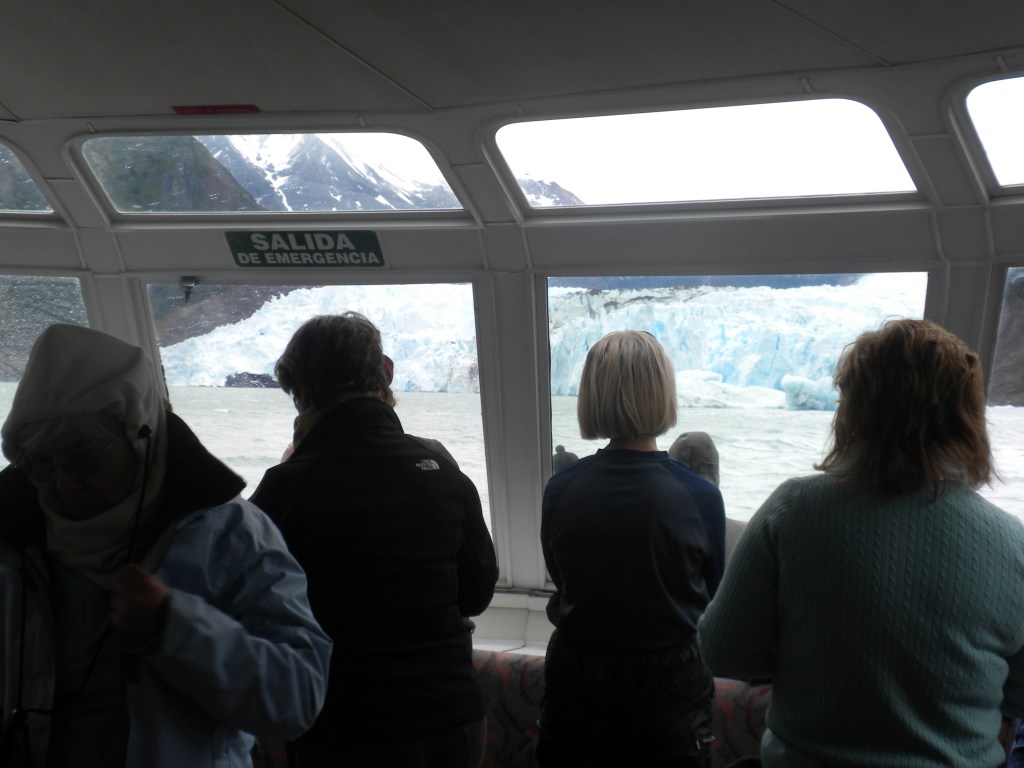
Spegazzini Glacier in Argentina’s Los Glaciares National Park (2011)

As the Earth continues to heat up, I can foresee that more and more tourists will try to see fewer and fewer glaciers. Martine and I have been atop Canada’s Athabasca Glacier in Alberta and in Southern Argentina we have visited the Perito Moreno, Spegazzini, and Upsala Glaciers. By myself, I have ridden a Ski-Doo on Iceland’s giant Vatnajökull Glacier. I hope I can rustle up enough cash to go with Martine to visit the most spectacular glaciers in the U.S., all of which are in Alaska.

It is amazing to think that, at one time, glaciers covered much of the lower forty-eight states and most of Canada, as shown in the following map:

It is possible that in the lives of your children, or of your children’s children, the glaciers will no longer be around. Not only that, but parts of the U.S. coast will be under water, particularly Florida. And as the ocean levels continue to rise, I would not be surprised that some of the most beautiful beaches in the world will disappear under water.

I remember my visit to Iceland in 2001. I stayed at a hotel on the edges of Skaftafell National Park. I walked on a trail as close as I could get to Skaftafell Glacier. As I neared the front edge of the glacier, I saw numerous pools of water and heard a groaning sound as the glacier pushed forward millimeter by millimeter. It was an awe-inspiring experience.

See it while you can.

Impressions of Reykjavík

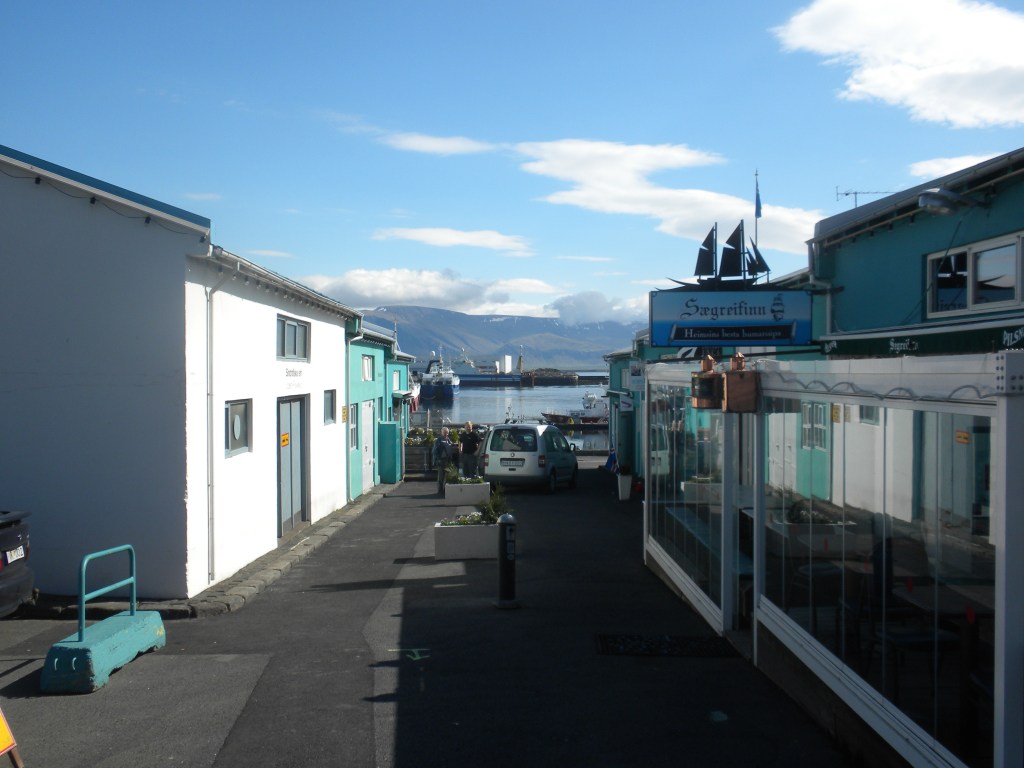
Street Adjacent to Reykjavík Harbor

It’s not the largest European capital, but Reykjavík is to my mind one of the most interesting. Within hailing distance of the Arctic Circle, it can have some of the worst weather imaginable. Yet it is relatively small (about 131,000 souls) and is walkable—if it’s not too windy and wet. You can feed the sea birds by the Tjörn, the municipal pond, but they could just as easily attack you for the goodies you are doling out. The people are friendly, but it seems everyone in town gets shitfaced drunk on the weekend.

There is an air of mystery about the city, which is one reason why the mysteries of Arnaldur Indriðason and Yrsa Sigurdardottir, among others, are so popular.

I have been to Iceland twice, once in 2001 and once in 2013. Both times I fell in love with the city and wished I could stay longer. My first day in 2013 was my favorite. It was near the summer solstice, when it does not get dark until the middle of the night, and then only for a short while. Even after my long flight, I fought jet lag by forcing me to stay up until 7:00 AM Los Angeles time. I even took an evening ghost tour through the local cemetery with the sun still up past 10:00 PM Iceland time.

As I walked the streets of the city, I noticed that many of the buildings had walls of thick corrugated steel, frequently brightly colored. The stucco and chicken wire constructions that protect L.A. from earthquake damage would be blown to bits by the Arctic storms. I ran into one in Myvátn where the rain was blown horizontally through every micro-opening in my parka. And all I was trying to do was to get to the grocery store across the street.

I don’t know if I will ever get to Reykjavík again in this life, but in a way it has never left my dreams. As Edward Gorey once said: “I have fantasies of going to Iceland, never to return.”

Things To Do in Iceland

I’ve been to Iceland twice—in 2001 and 2013—and I hope to go again. People don’t have any concept of what the country is like. One hears the old chestnut that “Iceland should be called Greenland and vice versa.” With global warming, I suspect that both countries will in future be free of most ice. Below are a few highlights if you are thinking of visiting my favorite country in Europe:

  • Fish is always the cheapest and most interesting thing on the menu, and you’re never far from the ship that brought it to port.
  • If You Don’t Like Fish, don’t worry. Icelanders eat tons of hamburgers, hot dogs (which they call pylsur), and pizza.
  • The Interior of the Country is a picturesque and mostly uninhabited wasteland.
  • Icelandic Sagas from the 12-13th centuries A.D. are the best things to read, followed by the novels of 1955 Nobel prizewinner Halldor Laxness.
  • Islands off the coast of Iceland make great destinations, particularly Heimaey and Flatey. The first had a famous volcanic eruption in the 1970s, and the second was the site of a medieval monastery.
  • English is the Second Language of most Icelanders under the age of 70, so communication is no problem.
  • Iceland Is Expensive, particularly if you want to rent a car. Not to worry, there’s good long distance buses.
  • Waterfalls and Rainbows are everywhere, making it the most scenic country in Europe—if it can be said to be part of Europe.
  • Volcanoes are all over the place, and many of them are active. Don’t be surprised if you see one erupting during your trip.
  • Reykjavík contains half the population of Iceland, yet it’s small and quite walkable (if the weather isn’t foul).
  • The Westfjords are a bit out of the way, but shouldn’t be missed. Great hiking and incredible coastline views.
  • Northern Lights can be seen in the winter, but you can’t be 100% sure of a sighting.