Puerto Iguazu/Foz de Iguaçu

Three of the 200+ Waterfalls at Iguazu National Park

I was exhilarated by the two days I spent viewing the falls at Iguazu. There were trails leading off in all directions, as the falls were in an area several kilometers long.

My only regret is that I was not able to see the falls from the Brazilian side. Although the falls were in Argentina, the best long-distance view was from the city of Foz de Iguaçu. At the time I was there, in 2015, I would have had to pay a heavy fee to cross the border into Brazil.

The Panoramic View of the Falls from Brazil

It is not always possible to see all the sights, and I was content to view the falls from the Argentinean side—close up. Particularly impressive was the most powerful of the falls, the Garganta del Diablo, or Devil’s Throat. Here is a video from YouTube:

If you ever manage to fly the 6,000 miles to Argentina, I highly recommend spending several days at the falls. On the Argentinean side, Puerto Iguazu has excellent tourist amenities.
Puerto Iguazu 2015

Drinking Beer in Puerto Iguazu

I had good reason to celebrate: I had just survived a hamfisted pick-pocketing attempt as I was walking to the Retiro Bus Terminal in Buenos Aires with over 2,000 Argentinean pesos in my wallet. I finally made it to my all-night bus to Puerto Iguazu, where the borders of Argentina, Brazil, and Paraguay meet. I was there to see the falls, which were spectacular (more about that tomorrow).

At Puerto Iguazu, I was in the jungle, right by the massive falls of the Rio Iguazu—all 275 of them. This was my first visit to what I call a monkey jungle. There were monkeys aplenty, as well as coatimundis and picturesque birds.

Colorful Bird at the Local Aviary

I had always been afraid of the jungle because I hate mosquitoes. Curiously, I did not encounter any, though I spent two days viewing multiple falls in the area. I did encounter a lot of coatimundis, but numerous posted signs warned against feeding them: They have a tendency to get aggressive and go on the attack.

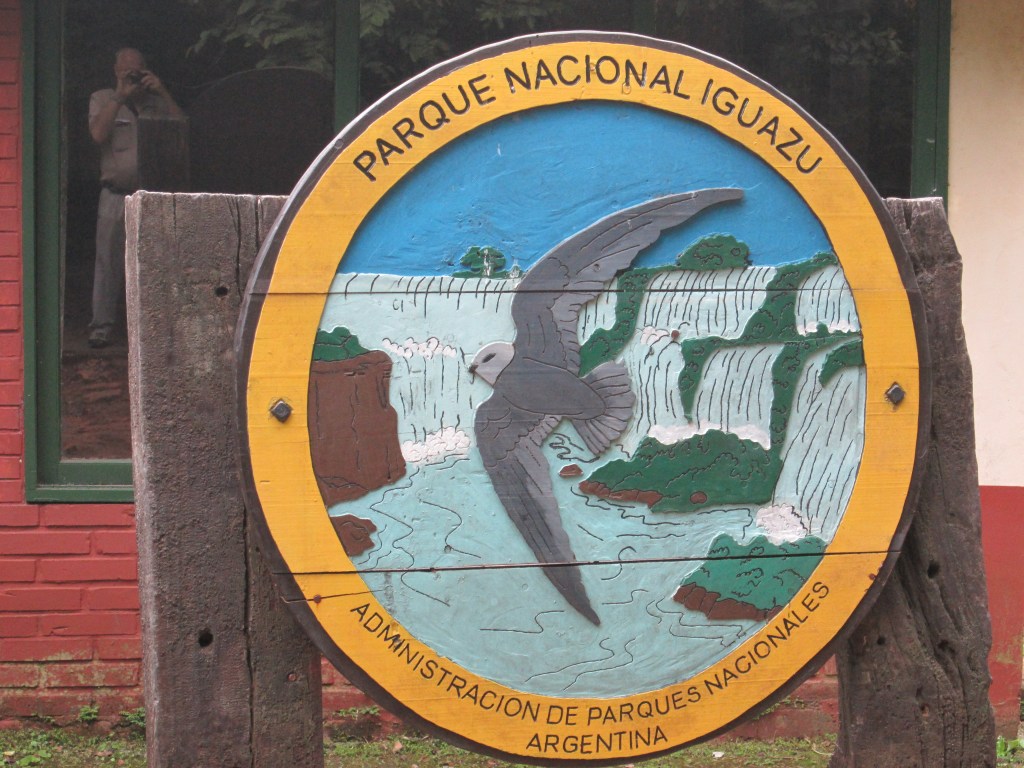
Iguazu National Park Seal

Argentina is a country with numerous national parks. I have visited both the northernmost (Iguazu) and the southernmost (Tierra del Fuego on the Beagle Channel). It is a pity that so few Americans have had the opportunity to visit any of them.

The Last Time I Was in Argentina

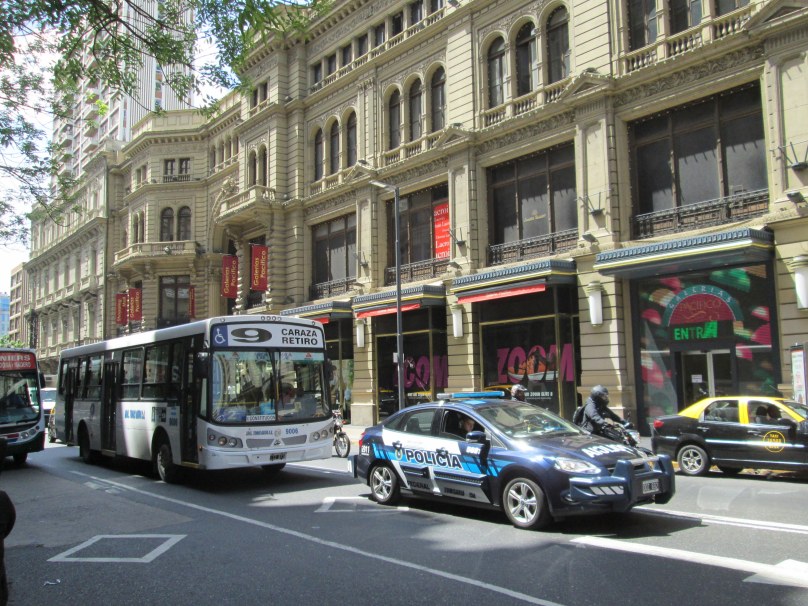
Buenos Aires: Traffic on Calle Florida

It has now been ten years since my last visit to Argentina. Cristina Kirchner was still President of the Republic. I had an itinerary that included a visit to the Foz de Iguazu by the border with Brazil, the Patagonian resort of San Carlos Bariloche, and a bus and boat trip over the Andes to Puerto Varas in Chile.

I revisited the spectacular cemetery at Recoleta where Eva Perón is buried and the port of Tigre by the delta of the Paraná River. On my way to the bus station in Retiro, a serious attempt was made to pick my pocket at a time when I was carrying $2,000 in Argentinean pesos. (I quickly sidestepped to the right and hailed a cab.)

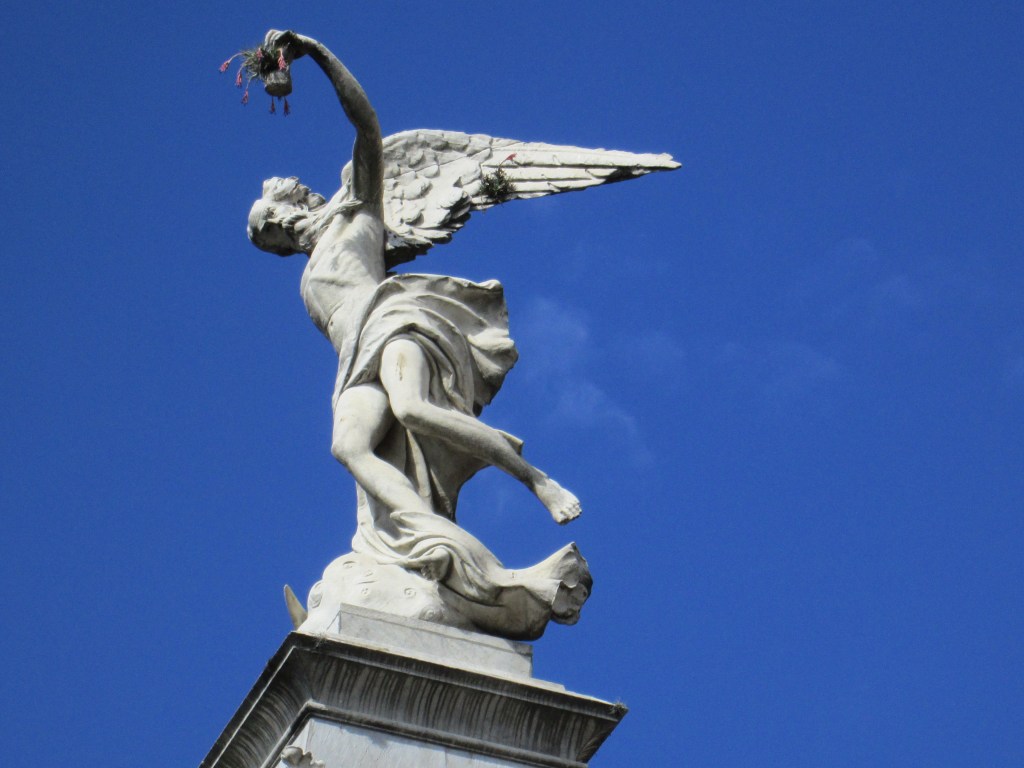
Funerary Statue at Recoleta Cemetery

I got violently ill at a hotel by the Congreso after eating a dubious steak dinner the night before, but I managed nonetheless to catch my bus to Puerto Iguazu and got better after a 10-hour bus ride that passed hundreds of fields where yerba mate was growing.

In sum, it was a great trip. As long in the tooth as I am, I would jump at the chance to visit Argentina again. The long plane ride over the Andes could be brutal, but the country is endlessly fascinating. I especially love Patagonia and Tierra del Fuego.

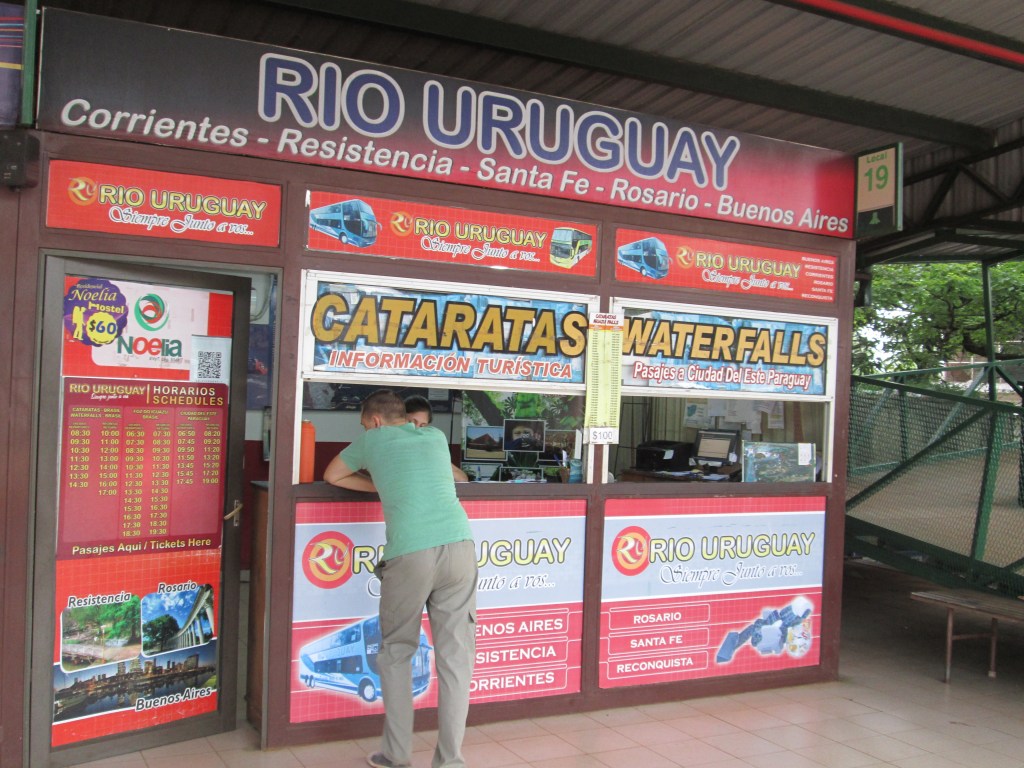
At the Puerto Iguazu Bus Station

Most Americans have little or no idea of what South America is really like. Over the last twenty years, I have been to Argentina, Chile, Uruguay, Peru, and Ecuador and enjoyed just about every minute of my travels there.

The Only Way to Survive in the Jungle

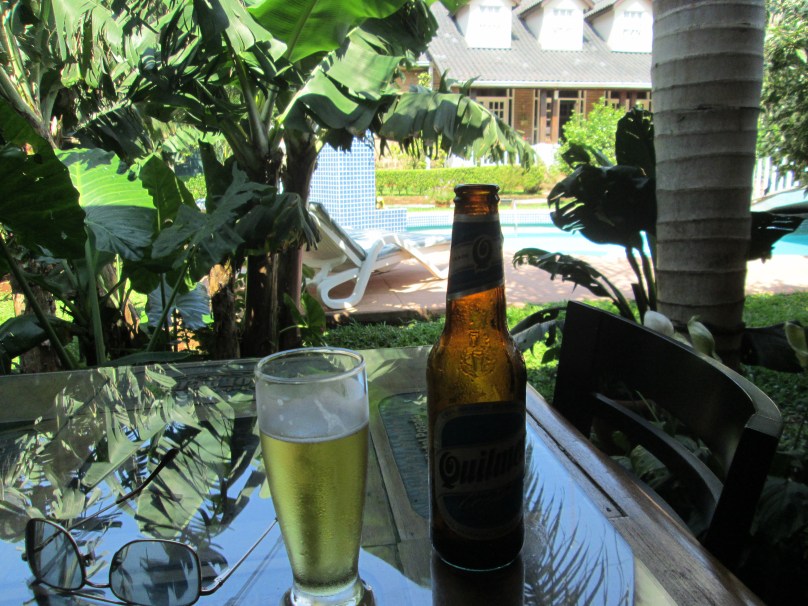
Having a Beer in Puerto Iguazu

Having a Beer in Puerto Iguazu

When I went to Iguazu Falls last month, it was the first time I had ever been in what I call a “monkey jungle.” There isn’t much jungle in Argentina, but the northeasterly states of Corrientes and Misiones readily qualify. Many of the trees have been cleared to make room for the Yerba Mate crop, of which most is consumed within Argentina itself (and sometimes in the United States by strange people like me).

Although I had Yerba Mate even for breakfast in the jungle—in the form of teabags, usually referred to as mate cocido—the drink which kept me going during the day was ice cold beer. In the above picture, I am enjoying a Quilmes, which is as popular down there as the various Anheuser-Busch productoids are here. You can see the edge of the pool at the Posada la Sorgente on Avenida Córdoba in Puerto Iguazu. In the late afternoon, I enjoyed having a cool one by the outdoor bar while reading my Kindle.

My overwhelming impression of the selva was that it was hot and humid, especially as it was getting ready to unleash a Biblical thunderstorm on the evening of the day the above picture was taken.

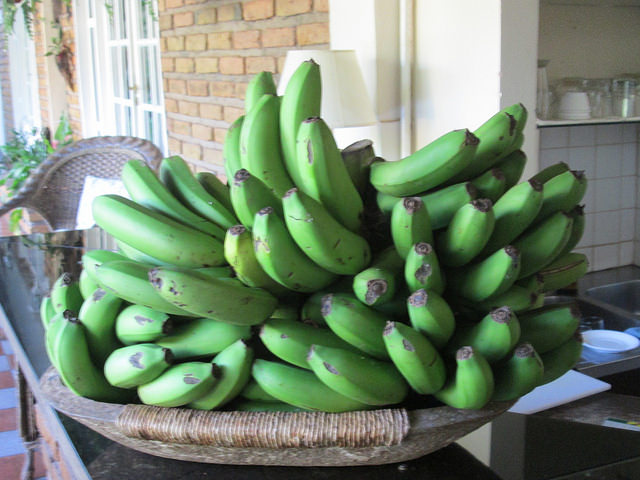
Bananas on the Bar at Posada la Sórgente

Bananas on the Bar at Posada la Sorgente

Here is another view of the bar, which had a handy basket of home-grown bananas at its edge.

I don’t know if I will ever find myself in the jungle again. For the Iguazu Falls, though, it was worth it. My greatest fear going there was the possibility of getting bitten by disease-carrying mosquitoes. Not too far north, in Brazil, the Zika fever (carried by the same Aedes aegypti mosquitoes that carry malaria, dengue, and chikungunya) is so prevalent that residents of the State of Pernambuco and surrounding areas are being urged to avoid getting pregnant. The danger? The children are in danger of being born with microcephaly.

Fortunately, not only was I not bitten: I did not even see any mosquitoes.

(Not) Strictly for the Birds

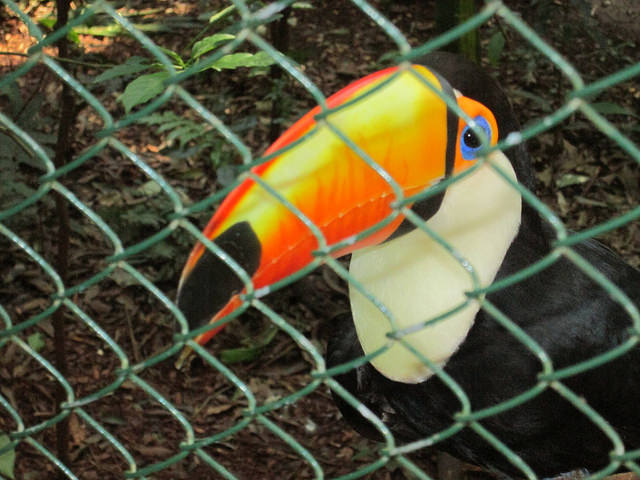
Toucan at Güiráoga

Toucan at Güiráoga

In the Guarani language, it means the House of Birds. Fortunately for the animals sheltered there, it’s not limited to birds.

I arrived in Puerto Iguazu by an overnight bus from Buenos Aires, so I decided not to go right away to the famous falls. Instead, I took a taxi to Güiráoga on the outskirts of town. There, I boarded a tractor-driven trailer and rode to the heart of the local jungle, where there were cages containing birds, monkeys, coatimundis, small mammals, and even a crocodile. Our guide was a young Italian naturalist, who led the tour in Spanish. (There is a tour in English, but I was there too late in the day for that.)

The purpose of Güiráoga is to rehabilitate injured animals. According to The Argentina Independent:

Sadder, human activity is what populates the rehabilitation centre; most of the injured animals are victims of poachers, automobiles, or wildlife trafficking. In a recent case, several wild birds were confiscated from the Ezeiza Airport in Buenos Aires. Those that were not found dead were transported back to Güirá Oga for rehabilitation.

Seeing the occupants in action at the park, however, helps you believe there is still good in the human species. Two vultures square off against each other, oblivious to their onlookers; several small birds flirt and chase one another around their cage; and all except one of the Capuchin monkeys cuddled and showed off for their viewers.

On the jungle trails in the Iguazu National Park, one can see several of the birds and animals, but not all. That’s why my toucan appears behind a chain link fence. I did see plenty of capuchin monkeys (called monos in Argentina) and coatimundis. Happily, I did not encounter any crocodiles or leopards on my walks.

The website (in Spanish) of Güiráoga is accessible by clicking here.

Raging Waters

Waterfalls So Extensive They Create Their Own Climate

Waterfalls So Extensive They Create Their Own Climate

Probably the most spectacular destination on my recent trip to South America was Iguazu Falls. For a panoramic view of the falls, one would have to visit the Brazilian side and pay $160 as a “reciprocity fee,” without guaranteeing that I would get a visa in time. So I opted for the Argentinian side, where I could cozy up to a number of the cataracts, either from the top or bottom.

Iguazu is in the State of Misiones, which juts like a narrow finger into the jungles of Southern Brazil. And, just a few miles to the west is the border with Paraguay at Ciudad del Este.

In the past, I had avoided visiting the falls because I was afraid of contracting a mosquito-borne disease such as malaria, dengue, or chikungunya. Imagine my shock when I saw no mosquitoes near the falls: Apparently the waterfalls, which can range up to 9,500 feet wide depending on water volume, create their own climate of swirling mists.

Most of the water squeezes through at a place called the Garganta del Diablo, or “The Devil’s Throat.” Standing near where the water rushes down is an awe-inspiring (and very wet) experience. But it is eminently worth it!

I spent two days visiting the Iguazu National Park. Looking back, I would have to consider it the single most impressive place I visited this year in Argentina and Chile.

Ytinerary: Iguazu Falls

Rainbow Over the Falls

Rainbow Over the Falls

My doctor suggested I see it, my niece suggested I see it, my friends suggested I see it; so I decided to add Iguazu Falls to my itinerary. It is considered by some to be the most spectacular waterfalls on earth. It lies at a point where the borders of three countries meet: Argentina, Brazil, and Paraguay. About 20% of the falls are on Brazilian territory, and 80% on Argentinian territory. Nearby Paraguay gets 0%. To see the best long-distance view, I have to pay the $140 visa reciprocity fee to Brazil, even if I just sneak across the border for an hour or two. (I have already paid the Argentinian fee in 2011, which is good for ten years.)

I plan to spend two nights at Puerto Iguazu on the Argentinian side. To get there from Buenos Aires, I plan to take a Via Bariloche bus with their tutto letto service with 180º degree reclining bed/seats. The trip takes upwards of eighteen hours, though I get the chance to see a lot of countryside. On the way back, I will take a plane—carefully avoiding Aerolineas Argentinas to the maximum extent possible. (We had horrendous luck with them back in 2011.)

Whether I will spend $140 to see the Brazilian side of the falls for a few hours is still a moot point. My doctor said it’s worth it, but a lot of tourists have written that once you get close up to the Garganta del Diablo (the Devil’s Throat), everything else is secondary.

As I have written earlier, I have avoided the falls on earlier trips because of my hatred of mosquitoes. I will take a 100% DEET insect repellent with me and avoid spending too much time in the jungle areas around dusk. Instead, I will read a book in air conditioned comfort.


In the Jungles of This Earth

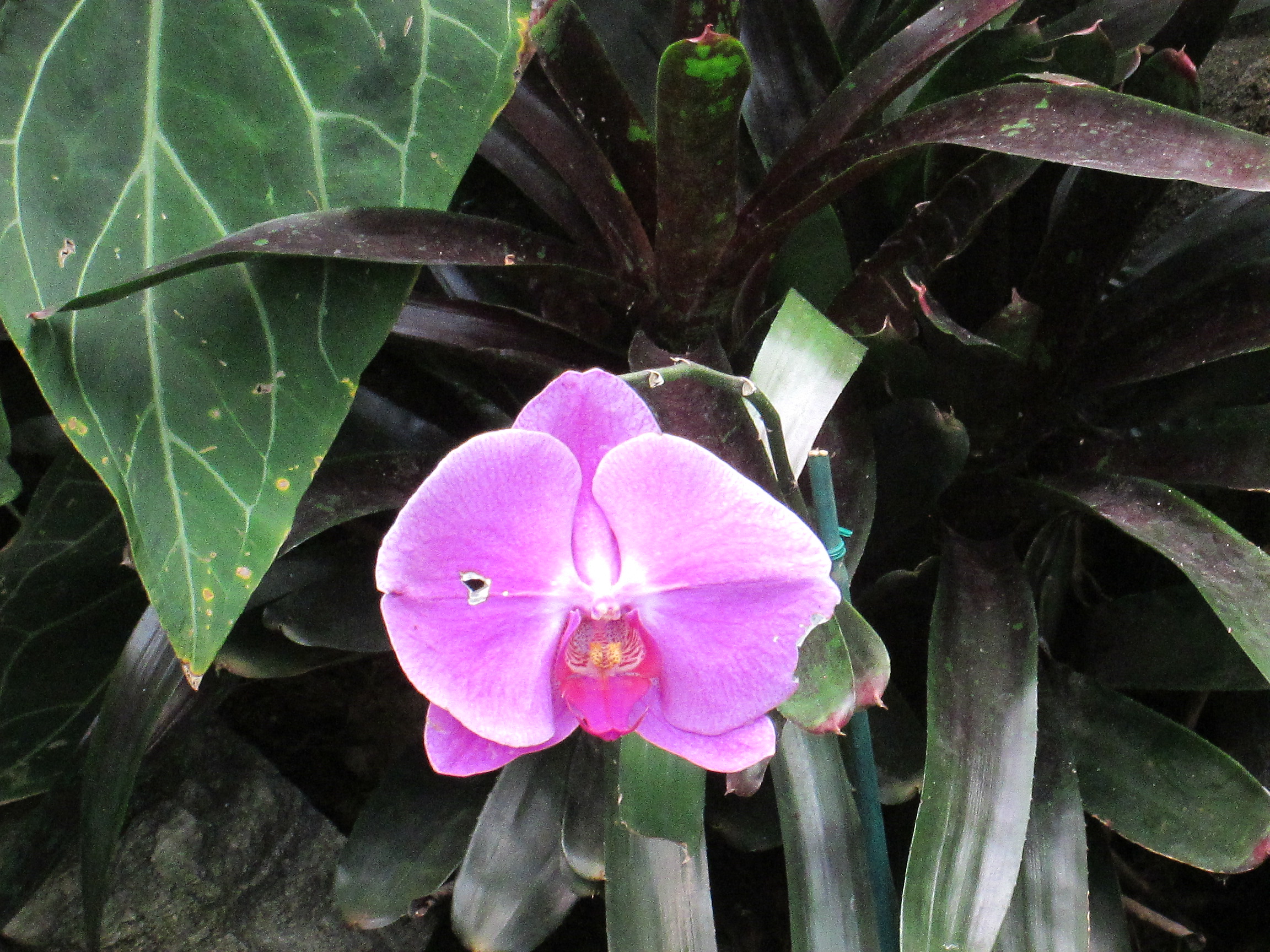
Orchid in L.A. Arboretum Greenhouse

Orchid in L.A. Arboretum Greenhouse

In various posts I have made to this blog, I have expressed some distaste about visiting the tropics. In November, I will make a two-day exception by visiting Iguazu Falls at the junction of Argentina, Brazil, and Paraguay. Since I share with Martine an abhorrence of mosquitoes and the diseases they pass on to humans, I will wear insect repellent and avoid going out at dusk, when they are most active. I shall also ask my physician—who herself has visited the falls—whether I should also take chloroquine, which I could buy over the counter in Buenos Aires.

My curiosity has been piqued by all the great waterfalls I saw In iceland, especially at Dynjandi and Gullfoss, in 2013. For someone living in an extreme drought zone like California, the thought of all that water is intriguing.

I shall take an overnight bus from Retiro bus station in B.A. to Puerto Iguazu and fly back to B.A. after two days.

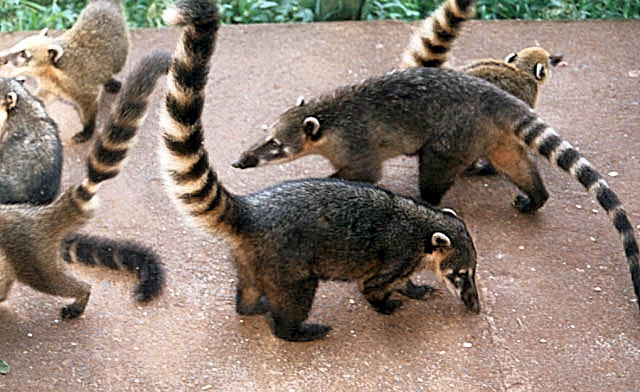
Despite my reluctance to pick up some tropical disease, I will probably take one or two of the jungle trails around the falls (just not at dusk) to see all the rich plant and animal life. Tourists at the falls are assailed by troops of coatimundi (see below). They are cute little buggers, but extremely voracious and aggressive.

Cute But Dangerous

Cute But Dangerous


After my broken shoulder, all I need are some nasty coatimundi bites, possibly rabid.