A Royal Palace on American Soil

Honolulu’s Iolani Palace (Built 1879)

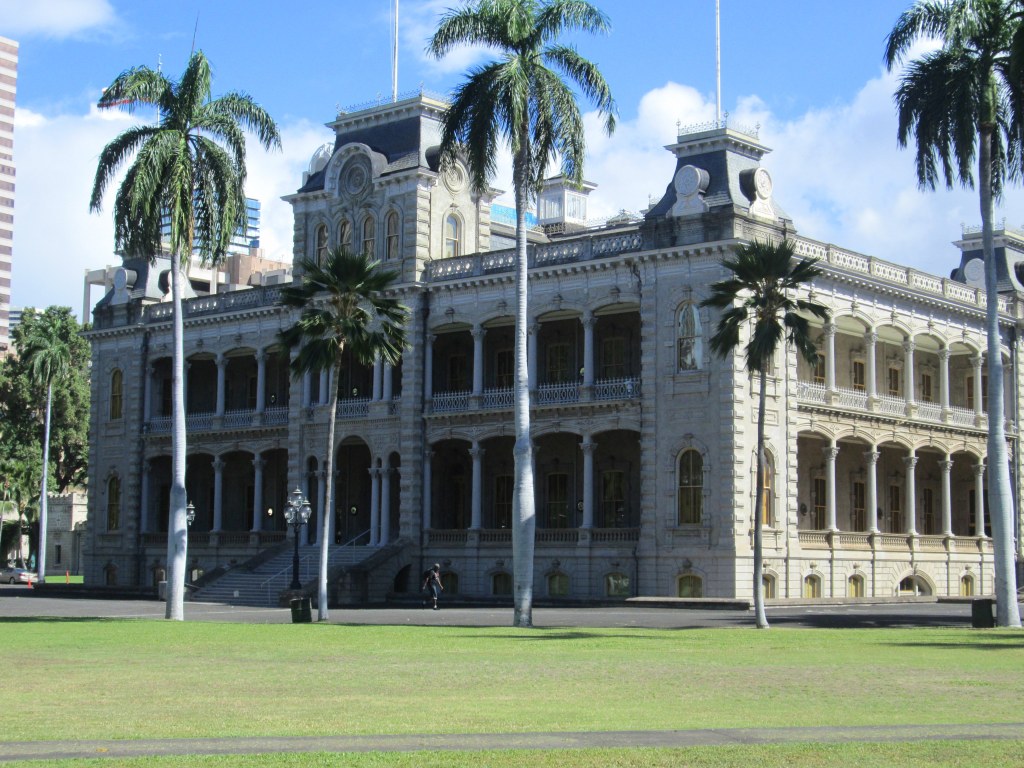
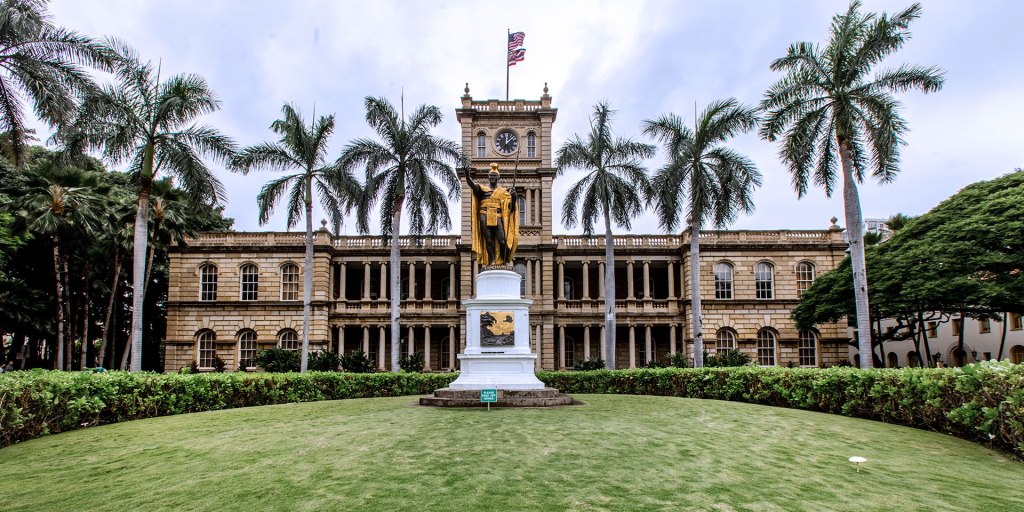
Not far from the Hawaii State Capitol sits the Iolani Palace, home of the monarchs of the Kingdom of Hawai’i from Kamehameha III in 1879 until the overthrow of the monarchy under Queen Lili’uokalani by a group of American merchants in 1893.

As I prepare to go to Hawaii in a week or so, I am conscious once again that the United States ruthlessly stepped on the rights of the Hawaiian people just so that a cabal of American merchants could have their way. On this trip, I plan to read Queen Lili’uokalani’s autobiography. For eight months, the Queen was imprisoned in one of the second floor bedrooms until she was tried by a military tribunal on some trumped-up charge.

It was like the U.S. and the American Indians all over again. Fortunately, there were no massacres by the cavalry in this instance, though the takeover was no less final—and unjust.
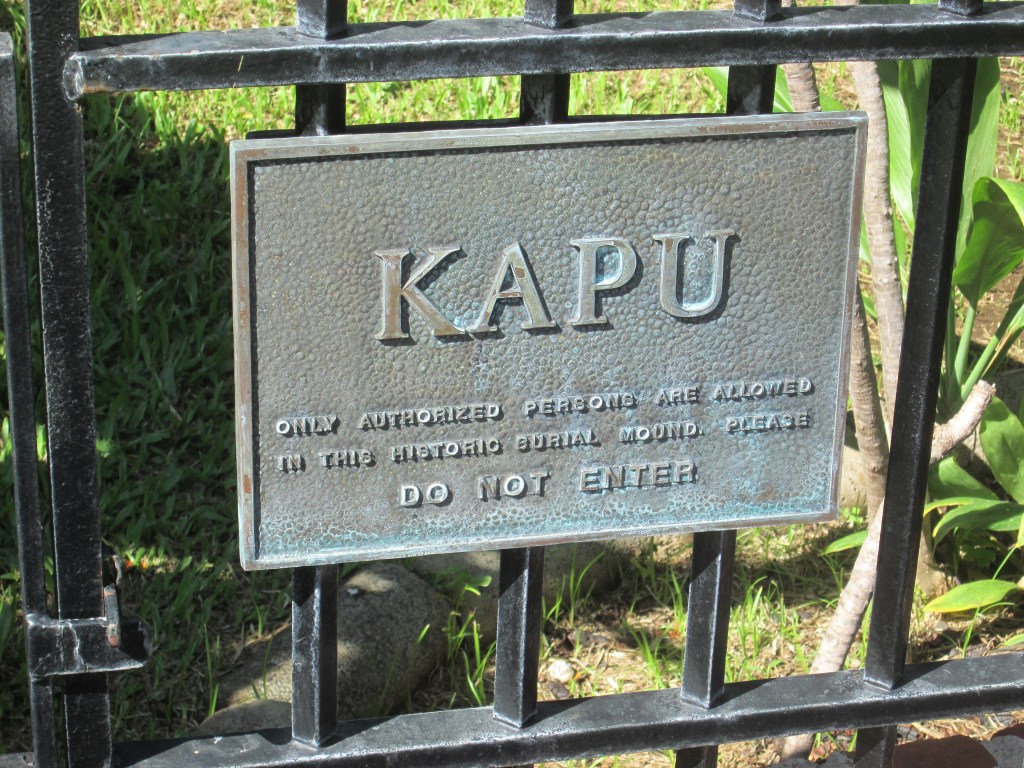
Forbidden

Sign on the Grounds of Iolani Palace

In the southeast corner of the grounds at Iolani Palace is a low mound that bears the Hawaiian language warning “Kapu.” Because the Hawaiian language doesn’t have the sounds of the consonants “t” and “b,” it would not make any sense if the sign red “Tabu.” Yet that is what it means.

Similarly, foods made from the pounded taro root are everywhere. Yet in Hawaiian, the word is written “kalo.” (There is no “r” in the language.)

The forbidden mound contains the remains of many old Hawaiian chieftains, or ali’i. Before the Iolani Palace was built in the late 19th century, there was an earlier, less European-looking palace that housed the great of O’ahu and the outlying islands. The earlier kings of the Kamehameha dynasty were buried there before a mausoleum was built to house their remains a mile or so to the west.

After the bones of the kings were removed, the Hawaiians had trouble identifying the other remains; so they fenced in the mound and made access to it Tabu.

The Vacant Throne

The Throne Room at Iolani Palace, with King Kalakaua’s Ceremonial Uniform

On our first full day in Honolulu, Martine and I visited the Iolani Palace, which was the seat of the Hawaiian monarchy that was dethroned in 1893 by a cabal of crooked American businessmen, diplomats, and naval officers. Even after they succeeded, it was only the sinking of the Maine in Havana harbor in 1898 that led to Hawaii becoming a U.S. territory.

The story of the annexation of Hawaii is told in Stephen Dando-Collins’s Taking Hawaii: How Thirteen Honolulu Businessmen Overthrew the Queen of Hawaii in 1893, With a Bluff. The “founding fathers” of the annexation make Donald Trump look like a Boy Scout, what with their lies, braggadocio, and even cowardice. When the moment came to move, several of the members of the so-called Committee of Public Safety conveniently came down sick.

The Hawaiians of today revere their monarchy, especially Queen Lili’uokalani, who was an able ruler who failed only because she could not appease a cabal of American and European businessmen who did not even feel that Hawaiian natives should have the right to vote.

The Iolani Palace

The Palace was built by the penultimate ruler of the monarchy, King Kalakaua, in 1882. It is tastefully designed, with verandas on all sides permitting the cool ocean breezes to circulate through the building. Nowadays, all the windows are closed so that the paintings on the wall don’t fade prematurely.

Royal Palaces on American Soil

The Iolani Palace, Honolulu

Most Americans are not aware that there are at least three royal palaces in the Hawaiian Islands. Two of them are in the Honolulu area: the Iolani Palace downtown and Queen Emma’s Summer Palace on the Pali Highway. Martine and I have been to the Iolani Palace in 1996 and intend to revisit it on our upcoming trip to O’ahu along with Queen Emma’s Summer Palace.

Hawai’i was a perfectly viable kingdom when the United States annexed the islands in 1898. In the wake of the Spanish-American War, Americans were eager for new colonies; and there was already in place a willing cadre of American settlers willing to raise Old Glory. The reigning monarch, Queen Lili’uokalani was kept a prisoner in the Iolani Palace under suspicion of “treason,” namely for being loyal to her country.

Interior Queen Emma’s Summer Palace

The other palace is connected with a happier time, when Queen Emma (1836-1885), wife to King Kamehameha IV preferred the cooler temperatures of her hillside retreat, which today is a museum operated by the Daughters of Hawai’i. The same group operates a third royal palace on the Big Island of Hawai’i, the Hulihe’e Palace in Kailua-Kona.

In my reading in preparation for our trip, I am concentrating on the period between Captain Cook’s landing on the islands in 1778 and the American annexation in 1898. The memory of the royal families of Kamehameha and Kalakaua is still alive in the islands. There is even a Royal Mausoleum in Honolulu where most of the royal family is interred.