Remember

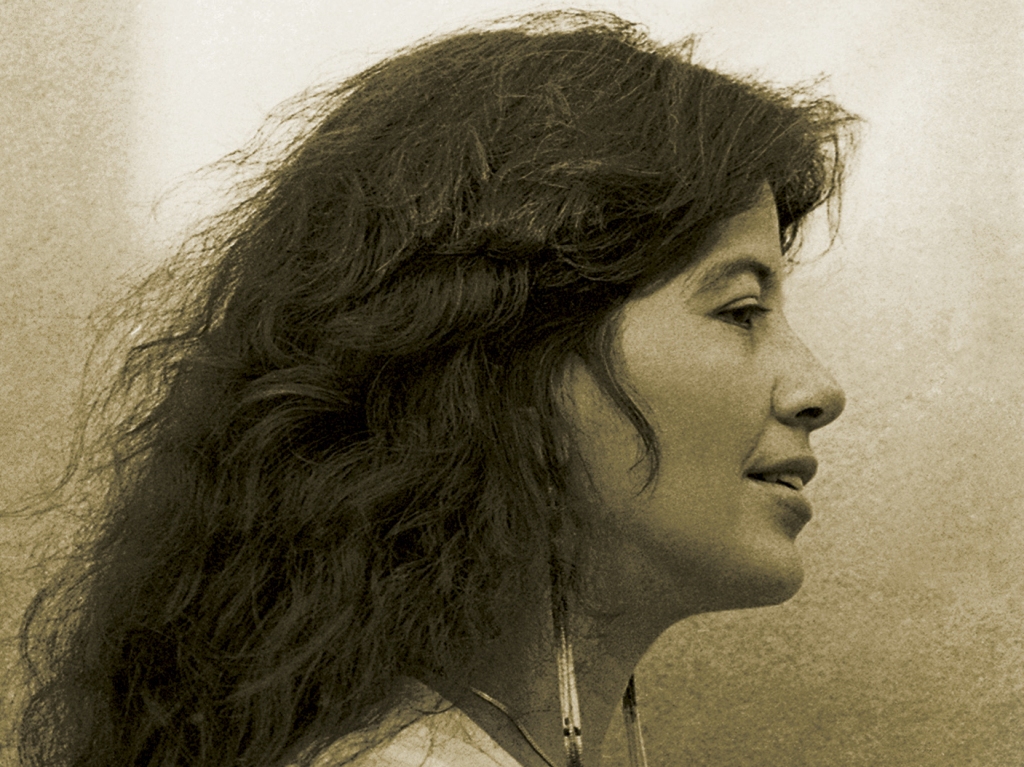
Former Poet Laureate of the United States Joy Harjo

This is the ninth time in the last five years that I have posted a poem by Joy Harjo, a Muscogee Creek Indian poet who was once Poet Laureate of the U.S. According to Joy’s notes regarding the poem:

I hadn’t been writing long when I wrote this poem. I believe I was still a student at the University of New Mexico. My first few poems were published in the Thunderbird, the student literary magazine. My voice found itself, then rooted itself in the Sandia Mountains, the Rio Grande River, in the sunrises and sunsets of the Southwest. My voice found a place to eat and drink after traveling through worlds and walking through time, a place to replicate the sense of those worlds in words. That’s when I began writing poetry, real poetry, after those first few published poems. Those first attempts were my calling out for poetry to find me.

Remember

Remember the sky you were born under,
know each of the star’s stories.
Remember the moon, know who she is.
Remember the sun’s birth at dawn, that is the
strongest point of time. Remember sundown
and the giving away to night.
Remember your birth, how your mother struggled
to give you form and breath. You are evidence of
her life, and her mother’s, and hers.
Remember your father. He is your life, also.
Remember the earth whose skin you are:
red earth, black earth, yellow earth, white earth
brown earth, we are earth.
Remember the plants, trees, animal life who all have their
tribes, their families, their histories, too. Talk to them,
listen to them. They are alive poems.
Remember the wind. Remember her voice. She knows the
origin of this universe.
Remember you are all people and all people
are you.
Remember you are this universe and this
universe is you.
Remember all is in motion, is growing, is you.
Remember language comes from this.
Remember the dance language is, that life is.
Remember.

“Don’t Bother the Earth Spirit”

American Indian Poet Joy Harjo

One of my favorite American poets is a member of the Muscogee (Creek) Native American Nation, who has served three terms as poet laureate of the United States. Her poetry is simply magical, as the following sample shows:

Don’t Bother the Earth Spirit

Don’t bother the earth spirit who lives here. She is working on a story. It is the oldest story in the world and it is delicate, changing. If she sees you watching she will invite you in for coffee, give you warm bread, and you will be obligated to stay and listen. But this is no ordinary story. You will have to endure earthquakes, lightning, the deaths of all those you love, the most blinding beauty. It’s a story so compelling you may never want to leave; this is how she traps you. See that stone finger over there? That is the only one who ever escaped.

“Rabbit Is Up to Tricks”

Poet Joy Harjo

Born in 1951, Joy Harjo is a member of the Muscogee (Creek) Native American Nation, who has served three terms as poet laureate of the United States. Her poetry is simply magical, as the following sample shows:

Rabbit Is Up to Tricks

In a world long before this one, there was enough for everyone,
Until somebody got out of line.
We heard it was Rabbit, fooling around with clay and the wind.
Everybody was tired of his tricks and no one would play with him;
He was lonely in this world.
So Rabbit thought to make a person.
And when he blew into the mouth of that crude figure to see
What would happen,
The clay man stood up.
Rabbit showed the clay man how to steal a chicken.
The clay man obeyed.
Then Rabbit showed him how to steal corn.
The clay man obeyed.
Then he showed him how to steal someone else’s wife.
The clay man obeyed.
Rabbit felt important and powerful.
The clay man felt important and powerful.
And once that clay man started he could not stop.
Once he took that chicken he wanted all the chickens.
And once he took that corn he wanted all the corn.
And once he took that wife, he wanted all the wives.
He was insatiable.
Then he had a taste of gold and he wanted all the gold.
Then it was land and anything else he saw.
His wanting only made him want more.
Soon it was countries, and then it was trade.
The wanting infected the earth.
We lost track of the purpose and reason for life.
We began to forget our songs. We forgot our stories.
We could no longer see or hear our ancestors,
Or talk with each other across the kitchen table.
Forests were being mowed down all over the world.
And Rabbit had no place to play.
Rabbit’s trick had backfired.
Rabbit tried to call the clay man back,
But when the clay man wouldn’t listen
Rabbit realized he’d made a clay man with no ears.

The Alligator Dream

The following is a dream that poet Joy Harjo, a Creek/Mvskoke Indian, had when she was a child and it was feared that she had polio. The excerpt comes from her book Crazy Brave: A Memoir.

It was shortly after the polio scare that I began to dream the alligator dream.

I am a young girl, between four and five years old. It’s early in the morning. I delight in my feet touching the ground and in the plant beings who line the trail to the river. I breathe in playful energy from small, familiar winds as I walk to get water for the family. The winds appear to part the tall reeds through which I walk with my water jar.

An alligator whips me suddenly to the water and pulls me under. I struggle, and then I am gone. My passing from earth is a quick choke. To my mourning family, my life has been tragically ended. They did not see that I entered an underwater story to live with alligators and become one of them.

I believe now that I had the beginnings of polio. The alligators took it away. It is possible. The world is mysterious.

Desire’s Dog

There is something in the voice of American Indian writers that is worth listening to. I have just finished reading Louise Erdrich’s Tracks, and now I have come across this delightful poem by Joy Harjo, a Muscogee Creek who was poet-laureate of the United States:

Desire’s Dog

I was desire’s dog.
I ate when I was fed. I did what I was told.
I knew how to sit, stand and roll over on command.
When I was petted, I was made whole.
Even when I dreamed, I dreamed a chain around my neck.

Desire is a bone with traces of fat.
It’s the wag smell of a bitch in heat.
It’s that pinched hit at the end of a beat.
It’s a stick thrown into a rabbit chase.

I lay at the feet of desire for years.

Then I heard this song, calling me.
It was a woman in a red dress,
It was a man with a gun in his hand.
It was a table filled with fruit and flowers.
It was a fox of fire, a bird of stone.

Then, it was gone.

What was left disintegrated by rain and wind.

I had followed desire, to the end.

The Path to the Milky Way Leads Through Los Angeles

I am completely entranced by the poetry of Joy Harjo, a Muscogee Indian who is also Poet Laureate of the United States. I found the following poem in her collection A Map to the Next World. By the way, Okmulgee is the Oklahoma city that is the center of the Muscogee nation.

The Path to the Milky Way Leads Through Los Angeles

There are strangers above me, below me and all around me and we are all strange in this place of recent invention
This city named for angels appears naked and stripped of anything resembling the shaking of turtle shells, the songs of human voices on a summer night outside Okmulgee.
Yet, it’s perpetually summer here, and beautiful. The shimmer of gods is easier to perceive at sunrise or dusk
when those who remember us here in the illusion of the marketplace
turn toward the changing of the sun and say our names.
We matter to somebody,
We must matter to the strange god who imagines us as we revolve together in the dark sky on the path to the Milky Way,
We can’t easily see that starry road from the perspective of the crossing of boulevards, can’t hear it in the whine of civilization or taste the minerals of planets in hamburgers.
But we can buy a map here of the stars’ homes, dial a tone for dangerous love, choose from several brands of water or a hiss of oxygen for gentle rejuvenation.
Everyone knows you can’t buy love but you can still sell your soul for less than a song to a stranger who will sell it to someone else for a profit
until you’re owned by a company of strangers
in the city of the strange and getting stranger,
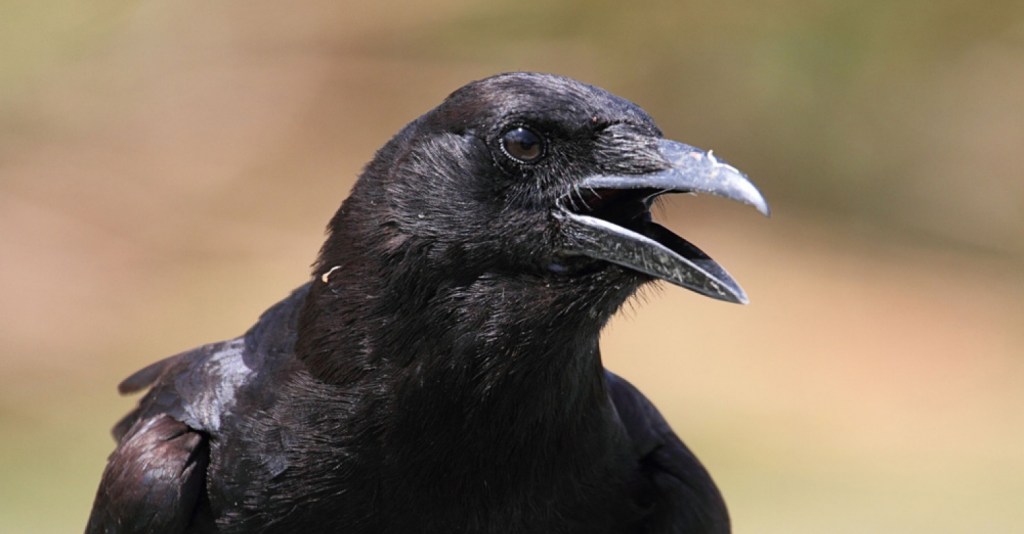
I’d rather understand how to sing from a crow
who was never good at singing or much of anything
but finding gold in the trash of humans.
So what are we doing here I ask the crow parading on the ledge of falling that hangs over this precarious city?
Crow just laughs and says wait, wait and see and I am waiting and not seeing anything, not just yet.
But like crow I collect the shine of anything beautiful I can find.

“Don’t Bother the Earth Spirit”

I have just finished reading Joy Harjo’s Crazy Brave: A Memoir, which made me hungry to read more of her poetry. Harjo is a Muscogee (Creek) Indian who also happens to be the Poet Laureate of the United States. Below is a short prose poem of hers:

Don’t Bother the Earth Spirit

Don’t bother the earth spirit who lives here. She is working on a story. It is the oldest story in the world and it is delicate, changing. If she sees you watching she will invite you in for coffee, give you warm bread, and you will be obligated to stay and listen. But this is no ordinary story. You will have to endure earthquakes, lightning, the deaths of all those you love, the most blinding beauty. It’s a story so compelling you may never want to leave; this is how she traps you. See that stone finger over there? That is the only one who ever escaped.

The Spiral Road

U.S. Poet Laureate Joy Harjo

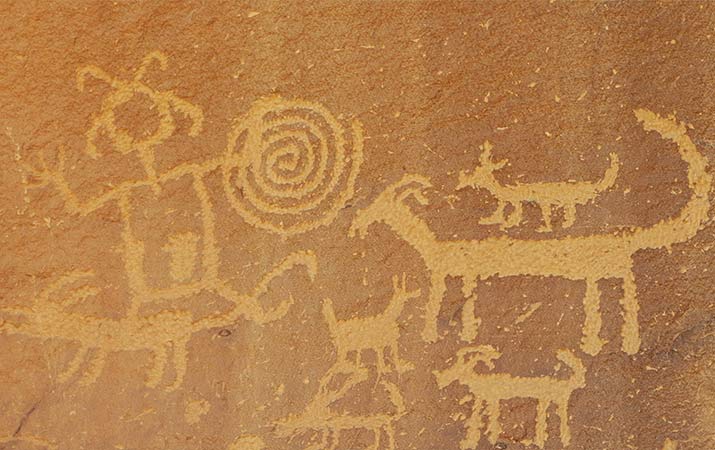
Here is another poem by Joy Harjo, a member of the Muscogee Nation (Este Mvskokvlke), belonging to Oce Vpofv (Hickory Ground). Considering all that has happened to her people, she is curiously optimistic “for earth’s grandsons.” And that is the title of her poem.

For Earth’s Grandsons

Stand tall, no matter your height, how dark your skin
Your spirit is all colors within
You are made of the finest woven light
From the iridescent love that formed your mothers, fathers
Your grandparents all the way back on the spiral road—
There is no end to this love
It has formed your bodies
Feeds your bright spirits
And no matter what happens in these times of breaking—
No matter dictators, the heartless, and liars
No matter—you are born of those
Who kept ceremonial embers burning in their hands
All through the miles of relentless exile
Those who sang the path through massacre
All the way to sunrise
You will make it through—

Pictograph at Chaco Canyon Showing the Spiral Road

I liked the way the poem ends with a dash: All this is still happening. I posted another poem by Joy Harjo on October 20 here. Both poems are taken from her recent book An American Sunrise (New York: W.W. Norton, 2019).

Seven Questions

Poet Laureate of the United States Joy Harjo

I present for your enjoyment—and serious consideration—a poem about politics by Joy Harjo, the Poet Laureate of the U.S., who is also a Muscogee Creek Indian whose people have suffered grievously from lying, weaselly politicians of all stripes through their history as the first real Americans.

The poem is from her collection entitled An American Sunrise.

For Those Who Would Govern

First question: Can you first govern yourself?

Second question: What is the state of your own household?

Third question: Do you have a proven record of community service and compassionate acts?

Fourth question: Do you know the history and laws of your principalities?

Fifth question: Do you follow sound principles? Look for fresh vision to lift all the inhabitants of the land, including animals, plants, elements, all who share this earth?

Sixth question: Are you owned by lawyers, bankers, insurance agents, lobbyists, or other politicians, anyone else who would unfairly profit by your decisions?

Seventh question: Do you have authority by the original keepers of the lands, those who obey natural law and are in the service of the lands on which you stand?


I found interesting Joy’s use of the word principalities in the fourth question. She herself is a member of a sovereign nation that is affiliated with the U.S.

In the sixth question, I would have included real estate developers, who are in my book archvillains.

Looking at our current president, he comes off in honest answers to these questions as a suppurating vessel of gangrenous pus.