

Fuge, late, tace

Big Sur Coastline, Central California

The last two days, I was revisiting one of my favorite authors, Honoré de Balzac. In his novel The Country Doctor (Le Médecin de Campagne), Doctor Benassis visits 5the Grande Chartreuse monastery in the French Alps and finds the following inscription left by one of the monks in an empty cell:

Fuge, late, tace

This is Latin for “Flee, hide, be silent.”

Which reminds me of Stephen Dedalus’s “Silence, exile, and cunning” from James Joyce’s Portrait of the Artist as a Young Man. It also makes me think of Russian poet Joseph Brodsky’s “If one’s fated to be born in Caesar’s empire, let him live aloof, provincial, by the seashore.”

I embrace this advice (except for the part about being silent, of which this post is a clear violation). At my advanced age, I have no hope of—or even desire for—success.

To quote the old antique dealer in Balzac’s The Fatal Skin (Le Peau de Chagrin):

Man depletes himself by two instinctive acts that dry up the sources of his existence. Two words express all the forms taken by these two causes of death: DESIRE and POWER. Between these two poles of human action, there is another principle seized upon by the wise, to which I owe my happiness and my longevity [the speaker is 102 years old]. Desire sets us afire and Power destroys us; but KNOWLEDGE leaves our fragile organism in a state of perpetual calm.

Alas, Balzac wasn’t able to follow his own advice. He burned through his life in 51 years, yearning for years to marry the Polish Countess Evelina Hanska. No sooner did he get his wish and return to Paris with his bride than he took sick and died.
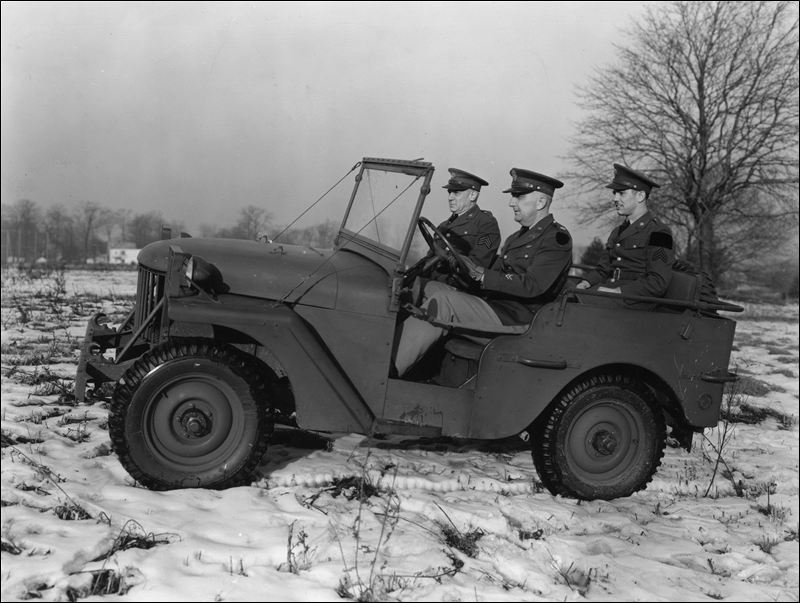
The Jeep Moment

It’s in All the 1950s Sci-Fi Films

It’s in All the 1950s Sci-Fi Films

You probably remember The Day the Earth Stood Still (1951): A flying saucer lands in the park in our nation’s capital, and a worried crowd begins to gather. Not to worry, however, a Jeep full of Army officers pulls up, and everyone in the audience breathed a sigh of relief. Our boys are here! They’re invincible. The G.I.’s will take care of the alien menace.

Except, they don’t. Michael Rennie and his robot accomplice Gort have weapons at their command that could turn people and their property into something resembling a tuna melt.

I find it interesting that, after we’ve won a two-front war, we should suddenly feel fear. Was it because of the uncertainty generated by the atom? Hiroshima and Nagasaki appeared to have deeply affected the American psyche. All of a sudden, this relativity thing that no one seemed to understand could not only kill people, but do it in a way that was strangely alien. (Was that why Professor Barnhardt, the Alfred Einstein lookalike, was played by Sam Jaffe in the movie.)

We were right to feel fear—and not only because of the A-Bomb. With the end of the Second World War, we were entering a world we did not understand. First there was Communism, which scared the bejeezus out of us until it all unraveled like a cheap suit in 1988-89. But we didn’t get any kind of respite, because all of a sudden there was all this weird violence in the Middle East.

American Hawks were still around, except now they were called Neoconservatives. They kept having this “Jeep Moment,” where they would meet any crisis by sending in our troops with their Jeeps (though now I guess they ride Humvees). We’re still dealing with something alien that we can’t understand. We keep fighting wars with people who speak a strange language and worship strange gods and in general behave in bizarre ways. And they think nothing of blowing themselves to bits if they could take a bunch of us with them. (In the Arab world, being a suicide bomber is considered to be a good career move.)

It strikes me that there is a mathematical formula for success in a military action against a peoples we don’t understand: K/F=C, or Knowledge divided by Force equals the Chance of Victory. Either that, or a recipe for fried chicken.