The Flight Into Egypt

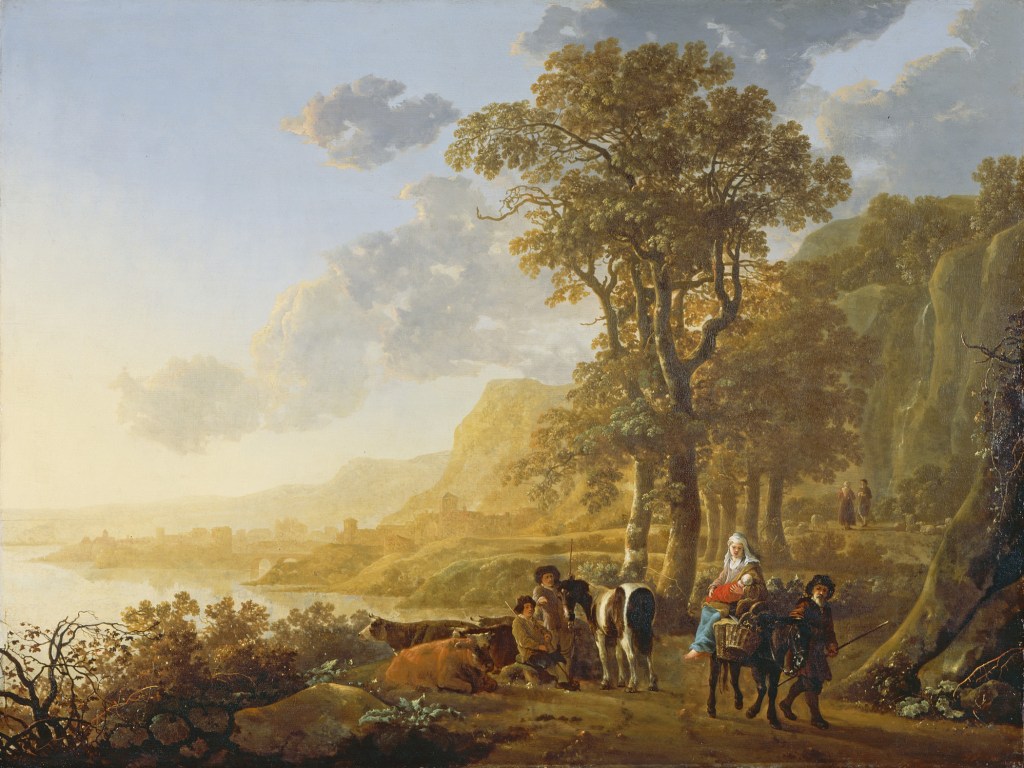
Aelbert Cuyp’s “The Flight Into Egypt” (ca. 1665)

Although I saw this painting at the Getty Center in Los Angeles, it is actually on loan from the Los Angeles County Museum of Art. Apparently Aelbert Cuyp (1620-1691) painted several canvases of the Holy Family’s flight into Egypt to escape Herod’s massacre of the innocents born around Bethlehem. According to the Gospel of St. Matthew (2:16):

Then Herod, when he saw that he was mocked of the wise men, was exceeding wroth, and sent forth, and slew all the children that were in Bethlehem, and in all the coasts thereof, from two years old and under, according to the time which he had diligently inquired of the wise men.

This painting appealed to me because it moves its subject into an obviously European setting—certainly as far removed from the Sinai Peninsula as it is possible to be. At the same time, the scene is as peaceful as a bucolic Poussin or Lorrain painting of the same period.

Cuyp was noted for his landscapes. According to the Wikipedia entry on him, “he is especially known for his large views of Dutch riverside scenes in a golden early morning or late afternoon light.”

Architecture and Personal Power

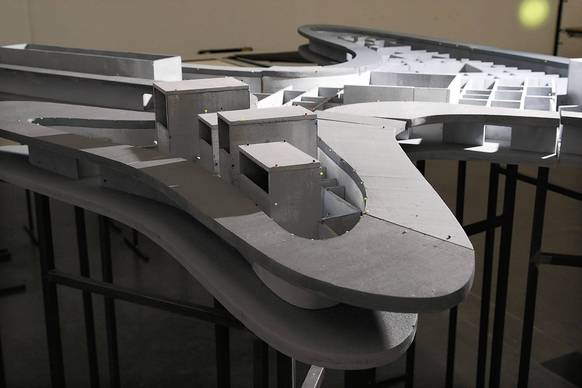
Proposed Peter Zumthor Design of New L.A. County Museum of Art

Proposed Peter Zumthor Design of New L.A. County Museum of Art

Has that museum building been hanging around too long? You know the one I mean: The one with the central court that goes up four floors. Rather nice for a building designed in the 1960s. Well, it’s gotta go! It will be razed in favor of Swiss architect Peter Zumthor’s space station illustrated above in a photo from the Los Angeles Times.

In Europe, people are not quite so quick to go to the wrecking ball. And it’s not just because of earthquakes: We see new architecture as an attribute of personal power. Basically, the executives of LACMA are just flexing their muscles. They’ll have to close down most of the museum’s collections for several years while the new monstrosity is being constructed.

By the time the new wing opens, I will probably have just written LACMA off as a place I’m interested in seeing. The works I like the most (click here) will probably be crated up and stored in some sub-basement until the Zumthorian space station emerges out of the dark matter by the La Brea Tar Pits. Of course, all the 20th century stuff I hate will continue to be on view in an adjacent building.

This Is the Rather Handsome Museum Building Doomed to Be Torn Down

This Is the Rather Handsome Museum Building Doomed to Be Torn Down

I really feel for those people in Istanbul who are rioting because the Turkish government wants to turn an old Ottoman-era barracks, sitting on one of the few parks in the city, into a shopping mall. Even Recep Tayyip Erdogan, the Prime Minister, has gotten into the act—presumably because he has been paid off by the developers.

Why don’t the people of Los Angeles rise up against the morons who run LACMA and toss them into the adjoining Tar Pits. It would be no more than they deserve!

An Afternoon at LACMA

One of My Two Favorite Paintings at LACMA: Jan de Heem’s “Still Life with Oysters and Grapes”

One of My Two Favorite Paintings at LACMA: Jan de Heem’s “Still Life with Oysters and Grapes”

Today was the last day that I don’t have to show up for work until Friday, April 19: That’s thirty-nine consecutive days that I will have to work. (We have a three-day weekend after the April 15 tax deadline).

Martine and I took advantage of the last free day by visiting the Los Angeles County Museum of Art (LACMA) right near the famed La Brea Tar Pits by Wilshire & Fairfax. Over the years, LACMA has grown like Topsy: It now occupies a campus of some eight buildings, only three of which I visited. Scattered as the museum’s collections are, it is now much more difficult to find particular paintings or particular periods of art. There are two paintings I always look for. The first (shown above) is Jan Davidszoon de Heem’s “Still Life with Oysters and Grapes,” from the Dutch Golden Age of the 17th century.

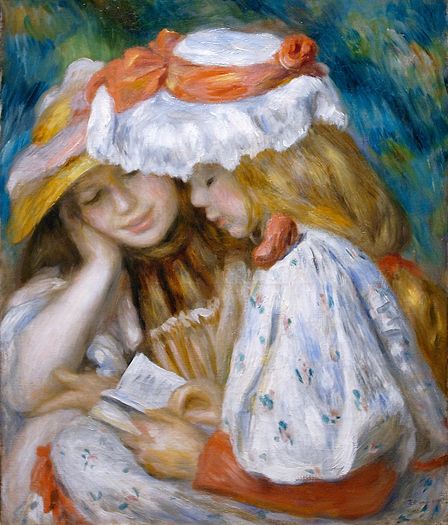
The other, shown below, is a delightful Auguste Renoir painting of two girl’s reading from a book.

Pierre Auguste Renoir’s “Two Girls Reading”

Pierre Auguste Renoir’s “Two Girls Reading”

I am not always fond of the Impressionist painters, because I think some of them, such as Monet and Cézanne, can be too sterile in their search for effects (though not always). But in the above painting, the whole world revolves around the two girls. Displayed right next to it at the museum is a portrait of the artist’s son Jean portrayed as a huntsman. Because Jean grew up to be one of my favorite film directors, I have always been fond of that portrait as well.

Because Martine and I have different tastes in art, we split up and met later in the afternoon at the museum café, where I was drinking a cup of English Breakfast tea. In the meantime, on my own I visited the exhibits of Chinese and Korean art. Particularly interesting was a small traveling exhibit of Ming Dynasty Masterpieces from the Shanghai Museum. Many of them depicted members of the Taoist Immortals, often with a great sense of humor, such as the ink wash drawing showing one of them flying up to the heavens on the back of a giant carp.

There was also an excellent exhibit of ancient Meso-American art, showing the typical Mayan, Totonac, and other peoples’ sense of humor depicting gods, men, and animals—especially the latter.