The House at Sunnylands

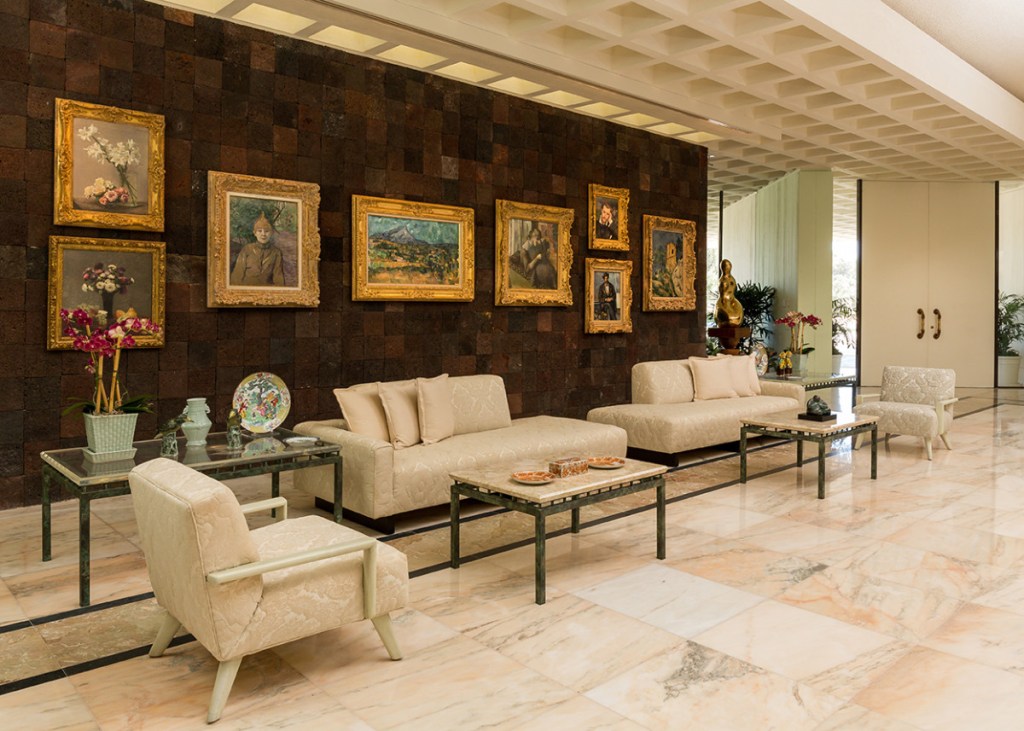
Interior at Sunnylands

The Sunnylands Estate where Walter and Leonore Annenberg lived and entertained political and entertainment figures from around the world is one of the most interesting sights in the Coachella Valley. When I took the house tour last Sunday, I saw a beautiful example of 1960s modern architecture in the form of a single-story house that seemed to go on forever.

One strange note is that the walls were covered with reproductions of famous paintings. The originals belonged to the Annenbergs, but they were gifted in 1991 to the Metropolitan Museum of Art in New York.

During the lifetime of the Annenbergs, Sunnylands was frequently the site of meetings with world leaders, including both President Bushes, Barack Obama, Ronald Reagan, Queen Elizabeth II, Richard Nixon, Dwight D. Eisenhower, and Xi Jinping of China. In 1976, Frank and Barbara Sinatra were married there.

The Rose Garden at Sunnylands

Not only the house but the grounds at Sunnylands are worth seeing. Access is free to all, and there are tens of thousands of trees and cacti, a rose garden, and numerous other landscape features. Check out the video of the grounds at the Sunnylands website.

Sunnylands

Cacti on the Grounds of the Sunnylands Center & Gardens

Attached to the historic Sunnylands Estate in Rancho Mirage are extensive cactus gardens that are open to the general public five days a week. My brother Dan and I wanted to tour the estate, but it was closed for a scheduled event. Instead, we spent a couple hours seeing a film about the role of the center in world politics and walking the gardens.

Although the center has no official status, it has been the site of meetings with such figures as most of the recent U.S. Presidents, Chinese Premier Xi Jinping, Queen Elizabeth and Prince Charles, Mikhail Gorbachev, Margaret Thatcher, Israel’s Benjamin Netanyahu, and prominent entertainment figures such as Frank Sinatra, Bob Hope, Bing Crosby, and Sammy Davis Jr.

The only recent President who did not put in an appearance there was Donald J. Trump, probably because there was some fear he would break plates and steal the silver.

On the premises of the estate at one time were paintings by Picasso, Van Gogh, Andrew Wyeth, and Monet. When Walter and Leonore Annenberg died, these paintings were donated to New York’s Metropolitan Museum of Art. The nine-hole golf course is still there, to be used by invited guests of the Annenberg Foundation Trust, who may stay overnight in one of a number of elegant cottages on the grounds.

The cactus gardens by themselves are a work of art, with some of the most elegant landscaping I have ever seen.

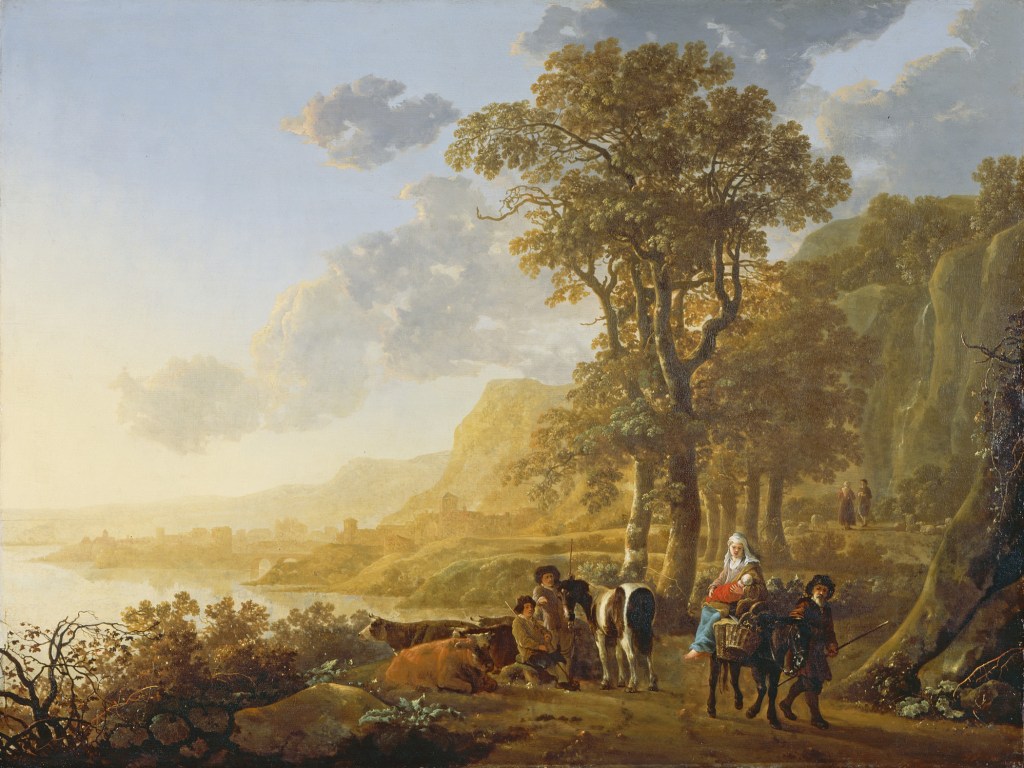
The Flight Into Egypt

Aelbert Cuyp’s “The Flight Into Egypt” (ca. 1665)

Although I saw this painting at the Getty Center in Los Angeles, it is actually on loan from the Los Angeles County Museum of Art. Apparently Aelbert Cuyp (1620-1691) painted several canvases of the Holy Family’s flight into Egypt to escape Herod’s massacre of the innocents born around Bethlehem. According to the Gospel of St. Matthew (2:16):

Then Herod, when he saw that he was mocked of the wise men, was exceeding wroth, and sent forth, and slew all the children that were in Bethlehem, and in all the coasts thereof, from two years old and under, according to the time which he had diligently inquired of the wise men.

This painting appealed to me because it moves its subject into an obviously European setting—certainly as far removed from the Sinai Peninsula as it is possible to be. At the same time, the scene is as peaceful as a bucolic Poussin or Lorrain painting of the same period.

Cuyp was noted for his landscapes. According to the Wikipedia entry on him, “he is especially known for his large views of Dutch riverside scenes in a golden early morning or late afternoon light.”

Spilimbergo

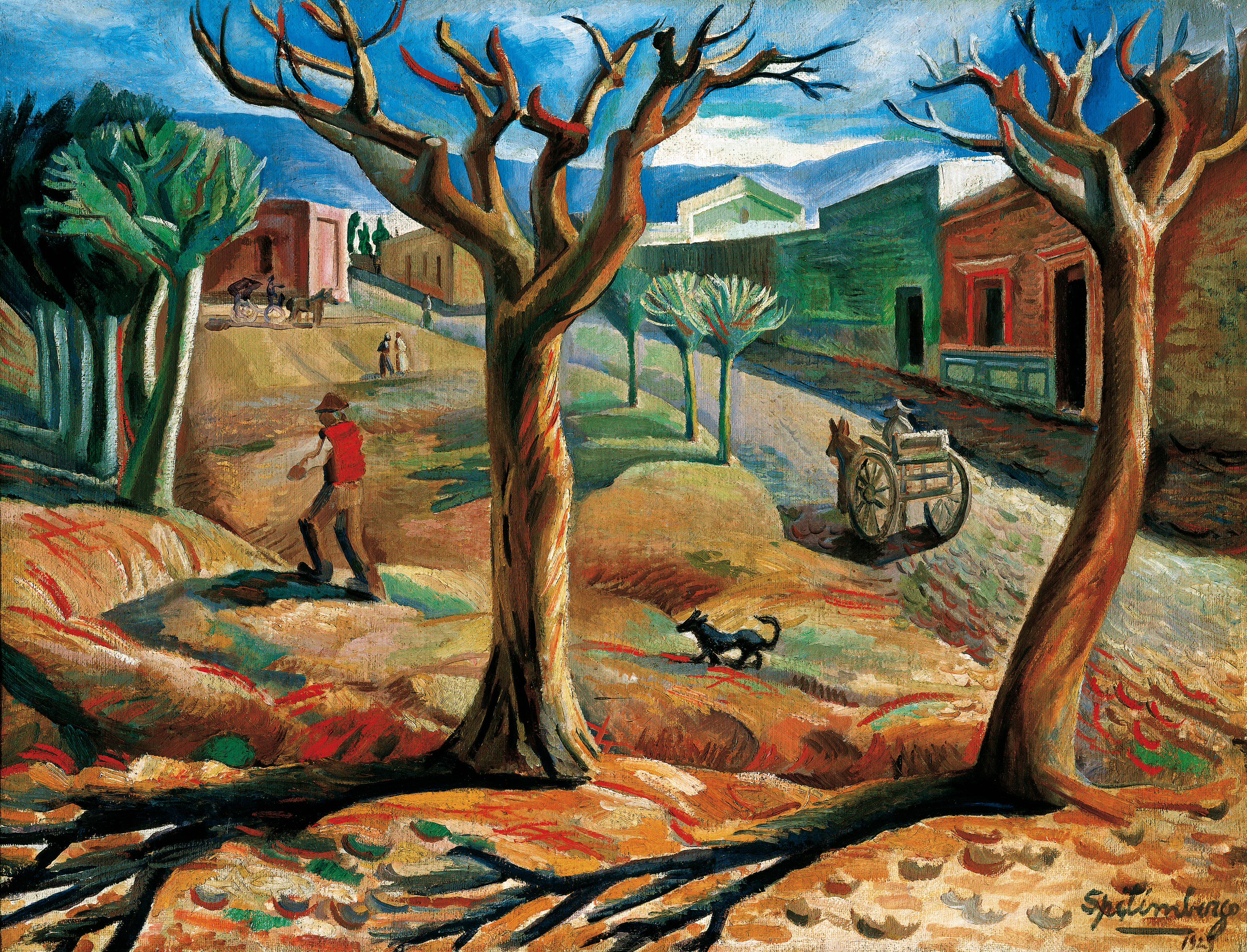
Landscape by Lino Enea Spilimbergo (1896-1964)

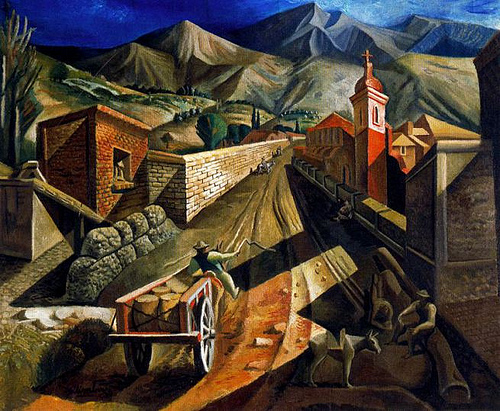
I have always thought that the world has never sufficiently appreciated the artists and writers of Argentina. Having paid three visits to that distant country, I have begun to appreciate the artistic vision of its people. This post honors the work of Lino Enea Spilimbergo, the son of Italian immigrants, who was born in the Palermo neighborhood of Buenos Aires, but for health reasons relocated to the drier province of San Juan in the center of the country.

“Pasaje de San Juan” by the Painter

What draws me to Spilimbergo’s work is that his eye seems to capture much of the wonder that is the Argentine landscape. Though the artists work was by no means limited to landscapes:

“Mujer Sobre Paisaje”

The above picture has both surrealistic and straight landscape elements, incorporating the jungles of northern Argentina with a female nude. Unfortunately, relatively little is written about Spilimbergo’s art on the Internet in English, though I think his work deserves serious study.


The Ruins of Pompeii

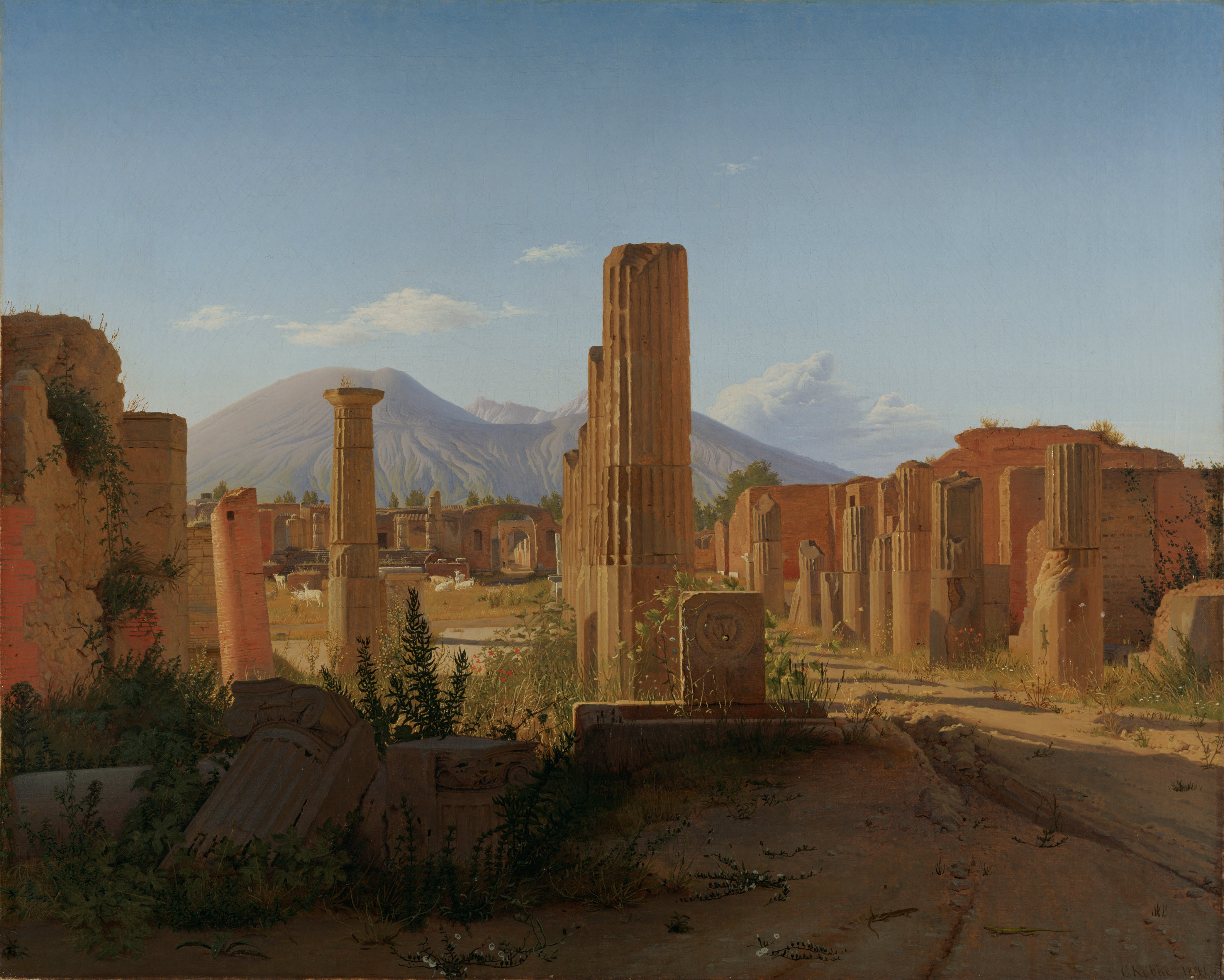
“The Forum, Pompeii, with Vesuvius in the Distance” (1841)

Last Sunday, I saw this Danish painting at the Getty Center and dreamed of visiting Pompeii. The artist of Christian Schjellerup Købke (1810-1848), who, like many 18th and 19th century artists did the Grand Tour. He returned to Denmark after a year or two of travel in sunnier climes—and promptly died at the age of 37 of pneumonia. I loved Købke’s painting, though I am saddened that he was cut off in his prime.

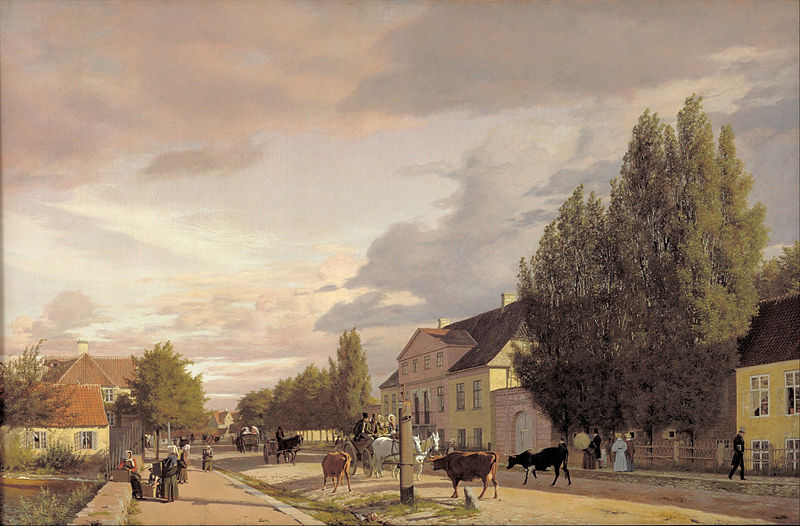
In earlier centuries, people were much more matter-of-fact about the suddenness of death—at any age. Although I would love to have seen Pompeii as Købke did, I am saddened that he did not have a longer career. Below is an earlier of his delicate landscapes:

“View of a Street in Østerbro Outside Copenhagen – Morning Light” (1836)

It’s not easy to paint a great landscape. Some painters had the knack, such as Theodore Rousseau, Jacob van Ruisdael, Claude Lorraine, Nicolas Poussin, and J.M.W. Turner. To that list, I would add Christen Købke.

Wild Nature

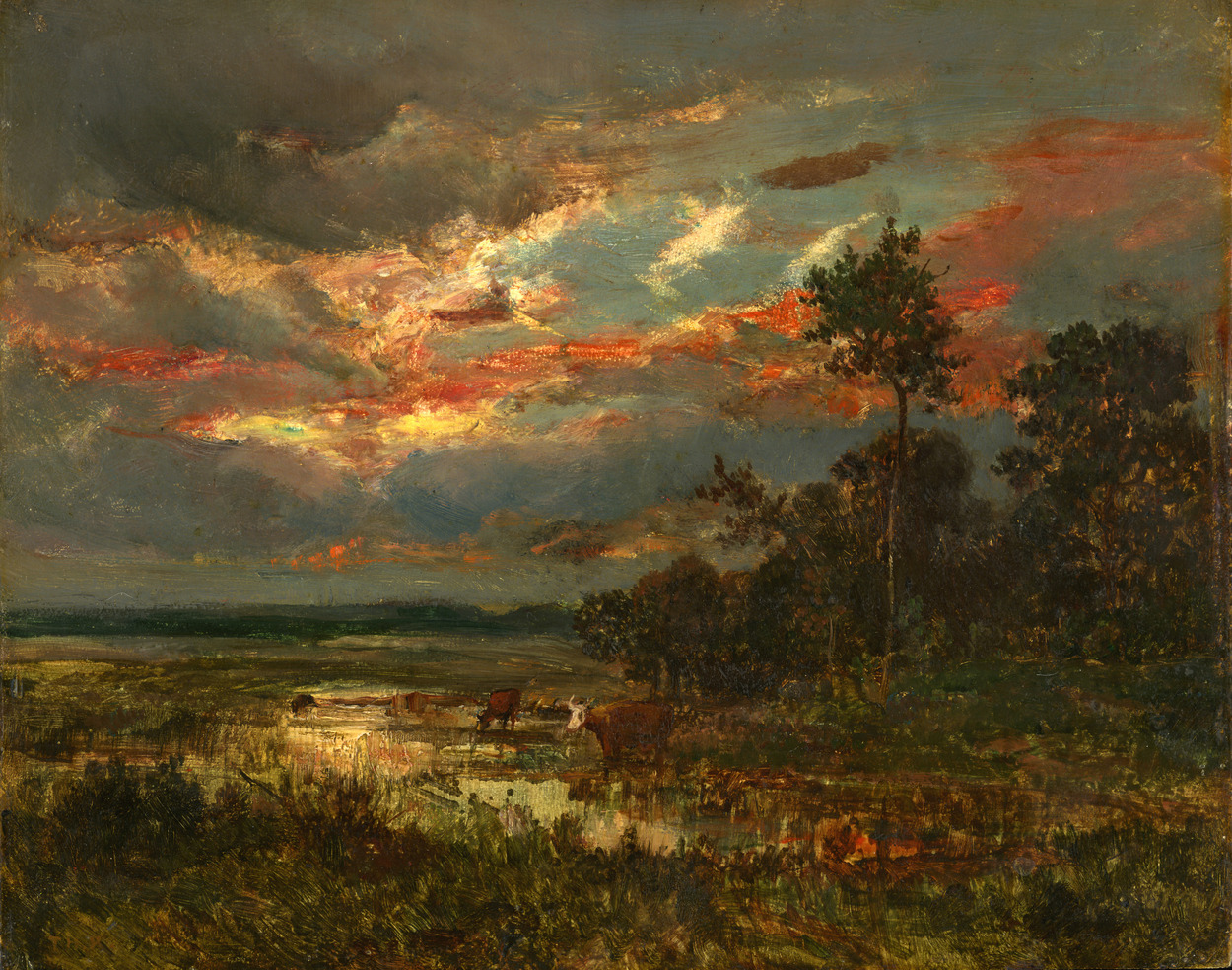
“Mare au Crépuscule” (1850) by Theodore Rousseau

“Mare au Crépuscule” (1850) by Theodore Rousseau

When I went to the Getty Center last Sunday, there was a traveling exhibit of the mostly landscape paintings of Pierre Etienne Théodore Rousseau. I had never heard of him before. I even asked one of the docents whether that was the same as Henri ”Douanier” Rousseau. Then, when I saw the paintings, I realized that here was a very different artist.

Théodore Rousseau painted nature as she is seen, not as a manicured garden. Here were trees that were alive and dominated the landscape. And man does not figure as a dominant force in most of his work.

“The Pond Near the Road” (1848)

“The Pond Near the Road” (1848)

Étienne Pierre Théodore Rousseau (1812-1867) was considered to be a painter of the Barbizon School, which takes its name from the village of Barbizon near the Forest of Fontainebleau, where many of its adherents would gather. Their work was marked by “its tonal qualities, color, loose brushwork, and softness of form” according to Wikipedia.

After all these years, I am getting a little fatigued with many of the impressionist painters; so it was a relief to see someone who work made me stop in my tracks admiring an artist who was new to me.