
In Praise of Minor Writers

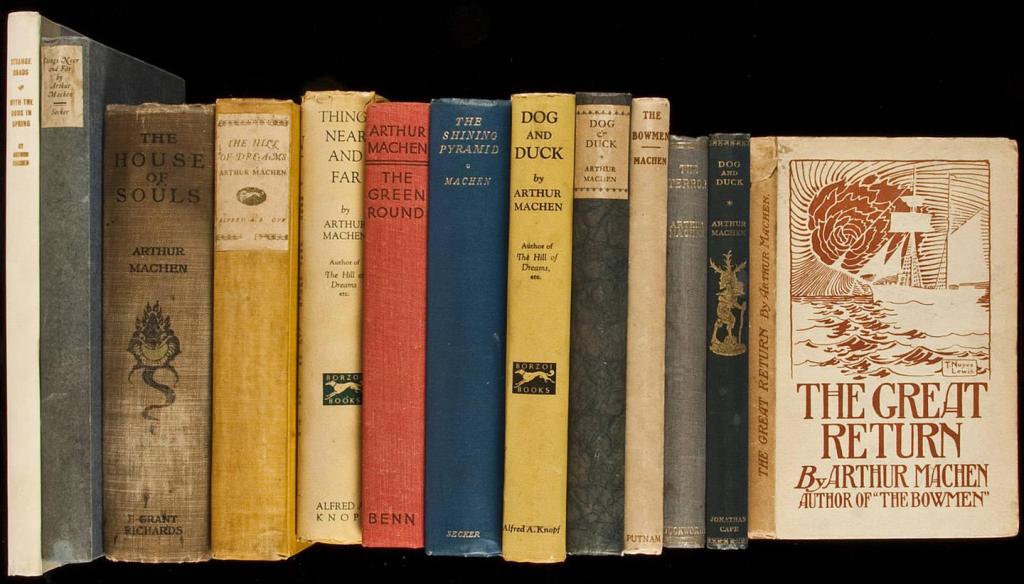
A Collection of Books by Arthur Machen (1863-1947)

Even if you have not read all the famous books by the universally acknowledged great writers, it is fun to root around the work of more minor writers. Such a one is Arthur Machen, born Arthur Llewellyn Jones in Caerleon-on-Usk in Wales. He is probably best known for his early horror stories, particularly The Great God Pan (1894), The Three Impostors (1895), and The Hill of Dreams (1907). You can read these with great enjoyment, but then, too, there are his essays, such as Dog and Duck (1924); his translations, such as The Memoirs of Casanova; and his three-part autobiography.

I have always found that if you cast your net widely, you will come up with a whole slew of interesting writers—and these will inevitably direct you to other works worth reading.

In addition to Arthur Machen, here are some of my other favorite minor British writers:

  • G. K. Chesterton is one of my favorite writers … period … for his novels, short stories, essays, and poems
  • Hilaire Belloc, friend of Chesterton, was born in France and wrote in a number of genres
  • Ernest Bramah, a tea merchant, author of stories starring the blind detective Max Carrados and the Chinese sage Kai Lung
  • Arthur Morrison wrote great mysteries and a very Dickensian novel The Hole in the Wall
  • Some great horror writers: W. W. Jacobs (“The Monkey’s Paw”); M. R. James (Ghost Stories of an Antiquary); Algernon Blackwood (“The Willows”); and Oliver Onions (Widdershins)
  • Richard Austin Freeman, author of the Dr. Thorndyke detective stories

I see that all the above authors were either late Victorian or Edwardian writers. And I notice that the list could have been at least five times as long had I tried harder. But then, I always thought that it was too tempting to go overboard on lists: no more than six bulleted items is best.
Samurai Swordplay

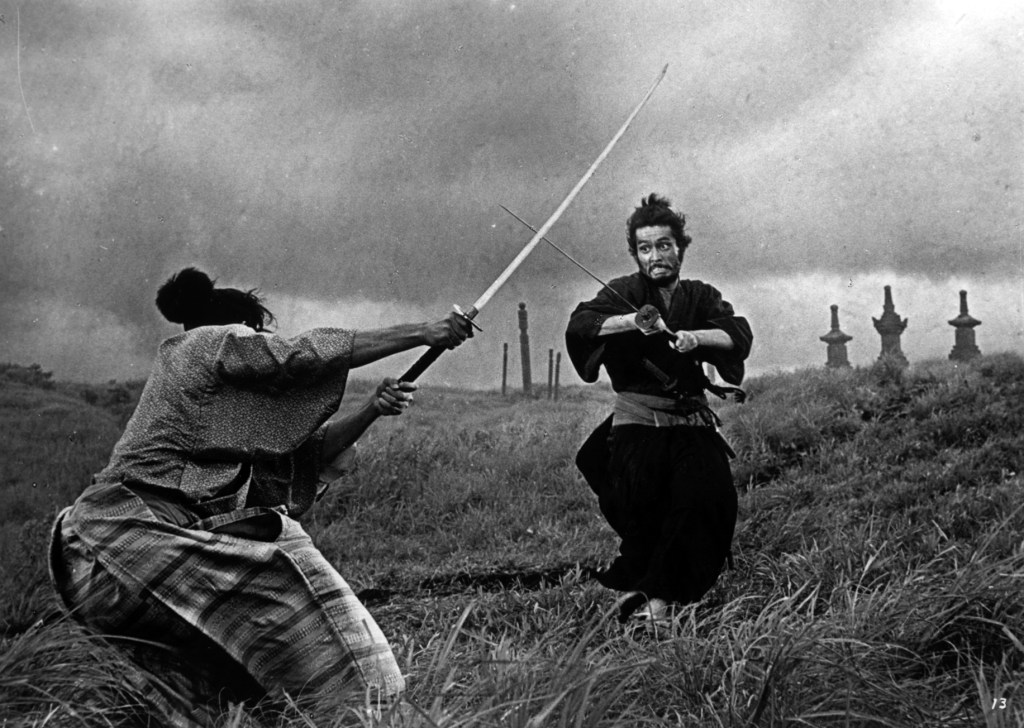
A few days ago, I promised to list my favorite Japanese samurai films. Here I present the annotated list in alphabetical order by eight directors, with my favorite samurai film for each director:

  • Hideo Gosha: Goyokin (1969) See also his early Three Outlaw Samurai (1964) and Sword of the Beast (1965).
  • Kazuo Ikehiro: Trail of Traps (1967). My favorite of the Kyoshiro Nemuri films starring Raizo Ichikawa.
  • Hiroshi Inagaki: Samurai Trilogy, comprising Musashi Miyamoto (1954), The Duel at Ichijoji Temple (1955), and Duel on Ganryu Island (1956).
  • Masaki Kobayashi: Harakiri (1962) starring the great Tatsuya Nakadai.
  • Akira Kurosawa: The Seven Samurai (1954), just one of over a dozen great chambara epics usually starring Toshiro Mifune.
  • Kenji Misumi: Lone Wolf and Cub: Sword of Vengeance (1972). Weird and entertaining.
  • Kihachi Okamoto: Sword of Doom (1965), another great Nakadai role.
  • Kimiyoshi Yasuda: Zatoichi’s Fire Festival (1970), one of a score of films starring Shintaro Katsu as a blind samurai warrior. Very funny.

After the 1970s, the studio system that supported the great Japanese films of the postwar period collapsed because the studios made more money selling their studio space in a real estate bubble than they ever did making movies. There’s a lesson to be learned there.

My Best of 2016

Heavily Weighted Toward 20th Century Fiction

Heavily Weighted Toward 20th Century Fiction

Below is a list of the ten best works of fiction (or near-fiction) that I read in 2016. No re-reads were included, which is probably why the twentieth century is over-represented. Three of the works (the first three listed below) purport to be straight non-fiction, but include fictional elements. They are listed below in alphabetical order by last name of the author:

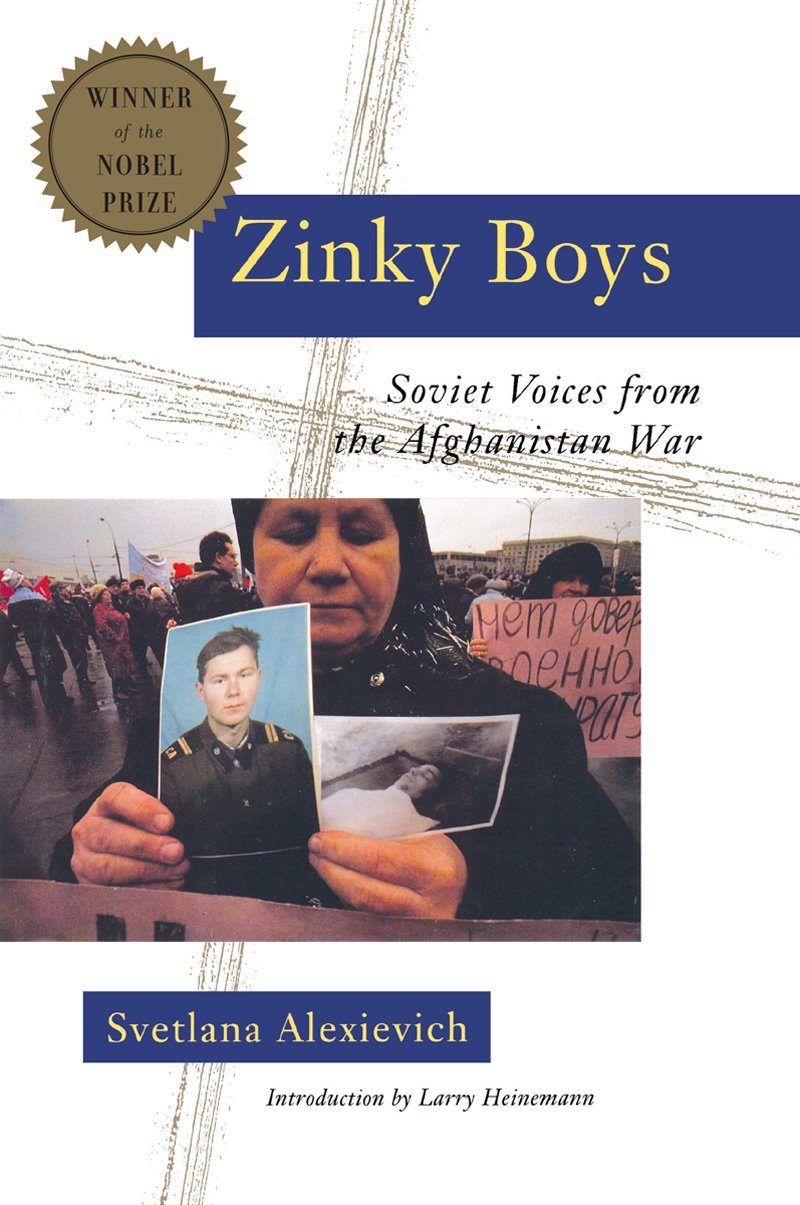
  • Alexievich, Svetlana. Zinky Boys: Soviet Voices from the Afghanistan War. Powerful stuff. Her concept of literature as interviews works really well because she’s great at getting people to open up.
  • Babitz, Eve. Eve’s Hollywood. Mostly autobiographical essay by the “It Girl” of the 1960s, with some fictional interpolations.
  • Barnes, Julian. Levels of Life. What it really means to lose someone you love.
  • Cohen, Albert. Belle de Seigneur. A thousand-page novel about illicit love in early 20th century France.
  • Flanagan, Richard. The Narrow Road to the Deep North. Probably a more realistic re-telling of the whole Bridge on the River Kwai story by a great Australian writer.
  • Modiano, Patrick. In the Café of Lost Youth. I am liking this French novelist more and more all the time.
  • Saer, Juan José. The Clouds. A tale of madness in Argentina in the 1800s.
  • Simenon, George. The Clockmaker. One of the mystery writer’s romans dur, about a father and his delinquent son.
  • Stevenson, Robert Louis and Lloyd Osbourne. The Ebb-Tide. Recommended by Jorge Luis Borges in one of his interviews, one of RLS’s best.
  • Wells, H G. Tono Bungay. A classical 19th century Victorian novel, decidedly not sci-fi.

The funny thing about this list is its variety. Is it because I’ve read most of the classical fiction repertoire already?

In 2017, I’m continuing my long-range project of reading most of Fyodor Dostoyevsky’s work along with Joseph Frank’s five volume biography. And, of course, I’m still casting my nets wide to find the best of world literature.