Is Rain a Frenemy?

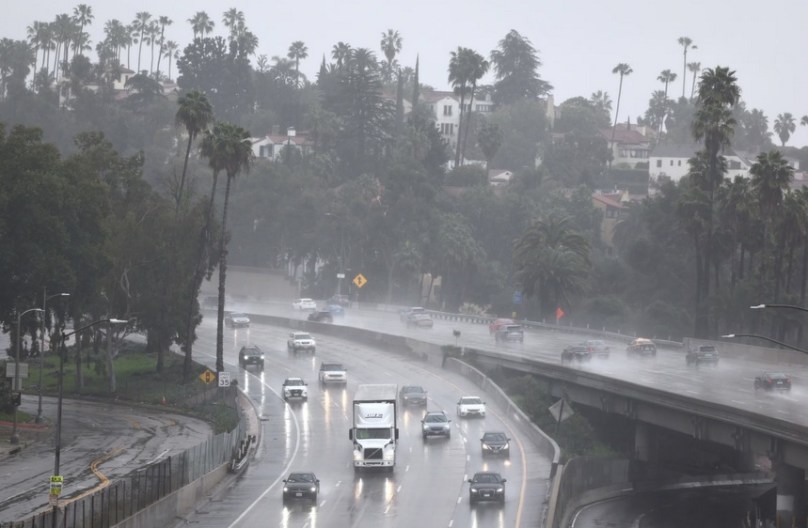
L.A. Caught in the Throes of an “Atmospheric River”

It seems that Southern California is in a perpetual drought, except when we are being drenched by monster rainstorms. I love rain because it makes the surrounding hillsides green, that is, when it doesn’t send those same hillsides sliding into the ocean.

The Los Angeles River is something of a joke for most of the year. (You might remember the car chase scenes in Terminator 2 along its concrete banks.) Right now, it is a raging torrent which I would not dare to approach.

At the supermarket today, I forgot an item on my grocery list for our supper. After watching Fritz Lang’s M (1931) on TCM (Turner Classic Movies), I noticed that the rain was still coming down, so I decided to make do with miscellaneous food items I had lying around the kitchen. Why didn’t I go back to the market? For one thing, it was already dark; and L.A. drivers go crazy when there is anything heavier than a drizzle.

Fortunately, I am a bookworm and a cinephile, so I have no problem entertaining myself. Martine, however, likes to take long walks; and the weather lately has not been conducive.

I Didn’t Like L.A. at First …

Downtown Los Angeles 2011

It took a few years for me to get to like Los Angeles. I had grown up in Cleveland, Ohio—nobody’s idea of a beautiful city. I was used to red brick buildings overlaid with grime, along with hot humid summers and unrelievedly grim winters. My first opinion of Southern California was, “This place just isn’t real!”

Oh, it was real all right. After enduring earthquakes and floods and smog and wildfires, I saw that L.A. had its own demons, which were more intermittent. (In Cleveland, they were pretty constant.)

When I was in college trying to decide where to go to grad school to study film history and criticism, I remember reading a snide book (whose title I forget) about a state whose residents were called Procals (short for Pro-California) whose residents endlessly plugged their state as “God’s country.”

The part that sticks in my mind was the description of the Pacific Coast Highway as it followed the coast north from Santa Monica. Anyhow, the highway was always being covered with destructive landslides. Well, now I live a scant two miles from that road. It is incredibly beautiful, but I haven’t the heart to drive it ever since the January wildfire that destroyed Pacific Palisades. Too many of my favorite places have been burned to a crisp.

Am I a Procal? No, not at all. There are too many people in Southern California. Too many of the recent arrivals are homeless people who live in tents pitched any which way on sidewalks, surrounded by piles of trash. They have taken a lot of the shine off Los Angeles. I still love the place, but I am all to conscious that no place ever remains the same over the decades.

My Libraries

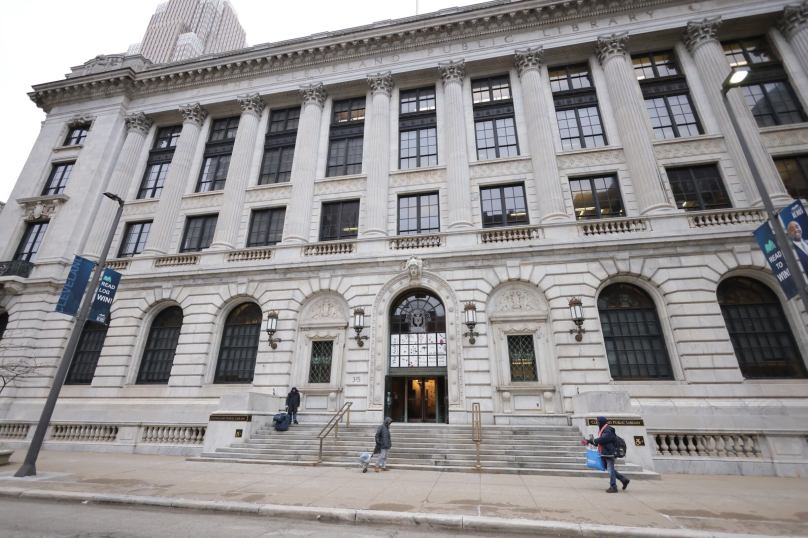
The Main Branch of the Cleveland Public Library Downtown

Books and libraries have always played an important part in my life.

When I was a toddler, my mother took me to the branch of the Cleveland Public Library on East 109th Street (now Martin Luther King Drive). Not that I could read, but I could indicate based on the illustrations the books I would be most interested in. She would check them out and read them to me in Hungarian, probably embroidering a bit. The one book I remember from that period was Dr. Seuss’s The King’s Stilts, which I now have in my collection.

In 1951, after my brother Dan was born, we moved to the Lee-Harvard Area on the East Side of Cleveland. For many years, I went to the Lee-Harvard branch which was located on Lee Road, first north of Harvard, and then south of it. The head librarian was a fellow Hungarian, Mr. Matyi, who played the oboe in the Cleveland Philharmonic Orchestra.

During my college years at Dartmouth, I spent many hours at Baker Library, which was modeled after Independence Hall in Philadelphia. What I loved most about it were the frescoes in the reserve room that were painted in the 1930s by José Clemente Orozco.

Jose Clemente Orozco, Murals at Baker Library Reading room, Dartmouth College, Hanover NH; The Machine

Once I moved to Los Angeles, I spent some time at the UCLA University Library, but I liked going to the main branch of the Santa Monica Public Library—which satisfied me until an opportunity opened up with the construction of the E (for Expo) Line of the Metro Rail. Driving and parking downtown was always a major pain. But now I was able to whiz downtown for 35 cents in three quarters of an hour.

I am now hooked on the Central Branch of the Los Angeles Public Library. Not only because of the library’s holdings, but various events sponsored by the library, especially the guided Thursday mindful meditation sessions.

The one library I forgot to mention is my own personal library of some 6,000 volumes, which I am slowly trying to thin by donations.

Back to … This?

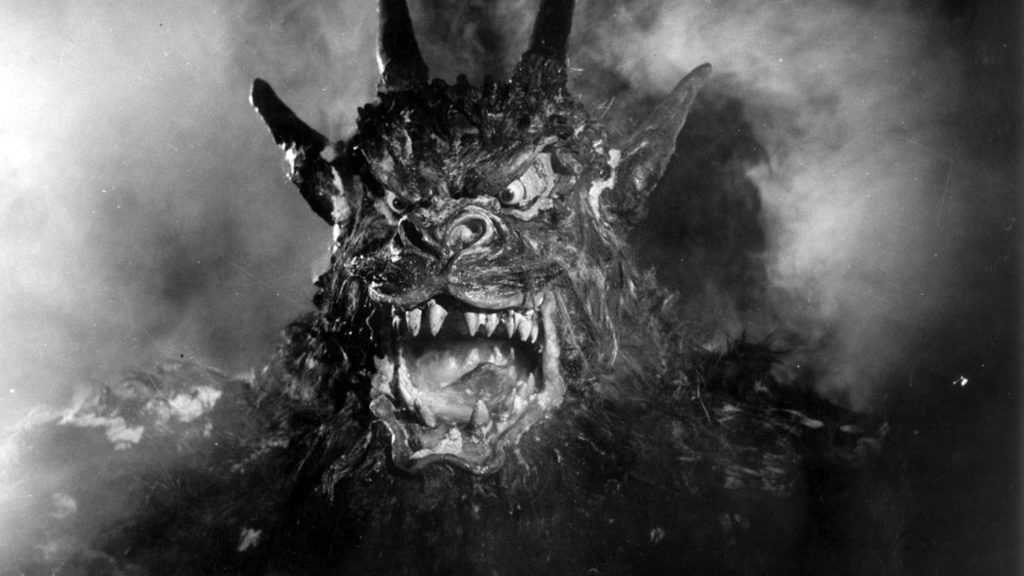
Still from Jacques Tourneur’s Night of the Demon (1949)

I was in the hospital until a few days ago—and that wasn’t even the worst thing that happened at the start of this inauspicious New Year. What affects me more are the wildfires that are destroying the city of Los Angeles.

One of my best friends has lost his house, his church, and his neighborhood from the Eaton Fire in Altadena. To this point, I have not been affected, but in the nearby city of Santa Monica, just two miles to the northwest, residents are being warned they may have to evacuate.

The hurricane-force winds buffeting the area are sending flaming embers for miles, each one of which is capable of burning down a house, place of business, school, apartment building, or church. I have never experienced such powerful wind gusts in the sixty years that I have lived in Southern California.

First Responders at the Palisades Fire

Over the decades, I have come to love Los Angeles. What is happening to it now is tearing me apart.

LA28: A Modest Proposal

Time to Introduce New Sports for the Next Olympics

The 2024 Paris Olympics were a smashing success. The Chinese continued their domination of track and field, while the Americans took medal after medal in platform diving. For the next Olympics in my home town of Los Angeles, it’s time to consider some new events to mix things up a bit:

SYNCHRONIZED PIZZA DOUGH TOSSING. Let’s face it: Pizza has become an international food and is due for some recognition by the Olympics.

THREE-LEGGED MARATHON RACE. I’ve always thought that Marathon runners had it too easy. I mean the only difficult thing about the 42.195 kilometer (26.219 mile) course is doing all the decimal math in your head while running.

FACEBOOK FACEPLANT. Let’s acknowledge the role of social media in our lives by having a race during which the participants must complete a series of responses to social media posts while running.

UNDERWATER GYMNASTICS. On one hand, you have greater buoyancy in the water; on the other hand, you don’t want to stretch out your routine too long.

CLIFF DIVING. For lemmings only. You dive off a cliff into a net. You can have a number of heights: 100 meters, 200 meters … the sky’s the limit.

An Architectural Marvel

The Getty Center in Los Angeles

In general, I am not a big fan of contemporary architecture. I get tired of giant rectangles constructed of steel and glass. Ever since it opened its doors in 1997, I have come to love the Getty Center. (I also love the Getty Villa in Malibu, but I’ll save that for another time.)

Architect Richard Meier spent thirteen years designing the center, with the kind of attention to detail used to site ancient Egyptian or Meso-American temples. For instance, some of the buildings on the campus are oriented north/south. Others parallel the line of the I-405 freeway, which is 22.5° degrees off the north/south axis—which is exactly one-half of 90° and one-fourth of 180°.

The buildings are faced with blocks of travertine from Italy or aluminum tiles, both of which are 30 inches square (or 76.2 centimeters). Below is a close-up of one of the highly textured travertine walls:

Travertine Blocks Forming Getty Center Outer Wall

When I open the front door of my apartment in the morning to pick up my copy of the Los Angeles Times, I can actually see the Getty Center atop its hill some 4.5 miles (7.24 kilometers) as the crow flies. For more info about the Center’s design, click here.

Hello Darkness My Old Friend

Los Angeles at Night

This afternoon the thought suddenly hit me that, in the Los Angeles night, it never really gets dark—or altogether quiet, either. I have experienced total darkness only once, when the lights in the Cave of Balancanche near the ruins of Chichén Itzá in Yucatán were turned off to show the turistas why the Maya thought that caves were portals to Xibalba, the “place of fright,” the underworld.

I used to love camping in the desert during the winter months, finding the nighttime in places like Death Valley, Hovenweep, and Chaco Canyon a magical experience. Seeing the myriad of stars in the sky without interference from city lights is something I recommend to all. When was the last time I saw stars in Los Angeles? How about … never?

In addition to the all-pervasive light pollution, there is constant noise, not only from the heater and refrigerator, plus an all-pervasive high-pitched electronic susurrus, but from the city around us. Whenever a motorcycle or a performance car races down the street, a number of car alarms go off and screaming until the automatic shutoff kicks in.

Also, I live within 2-3 miles of three major hospitals: UCLA Ronald Reagan, UCLA Santa Monica, and Saint John. In an average night, we hear several ambulance sirens carting the sick to local emergency centers.

Despite all this, I somehow manage to clock 8-9 hours a night of fairly solid sleep.

I wish I could say the same for Martine. To avoid nightmares, Martine must take a sleeping pill that gives her only 4-5 hours a night, or even less. At a certain point during what I call the Hour of the Wolf, Martine just lies in bed trying without luck to drop off into slumberland.

Eclipse

Enough Fentanyl to Kill a Regiment

Yesterday afternoon, I heard some strange animal-like sounds coming from below my living room window. I pushed back the blinds, only to see several policemen and paramedics tending to something hidden by the hedge separating my building from the neighboring building. As I continued to look, I saw the paramedics hauling a black man in a bloodied t-shirt who was still howling.

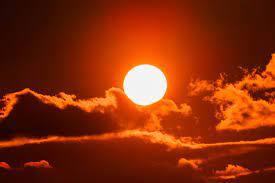
Just another day on the streets of L.A., watching as our civilization is being eclipsed. And not just for a few minutes, either, but for the long count.

I do not understand why anyone would think that recreational drugs would be an improvement on real life. Even when real life is grim, it beats madness and suicide by chemical.

What is the tipping point after which there are so many people on drugs that reality has been supplanted? For a possible picture, read Polish sci-fi author Stanislaw Lem’s The Futurological Congress.

A Wild Day

A Tropical Storm in August—Followed by an Earthquake?

My friend Bill Korn had it right: “So. Floods. Tempests of wind. Even an earthquake. It seems like Someone is having an Old Testament-y kind of day.” Today, for the first time in eighty-four years, Los Angeles was hit by a summer hurricane that snaked its way north from Baja California. Just as a kind of bonus, we also had a Richter 5.1 earthquake around 2:40 this afternoon. (Fortunately, it was centered in Ojai, which is more than fifty miles northwest of here.)

Typically, L.A. has a short rainy season that lasts roughly from December to March. In the sixty-odd years I have lived in Southern California, we have not had any intense tropical summer storm events like this one. The rain started twelve hours ago and bids fair to continue for another whole day.

Thankfully, we are on the western edge of the storm, so we have not had any gale-force winds, just a whole lot of rain.

Martine and I went out for a Thai lunch early this afternoon, but otherwise we just stayed put, hoping with our fingers crossed that we would not have another power outage.

Summer Is Icumen In

It was bound to happen eventually. We had an unusually cold winter, but now the pendulum has swung to the other extreme. It wasn’t so bad near the ocean, where we live; but Martine spent most of the day downtown, where the temperature was several degrees of Fahrenheit warmer. It was no surprise to me that she took the earlier bus back.

The title of this post is the diametric opposite of the first line of an Ezra Pound satirical poem on the subject of winter, written, of course, in Middle English:

Winter is icumen in,
Lhude sing Goddamm,
Raineth drop and staineth slop,
And how the wind doth ramm!
Sing: Goddamm.
Skiddeth bus and sloppeth us,
An ague hath my ham.
Freezeth river, turneth liver,
Damm you; Sing: Goddamm. 

Goddamm, Goddamm, ’tis why I am, Goddamm,
So ’gainst the winter’s balm.
Sing goddamm, damm, sing goddamm,
Sing goddamm, sing goddamm, DAMM.

Typically during this time of year, I turn into a lizard-like reader of books set in warm climates, like India, South and Central America, or the Deep South. I started by re-reading William Faulkner’s Sanctuary (1932) and have started in on Edouard Glissant’s Faulkner, Mississippi (1999).

I will probably try to get up earlier so I can take my walks in the cooler mornings. Once noon has passed, it is no fun to exercise.