
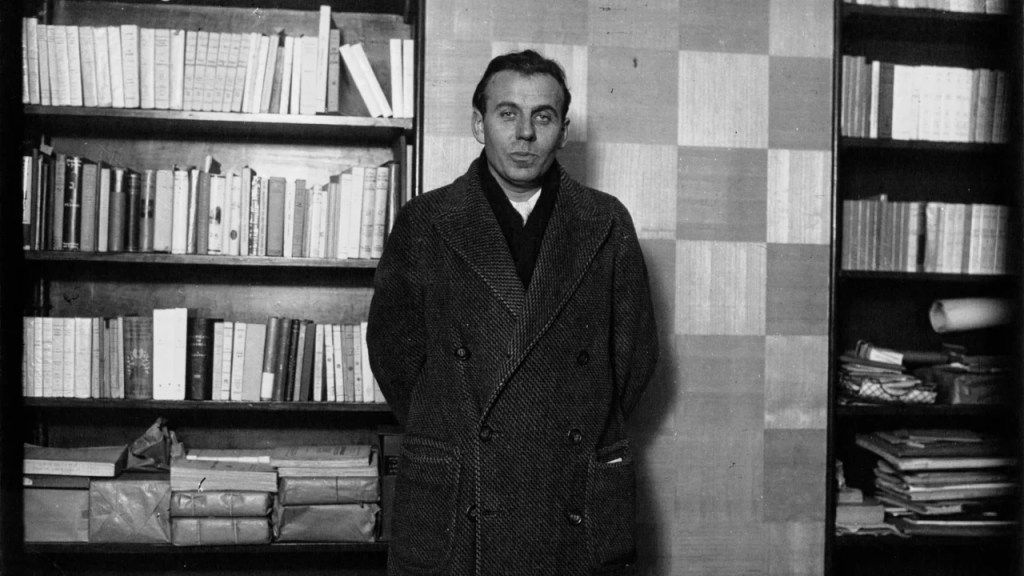
Doctor Destouches in Germany

Doctor Destouches (aka Louis-Ferdinand Céline)

He will never win any humanitarian awards, or, for that matter, any awards, but Louis-Ferdinand Céline is one of the greatest writers of the twentieth century, an anti-Semite, a Nazi sympathizer, and probably a very decent human being otherwise. Born Louis Ferdinand Auguste Destouches in Courbevoix, France in 1894, Céline became a wounded war hero at Ypres in 1914

After the war, he became a physician and toured Africa and the Americas working for the League of Nations. In 1932, he published his greatest and most approachable novel, Journey to the End of the Night (Voyage au bout de la nuit). Unfortunately, in the early 1940s, he published several anti-Semitic books urging closer ties to Hitler’s Germany.

After the Allied invasion of France, Céline fled to Germany after having been identified by the Resistance and the British as a collaborationist. It was the beginning of a long and confused period escaping Allied bombing attacks and the Russian Army that was brilliantly described in his trilogy about being a guest of the Nazis as they were being pounded to pieces:

  • Castle to Castle (D’un château l’autre) 1957
  • North (Nord) 1960
  • Rigadoon (Rigadon) 1961

Years after reading the first two volumes, I have just finished reading Rigadoon and loving it. Céline and his wife are constantly being shuttled on trains from one bombed-out city to another. At one point, he escorts a group of eighteen severely retarded children from Hannover to Hamburg and manages to transfer them to a special Swedish Red Cross train taking them to safety. Unfortunately, the same train took Céline to Copenhagen, where he served a year in prison for his collaboration with the Nazis.

He died in 1961. Although his novels were a powerful influence on other novelists, Céline was never treated with the honor that his literary and medical work deserved. He spent his last years being a doctor treating poor patients in the slums of Paris.

So fair and foul a career I have not seen. I love Céline’s novels even as I detest his racial and political views. Life can be strange.
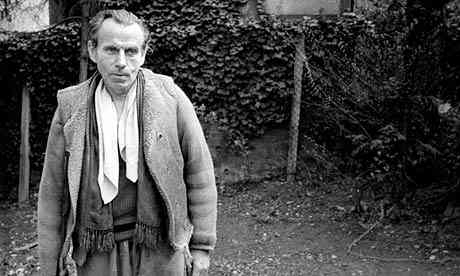
Doctor Destouches and Mister Hyde

Louis-Ferdinand Céline

French Author Louis-Ferdinand Céline

There are some writers in which critical opinion is inevitably polarized. Especially Louis-Ferdinand Céline, who committed the unpardonable sin of being politically incorrect to the nth degree. On one hand, he was the kindly Doctor Destouches, who ministered to the health needs of the poor without overcharging them. On the other, he wrote three anti-Semitic pamphlets in the lead-up to the Second World War that endeared him to the Nazi occupation forces and earned death threats from the French Resistance.

Not mentioned in the above paragraph is the fact that Céline wrote two of the greatest books of the 20th Cemtury: Journey to the End of the Night (1932) and Death on the Installment Plan (1936). His postwar trilogy about his travails for his “war crimes” is almost as great: Castle to Castle (1957), North (1960), and Rigadoon (1961).

The Young Céline

The Young Céline

In his biography of the author, Patrick McCarthy aska:

What remains alive of Céline? When one looks beyond his period and and beyond all the different roles he played, what remains of the man and his work? His life was dedicated to probing the pain that men feel at their contact with the world. Each person knows, as he goes about his daily round, that one part of himself does not join in. It remains outside, permanent and untouched. One tries to ignore it but it is there. It was Céline’s destiny to face this “otherness”: to look hard at it and to liberate it. It rushes out in his work as fear: the fear of man abandoned to himself. In Céline’s vision this fear engulfs all existence. It expresses itself in many ways: as pain, loneliness, hatred and pity. These are the guiding demons of Céline’s work—inseparably interwoven. But beyond all of them is this fundamental and total fear. It explains why reading Céline is such a shattering experience. It is not that fate dominates or that death lies in wait. It is that every moment the “otherness” is rampant. It runs around screaming that the nightmare is real and the waking hours only a dream. It imposes on the reader a very special kind of pain—reminiscent perhaps of Shakespeare’s wildest moments in King Lear.

When interviewed by an Italian journalist, American poet Charles Bukowski ended by saying, “Don’t shout so much. And read Céline.” That’s good advice.