Red Hat

Entrance to Louisiana’s State Penitentiary at Angola

Located in West Feliciana Parish is Louisiana’s fearful Angola State Penitentiary. And within that penitentiary, by far the worst place to be incarcerated was the Red Hat Cell Block, which also contained the state’s electric chair, known as “Gruesome Gertie,” which was used for 87 executions between 1956 and 1991.

The Red Hat Cell Block was named after the red painted straw hats the inmates wore when working on the prison farm. It contained thirty cells that were 3 × 6 feet (0.91 meters × 1.8 meters), with a single window near the ceiling that was 1 foot square (0.3 meters square). Inmates slept on an iron bunk without any mattress. Temperatures frequently soared to slow oven levels; and the cells were infested with rats and other vermin. There was no toilet: prisoners had to eliminate in a bucket that was emptied each morning.

Naturally, most of the inmates of the cell block were non-whites. And, needless to say, even prisoners on death row in Angola had it better.

Entrance to the Red Hat Cell Block

Why am I describing such a terrible place? It is because I am becoming increasingly of the role that racism has played in the history of our country—a history which many Americans are trying to whitewash.

It goes all the way back to the Constitution of the United States. In an article by Steven Mintz entitled “Historical Context: The Constitution and Slavery,” it states:

The word “slave” does not appear in the Constitution. The framers consciously avoided the word, recognizing that it would sully the document. Nevertheless, slavery received important protections in the Constitution. The notorious three-fifths clause—which counted three-fifths of a state’s slave population in apportioning representation—gave the South extra representation in the House of Representatives and extra votes in the Electoral College. Thomas Jefferson would have lost the election of 1800 if not for the Three-fifths Compromise. The Constitution also prohibited Congress from outlawing the Atlantic slave trade for twenty years. A fugitive slave clause required the return of runaway slaves to their owners. The Constitution gave the federal government the power to put down domestic rebellions, including slave insurrections.

Lest we pat ourselves on the back for not being Southerners, I have seen enough in Cleveland and Los Angeles in my time to feel a deep sense of shame. How many decades, how many centuries must pass before the blot of slavery and racism are wiped out?
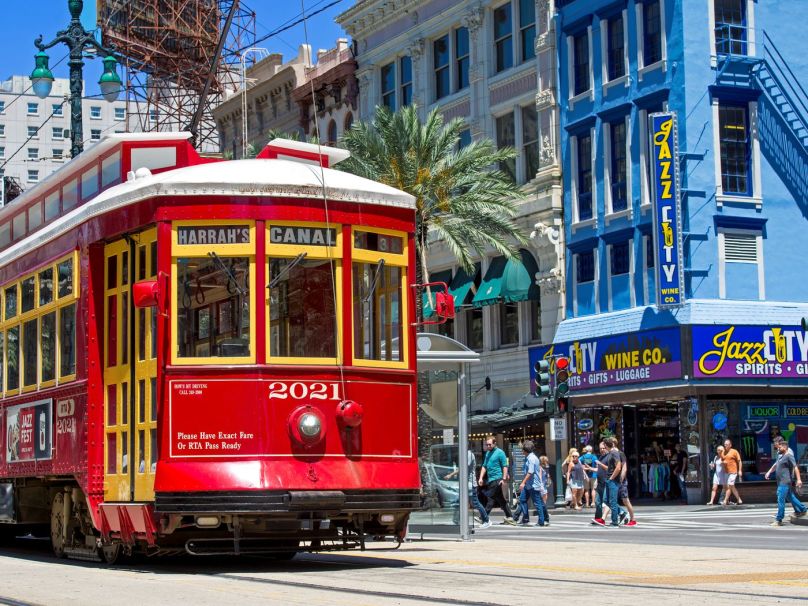
A Streetcar Named Canal

The Canal Street Streetcar Line in New Orleans

Although most of the South doesn’t interest me very much, I would love to visit New Orleans during the two or three weeks of the year when the weather isn’t too oppressive. And I would be delighted to skip the crowds of Mardi Gras.

New Orleans started out under the French flag from 1718 to 1763, then under Spain from 1763 to 1802. It returned to France briefly in 1802 until First Consul Napoleon Bonaparte decided to sell it to the fledgling United States of America in 1803 for $15 million, along with a whole lot of other land totaling 828,000 square miles. The only other flag that flew over the Big Easy were the “Stars and Bars” of the Confederate States of America (1861-1862).

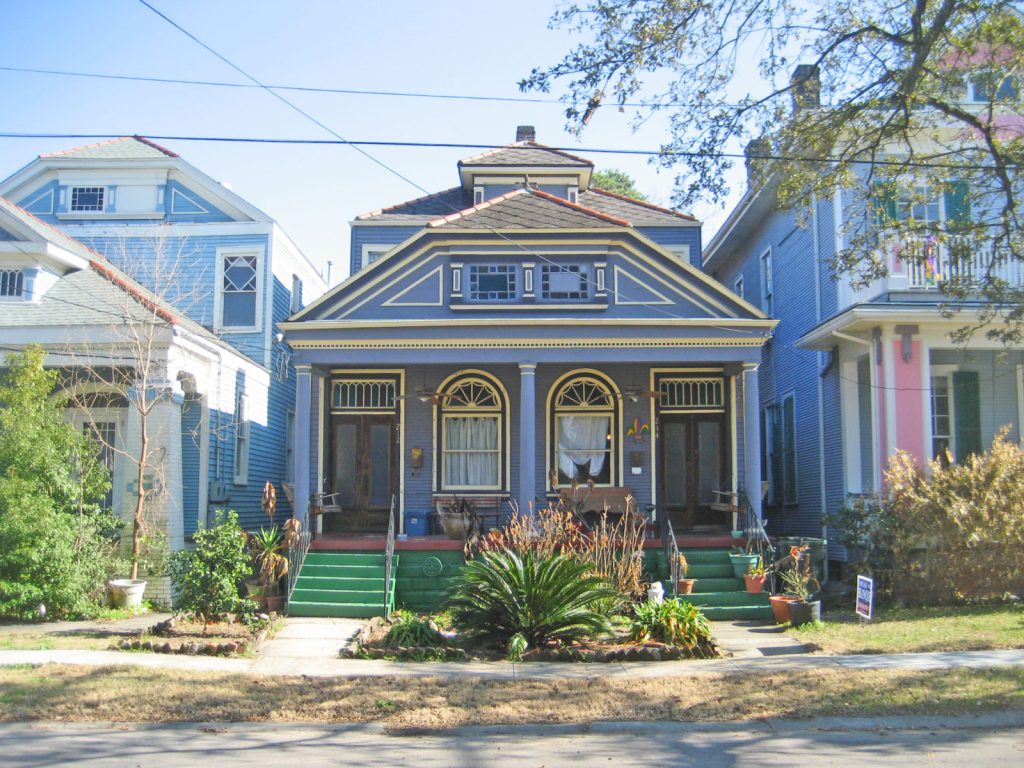
Camelback House in New Orleans

What interests me about the city is its rich cultural (and culinary) history. (How many cities in our country have their own cuisine?)

Close to the city are the Cajun parishes of Louisiana, with their own transplanted French Canadian culture. Martine and I have visited the Maritime Provinces of Canada, from where the Cajuns (Acadians) hailed after they were deported following the French and Indian War. In preparation for some future visit to Louisiana, I have been reading the Dave Robicheaux novels of James Lee Burke. And I am currently in the middle of George Washington Cable’s The Grandissimes.

Until the coronavirus quarantine becomes a thing of the past, I won’t be doing much traveling—though I might go to Puerto Vallarta in Mexico to celebrate my brother’s 70th birthday in April. (That, too, is contingent on the virus.)

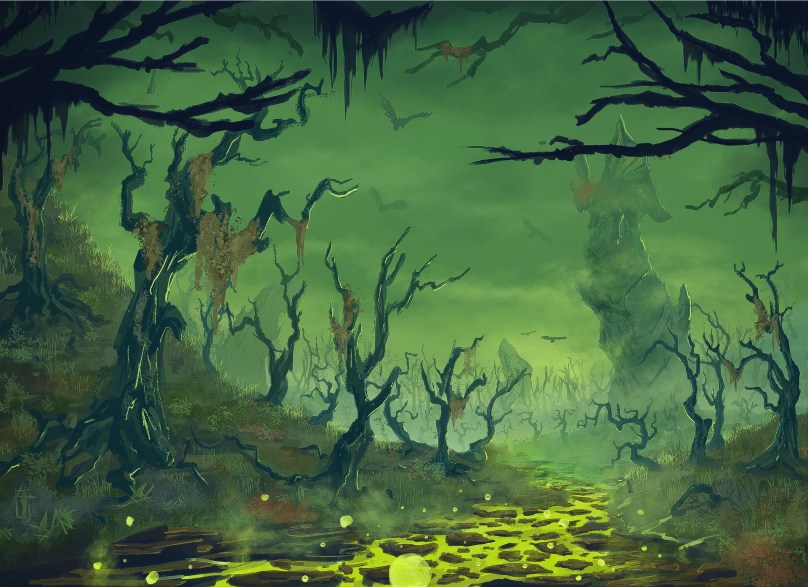
The Swamp of Evil

Swamps in Our Culture Are Places of Evil

One of the grisliest places I ever visited was the Mexican State of Tabasco, where storms upriver caused floods in Villahermosa. From the banks of the Grijalva, my brother and I saw the carcasses of cows and other livestock come floating past in the fast-flowing muddy waters. The humidity easily stood at 100%, if not more.

We have our swampy regions in the States as well. Take Louisiana, for instance, where the Atchafalaya Basin could become the new course of the Mississippi, if it jumps the Army Corps of Engineers dams to the north.

James Lee Burke, Author of the David Robicheaux Novels

I have just finished reading James Lee Burke’s Sunset Limited, in which David Robicheaux of the New Iberia Police confronts evils that are scarcely to be imagined, let alone experienced.

Years ago, a labor leader named Frank Flynn was murdered by being crucified upside-down with a nail gun on the side of an old barn. His children Cisco and Megan are back in the Bayou Teche area, along with some of the nastiest contract killers ever portrayed in literature. But then, as Dave reminds us, “Evil doesn’t have a zip code.”

The gnarliest of them, one Harpo Scruggs, also has a wicked sense of humor:

“You got a lot of brass,” I said to him.

“Not really. Since I don’t think your bunch [the police] could drink piss out of a boot with the instructions printed on the heel,” [Harpo] replied. He unscrewed the cork in the mescal bottle with a squeak and tipped another shot into his glass.

One thing that characterizes a Dave Robicheaux novel is the tendency of its hero, along with his friend Clete Purcel, a former New Orleans police officer, to confront evil head on, with intensity and frequency.

To date, I have read over ten of Burke’s Robicheaux novels with their brooding atmosphere of Cajun eeriness—and I intend to keep going.