O Brave New World!

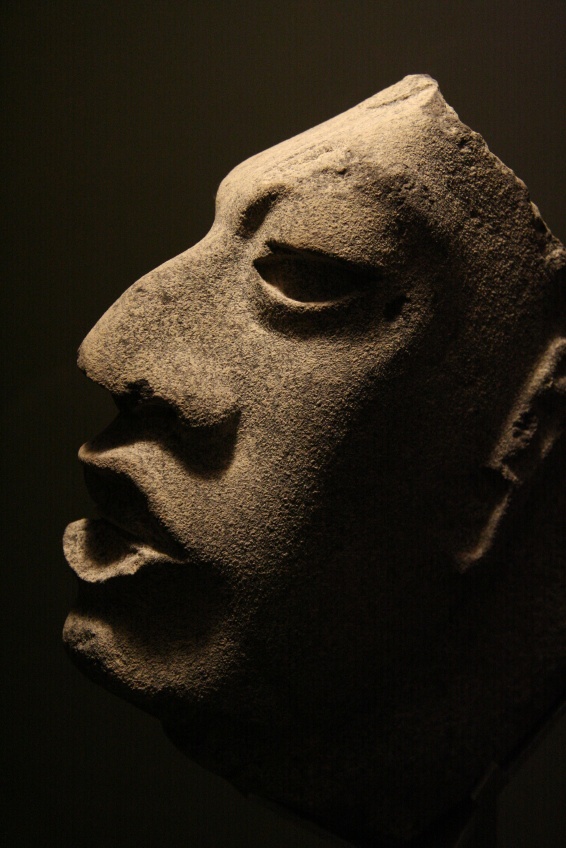
Maya Nose on Pre-Columbian Figure

The world opened up for me when I was thirty years old. It was the first time I even thought of breaking loose from my mother and father and exploring the world. For my first trip, I chose Yucatán in November 1975. And it was magical. First there was that cab ride to the Hotel Mérida past snack bars that were open to the street. It was my first experience of the tropics (other than Florida), and in the dark I saw men and women drinking beer and sodas. I was able to peer into houses and saw families watching television.

Once I checked in to my hotel, I stood at my sixth-floor window looking down onto Calle 60 and looking at passers-by walking on the sidewalk below. Suddenly one stopped and looked straight up at me. How did he know to do that? I stayed up until the wee hours of the morning, staring at an optician’s office across the way called Optica Rejón.

I was entranced by the zócalo and the 16th-century structures surrounding it. I had my boots polished every day. There was endless people-watching, all those Maya with their distinctive noses.

How many goodly creatures are there here!
How beauteous mankind is! O brave new world,
That has such people in ’t!


Around mid-afternoon, I hung out at the main entrance of the University (also on Calle 60, just a couple blocks from my hotel). So many beautiful young women that looked so different from the ones back home! Young Maya women are astonishingly good looking.

Can you wonder that, feeling the way I did about travel, that it would become a major feature of my life. Even though, in the next two years, I would travel to Europe, there was something about Latin American that lured me—and still does.

Why I’m Stuck on the Maya

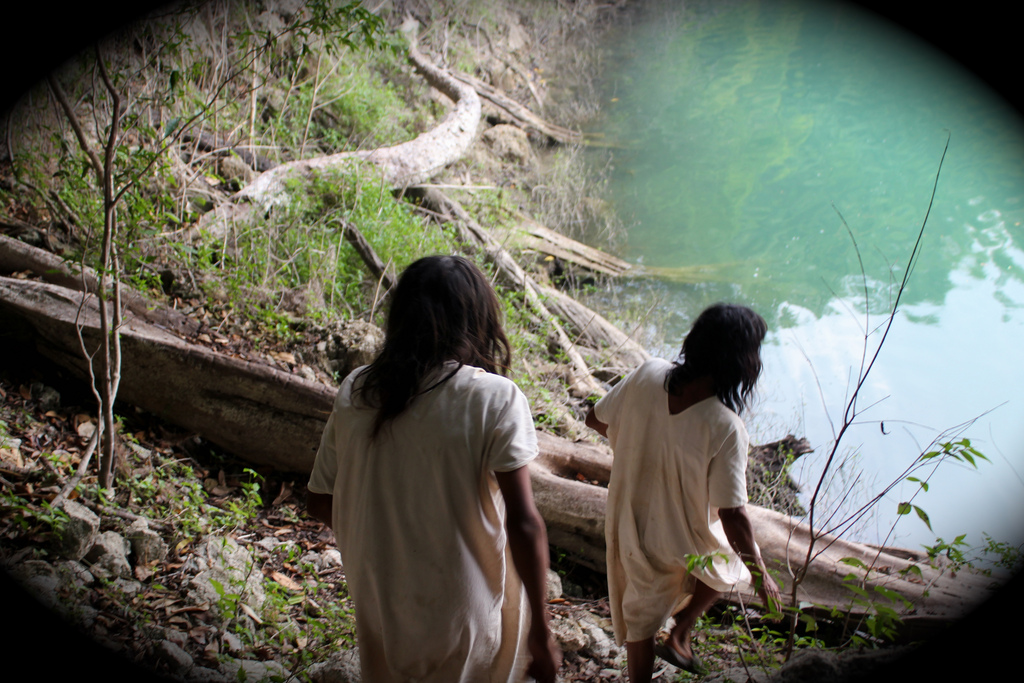
Maya Girls

My first real trip outside the borders of the United States was to Yucatán in November 1975. I was so entranced with what I saw that I kept coming back to Maya Mexico for years, until 1992. During that time, I also wanted to go to Guatemala, but a civil war between the Maya and the Ladinos (Mestizos) was raging until 1996; and Guatemala was on the State Department’s “Level 4: Do Not Travel” list until just recently. Even now, the State Department as the whole country classified under a blanket “Level 3: Reconsider travel to Guatemala due to crime” warning.

Why is it that I am so fascinated by the Maya that I would risk flouting President Trumpf’s State Department?

For one thing, the Maya are incredible survivors. The Aztecs were ground down by Cortez within two years. In Peru, it took forty years before resistance was smashed by Pizarro and his successors. And the Maya? That took a full 180 years before the last Maya kingdom (at Tayasal in Guatemala) was leveled.

Today, there are 1.5 million speakers of Nahuatl, the language of the Aztecs. There are some 6 million speakers of the 26-odd Mayan languages and dialects. Of course, the Incan Quechua language has even more speakers: some 8.5 to 11 million speakers in several South American countries.

In recent years, there have been several disturbances in the Maya area:

  • In Mexico, there was a Maya war against the Ladinos in Yucatán that lasted from 1847 to 1901 and a Zapatista revolt in Chiapas that flared briefly in 1994.
  • In Guatemala, there was a violent civil war against the Ladinos from 1960 to 1996. It is estimated that tens of thousands of Maya were massacred by the army.
  • In El Salvador, there was a civil war from 1979 to 1981. (Only some of the indigenous peoples involved in that one were Maya.)

The Maya are still there, occupying large parts of Mexico (Yucatán, Chiapas, Tabasco, Campeche, and Quintana Roo); Belize; Guatemala; and parts of Honduras and El Salvador. It is no small achievement for them to have survived so much persecution for upwards of 500 years.

That is what interests me.


The Joys of Pre-Columbian Art

Moche Portrait Vessels at Lima’s Museo Larco

Not everyone is an aficionado of primitive art—particularly the Pre-Columbian art of the Americas. Children are not taught in schools about the early civilizations of the Americas. On the contrary, I suspect most kids think that, since the ancient civilizations fell so quickly to the conquistadores,  they didn’t have anything to offer to us.

Even one of my literary heroes, Aldous Huxley, came a cropper in his 1934 travel classic, Beyond the Mexique Bay: “Frankly, try how I may, I cannot very much like primitive people. They make me feel uncomfortable. ‘La bêtise n’est pas mon fort.’”

I strongly suspect that among Europeans of some eighty years ago, that was a common opinion. After all, the Olmecs, Maya, Aztecs, Moche, and Inca do not in any way resemble the ancient Greeks and Romans—except that the Inca, like the Romans, were also great road-builders. They didn’t have much of a literature that has survived the Spanish conquest, except perhaps for the Maya Popol Vuh of the 16th century. As for philosophy, drama, novels, poetry… you can pretty much forget about it.

There was a period of tens of thousands of years during which the peoples of the Americas were isolated from any possible contact with European civilization. In consequence, they developed along different lines. Again and again in his book on Guatemala and Mexico, Huxley shows himself to be unwilling to consider that the Maya are very different. Not inferior, just different.

The Moche figures in the above photograph are all highly individualized. They remind me of the terra-cotta Chinese warriors discovered in Xian: Each of the 8,000 soldiers was different from all the others.

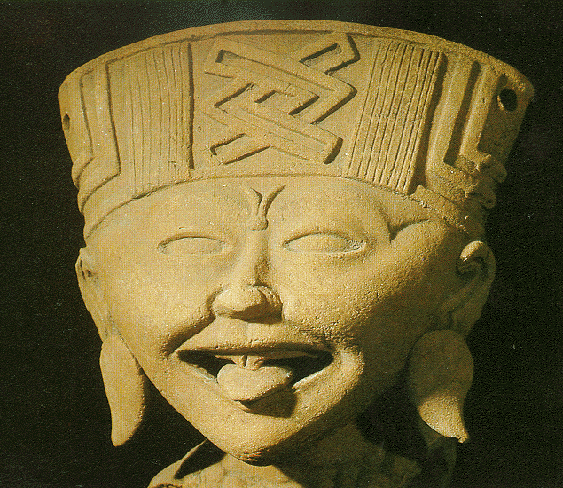
Totonac Figure from Mexico

Take the Totonac figure from the State of Veracruz in Mexico. This is a typical subject for Totonac art. Do we know what it means? The sloping forehead (does it show a deliberately deformed skull such as many Maya subjects?), the humorous expression: It is as if the distant past were laughing at us. And, in a way, it is. Many Pre-Columbian figures of animals from Mexico are downright hilarious. I don’t remember that type of humor from Greece or Rome, and certainly nothing similar from the Christian era.

Look at the Diego Rivera mural below, depicting a scene from El Tajin, the ancient ceremonial center of the Totonacs:

Scene from Diego Rivera Mural of El Tajin, Ancient Totonac Center

Let’s face it. We don’t quite understand what is going on here. We probably never will. I myself have been to El Tajin and saw Totonac youths rotating around elevated poles as voladores. Was there any convincing explanation of what was going on here? No, of course not. What intrigues me about this period is that the subjects are incredibly fascinating, but it is all a great mystery. Like life in general.


Xu’tan

The Term Means, Literally, “The End of the World”

The contradiction goes all the way back to 1562, when Spanish Bishop Diego de Landa ordered some 5,000 Maya cult images and a number of codices in Mayan to be burned in the city of Mani in Yucatán (see illustration below).  Yet, four years later, this same Diego de Landa preserved an incredible amount of Maya culture in his book Relación de las Cosas de Yucatán, without which it is doubtful we would have learned to read the Mayan language. So what is the verdict on de Landa? Only history will tell.

In his book Mornings in Mexico, D. H. Lawrence wrote:

The Indian way of consciousness is different from and fatal to our own way of consciousness. Our way of consciousness is different from and fatal to the Indian. The two ways, the two streams are never to be united. They are not even to be reconciled. There is no bridge, no canal of connection…. The sooner we realize, and accept this, the better, and leave off trying, with fulsome sentimentalism, to render the Indian in our own terms.

Yet we cannot seem to ever “leave off trying.” I certainly can’t. In my reading and in my travels I revisit this primitive world. I have been numerous times to the Hopi and Navajo Reservations, and visited many of the Pueblos of New Mexico, from Acoma to Zuñi. I have eaten their food, purchased their crafts, even given rides to their hitchhikers.

Diego de Landa Burning Maya Codices

I have just finished reading Victor Perera and Robert D. Bruce’s The Last Lords of Palenque: The Lacandon Mayas of the Mexican Rain Forest, which tells of the doom in store for the Lacandon Maya of Chiapas. The doom begins with visits from foreigners, continues with ecological disaster (building roads, cutting down or burning forests), and ends with the end of a culture which has survived for hundreds, perhaps thousands of years.

The old spiritual leader of the Lacandons, the now deceased Chan K’in, predicted this xu’tan, or end of the world:

“The world is going to die,” he said, with the bright obsessive gaze that overtakes the younger Lacandones when they speak of the world’s end. “It is too old already. The flesh is also old. It is exhausted. The world will burn up soon. The sun will stop, not move in the sky, and it will burn everything down. It will burn everything until the world is naked. It will burn for three weeks. Then it will rain. It will rain for three weeks without stopping, until everything is flooded. Then, above, in the upper heaven of the minor gods all will be dark, and they will cut off the heads of the people and Ts’ibatnah [the god of the graphic arts] will paint the houses with the blood of the good people. Their blood is bright red and smells very good, like nthe tuberose. But the celestial jaguars will eat the people with dark blood, which will be spilled on the ground….”

The details become ever more bizarre and remote from the experience of people like me, however much we like to study primitive civilizations.


Maximón

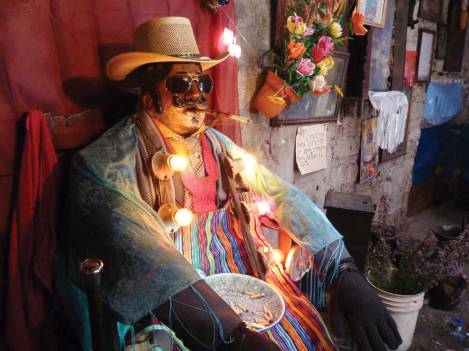
Votive Figure of Maximón in Santiago Atitlán

I laugh when ignorant people wonder what happened to the Maya. They are still around, and still occupying the parts of Mexico (Chiapas and Yucatán), Guatemala, Belize, and Honduras that constituted the original Maya homeland at its height. There are millions of Maya around. They speak some thirty different major dialects of the Mayan language, most of which are not understandable to Maya speaking other dialects.

When Cortés arrived in 1519, he made short work of the Aztecs. Moctezuma and his people were conquered within a few years. (Their language, Nahuatl, still exists.) It took a considerable while longer for all the Maya polities to fall. The last one, Tayasal, located on the Lago de Petén near present-day Flores in Guatemala, fell in 1695.

But the Maya are still Maya. They managed to survive with their culture not quite intact, yet robust enough to survive under new circumstances, namely Spanish conquest. There are still isolated Maya villages where non-Maya are not welcome. In others, there are strange new Maya gods, such as Maximón (mah-shi-MOAN) whose image appears above.  When I visit Santiago Atitlán, I plan to visit him and offer a gift, typically a bottle of aguardiente, cigars, or a pack of cigarettes.

This Maximón is a sort of evil god, midway between the underworld (Xibalba) and the heavens. The Tzutujil-speaking Maya, who inhabit the area, pay homage to him, particularly during Holy Week. According to Peter Canby in his The Heart of the Sky: Travels Among the Maya:

In Santiago Atitlán, Maximón is the god of destructive nature, of floods, earthquakes, and storms. A traveler and walker, he is associated with snakebites, is the inflicter of madness, and is worshiped at the mouths of caves. [Anthropologist] Michael Coe associates Maam (Maximón) with the Yucatec god Pauhatun, also known as God N, one of the most powerful underworld gods. In fact, Pauhatun is the quadripartite god taking part in a hallucinogenic enema-ritual depicted on the funerary vase in Michael Coe’s Lords of the Underworld…. It was strange, therefore, to see atitecos [Maya residents of Santiago Atitlán] treating Maximón with such tender reverence, but I knew that this merely reflected the different concepts of evil held by ourselves and the Maya.

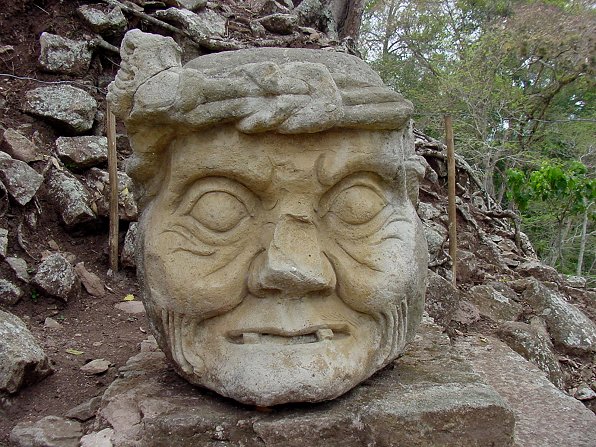
Figure of Pauhatun from the Ruins at Copán

To us, evil is something absolute, something to be resisted at all costs. To the Maya, evil is the principle of death and decay in nature and therefore an integral part of life. Gods like Maximón are terrifying, but they’re also part of the earth’s fertility. [Archeologist J Eric S] Thompson notes that “there is a widespread Maya belief that darkness and the underworld are evil, but as [the underworld] reaches up to immediately below the surface of the earth, it also produces crops.”

Among the attributes worshiped in Maximón are those of Judas Iscariot and Pedro de Alvarado, cruelest of conquistadores. I cannot help but think that there is something in the Maya conception of evil that has led them to survive as a culture—if not 100% intact, then at least substantially intact. Compare that with America’s vision of itself as “a city on a hill” acting as a beacon for all peoples, while we slaughter our own children with military automatic weapons.


Serendipity: Where Did The Maya Go?

Our Picture of the Ancient Maya, But Is It the Only One?

I can still remember the historical pundits of the 1950s and 1960s, with their cockamamie claims that the Egyptians came to the New World and built the pyramids for the Maya, because, naturally, they were too primitive to learn how to pile one stone on top of another. I can hear their voice-overs in dozens of spurious documentaries (imagine Lowell Thomas’s voice): “What happened to these people? Where did they disappear to?”

One answer comes from Christopher Shaw, in his uneven but occasionally brilliant book Sacred Monkey River: A Canoe Trip with the Gods:

If a golden age existed, it included—along with art and writing, highly developed religious and political systems, artificers and scribes, ritual torture and human sacrifice—cayucos [canoes] floating in waterlily beds, canals thick with protein-rich fish, and the finite cosmos reflected in the waters. If it “fell,” as mny scenarios insist it did, the region became crowded and degraded at the denouement of the classical era. Drought came and apocalyptic wars ensued. In their aftermath, people forgot the old ways and connected them to the past. With the cities reeling, merchant nobles from the coast—putun—imposed themselves and took power. Some of them, in their bourgeois, sentimental fashion, tried to maintain the trappings of grandeur. But the thread had been cut. In the great pyramid temples of the centralized state, the gods fell silent, though not in the houses of the campesinos.

The putun—simultaneously “barbarian” intruders and “merchant warriors,” to [archeologists] Linda Schele and David Freidel—apparently tried to keep alive the connections to tradition, dynasty, and place that lay at the root of the classic peple’s success. But the collective consciousness had moved on. The people “turned their backs on the kings to pursue a less complicated way of living,” as Schele and Freidel put it. hey turned to the forest. In the words of the Popol Vuh, the retreated “under the vines under the trees.”

Tomorrow I will return to this subject with a slightly different point of view.

You Can’t Get There from Here … Not Easily, Anyhow

Maps Can Be So Deceiving

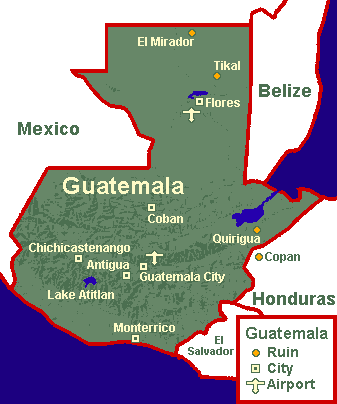
There are three Mayan ruins that I hope to visit on my trip to Central America. You can see all three of them on the above map: Tikal in Guatemala’s Petén Department, Quiriguá in Guatemala’s Izabal Department; and Copán in Honduras’s Copán Department. As the crow flies, the distance separating the three cannot add up to more than three hundred miles. Ah, but tourists do not travel as the crow flies. They must take planes or roads; and in the jungles of Central America, airports are few and roads are not built for the convenience of tourists.

Probably the easiest thing to do is to make three separate trips from Antigua or Guatemala City: to Tikal and back, to Quiriguá and back, and to Copán and back. Take Copán and Quiriguá: They look so close to each other on the above map. But to go by public transport, I’d have to go by way of Chiquimula or Rio Hondo, and probably spend the night at one of those two towns. The buses are mostly for the convenience of the locals, and they just don’t go traipsing between Mayan ruins.

I could probably hire a driver, but there’s this international boundary between Honduras and Guatemala, which complicates things.


Looking South to Guatemala

Temple I at Tikal in the Petén

It’s time to resume visiting Mayan ruins, after a hiatus of twenty-five years. It was in 1992 that I went to Yucatán with Martine and several friends from work. For years I had wanted to see the ruins in Guatemala, but there was something like a civil war going on under the dictatorship of Efraín Ríos Montt, whose “Evangelical” regime was slaughtering the Mayans. For most of the 1980s, the U.S. State Department recommended that Americans stay out of Guatemala.

Later this year, I hope to visit the ruins of Tikal and Quiriguá in Guatemala and hop over the border into Honduras to see the ruins of Copán. Half the trip will be devoted to ruins, and the other half to visiting picturesque Highland Mayan towns like Antigua, Huehuetenango, Chichicastenango, and Panajachel. It would be nice if I could talk someone into accompanying me, but even at my advanced age, I am too adventurous for most of my friends.

I am starting my planning early, because I have a lot of reading to do before the rainy season ends in Central America.


The Book of Chilam Balam of Malibu

Southern California Brush Fire

Ten years ago at approximately this time, I was blogging on the Yahoo-360, which I liked and was saddened to see snuffed out. Around this time in 2007, there were extensive brush fires in Southern California. Here is what I wrote on October 23 of that year.

The brush fires that are devouring Southern California bring to mind another catastrophe: The Mayans, trying to cope with the Spanish invasions and the attendant diseases and persecutions, produced a series of prophetic books called the Books of Chilam Balam, the most famous of which is the Book of Chilam Balam of Chumayel. A copy of the Roys translation is available on the Internet by clicking here.

Here is a brief apocalyptic meditation on the fires and several other disastrous “signs and portents” brought to mind by them in the style of (and incorporating some of the words of) the Book of Chilam Balam of Chumayel:

October 21, 2007 at dawn

When our rulers increased in depravity and stupidity
Following the words of their evangelical swineherds
That which came was a drought, according to their words,
When the hoofs of the animals burned,
When the seashore burned,
A sea of misery.

Then the face of the sun was eaten,
Then the face of the sun was darkened,
Then its face was extinguished.

Smoke covered the land
Darkened the clothes hanging on the line
Bringing an acrid stench to the nostrils
And dissatisfaction to the gorges of men.

They awoke in the morning
Restless
With the lining of their noses crusted with ashes
They took ashes with their coffee
Ashes with their water
Until the smell of burning was all that was.

Far out in space
The crystalline sphere of the gods
The smoke was visible
As that which was once alive and green
Now turned dark brown and black
And acrid.

How long will the gods let this continue?
May they abate their devil winds
And waft clouds heavy with rain
Over the blasted hillsides.

May they restore the beauty that was was there.
May men walk in this beauty
And appreciate it as a gift to be cherished.


What Ever Became of Them?

The Anasazi Ruins of Pueblo Bonito at Chaco Canyon

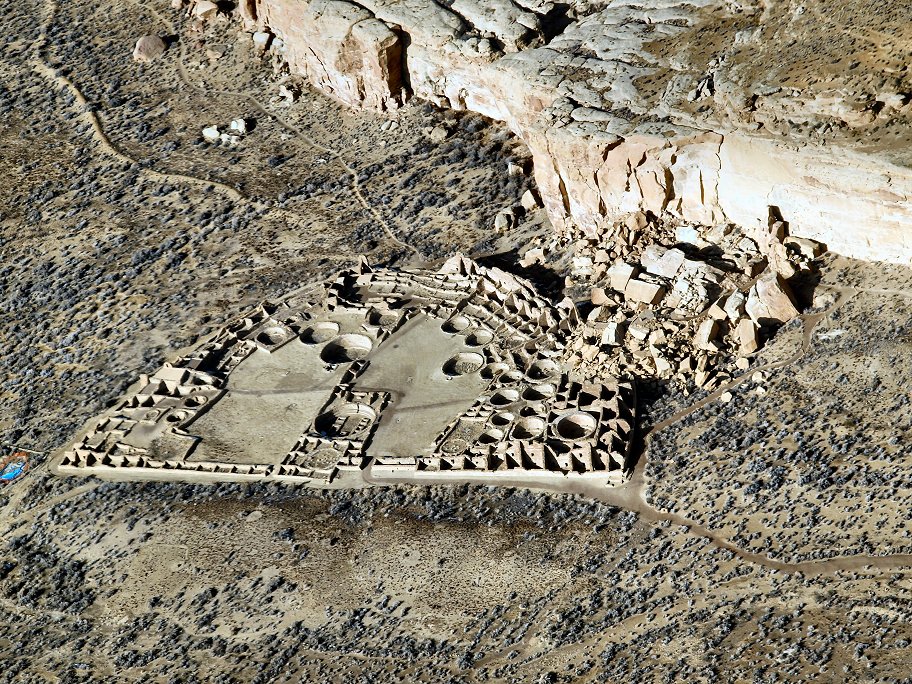
You’re familiar with the patter: These ancient people had an advanced civilization, and they suddenly disappeared. What ever happened to them? Actually, they didn’t go very far: You can find their descendants among the Hopi and the twenty-three tribes of Pueblo Indians in New Mexico, ranging from Taos to Acoma to Zuñi. What made them move from Chaco Canyon and the other Anasazi communities of the Four Corners, such as the ones at Mesa Verde, Betatakin, Chimney Rock, and Keet Seel? Some time around the 13th century, many of the local rivers dried up; and the Anasazi were forced to move.

I ran into the same type of “mystery journalism” in Mexico. What ever happened to the Mayans? These brilliant peoples inherited all those wonderful ruins such as the ones at Chichén Itzá and Uxmal—and now they’re all gone, or are they? All I know is that there are millions of Maya still inhabiting Yucatán, Chiapas, and much of Central America—and many of them still speak Mayan.

One of the reasons I want to go to New Mexico is to see Anasazi ruins. The best site is Chaco Canyon, of course, but I’ll be traveling this time with Martine, who doesn’t like long washboarded dirt roads and sleeping in campgrounds. So I will try to see some of the more peripheral Anasazi cities such as Chimney Rock, Salmon, or Aztec. (No, they are not related to the Aztecs of Mexico.)

No doubt I will be seeing thousands of Anasazi, or at least their descendants.