
Takony

It’s the Hungarian Word for Mucus

For the last couple of days, we have been experiencing a dry Santa Ana offshore wind. It’s like the sirocco in the Mediterranean: When it blows, everyone is uncomfortable. Perhaps the best description of the Santa Ana comes in a story by Raymond Chandler called “Red Wind”:

There was a desert wind blowing that night. It was one of those hot dry Santa Anas that come down through the mountain passes and curl your hair and make your nerves jump and your skin itch. On nights like that every booze party ends in a fight. Meek little wives feel the edge of the carving knife and study their husbands’ necks. Anything can happen. You can even get a full glass of beer at a cocktail lounge.

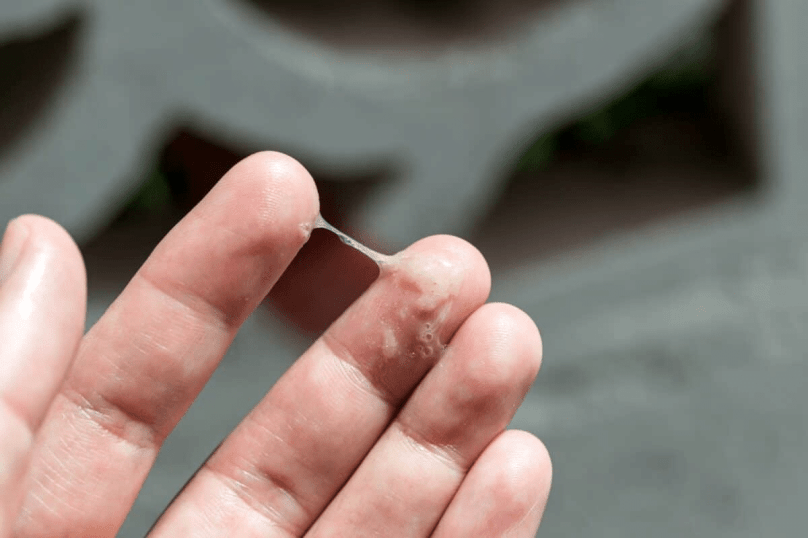
In my case, my life turns to outputting mucus, wither through sneezing or extensive nose blowing. My handkerchiefs turn soaking wet in minutes, though they can dry quickly if there is a pause in the snot generation.

By the looks of tomorrow’s weather forecast, tomorrow will not be a good day for me, as there will be only 15% humidity and wind blowing at sixteen miles per hour. It will be a good day to sit around with a pile of clean handkerchiefs and read a good book. (Paper towels tend to irritate my skin.)

A note about the Hungarian term that is the title of this blog. According to Google’s AI summary of the work taknyos:

“Taknyos” is a Hungarian adjective meaning “snotty,” “snivelly,” or having a runny nose, derived from the noun takony (snot). It is commonly used to describe children with cold symptoms, or colloquially as an insult for a young, inexperienced person. 

  • Literal Meaning: Snotty, covered in nasal mucus.
  • Colloquial Usage: Can be used to refer to a brat or a young, snot-nosed kid.
  • Related Term: Takony (noun) = snot/mucus.

Since I was allergic all my life, the words “takony” and “taknyos” were pretty liberally applied to me by my family and Hungarian friends. I’ve never been able to shake the implication.


Náthás

My Nasal Congestion Was Nowhere So Pretty As Hers

Sometimes, from deep inside my early memories, a Hungarian word comes flying to the surface, bringing with it a whole jumble of interconnected moments from my past.

Today’s word is náthás, which was a word frequently applied to me as a child. It is pronounced like naht-hahsh, equally accented on both syllables. According to my trusty Országh Magyar-Angol Kéziszotár (translates as Handy Hungarian-English Dictionary), the word means “having a cold.” Actually, in my experience, it really means “having the symptoms of a cold, whether from an actual cold or allergy.”

In my case, it was respiratory allergies, going back to an early age. I remember all the vain attempts to unblock my nose, starting with the deceitful over-the-counter nose drops called Neo-Synephrine. It actually succeeded in unplugging the blockage for up to half a minute, immediately followed by an even more resistant blockage.

Then there was the old Hungarian remedy of filling a large pan with boiling water and mixing it with table salt. I would hold a towel over my head and bend low over the steaming salty water, breathing deeply. That didn’t work any better than the Neo-Synephrine. So much for old remedies.

Nowadays there are more effective medications and procedures. One good nasal unplugger is a sinus rinse in which salt is dissolved in distilled water and shot up each nostril using a squeeze bottle—the principle being that what goes up one nostril comes out the other, bringing with it the muck stored in the sinus cavity.

Nevertheless, I am still very much náthás, due to snorting, sneezing, and nose-blowing. That never seems to go away. I like to think of myself as a superhero in the Marvel Comic Universe, my super power being the ability to shoot great gobs of mucus at evildoers.

Draining … Drained

I Felt Hurled Back into Childhood

When I was a child, I suffered intensely from allergies. My nose was frequently blocked, so that I had to breathe through my mouth, making me feel as if I had ingested a bucket of fine sand. My mother would boil up a big pot of water and add salt to it. She had me cover my head with a towel and bend forward to inhale the salty steam. Not that it did me any good.

For decades now, I have not had the experience of having my nasal air passages totally blocked … until this last week. I got a cold which in itself was not that bad, but as soon as I climbed into bed, my nasal passages shut down a la my youth. My doctor recommended something akin to my mother’s remedy: Shoot distilled water up my nose that contains powdered salt with sodium bicarbonate. This actually works, and I am finally able to sleep in bed again.

My cold was not that bad, but the long recovery is a pain. It seems as if I fill endless handkerchiefs with mucus that has the gluey texture of rubber cement. At the same time my cold began, my eyes started to water and itch again. I have spent the better part of a week draining in various ways—and that has tired me out big time. I attribute this illness to a cold snap that has hit Southern California right after I returned from Guatemala. It seems that the temperature has not climbed up to 70º Fahrenheit (21º Celsius) since the start of the month.

Eventually the temperature will rise and I will have drained out the last cubic centimeter of mucus as well as whatever is discharging from my eyes. Until that time I will just have to be patient.