

This is the scanned image of my ticket to the Museo Larco in Lima, Peru. It was the first tourist sight I visited in Lima back in 2015—and it was an eye-opener. Founded in 1926, it was dedicated to the northern coastal cultures of Peru, of which there were many. We tend to think, “Peru … Yeah, that’s the Incas.” Except that the Incas were 15th century latecomers, and some of the earlier cultures were more advanced than they were.
Besides the Incas, there were the Moche, the Wari, the Chimu, the Chavin, the Paracas, the Nazca, the Chachapoyas, and many others.
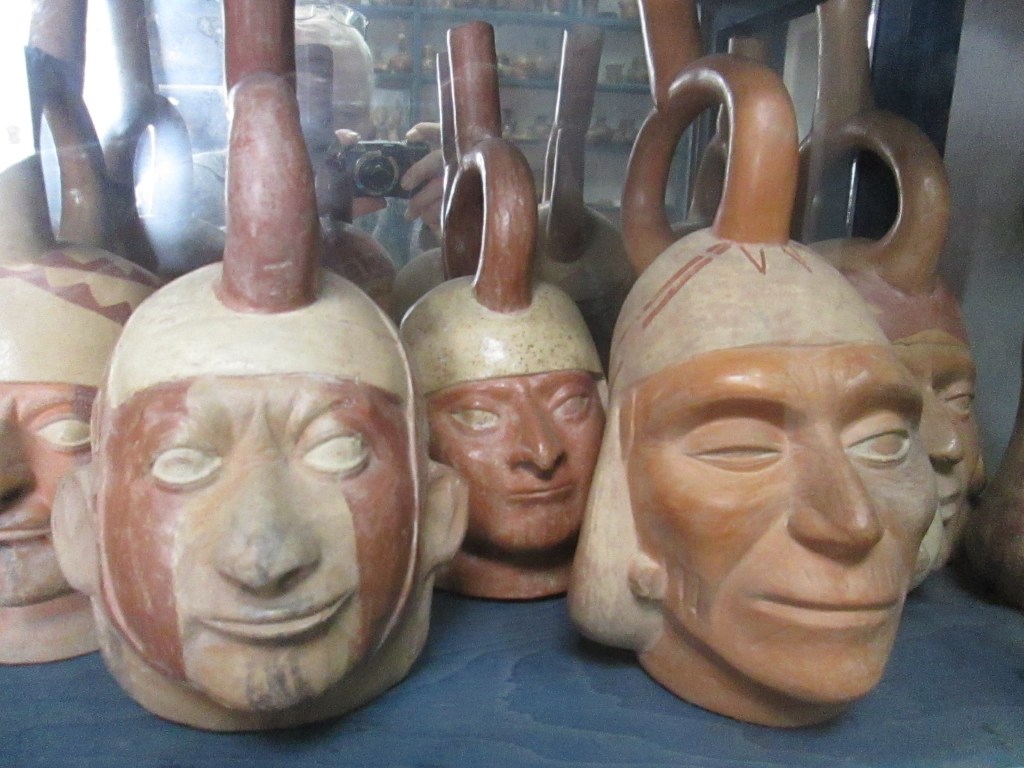
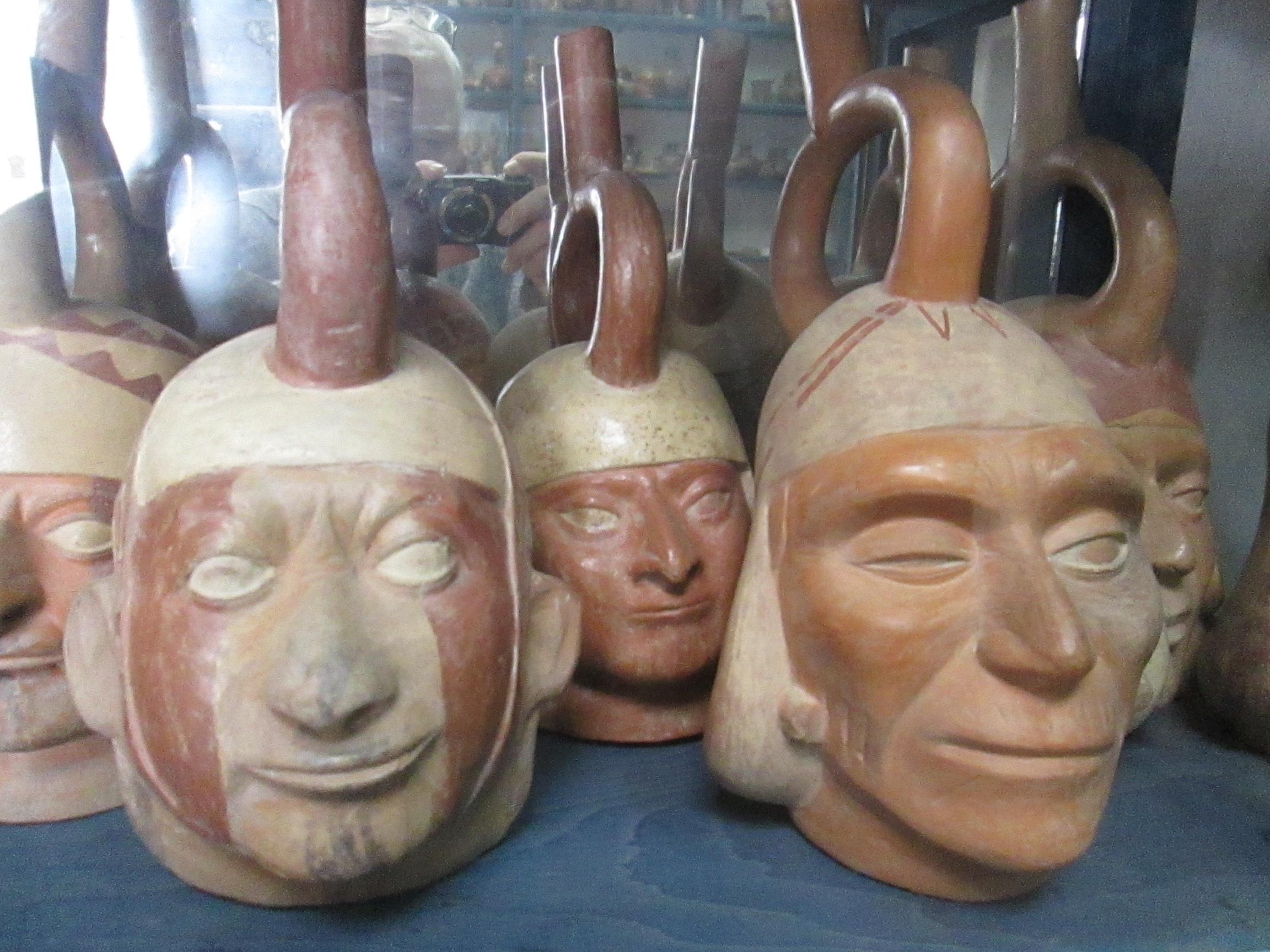
There were scores of these Moche heads at the museum. Like the famous terra cotta warriors at Xian in China, all had distinctive facial features as if they were based on particular individuals.
In addition there were elaborate textiles dating back centuries and still in excellent condition. There were even a few quipus, collections of knotted cords that were used for accounting purposes. None of these peoples appear to have had a written language like the Maya or Aztecs.
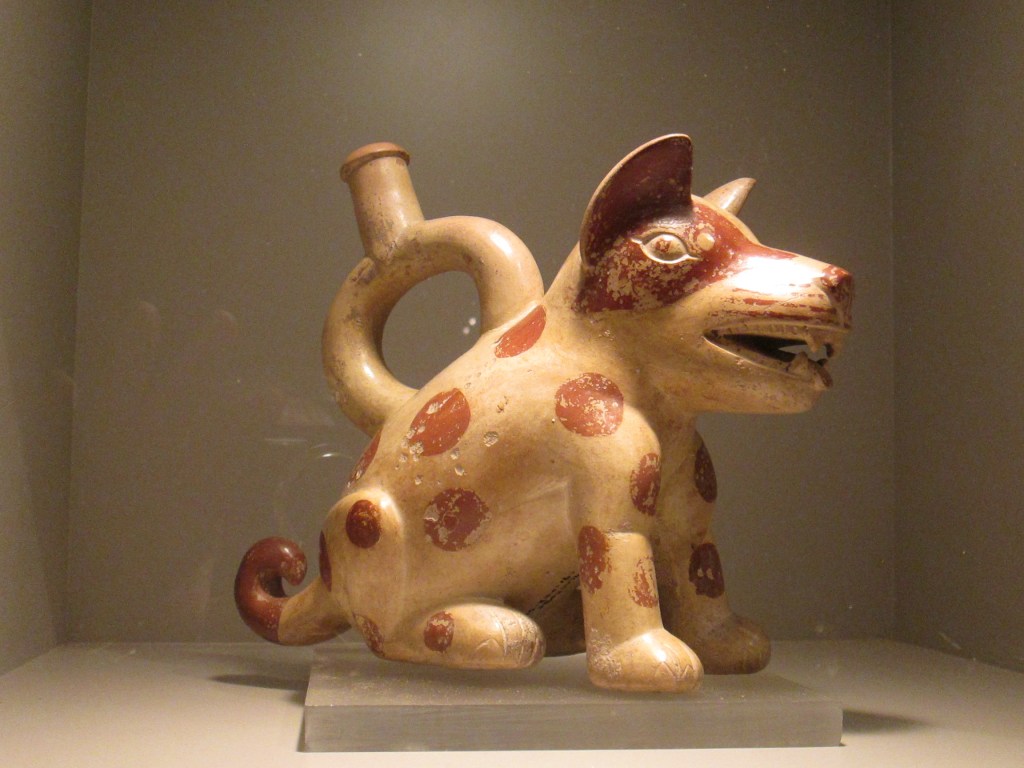
In common with many of the early Mexican cultures, the Moche had cute pottery fashioned in the shape of animals, such as the above dog.
One great thing about many museums in Latin America is that they frequently had adjoining cafés with excellent meals. The Museo Larco was no exception.
If you should find your way to Peru after they horrible Covid infestation, remember that there are a whole lot more to see than just the ruins of Machu Picchu. I could have spent several weeks in Lima without exhausting the list of places I wanted to see, such as the Police Museum in Callao.
 Tarnmoor
You must be logged in to post a comment.