Gyökér

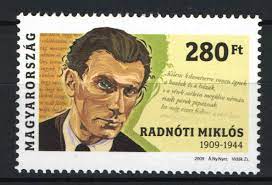
Stamp Honoring Hungarian Poet Radnóti Miklós (1909-1944)

The title of this post is the Magyar (Hungarian) word for “Roots.” Radnóti was a Jewish-Hungarian poet who was conscripted into forced labor by the Nazis and marched to the point of exhaustion. The poem below was found in his pocket when his body was exhumed from a mass grave.

Roots

Strength courses in the root;
It drinks the rain, it lives together with the soil,
And its dream is white as snow.

From beneath the soil to above the soil it bursts;
The root crawls, cunning,
Its arms like ropes.

On the root’s arms, worms sleep;
On the root’s legs, worms sit;
The world grows worm-ridden.

Yet the root lives on below;
The world does not concern it —
Only the branch does, full of leaves.

Marveling at the branch, it feeds it constantly;
To it it sends its savors,
Its sweet, celestial savors.

Now I too am a root;
I too now live among worms;
It is there that poetry is made.

I was once a flower; now I have become a root,
With the heavy dark soil above me;
My fate now ended,
A saw wails above my head.

Below is the first stanza of the poem in Hungarian, just to give you an idea of the severe compression possible in the Magyar language:

Gyökér

A gyökérben erő surran,
esőt iszik, földdel él
és az álma hófehér.
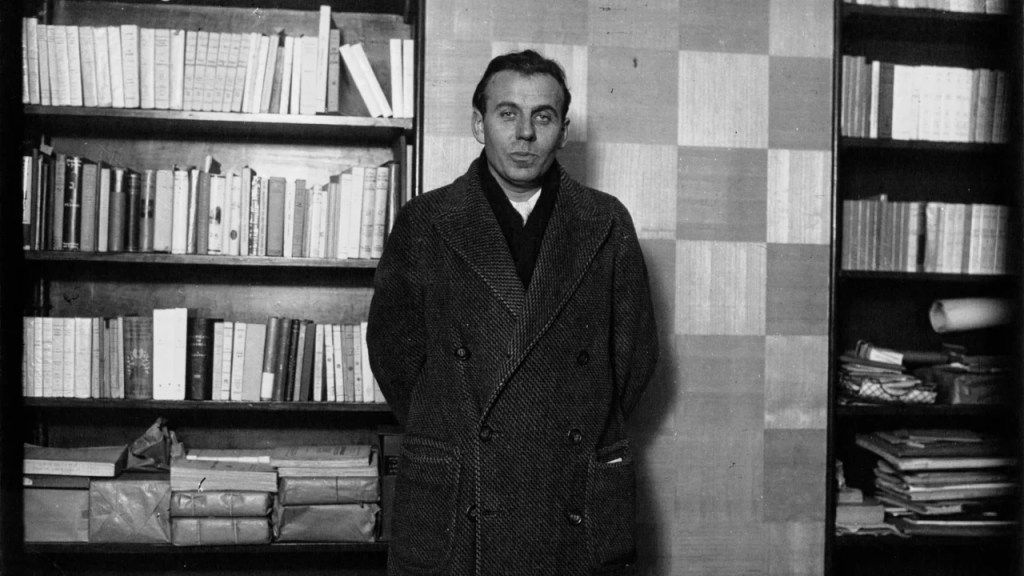
Doctor Destouches in Germany

Doctor Destouches (aka Louis-Ferdinand Céline)

He will never win any humanitarian awards, or, for that matter, any awards, but Louis-Ferdinand Céline is one of the greatest writers of the twentieth century, an anti-Semite, a Nazi sympathizer, and probably a very decent human being otherwise. Born Louis Ferdinand Auguste Destouches in Courbevoix, France in 1894, Céline became a wounded war hero at Ypres in 1914

After the war, he became a physician and toured Africa and the Americas working for the League of Nations. In 1932, he published his greatest and most approachable novel, Journey to the End of the Night (Voyage au bout de la nuit). Unfortunately, in the early 1940s, he published several anti-Semitic books urging closer ties to Hitler’s Germany.

After the Allied invasion of France, Céline fled to Germany after having been identified by the Resistance and the British as a collaborationist. It was the beginning of a long and confused period escaping Allied bombing attacks and the Russian Army that was brilliantly described in his trilogy about being a guest of the Nazis as they were being pounded to pieces:

  • Castle to Castle (D’un château l’autre) 1957
  • North (Nord) 1960
  • Rigadoon (Rigadon) 1961

Years after reading the first two volumes, I have just finished reading Rigadoon and loving it. Céline and his wife are constantly being shuttled on trains from one bombed-out city to another. At one point, he escorts a group of eighteen severely retarded children from Hannover to Hamburg and manages to transfer them to a special Swedish Red Cross train taking them to safety. Unfortunately, the same train took Céline to Copenhagen, where he served a year in prison for his collaboration with the Nazis.

He died in 1961. Although his novels were a powerful influence on other novelists, Céline was never treated with the honor that his literary and medical work deserved. He spent his last years being a doctor treating poor patients in the slums of Paris.

So fair and foul a career I have not seen. I love Céline’s novels even as I detest his racial and political views. Life can be strange.

The Great Patriotic War

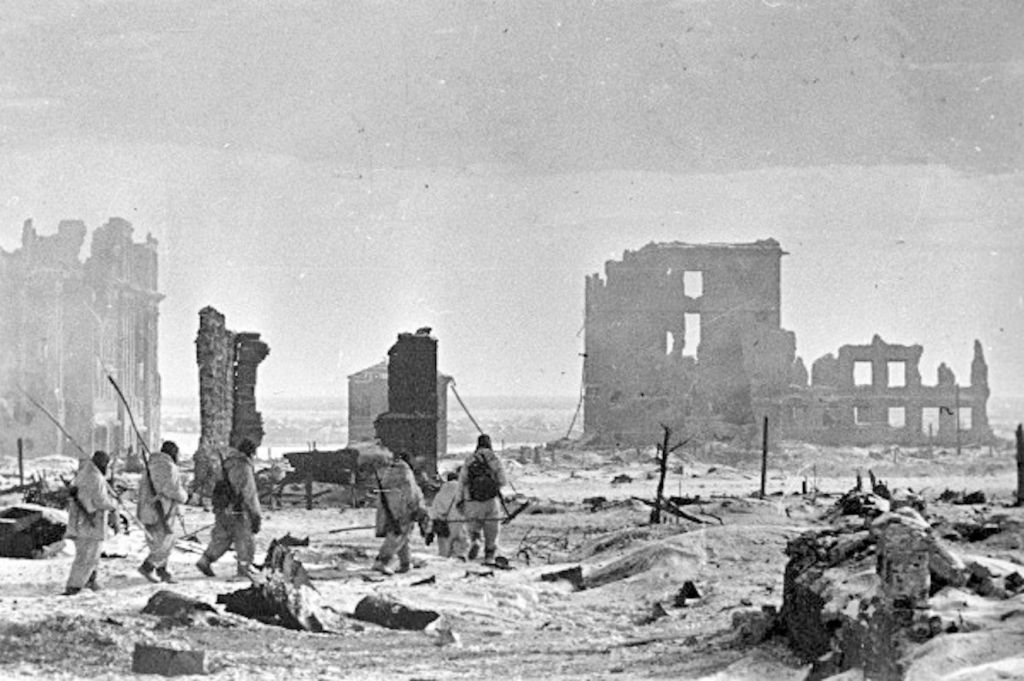
The Battle for Stalingrad (1942-1943)

Strange things happen when, through laziness or ignorance, one too readily accepts a slanted view of history. That’s one of the reasons I don’t like talking about the Second World War, mainly because the West’s participation was not what brought down Hitler and the German military machine.

In fact, until D-Day, the United States and England were not even confronting the Nazis where they lived, except in the form of bombing raids. On the ground, we started somewhat late in North Africa and then moved to Sicily and the Italian mainland, where we slogged our way up the boot of Italy.

We might not want to admit it, but it was predominately the Soviet Union that put the kibosh on Hitler. For Stalin, the war was an existential horror. If his forces didn’t hold, Russia was in danger of being wiped off the map.

According to the Percy Schramm Kriegstagebuch des Oberkommandos der Wehrmacht: 1940—1945: 8 Bde. 1961, 68% of Wehrmacht deaths were on the Eastern Front, more than double of all other Army deaths in Europe, North Africa, Italy, France, Holland, Belgium, Norway, and the Balkans combined. The figures for wounded German soldiers was even more spectacular: 82% of all wounded were on the Eastern Front.

I do not denigrate the bravery and lost lives among the Americans and British; it’s just that the Soviet Union was the main theater of the war. Recognizing this, the Russians refer to the conflict as the Great Patriotic War. It was at places like Stalingrad and the Kursk-Orel Salient where the Nazis paid the ultimate price.

Not a Nice Guy

Representative Jim Jordan (R, Ohio)

Ever since Donald Trump came down that escalator at the Trump Tower to announce his run for the presidency on June 16, 2015, American politics has changed from bad to nightmarish. The ongoing travails of the House of Representative beginning with the ouster of Kevin McCarthy and the failed attempts by Jim Jordan to become Speaker of the House resemble nothing so much as the early days of Nazi Germany.

It seems the Republican Party is crawling with Brown Shirts Are we are heading toward some ghastly Night of the Long Knives in which the extreme MAGA Republicans with their totalitarian tendencies will be violently repudiated?

Jordan thought it a nifty idea to authorize threatening phone calls to the wives (?!) of Republican Congressmen who didn’t vote his way. It’s a long way from the America of George Washington, Benjamin Franklin, and Thomas Jefferson or the Republican Party of Abraham Lincoln. At the same time we are sanctioning Venezuela, we are becoming more like them.

Double ugh!

Kursk

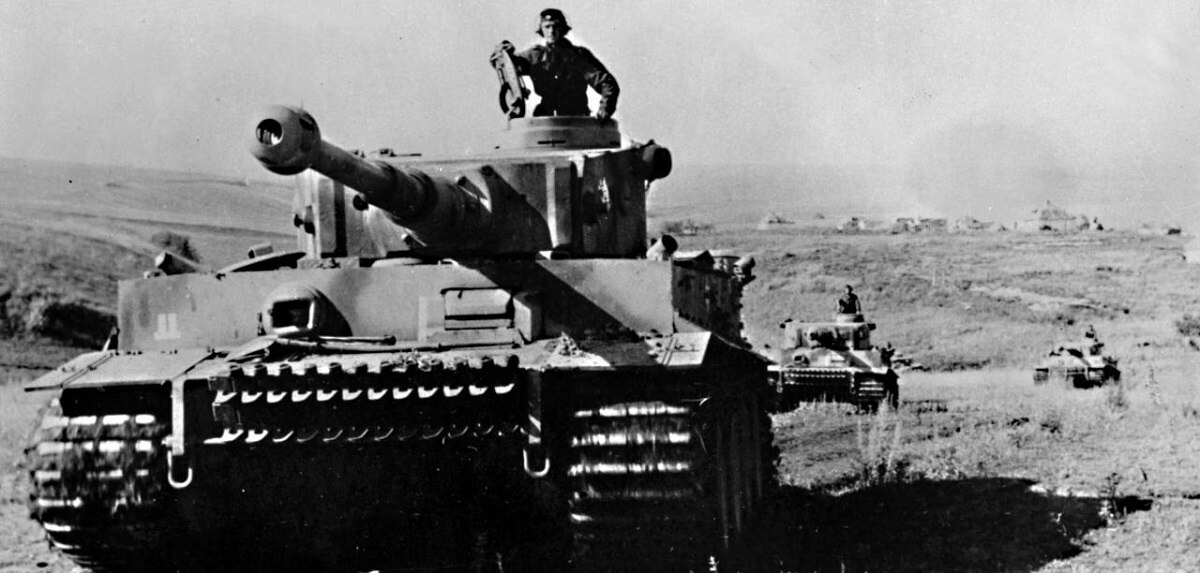
It Was the Greatest Tank Battle in History

People in the United States know very little about World War Two as it was fought in Europe. The real war in Europe was waged on the Eastern Front, after Hitler invaded Russia in the summer of 1941. At first, it was all blitzkrieg, with German victories on all fronts and horrendous Russian losses. Things began to change after Stalingrad, however, when the entire German 6th Army surrendered to the Soviets.

The next big battle was at the Kursk salient. Hitler and his generals planned to attack the salient from two sides, take Kursk, and trap several Soviet armies. This was the intent of Operation Citadel, as shown in the map below:

Operation Citadel as the Germans Planned It

The German General Staff thought the Russians would take fright at the Nazis’ technologically superior tanks and surrender in droves. But the Russians—beginning with Stalin himself—learned their lesson in 1941 and 1942. In July 1943, Stalin realized he had more human and industrial resources to draw on than the Germans. This was similar to Ulysses S. Grant realization during the American Civil War when, after the Battle of the Wilderness, realized that he could afford to take more casualties than Robert E. Lee’s Army of Northern Virginia and still win.

Instead of pinching off the Russians in the salient, General Walter Model advanced only 10 miles on the north, where he was beaten by Rokossovsky’s Central Front. The real battle was in the south, where General Erich von Manstein battled with Nikolai Vatutin’s Voronezh Front over the town of Prokhorovka. Vatutin kept throwing rifle regiments, tanks, and artillery at von Manstein’s Army Group South until, after a 30-mile advance, the Germans could go no further.

The Russians had a very good idea of what the Germans were planning with Operation Citadel, and they had more men (at a 2.5:1 ratio) than the Germans, and more tanks (though not as good). So they planned carefully to fight to the last man, if necessary.

The Battle for Prokhorovka (The Germans in Blue)

By the time Vatutin and Rokossovsky had finished with the German army, there was no more blitzkrieg. Hitler didn’t know it yet, but from this point his armies were in retreat.
.

There Is Some Good News

Stadium Sequence from Triumph of the Will (1935)

If you are feeling despondent about politics in America in 2018, I recommend you google YOUTUBE RIEFENSTAHL TRIUMPH OF THE WILL. People make a lot of glib comparisons between Trumpf’s Administration and Nazi Germany. Leni Riefenstahl’s great documentary of the 6th Nazi Party Congress in Nuremberg in 1933 will make you see how the present differs from that dismal event eighty-five years ago. The film is one and three quarters of an hour long, but it is mesmerizing in its icy control and will suggest several major differences between then and now.

First of all, Hitler and the Nazis were always on message. There are no 3 am Tweets that contradict one another. The Führer knew what he wanted to say and said it—even when he was lying through his teeth. A major attempt is made during the Congress to heal the split between the Brownshirts (the Stürmabteilung or SA) and the SS. Yet between the Congress and the time this film was released to the German public, the Night of the Long Knives took place, and the Brownshirts were purged, and many of its leaders were executed without benefit of trial. I can only wonder how the German people interpreted all the happy talk about the SA in the film when it was finally released.

It amazed me that so many of Hitler’s lieutenants were with him to the bitter end. It is true that Vice Führer Rudolf Hess defected to England, and many of the SA Leaders were no more; but there were Gõring, Goebbels, Himmler, Streicher, Von Schirach, and many others who made an appearance in the film stayed with Hitler through thick and thin. Compare that with the revolving door in Trumpf’s White House. First there is the inevitable publicity photo of our President smiling and pointing at his new hire as if to say, “See, I bring you the very best.” Then a few months later, “he was never any good anyway.”

Then, too, America is very different. Instead of all those Nazi salutes and Sieg Heils, there would be thousands of upraised middle fingers and hurled garbage. The only way Trumpf can raise a great multitude is in his dreams (witness the size of the inauguration crowd in January 2017).

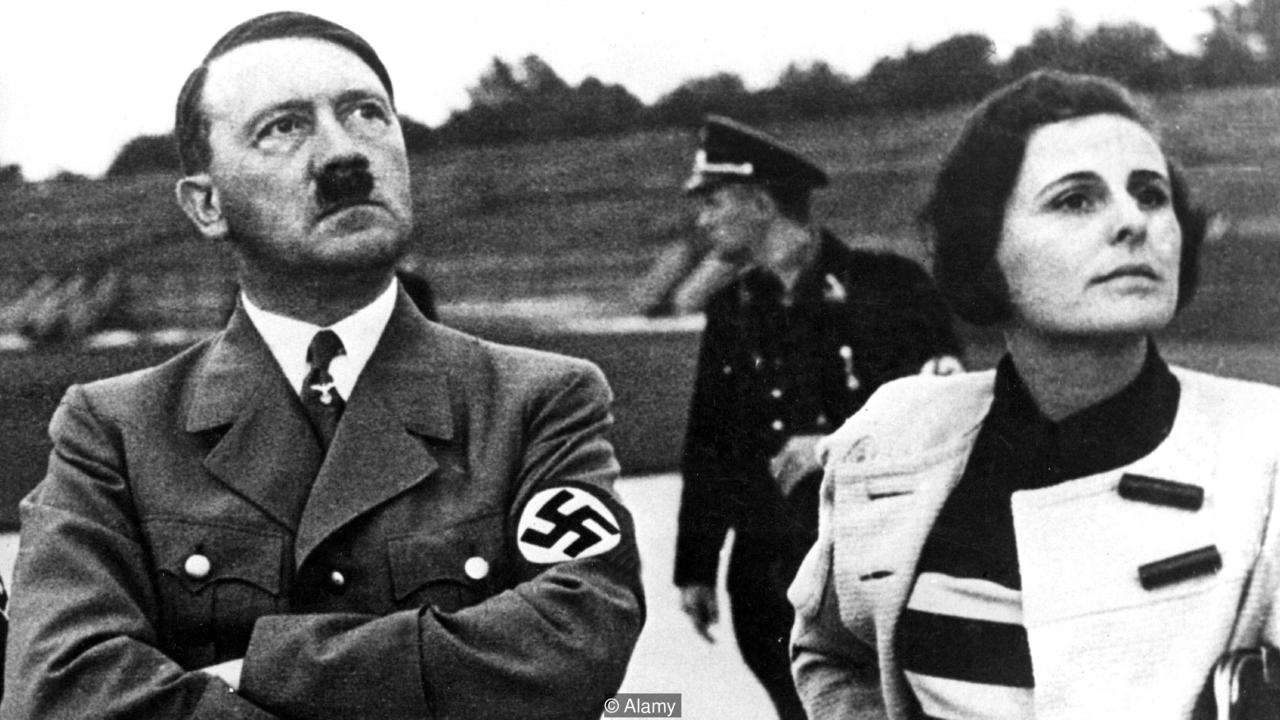
Adolf Hitler with Film Director Leni Riefenstahl

Despite the fact that women do not play a major part in the 6th Nazi Party Congress, the film of the Congress was directed by a woman who was probably one of the greatest of all women film directors. Whether or not she was a loyal Nazi, she knew how to make a great film. Her film of the 1936 Berlin Olympiad was perhaps the greatest sports film ever made. Its hero turned out to be a non-Aryan American, the great black athlete Jesse Owens.

Riefenstahl got her start as an actress in a strange German film genre of the 1920s: brooding, mystical mountain films such as The Holy Mountain and The White Hell of Piz Palü.