Pedestrians Are Always Suspect

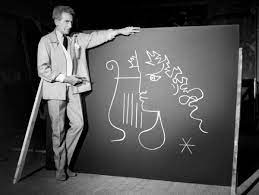
Jean Cocteau (1889-1963) with Drawing of Orpheus

He was, to quote Wikipedia:

French poet, playwright, novelist, designer, filmmaker, visual artist and critic. He was one of the foremost artists of the surrealist, avant-garde, and Dadaist movements and an influential figure in early 20th century art.

He was, to quote one newspaper essay, a Renaissance man.

In the United States, he is probably best known for his films La Belle et la Bête (1946) and Orphée (1950). Although he created some paintings, he is probably better known for his line drawings, many referring to Greek myths such as the drawing of Orpheus illustrated above and used in the titles of his film on Orpheus.

“The Birth of Pegasus” (1953)

With his surrealist and Dada experience, Cocteau’s work is sometimes underestimated because the artist never took himself that seriously. I love the scene in Le Testament d’Orphée (1960) where the poet (played by Cocteau himself) is arrested by motorcycle cops who, when asked what the charge was, say, “Pedestrians are always suspect!”

There is no lack of artists who take themselves very seriously. Even his film masterpiece Orphée is not only profound, but profoundly funny in spots.
Favorite Films: Orphée (1950)

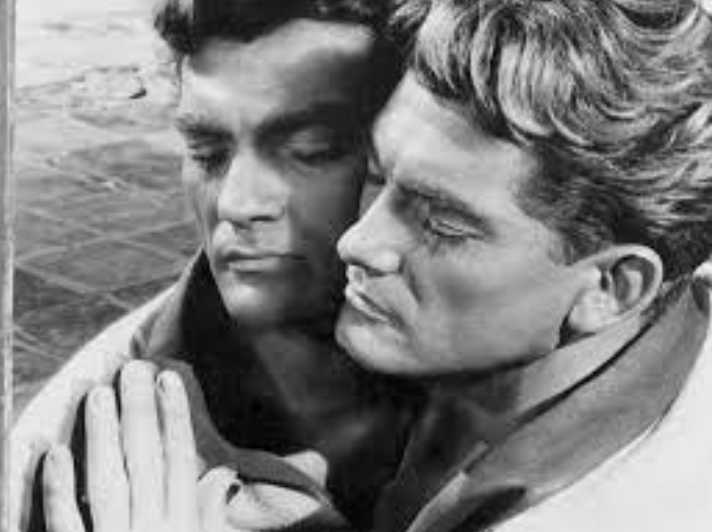
Jean Marais as Orpheus in Jean Cocteau’s Orphée

This is a film I have loved for upwards of sixty years, ever since I first saw it screened by the Dartmouth Film Society. It is the only film I have ever seen that makes a stab at showing us what happens after death—without looking totally silly.

The story is based on the Greek myth of Orpheus the poet and his wife Eurydice, variously mentioned by such authors as Plato, Plutarch, Apollonius of Rhodes, and others. Eurydice dies, and Orpheus, while still alive, goes to the Underworld to get her back. The gods agree, but with the condition that he must never look upon her face again. If he did, her spirit would be instantly wafted back to the Underworld.

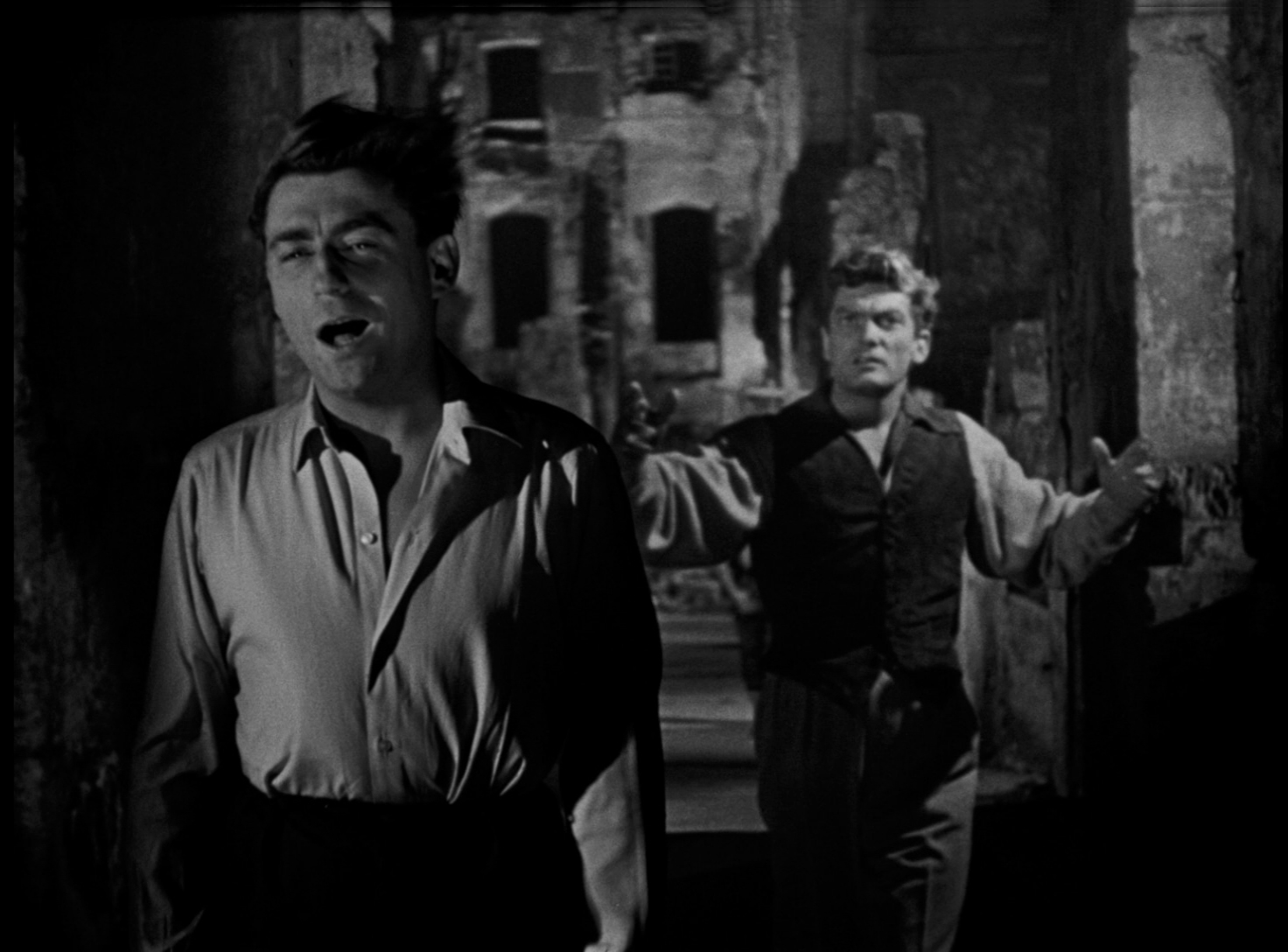
Jean Cocteau places the tale in postwar France and adds some interesting touches. Death is personified as “The Princess.” Played by the lovely and elegant Maria Casares, who falls madly in love with Orpheus. Among hr assistants are François Périer as Heurtebise and Édouard Dermit as Cégeste. One enters the underworld by walking through a mirror wearing special rubber gloves, which convert the mirrors to a waterlike substance. The ruins of Saint Cyr Military Academy serve as the Underworld, where Orpheus and Heurtebise go to negotiate with a tribunal in a grimy meeting room.

The Last Shot: The Princess and Heurtebise Go to Meet Their Fate

I have seen Orfée at least a dozen times, and each time was as magical and striking as the first viewing. Along with the same director’s La Belle et la Bête (1946), it is one of the glories of the French cinema, indeed of world cinema.

Favorite Films: Orpheus (1950)

Heurtebise and Orpheus in the Underworld

Heurtebise and Orpheus in the Underworld

In just three hours, Turner Classic Movies is going to show one of my favorite films: Jean Cocteau’s Orpheus (1950), starring Jean Marais, Maria Casares, François Périer, and Marie Déa. Cocteau took a Greek myth and adapted it to the French experience in the Second World War and came up with a majestic dreamlike work which not only works but sticks in the memory. (Also great is Cocteau’s Beauty and the Beast, which also takes a myth and somehow improves on it.)

Particularly memorable are the scenes in the underworld, where Orpheus (Marais) goes with Heurtebise (Périer) to bring his wife Eurydice (Déa) back. According to the myth—and the film—Orpheus is not supposed to ever look upon his wife again once she has been rescued from the world of the dead. That did not work, and before long Orpheus himself is shot and finds himself walking by the ruined barracks where Cocteau’s underworld is set. One new difference is that Death herself, played by the severe and beautiful Maria Casares has fallen in love with him. This was not part of the Greek myth, either, but it makes for a better story.

I do not remember how many times I have seen Orpheus. However many times it was, it was apparently not enough.