
Am I Still an Auteurist?

This Is the Magazine That Started It All

The Politique des Auteurs started in France with the writers of Cahiers du Cinema. André Bazin and a young cadre of rising filmmakers and critics felt that the French cinema was becoming too literary and that much was to be learned from the vitality of the American film industry. With almost every issue, they were discovering scores of new film artists such as John Ford, Howard Hawks, Nicholas Ray, and even such downmarket geniuses as Edgar G. Ulmer.

By 1962, the auteurists found an American disciple in Andrew Sarris, film critic for The Village Voice in New York. For the Winter 1962-1963 issue of Film Culture, Sarris created a whole issue dedicated to the auteur theory. As a student at Dartmouth College, I paid to photocopy the entire issue and used it religiously as a guide until Sarris came out a few years later with the greatly expanded American Cinema: Directors and Directions 1929-1968.
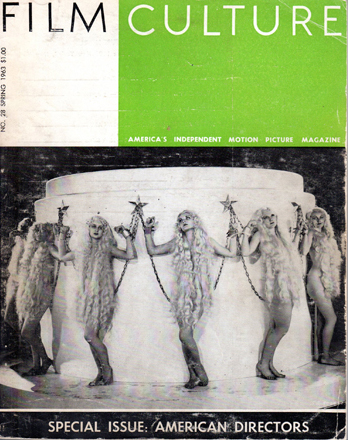
The Notorious Auteur Issue of 1962-1963

Circles and Squares: In the interim, Pauline Kael published a blistering attack in Film Quarterly called “Circles and Squares: Joys and Sarris.” Many of her attacks hit home, and they certainly exposed Sarris’s weaknesses as a film theoretician. I had met Pauline Kael and liked her work, but as a young man I was a budding auteurist.

Now, half a century and thousands of films later, I still see myself as having been influenced by the Cahiers crowd and Sarris, but I think there is a lot more to film than an a priori theory imposed from above. On the plus side, the auteurists opened me to the incredible riches of the American film—but I started liking films by such card-carrying non-auteurs as Felix Feist, Edward L. Cahn, Robert Florey, and Charles Vidor.

I give the credit to the auteur theory for introducing me to the idea that American films can also be great. I started my love of film by watching such foreign productions as Carl Dreyer’s Day of Wrath (1948) and Wojciech Has’s The Saragossa Manuscript (1962); but by the late 1960s I was beginning to give Hollywood its due and loosened up considerably.
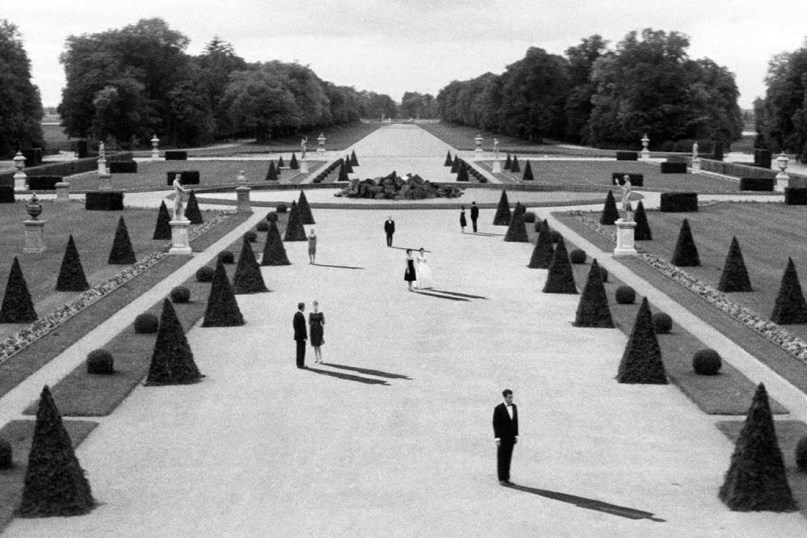
Creeping Marienbadism

Famous Shot from Last Year at Marienbad (1961)

I met Pauline Kael during my last year at Dartmouth. At the time, I was Assistant Director of the Dartmouth Film Society and involved in meeting and greeting visiting film dignitaries. We had dinner across the river in Norwich, Vermont, followed by an interesting conversation.

Pauline had just published her first book, entitled I Lost It at the Movies (1965), which I read and loved.

Although she went on to be film reviewer for the New Yorker between 1968 and 1991, Pauline had a strong streak of the old fashioned, with a strong preference for straight narrative and a disdain for art house films and Hollywood blockbusters. (She called The Sound of Music with the moniker The Sound of Money, which made her no new friends in Hollywood)

Film Critic Pauline Kael (1919-2001)

I am slowly re-reading I Lost It at the Movies, where I found some interesting ideas. She hated the Alain Resnais film Last Year at Marienbad and complained that “we can’t even leave Marienbad behind because, although it memorable (it isn’t even particularly offensive), a kind of creeping Marienbadism is is the new aesthetics of ‘poetic cinema.’”

She recalls:

In Los Angeles, among the independent filmmakers at their midnight screenings I was told that I belonged to the older generation, that Agee-alcohol generation they called it, who could not respond to the new films because I didn’t take pot or LSD and so couldn’t learn to accept everything. This narcotic approach of torpid acceptance, which is much like the lethargy of the undead in those failure-of-communication movies, may explain why these films have seemed so “true” to some people….

At the time, I was at the cusp of the whole postmodern movement myself. I remember being agonized by Ingmar Bergman’s Persona (1966) because it so challenged my own way of thinking … at the time. (No longer: I now love the film.)

Liv Ullmanm and Bibi Andersson in Persona

I guess I have become thoroughly postmodern. A strong narrative line is no longer necessary for me to enjoy a film. I could just be drawn by a series of beautiful images, startling epiphanies, powerful acting, or something as wonky as my love of Geena Davis in Earth Girls Are Easy (1988).