A Most Unprepossessing Man

The Mouse That Conquered the Lions

The Mouse That Conquered the Lions

This is my last posting inspired by my reading of William H. Prescott’s The History of the Conquest of Peru, which I have just completed. After the Incas were conquered and Atahuallpa executed, there arose in Peru a civil war between the two partners of the enterprise, Francisco Pizarro and Diego de Almagro, and after these two were killed, between their families. Finally, Gonzalo Pizarro, Francisco’s brother, was firmly in power—or so he thought. There was still the Spanish crown with which to contend. Carlos V and later Philip II sent various representatives, some well chosen, some notoriously bad.

Finally, the Spanish cleric Pedro de la Gasca was sent with broad authority to put an end to the conflicts and to secure Peru to the crown. Where others failed, Gasca finally succeeded. While a most unprepossessing man, he had vast reserves of shrewdness and good judgment which enabled him to take down the last of the Pizarros and unite the people behind him:

After the dark and turbulent spirits with which we have been hitherto occupied, it is refreshing to dwell on a character like that of Gasca. In the long procession which has passed in review before us, we have seen only the mail-clad cavalier, brandishing his bloody lance, and mounted on his war-horse, riding over the helpless natives, or battling with his own friends and brothers; fierce, arrogant, and cruel, urged on by the lust of gold, or the scarce more honorable love of a bastard glory. Mingled with these qualities, indeed, we have seen sparkles of the chivalrous and romantic temper which belongs to the heroic age of Spain. But, with some honorable exceptions, it was the scum of her chivalry that resorted to Peru, and took service under the banner of the Pizarros. At the close of this long array of iron warriors, we behold the poor and humble missionary coming into the land on an errand of mercy, and everywhere proclaiming the glad tidings of peace. No warlike trumpet heralds his approach, nor is his course to be tracked by the groans of the wounded and the dying. The means he employs are in perfect harmony with his end. His weapons are argument and mild persuasion. It is the reason he would conquer, not the body. He wins his way by conviction, not by violence. It is a moral victory to which he aspires, more potent, and happily more permanent, than that of the blood-stained conqueror. As he thus calmly, and imperceptibly, as it were, comes to his great results, he may remind us of the slow, insensible manner in which Nature works out her great changes in the material world, that are to endure when the ravages of the hurricane are passed away and forgotten.

With the mission of Gasca terminates the history of the Conquest of Peru. The Conquest, indeed, strictly terminates with the suppression of the Peruvian revolt, when the strength, if not the spirit, of the Inca race was crushed for ever. The reader, however, might feel a natural curiosity to follow to its close the fate of the remarkable family who achieved the Conquest. Nor would the story of the invasion itself be complete without some account of the civil wars which grew out of it; which serve, moreover, as a moral commentary on preceding events, by showing that the indulgence of fierce, unbridled passions is sure to recoil, sooner or later, even in this life, on the heads of the guilty.

I find it interesting that the Bolivian stamp illustrated above honors Gasca and pokes fun at neighboring Peru, which had to be pacified by this mouse of a Spanish cleric.

The Conquistador

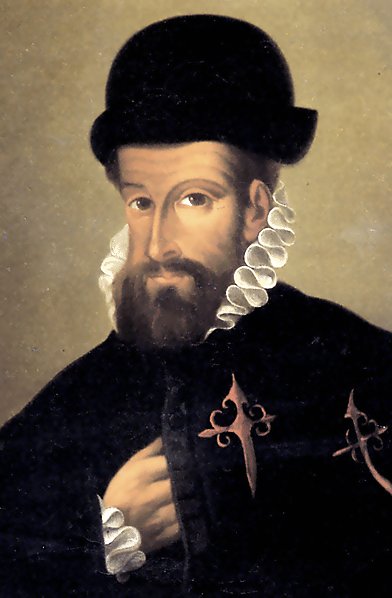
Francisco Pizarro (d. 1541)

Francisco Pizarro (d. 1541)

No one is quite sure when the great conquistador Francisco Pizarro was born. As he was a bastard, no one noted such niceties. He was raised to be a soldier—and he was a good one. But he was also illiterate, because no one took care that he learn to read and write, or to act the part of a gentleman. So he grew up a litle on the wild side, a man of great talents and a great destiny. With a handful of men, he destroyed an empire.

On this Columbus Day—a holiday which we are growing ever more abashed about celebrating without twinges of guilt—it is interesting to note the career of this man, who took on the mighty Inca empire, killed Atahuallpa, its leader, and sent vast treasures of gold and silver to his monarch across the Atlantic.

Pizarro founded cities, most especially Lima, enslaved the native Incas, acted at times with condign cruelty, and at other times with lightness and gentility. But, in the end, all was thrown into chaos by a partnership that failed. At the outset, he formed a compact with his fellow conquistador (and fellow bastard) Diego de Almagro. It was Pizarro, however, who seemed to get all the credit for the conquest from Charles V in Spain, who only belatedly recognized the one-eyed Almagro for his role in the conquest. In the meantime, envy had taken control; and Almagro wrested Cuzco from his partner. Francisco Pizarro’s brother Hernando defeated the rebel at Las Salinas, after which he had him tried, convicted, and executed by garroting.

The brief civil war did not have a clear victor, as, within three years, Francisco Pizarro, was assassinated by remnants of the Almagro faction in Lima. Finally, the Spanish had to step in to restore order.

In his magisterial History of the Conquest of Peru, William H. Prescott waxes lyrical about all the might-have-beens in the late conquistador’s life:

Nor can we fairly omit to notice, in extenuation of his errors, the circumstances of his early life; for, like Almagro, he was the son of sin and sorrow, early cast upon the world to seek his fortunes as he might. In his young and tender age he was to take the impression of those into whose society he was thrown. And when was it the lot of the needy outcast to fall into that of the wise and virtuous? His lot was cast among the licentious inmates of a camp, the school of rapine, whose only law was the sword, and who looked upon the wretched Indian as their rightful spoil.

Who does not shudder at the thought of what his own fate might have been, trained in such a school? The amount of crime does not necessarily show the criminality of the agent. History, indeed, is concerned with the former, that it may be recorded as a warning to mankind; but it is He alone who knoweth the heart, the strength of the temptation, and the means of resisting it, that can determine the measure of the guilt.

Contrast Pizarro with Cortés, who knew how to read and write and who was able to protect his own place in history with his writings after the conquest of the Aztecs. Nonetheless, it is interesting to note that in neither Mexico or Peru are there any monuments to the conquistadores who secured those lands for Spain.

Costa, Sierra y Selva

Omna Peru in Tres Partes Divisa Est

Omna Peru in Tres Partes Divisa Est

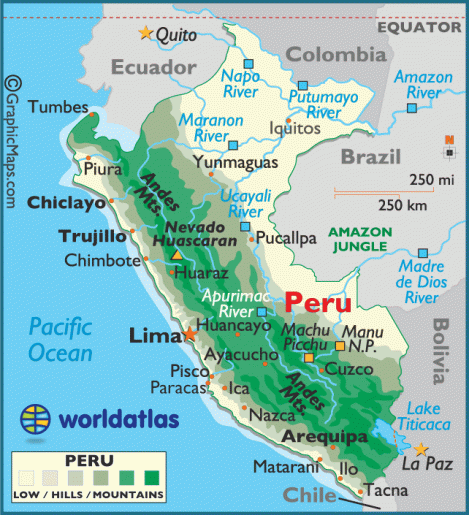
Excuse the schoolboy Latin, but Peru, like Gaul, is divided into three parts: the coast, the mountains, and the jungle. In Spanish, that comes out as the Peruvian schoolkid mantra costa, sierra y selva. As you can see from the above map, the narrow coastal strip is the smallest of the three—and by far the most populated. It contains the largest cities, including the capital Lima. It is also the driest, being a northern extension of the Atacama Desert, where rainfall does not, for all practical purposes, ever occur.

When we think of Peru, we generally think of the Andes, which takes up the second largest chunk of Peruvian territory. Here are the tourist meccas of Cusco, Machu Picchu, and Lake Titicaca, as well as several isolated mountain metropolises like Arequipa, Huancayo, and Ayacucho. The locals here speak mostly Quechua and Aymara. This is the second most populated region.

Finally, there is the jungle. The mighty Amazon has its source in rivers flowing into the Marañon and Ucayali River systems from various parts of Peru, Ecuador, and Colombia. Here is two-thirds of the total land area of Peru, but only 11% of its population. Culturally, it is one of the most interesting parts of the country, but many (including myself) are deterred by Yellow Fever, Malaria, Dengue, and a whole host of tropical diseases.

If I went to Peru, I would concentrate on Lima and the high country between Lake Titicaca and Machu Picchu. (That is, if I don’t develop severe soroche. If I do, I might take a side trip to Northern Chile via Tacna and Arica.)

To Each According to His Needs

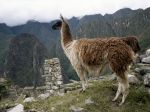
Llama

Llama

A similar arrangement prevailed with respect to the different manufactures as to the agricultural products of the country. The flocks of llamas, or Peruvian sheep, were appropriated exclusively to the Sun and to the Inca. Their number was immense. They were scattered over the different provinces, chiefly in the colder regions of the country, where they were intrusted to the care of experienced shepherds, who conducted them to different pastures according to the change of season. A large number was every year sent to the capital for the consumption of the Court, and for the religious festivals and sacrifices. But these were only the males, as no female was allowed to be killed. The regulations for the care and breeding of these flocks were prescribed with the greatest minuteness, and with a sagacity which excited the admiration of the Spaniards, who were familiar with the management of the great migratory flocks of merinos in their own country.

At the appointed season, they were all sheared, and the wool was deposited in the public magazines. It was then dealt out to each family in such quantities as sufficed for its wants, and was consigned to the female part of the household, who were well instructed in the business of spinning and weaving. When this labor was accomplished, and the family was provided with a coarse but warm covering, suited to the cold climate of the mountains,—for, in the lower country, cotton, furnished in like manner by the Crown, took the place, to a certain extent, of wool,— the people were required to labor for the Inca. The quantity of the cloth needed, as well as the peculiar kind and quality of the fabric, was first determined at Cuzco. The work was then apportioned among the different provinces. Officers, appointed for the purpose, superintended the distribution of the wool, so that the manufacture of the different articles should be intrusted to the most competent hands. They did not leave the matter here, but entered the dwellings, from time to time, and saw that the work was faithfully executed. This domestic inquisition was not confined to the labors for the Inca. It included, also, those for the several families; and care was taken that each household should employ the materials furnished for its own use in the manner that was intended, so that no one should be unprovided with necessary apparel. In this domestic labor all the female part of the establishment was expected to join. Occupation was found for all, from the child five years old to the aged matron not too infirm to hold a distaff. No one, at least none but the decrepit and the sick, was allowed to eat the bread of idleness in Peru. Idleness was a crime in the eye of the law, and, as such, severely punished; while industry was publicly commended and stimulated by rewards.—William H. Prescott, History of the Conquest of Peru


El Tren de la Sierra

It All Began in 1980...

It All Began in 1980…

My interest in visiting South America first began when I read Paul Theroux’s The Old Patagonian Express: By Train Through the Americas back around 1980. Even earlier, my interest had been whetted by reading the stories, essays, and poems of Jorge Luis Borges—though the South America of Borges was more nonspecific, almost mythical.

Theroux, on the other hand, was an intelligent and highly snarky American who decided in the 1970s to travel by train—insofar as it was possible—from Boston to Patagonia in Argentina. One of the routes he took, El Tren de la Sierra ran from Lima’s Desamparados (“forsaken”) station to Huancayo high in the Andes. It is one of two Peruvian rail routes that claims to be the second highest in the world; the highest is the recently opened rail route connecting Xining, Golmud, and Lhasa in Tibet. According to Wikipedia’s list of the Highest Railways in the World, the high point of the route is at Ticlio, altitude 4,829 meters (15,843 feet). The Tibet run is a scant 800 feet higher at Tangguia.

I am thinking of taking the same route as Theroux if and when I go to Peru. His goal was to go by train to Huancayo and take land transportation to Cuzco, from whence he would visit Machu Picchu and Lake Titicaca. The problem is, it is faster and far more convenient to go back to Lima and take the bus to Cuzco: Travel along the ridge line of the Andes is sometimes possible, but mostly not. Rains, snows, mud, and avalanches take their toll, especially between Ayacucho and Cuzco. Based on the map on the endpapers of my copy of The Old Patagonian Express, it looks as if Theroux flew from Huancayo to Cuzco, though I am not sure that is possible.

On his trip, Theroux ran into problems with altitude sickness, the dread soroche. To help combat the headaches and nausea, railroad employees handed out plastic balloons filled with oxygen, which afforded him some relief. There are some medications that are said to help, including Diamox, which has some gnarly after-effects, and a local preparation called Sorojchi. The locals also chew coca leaves with lime or drink a tea made with coca leaves called mate de coca. If I go, I’ll have to be prepared.  Here is Theroux’s description of his symptoms:

It begins as dizziness and a slight headache. I had been standing by the door inhaling the cool air of these shady ledges. Feeling wobbly, I sat down  and if the train had not been full I would have lain across the seat. After an hour I was perspiring and, although I had not stirred from my seat, I was short of breath. The evaporation of this sweat in the dry air gave me a sickening chill. The other passengers were limp, their heads bobbed, no one spoke, no one ate. I dug some aspirin out of my suitcase and chewed them, but only felt queasier; and my headache did not abate. The worst thing about feeling so ill in transit is that you know if something goes wrong with the train—a derailment or a crash—you will be too weak to save yourself. I had a more horrible thought: we were perhaps a third of the way to Huancayo, but Huancayo was higher than this. I dreaded to think what I would feel like at that altitude.

Theroux didn’t think much of Peru: He thought the whole place rather ramshackle. But then, that’s what Martine thought of Buenos Aires, which I love.

Hot Spark Plugs—and Rats?

An Apocryphal Story?

An Apocryphal Story?

Peru is a wonderful place. It is also wonderfully weird. The first time I visited, in 1997, several people I met in Lima warned me to take extra care when driving, because local thieves had perfected an ingenious new robbery technique. Near isolated intersections, street urchins heated discarded spark plugs over fifty-five-gallon drum fires. When a car stopped at a traffic light, the young thieves pressed a white-hot plug against its passenger-side window, causing it to shatter. Before the driver realized what was happening, a live rat was tossed into his or her lap. During the ensuing wrestling match with the (presumably agitated) rodent, the thief helped himself to handbags or anything else that looked inviting. If the driver understandably chose to exit the vehicle, the thief hopped in and drove off with his bewhiskered accomplice.—Mark Adams, Turn Right at Machu Picchu: Rediscovering the Lost City One Step at a Time

Is Peru Next?

I Am Thinking of Visiting Peru Next

I Am Thinking of Visiting Peru Next

If my next vacation will be solo like my trip to Iceland, I think I will visit Peru some time next year. My first view of the Andes from Argentina in 2006 and 2011 have whetted my appetite for more, and where better to go than Peru, home of the Inca Empire?

If, on the other hand, Martine gets better or decides she can travel, I will probably pick a destination in the United States, such as Oregon and Washington. Unfortunately, Martine still can’t lift anything and spends a lot of time resting from back pain.

Since I have been fairly healthy, I will test myself at high altitudes. Will the dread soroche bring me down? If my destination is Peru, I will ascend the Andes slowly, going by way of Arequipa and other intermediate destinations before I reach the heights of Cuzco, Machu Picchu, and Lake Titicaca.