Summer Vacation

The following paragraphs come from the beginning of Chapter Eight in John D. MacDonald’s The Crossroads. In it, he satirizes the typical 1950s summer family vacation.

During the first twenty-two days of July the Crossroads Corporation experienced the normal seasonal change in the character of the business. Summer vacationers clogged the roads. The young families stopped at the restaurants and gas stations and motels. The young husbands, with fourteen days, or twenty-one days of freedom, spent it abrading their souls against the shimmer and stink of fast traffic, counting every night the thinning stack of traveler’s checks. The young wives put on pretty summer skirts and blouses in the morning, and by ten o’clock were stained, wilted, wrinkled and rump-sprung, the victims of the attrition of summer heat, sticky hands and road fumes. They called their husbands darling with iron emphasis. Small, weary, wind-burned children whined and threw up. The young families visited dear friends they had not seen in three years, and found nothing to say to them. They visited the showplaces of the nation, made the proper dutiful sounds of appreciation and found them a litter of gum wrappers, bored guides, and ill-mannered children of the other young families. They careened down the endless stone rivers between the bright thickets of billboards. Virginia Beach was where Junie thumped Russell on the head with a rock. Three stitches. The Suwanee River was where the trunk compartment lock jammed. The Grand Canyon was where Baby broke Mummie’s glasses. Franconia Notch was where Tiffin got into the poison ivy.

Tires burst. Speedometer cables squeaked and died. Pebbles chipped windshields. Pets escaped. (You were the one hadda bring that goddam dog in the first place.) Fan belts snapped. Ten billion pieces of Kleenex tumbled along the dusty shoulders.

On the Open Road

Sam Riley and Garrett Hedlund in Walter Salles’ Movie On the Road

This month I read two classical “road novels.” The first was Jean Giono’s The Open Road (Grands Chemins) about two down-at-heel pals walking through the countryside of Southern France around 1950 looking to pick up cash from work or gambling. Conceived of around the same time was Jack Kerouac’s On the Road about two down-at-heel pals crossing the continent at high speed looking to pick up enough cash for gas to get to their destination. Curiously, neither writer was aware of the other, even though Kerouac came from a French-Canadian family.

Both books are well worth reading, especially as I feel that Kerouac and Giono would have admired each other’s work.

Jean Giono (1895-1970)

I had read the Kerouac decades earlier, but upon finishing Giono’s book, I thought I wanted to get on the road again, so I re-read On the Road. They were two very different authors. Giono was in love with the land of his birth as was Kerouac. Unfortunately, Kerouac’s love was so heavily suffused with alcohol that he only lasted to the age of 47. His later books, such as Big Sur, showed him to be headed down the road to liver failure.

Still, I love reading Kerouac’s books. He had such a vital enthusiasm for his friends and for mid-century America that, even in his experiments in bop prosody, something splendid shines through. Perhaps it was a never ending sense of youthfulness. Giono’s France is centuries old, but Kerouac’s America was bottled in bond in the years right after the Second World War.

Road Trip

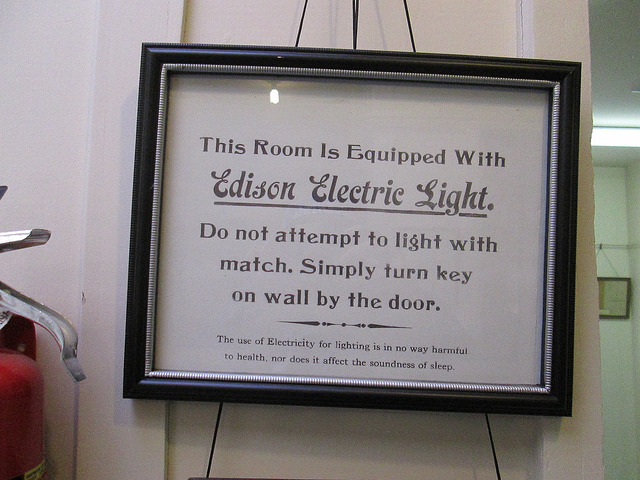
Sign in Fillmore Historical Society’s Museum

Sign in Fillmore Historical Society’s Museum

State Highway 126 runs roughly from Six Flags Magic Mountain in Santa Clarita to the Pacific Ocean around Ventura. During much of its length, it is prime agricultural country and contains miles of fruit orchards, especially in the old Spanish Sespe Rancho.

Ostensibly, we went to take the Fillmore & Western Railroad from Fillmore to Bennett’s Honey Farm in nearby Piru. There I sampled several types of honey and bought a big 3-pound jar of their Topanga Quality Wildflower honey, my favorite. Today was the 5th Annual California Honey Harvest Festival and BBQ Championship. We didn’t try any of the barbecue, mostly because neither Martine nor I really care for barbecued meat—too much sugar! Instead we ate at a little Mexican Restaurant called La Fondita on Central.

The train ride to the honey farm took half an hour in each direction. The train ran forward to get there, and backed up all 6-7 miles to return to the station.

While in Fillmore, we visited the Fillmore Historical Museum, where we saw the amusing sign above and had an interesting discussion with some of the volunteers. Then, on the way back home, we stopped at the Cornejo Produce Stand just outside of Fillmore for some really delicious looking apricots and strawberries.

It was a fun road trip and gave me ideas for several more in the area. Keep tuned to this space for further details.