
Across Twenty Years of L.A. Life

Charles Manson Under Arrest

I am currently reading Tracy Daugherty’s biography of Joan Didion entitled The Last Love Song. Halfway through the book, I feel as if I had relived the 1960s and the 1970s. I had never realized what a key literary figure that Joan Didion (as well as her friend Eve Babitz) were in my life. While Eve represented to me the world of L.A. celebrities, Joan’s wide screen writings took in the whole local and even international picture.

If one lives in the West L.A. area over a number of years, one finds oneself on the fringes of history. On June 5, 2004, for instance, Martine and I were turned away from the Ronald Reagan Presidential Library in the Simi Valley because the ex-president had just died. The funeral home that handled his body was within walking distance of my apartment, at 26th Street and Arizona in Santa Monica.

The scene of the crime when O. J. Simpson killed his wife and Ron Goldman was only five blocks north of me on Bundy Drive. (It building got so many visitors that they demolished the building.)

On June 25, 2009, I had difficulty getting home from work because thousands of people had showed up at the UCLA Hospital when they heard that Michael Jackson had died.

One of our clients at the accounting firm where I worked was the actor Richard Anderson, who lived at 10130 Cielo Drive, right next door to the house in which Sharon Tate and her friends were slaughtered by the Manson Family.

Joan Didion

While I never met Joan Didion, I always felt a curious parallelism between her works and my life. Not because I was a successful writer or filmmaker, but because she tracked life in Southern California the way I did. For the most part, what interested her interested me. I suspect that if I had met her, she and I would not have seen eye to eye: I am not interested in the kind of active social life she lived, or in heavy drinking, or raising a child (at which she self-admittedly failed).

The fact remains that, in following her works, especially in the 1960s and 1970s, I feel as if I am reliving my life during the formative years of my early adulthood. So much so that it is almost eerie at times.

Two Presidents Reconsidered

Entrance to the Ronald Reagan Presidential Library and Museum

I have come to enjoy visiting Presidential Libraries. The two in Southern California—those of Ronald Reagan and Richard Nixon—have been visited by me several times. When Presidents Nixon and Reagan occupied the White House, I was dead set against them. I voted for neither of them and, in fact, threatened to leave the country if Reagan were elected.

Today, Martine and I spent a few hours at the Ronald Reagan Presidential Library and Museum in the Simi Valley. It’s funny how time tends to remove sharp edges. Now I look back and see a gifted speaker who sincerely believed in what he was saying and who was able to convince listeners of his sincerity. Even though his presidency fell apart somewhat toward the end with the whole Iran-Contra negotiation; even though the whole Savings & Loan fiasco was the result of a horrible miscalculation; even though his mind couldn’t wrap itself around that truck bomb in Beirut that killed 241 U.S. military; even though he trusted that sanctimonious snake-in-the-grass Colonel Oliver North—he did not turn out to be an irredeemably awful president like the Current Occupant.

Probably what I liked most about Reagan were the sentiments expressed in his epitaph: “I know in my heart that man is good. That what is right will always eventually triumph. And there’s purpose and worth to each and every life.” I could forgive a man who believed that, and I do not think that Ronald Wilson Reagan was given to lying.

Earlier this year, Martine and I paid another visit to the Richard Nixon Presidential Library and Museum in Yorba Linda. As President, Nixon may well have been paranoid, but he was also brilliant. The videos of his speeches were articulate and, overall, impressive. Granted that he was not at his best after the Watergate break-in forced him to go into defensive mode, he succeeded in ending the Viet Nam War and opening Communist China. Both were considerable accomplishments, and could not be altogether diminished by the whole Watergate fiasco.

Also, there was a real humility about the man. His presidential library also includes the house in which he was born which was built by his father from a kit. It was as humble a house as any log cabin. And directly outside it is where Richard and Pat Nixon are buried.


A City That Is Set On A Hill

Homeless Man on the Street

Homeless Man on the Street

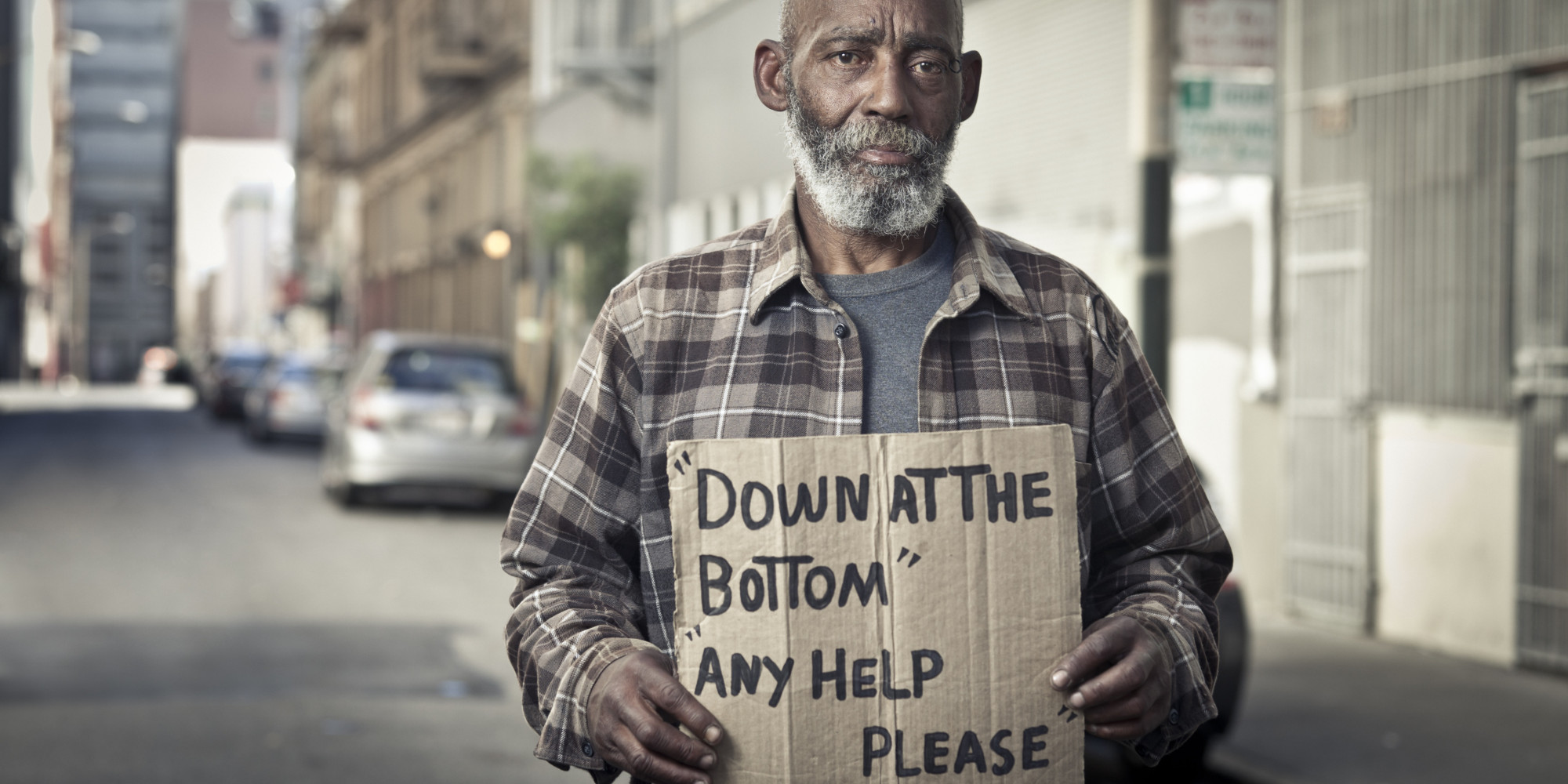
It all started in the 1980s, during the Presidency of Saint Ronald Reagan. Almost overnight, the homeless began appearing in the streets. Over the last thirty years, their numbers have increased to the point that I cannot step out for lunch without getting at least three solicitations for spare change. When I drive home on Ohio Avenue, the bridge under the I-405 is full of tents and cardboard “forts” covered with tarpaulins.

In Matthew 5:14, Christ says, “You are the light of the world. A city that is set on a hill cannot be hidden.” Reagan and other Republicans have been fond of seeing the United States in this light. Sometimes I wonder what foreign tourists think when they see raggedy men and women sprawled on the sidewalks and living under bridges. In my travels, I did not see such sights, not even in supposedly Third World countries such as Peru, Uruguay, Argentina, and Chile.

For whatever reason, our “city that is set on a hill” has become a festering garbage dump. Even in rural America, crystal meth, opiates, and alcohol have stranded untold thousands wandering the streets in search of a meal or a place to crash. Across the street from where I live, people appearing to be homeless have their own cigarettes and cell phones and are, I suspect, dealing in drugs—especially when they make an appearance at their “corner” only intermittently.

As much as I want to help them, I know that my best bet is to help the Salvation Army and the local rescue missions. They can weed out the clearly unworthy more readily than I can. But what of the mentally ill? It seems that they form more than half of the local homeless population. I get this feeling of hopelessness whenever I think of them.

In Amongst the Enemy

The Tomb of President Ronald Reagan

The Tomb of President Ronald Reagan

Today I was surrounded by hundreds of Republicans as I visited the library of their sanctified hero, Ronald Wilson Reagan, 40th President of the United States.

While he was Governor of California and President of the United States, I hated him with a white-hot heat. With hundreds of fellow UCLA students, I jeered him at an illegal screening of Bedtime for Bonzo (1951), in which the widely disliked Governor of California was paired with a chimpanzee.

But times have changed. Although I disagreed with him on a number of counts, especially the Iran-Contra affair and the sending of U.S. troops to be blown up by one of the first suicide bombers in Lebanon. And yet, I would prefer him to any of the Klown Kar GOP candidates for 2016. There was a certain intelligence and sincerity to him that I would now find refreshing. He could also whip them all in a debate with his hand (and tongue) tied behind his back.

The words on his tomb (above) read: “I know in my heart that man is good, that what is right will always eventually triumph, and there is purpose and worth to each and every life.” That’s not a bad line to be remembered by.

Curiously, Martine and I showed up at the Reagan Library on June 5, 2004, the day Mr. Reagan died. We were interviewed by the Press (though I never saw my interview on TV). At that time, I said I thought that, although I did not agree with many of his policies, I thought he was a superb communicator. I still stand by that opinion.