
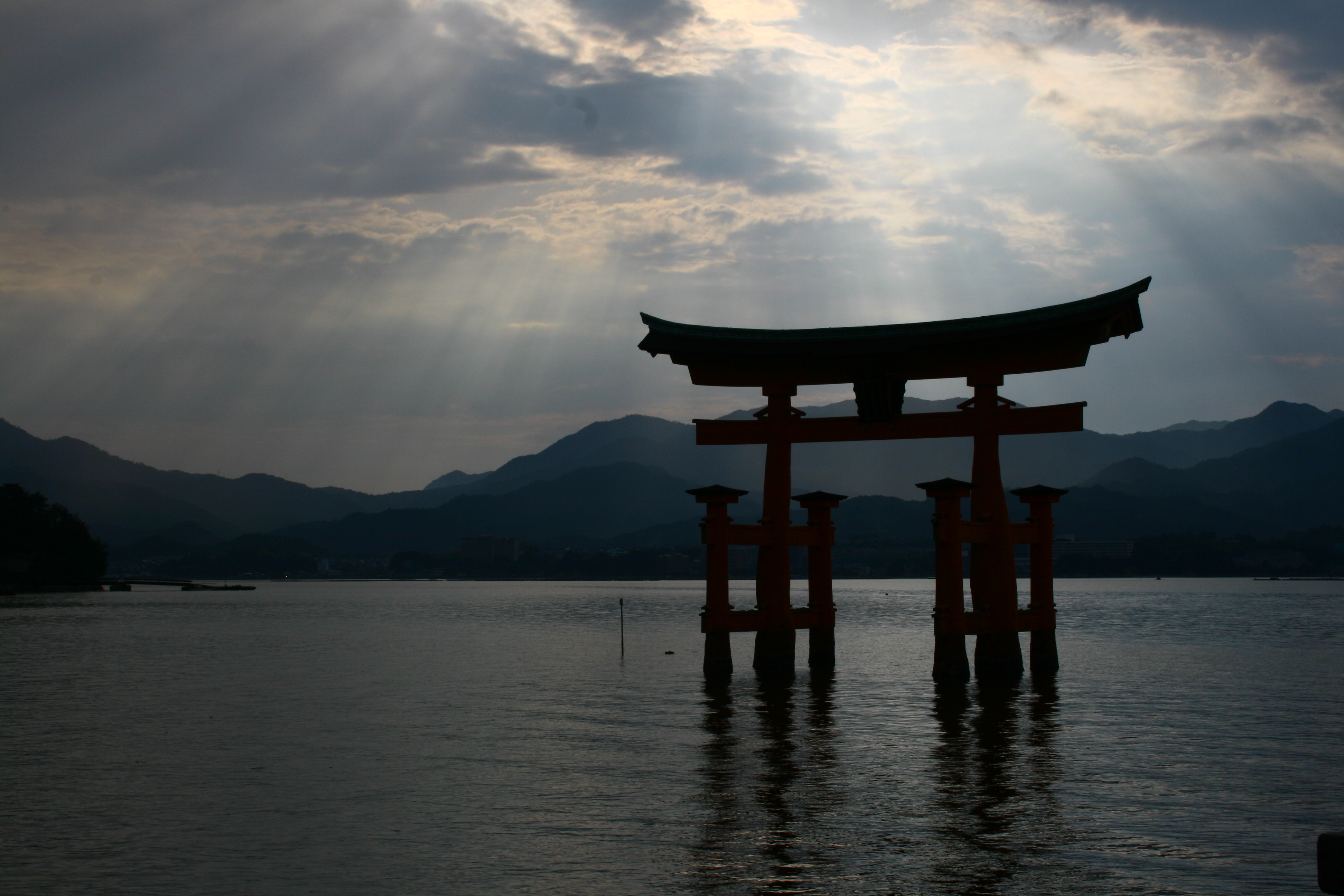
Modest Divinities

Shinto Shrine

Shinto Shrine

Jorge Luis Borges spent the last thirty to forty of his years in blindness, but like Tiresias and Milton, he saw more than most of us. The following poem is called “Shinto.”

Shinto

When misfortune confronts us
in an instant we are saved
by the humblest actions
of memory or attention:
the taste of fruit, the taste of water,
that face returned to us in dream,
the first jasmine flowers of November,
the infinite yearning of the compass,
a book we thought forever lost,
the pulsing of a hexameter,
the little key that opens a house,
the smell of sandalwood or library,
the ancient name of a street,
the colourations of a map,
an unforeseen etymology,
the smoothness of a filed fingernail,
the date that we were searching for,
counting the twelve dark bell-strokes,
a sudden physical pain.

Eight million the deities of Shinto
who travel the earth, secretly.
Those modest divinities touch us,
touch us, and pass on by.
 

Either Way Is Okay

Shinto Shrine

Shinto Shrine

It is a series of low buildings among trees. Space in a shrine is horizontal and not, as in a cathedral, vertical. In a church, space is confined. It must struggle upward, having no place else to go. In a shrine, space is spread. There are no high walls, no tight enclosures. The space is a grove and this grove seems so endless that it might be the world itself.

The sky seems low, near. There are long expanses of lawn or grove among the buildings. One is not enclosed, nor is one directed. One is liberated, and almost always alone.

Shrine prayer, as I have said, is not communal prayer. It is solitary prayer. It is not a state—it is a function. It lasts only a minute or so and it is spontaneous. One does not enter, as in churches, or descend, as in mosques. The way to the shrine is through a grove, along a walk, through nature itself, nature intensified. Through these trees, over this moss, one wanders to shrines.

This casual, unremarked acceptance of nature speaks to something very deep within us. It speaks directly to our own nature, more and more buried in this artificial and inhuman century. Shinto speaks to us, to something in us which is deep, and permanent.

Certainly we feel—which is to say, recognize—more here than in smiling Buddhism with its hopeful despair, more than in fierce man-made Islam with its heavenly palaces on earth, more than in the strange and worldly tabernacles of the Hebrews or in the confident, vaunting, expectant Christian churches.

This religion, Shinto, is the only one that neither teaches nor attempts to convert. It simply exists, and if the pious come, that is good, and if they do not, then that too is good, for this is a natural religion and nature is profoundly indifferent.—Donald Richie, The Inland Sea