This has been the coldest winter I can remember since I first moved to Southern California in 1966. It has been wet, too—but not quite the wettest. That honor belongs to several winters in the 1970s and early 1980s, and most particularly the winter of 2004-2005.
As I drove to the Original Farmers Market at 3rd and Fairfax, I saw the peaks of the San Gabriel Mountains covered with a heavy mantle of snow. The mercury stood in the low 50s Fahrenheit (or low teens Celsius).
Southern California winters usually consist of periods of cold interspersed with several warm spells, where the temperature can go as high as the 80s and 90s Fahrenheit (or 30s Celsius). For the last few months, however, I have been wearing long-sleeves shirts, a wool vest or sweater, and a windbreaker. In December, my gas bill topped $365.00—a new record!
I feel sorry for tourists who come to L.A. to bask in the sunshine and spend some time tanning at the beach. They will likely encounter icy winds and blowing sand.
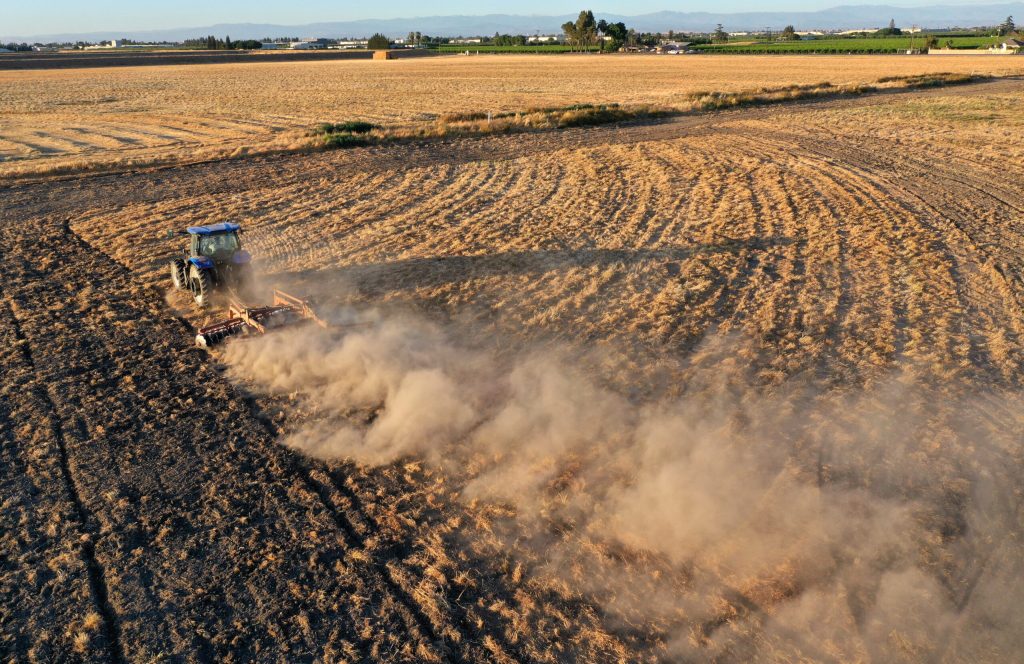
MADERA, CALIFORNIA – MAY 25: In an aerial view, a tractor kicks up dust as it plows a dry field on May 25, 2021 in Madera, California. As California enters an extreme drought emergency, water is starting to become scarce in California’s Central Valley, one of the most productive agricultural regions in the world. Farmers are facing a shortage of water to use on their crops as wells and reservoirs dry up. Some are pulling out water dependent crops, like almonds, or opting to leave acres fallow. (Photo by Justin Sullivan/Getty Images)
In Southern California, we have not seen so much as an inch of rain since last February or March. Oh, we get the occasional “dirty drizzle,” which succeeds only in leaving a layer of dust on our windshields as it dries. Today’s headline in the Los Angeles Times reads “Winter Tale: A ‘No Snow’ State.”
You might not associate California with snow, but the snowpack on the Sierra Nevada Range is the main source of irrigation for California agriculture. If that dries up, large parts of the San Joaquin Valley will no longer be able to reach the 12.8% of U.S. agricultural production that it hitherto enjoyed.
We usually think of water as used primarily for drinking and washing, yet 70% of global fresh water resources is used for irrigation. And also for keeping useless front lawns green.
Something is clearly happening that will make California a less desirable place to live. Late night comics are having a field day talking about our year-round wildfires.
I don’t have any idea what is going to happen. It could be that the rains and snows of yesteryear will return. Or, they may not.



 Tarnmoor
You must be logged in to post a comment.