The Babes of Star Trek

Diana Ewing as Droxine in “The Cloud Minders” Episode of Star Trek

Every once in a while I kick off my shoes and re-watch one of the original episodes of Star Trek. I am always amazed at how many really beautiful women show up in the series. I can only speculate that Gene Roddenberry must have been an incredible lech, but with good taste. I have already written about Marta the green Orion from the “Whom Gods Destroy” episode, played by Yvonne Craig.

Diana Ewing played the lean and strikingly beautiful blonde Droxine in “The Cloud Minders” episode from the same year (1969). She is one of the epicene Stratos cloud dwellers who live lives of idle pleasure while the Troglytes [sic] below mine zenite, which clouds their thinking.

Whereas Marta had a thing for James T. Kirk, Droxine was more interested in the tall Vulcan, Spock. Unlike Marta, Droxine is still alive at the end of her episode. But alas, the Starship Enterprise never returned to Stratos later in the series.
Where It All Began

Where Star Trek and Alien Began

Where Star Trek and Alien Began

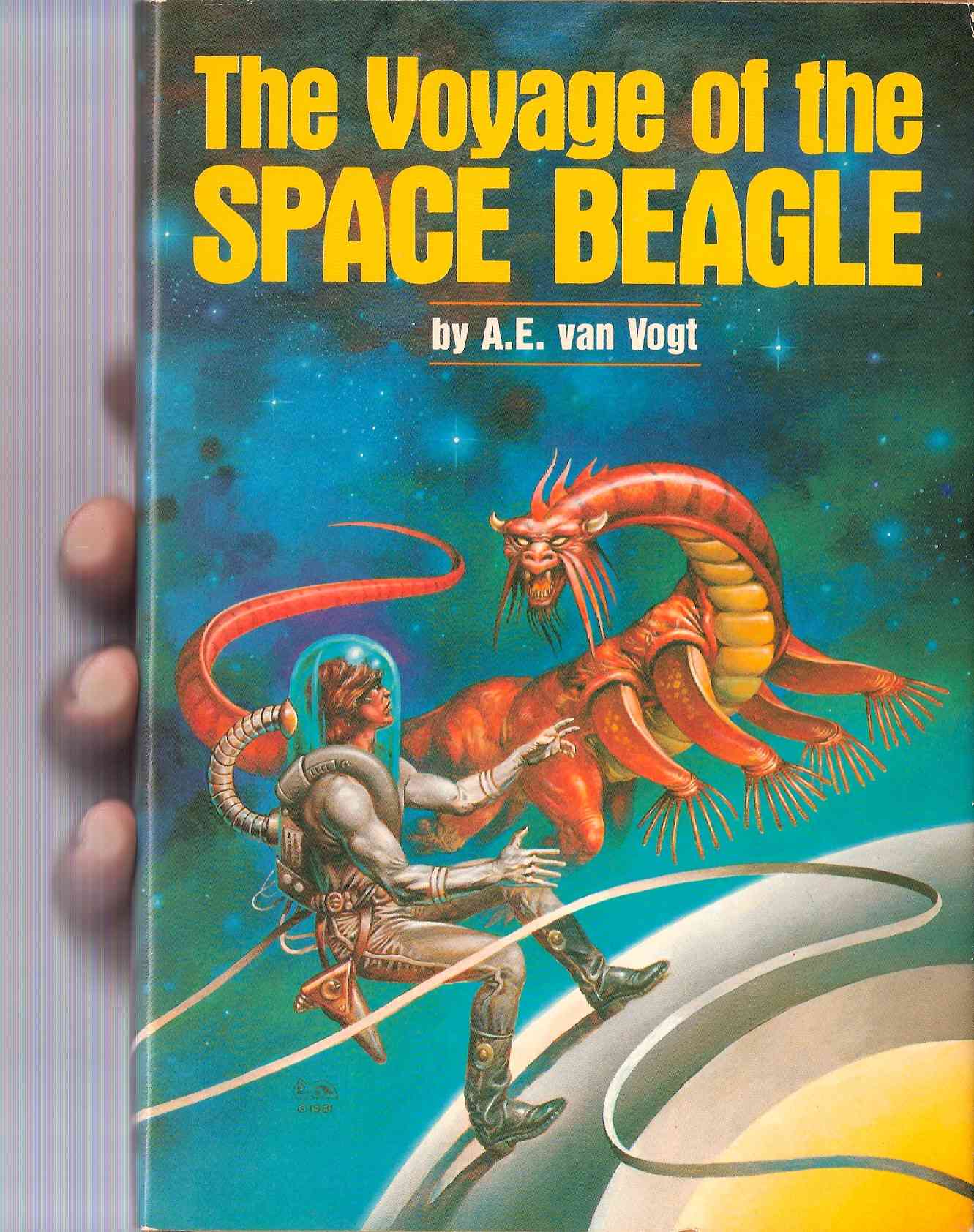
Lest we think of ourselves as too sophisticated and pooh-pooh out of hand some old (1950) science fiction with a somewhat clunky name, perhaps we should reconsider. A. E. Van Vogt’s The Voyage of the Space Beagle is a collection of four short stories cobbled together. From this unlikely source came the idea for Gene Roddenberry’s Star Trek and all its spin-offs and movies. From the third story came the idea for the movie Alien.

You remember the words that started the show: “Space, the final frontier. These are the voyages of the Starship Enterprise. Its five-year mission: to explore strange new worlds, to seek out new life and new civilizations, to boldly go where no man has gone before.” Van Vogt got his idea from Charles Darwin’s The Voyage of the Beagle, which, curiously, lasted five years. While the five years did not figure in Van Vogt’s book, it assumed new importance when Roddenberry lifted the general idea. And he never paid a penny to Van Vogt nor credited him with the idea for the series.

This Scene in Alien Did Not Come from Van Vogt

This Scene in Alien Did Not Come from Van Vogt

The producers of the film Alien did not get off so easily. Van Vogt sued the producers and came to an arrangement with them that was monetarily satisfactory to both sides. Needless to say, the character of Ripley, played by Sigourney Weaver (above), was not part of The Voyage of the Space Beagle, as all its crew were chemically castrated males.

There are many treasures from the Golden Age of Science Fiction (mostly the 1950s) that are worth re-examining. I would submit that the works of A. E. Van Vogt deserve a closer look. I have re-read three of his books recently and found them well worth the effort.

The Endless Trek

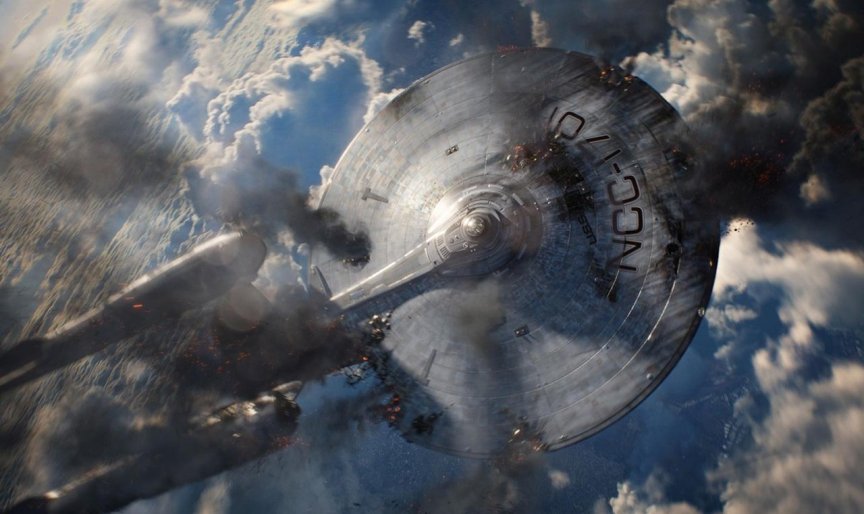
The Immortal NCC-1701

The Immortal NCC-1701

Today I saw Star Trek Into Darkness—by myself because Martine refuses to see any film that’s over ninety minutes long. I had wanted to see the film because, well, I’m sort of a Trekkie. No costumes or anything like that. Perhaps I just have a hankering for green women.

While I enjoyed the film for the most part, all the CGI work bored me. I have no doubt that most of the production money was spent on scenes that meant nothing to me. Ever since the original Star Wars, space ships have been at least as big as the Burj Kalifa (the world’s tallest building, these particular fifteen minutes) and have featured leagues of heavy metal whose mining would have reduced Planet Earth to the size of an inconsequential cinder. What I want to know is: Who did all the dusting and mopping?

On the plus side, the acting was pretty good, with Chris Pine as a believable, super-insubordinate James T. Kirk; Zachary Quinto as the son of the Leonard Nimoy Spock (that seems to go against the chronology, as this takes place before the Shatner/Nimoy original); John Cho as a fearsome Sulu; and Alice Eve (below) as an exceptionally cute addition to the Enterprise.

Alice Eve in a Gratuitous but Welcome Cheesecake Shot

Alice Eve in a Gratuitous but Not Unwelcome Cheesecake Shot

What worked best were when Director J. J. Abrams paid homage to the original series. Referred to in this version were The Wrath of Khan and the TV episode on which it was based (“Space Seed”), and also the TV episode entitled “The Trouble with Tribbles.”

In the end, I think Star Trek Into Darkness was a good addition to the franchise, but no masterpiece.