
Barking Up the Wrong Technology

Where Are We Headed with Technology?

When I was a student at Dartmouth, I taught myself how to use the new Basic programming language on the college’s General Electric computer. That was at some time in the mid 1960s. Little did I know that much of my post-graduate life would be involved with computers.

In March 1968, I was hired for the Lexicography & Discourse project at System Development Corporation in Santa Monica. My job involved proofreading and correcting the transcriptions of two Merriam-Webster dictionaries. The project was funded by the Advanced Research Projects Agency (ARPA) of the U. S. Air Force. That was the same agency which created the forerunner of the Internet, which was created to communicate with other computer nodes spread across the country even if several U. S. cities were destroyed by nuclear bombs.

The technology of the late 1960s was clunky, but it enabled us to land on the moon in 1969!

I went on to become a computer programmer and informational technology (IT) specialist for two accounting firms. During that time I saw technology change from a kind of intellectual priesthood into a pursuit for the masses. Everybody wanted in.

It all started with the Apple Macintosh, which supposedly made computing accessible to everyone. Then, the Internet was for everybody, via Prodigy and America Online. Kids were playing computer games.

A major hurdle was passed when touch-screen interfaces were invented. You didn’t need to remember commands with their complicated parameters: You simply pointed, and, if you were lucky, your choice was registered and acted upon. Of course, this went hand in hand with poor language skills. Who needed spelling and grammar when all you had to do was point at the options you wanted.

On one hand, there were many advantages to this; but techno continued to evolve with cryptocurrencies and artificial intelligence (AI). Money was now worth what you wanted it to be worth. And, with AI, you didn’t have to think any more. These are ominous developments. If technology continues to evolve along these lines, I expect no good to come of it.

Entering the Era of Crummy Technology

(Not So) Smart Phones

Little did I think way back around 1964 when I was fooling around with a General Electric 265 computer at Dartmouth College that computer technology would become so prevalent sixty years later. I moved from being an English Major in 1966 to seeking a Master of Arts in film history and criticism at UCLA in Los Angeles to becoming a self trained computer programmer in 1968 at System Development Corporation (SDC) in Santa Monica, California.

From there I moved on being a computer programmer for Urban Decision Systems in 1971, morphing into a Director of Corporate Communications to avoid working directly under the president’s thumb. When that went bust in 1991, I became an Network Administrator and Office Manager for a Westwood accounting firm, which lasted until the end of 2017.

I am now retired after a lifetime with computers. As I look around me today, I find technology everywhere—from automated attendant services that make it a 45-minute ordeal to telephone a corporation to expensive smart phones that are inferior in quality to the old Bell land lines to error-prone GPS systems to touch-screen interfaces that force you to repeat your keystrokes endlessly.

Tomorrow, I will have to pay a Blue Cross bill over the phone—and I dread the interaction with their automated attendant. They refuse to make it easy to pay them unless I let them auto-fill all my prescriptions. Even when my doctor changes medications or dosages.

I own a flip phone, but not a smart phone. Being a senior, I cannot read the tiny screens without changing to my reading glasses. If I were an eight-armed Hindu deity, it would be no trouble at all. But, alas, I am a mere human.

At SDC, I wrote three hefty user manuals. Now I find that user manuals are hard to come by. If you can’t find a portable data file (pdf) version on the Internet, you have to just fly by the seat of your pants. I guess people just don’t like to read any more.

What frightens me is not that we advance three steps forward and two steps back, but two steps forward and three steps back.

On Being a Troglodyte

I am viewed by some of my acquaintances as something of a cave man, mainly because I do not own a smart phone. When I looked at the technology, I saw several major disadvantages right off:

  • Tiny screens and bad eyesight don’t go well together. I usually wear distance glasses, and I would have to do a quick switch to reading glasses to be able to discern the images and text clearly.
  • I actually have a flip phone which I use for special occasions, but I was disturbed by suddenly being inundated by calls in Mandarin Chinese.
  • Thanks mostly to the 2024 election, I am inundated with text messages begging for donations—with the result that my cell phone is mostly off and rarely travels with me. I find it onerous to manage a whole lot of text messages.
  • Driving around Los Angeles, I am disturbed by drivers who are still texting when traffic signals change to green.
  • At my supermarket, the parking lot is 30% occupied by men and women who are fingering their smart phones, making it hard for legitimate shoppers to park.

Several years ago, my friend Mohan offered to present me with a free smart phone and was shocked that I refused on the grounds that it would make my everyday life more stressed and worrisome in every way.

I might be a cave man, but if so, I am a happy one. There are too many things that I love and that do not require so radical a change of life as the care and feeding of a smart phone.

On Being a Slave to Technology

Something happened to me as I approached retirement age. I mean besides getting old. What I mean is that I began to feel highly critical about several technologies that were beginning to assume a dominant position in our society.

Touch Screen

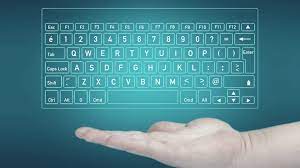
Although I use an Amazon Kindle to read several books a month, I do not like the imprecision of touch screen interfaces—especially when I have to enter data without a large-sized keyboard. I do not have fingers that measure five millimeters across, so an onscreen keyboard is as difficult for me as using tweezers to move an anvil.

Smartphones

In addition to my dislike of touch screen interfaces, I find smartphones irritating in the extreme. I have a flip cellphone, but I don’t carry it around with me everywhere I go. For one thing, I will not answer the phone while driving, as I wish to continue living and operating an unwrecked car. My cellphone is for outcalling only, except by prior arrangement. Most of the time, it is powered off and sits comfortably on my computer desk.

The other thing is that I already have to carry around a number of things in my pockets:

  • An eyeglass case with reading glasses
  • A ballpoint pen
  • My wallet
  • My keys
  • Change for parking meters
  • Selected medications, including insulin for diabetes

E-Scooters

Why was this ever invented? I have already seen a half dozen nasty accidents involving e-scooters. And besides, I’ve always thought people looked silly operating them.

Artificial Intelligence (AI)

I know that we are living in a world where artificial intelligence is regarded as the coming thing. In my opinion, AI is a way of sacrificing truth for convenience. Please accept my assurance that I do not use AI in producing my blog posts. We have enough half truths and lies all around us without my adding any more to the mix.

GPS

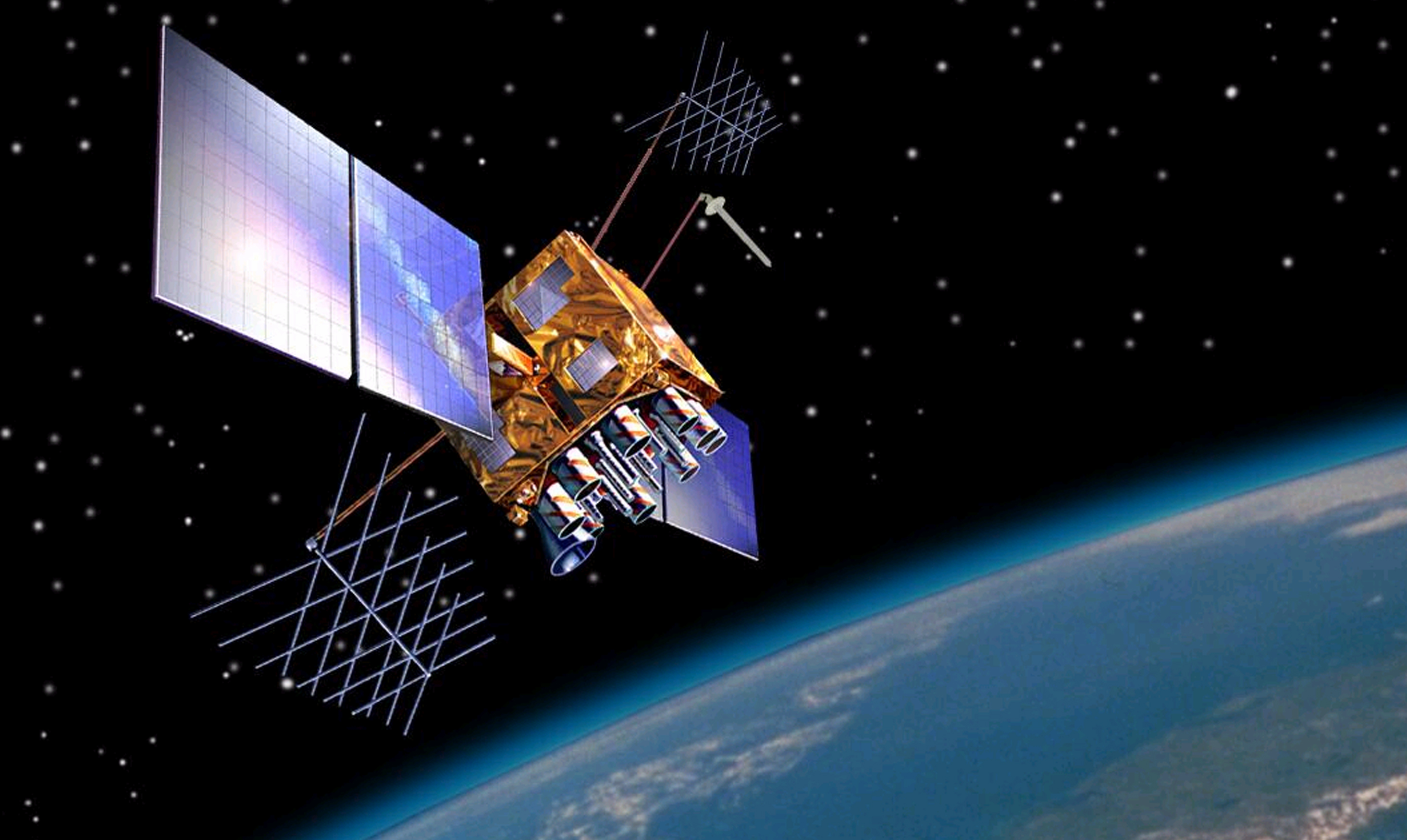
Here I admit I’m on shaky ground. I do not have any GPS device in my car because I do not like to be distracted while driving. Also, I am still a bit skeptical about their accuracy, particularly while traveling in foreign countries. I suppose that for people who don’t know where they’re going, GPS can be a blessing of sorts.

The nice thing about being my age is that I can pick and choose which technologies to adopt. I do not have to turn myself into a rabid fanboy because Apple or some other tech giant is releasing a new product. I believe it was Alexander Pope who wrote the following couplet:

Be not the first by which the new are tried
Nor yet the last to lay the old aside.

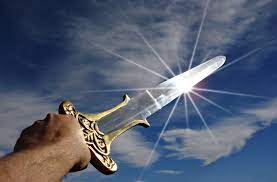
A Double-Edged Sword

Dr. Michio Kaku, famous American physicist and futurologist, probably said it best:

We have to realize that science is a double-edged sword. One edge of the sword can cut against poverty, illness, disease and give us more democracies, and democracies never war with other democracies, but the other side of the sword could give us nuclear proliferation, biogerms and even forces of darkness.

This double-edged quality affects us on an everyday level as well. Take computers, for example. Technology seems to promise us so much, but delivers so much frustration. For example, under no circumstances would I purchase an automobile whose electronics are so complicated that even experienced computer users are frustrated getting them to work properly without expending undue effort.

The average home computer user is presented with an infinite number of options as to which application software to use. But is he or she able to make wise decisions in this area? The temptation to go cheap or free is overwhelming.

I have one friend who loaded his computer with open-source word processing and portable data file (PDF) systems, only to spend untold hours trying to make it work with the operating system and with all the other software on the computer. He has recently uninstalled most of these cheapster programs.

A year ago, I bought a data tablet that actually had no user manual available on the Internet, or anywhere else. I got it to work … sometimes. I have since laid it aside with some regret.

At the same time, I have benefited from sturdy software like Microsoft Office and Adobe Acrobat. I manage to get a lot done on my computer, but dread having to face operating system upgrades.

The Road Not Taken

When you get to a certain age, you may well decide (like me) to pick and choose from new technologies, new music, and new trends. For instance, I do not own a Smart Phone and especially distrust the notion of using one for economic transactions. I didn’t work at an accounting office for more than twenty years without closely reconciling accounts so that I had a good idea of what I was spending.

As far as new music is concerned, I consider rap to be little better than noise. In fact, the same goes for much current pop music. I like current jazz and even current classical and folk music.

But what I particularly want to talk about are touch screens. There’s something about the imprecision of selecting options that drives me up the wall. That particularly goes for small screens. You hit an option, and it as often as not doesn’t take at first, requiring multiple attempts. Even on my Amazon Kindle, various screens pop up that I did not select.

Perhaps the very worst touch screen activity is using a touch screen keyboard, especially where there is not enough space between characters on the keyboard.

No Way, José!

Fortunately, larger touch screen displays are not quite so objectionable. For instance, the screens one must fill out for an airline boarding pass or upon returning from a foreign country are okay.

I think that, past a certain age, one gets to the point that newer technologies are trickier to manipulate. Younger people who live all day with their small screens develop the proper tiny sharp finger data entry skills. As for myself, I’ll stick to my caveman existence.

Time Off in Siberia

Tsarist Prisoners in Siberia

I have a particular love for Russian prison literature. For the third time, I am reading Fyodor Dostoyevsky’s The House of the Dead. By no means is it anywhere near the greatest of Dostoyevsky’s novels, but the subject has always fascinated me.

After the October Revolution, and especially during Josef Stalin’s reign, the literature of the GULAGs became a standard literary genre. I love Alexander Solzhenitsyn’s massive The GULAG Archipelago as well as One Day in the Life of Ivan Denisovich and The First Circle. Also well worth reading is Varlam Shalamov’s grim Kolyma Tales.

It is a common misconception that Dostoyevsky’s book is not a novel but just a thinly fictionalized account of his own four years in Omsk. At the time he wrote it, he was trying to reestablish his literary reputation after four years in prison and subsequent time with the Siberian Army Corps of the Seventh Line Battalion in Semipalatinsk. He was worried that if he wrote a book that was less than uplifting, he would once again be regarded as a political prisoner and suffer excessive censorship.

While it is anything but pollyanna-ish, The House of the Dead provided a rare look at the Tsar’s prison colonies on the other side of the Ural Mountains.

When Technology Leads You Astray

In Some Places, You Just Can’t Trust GPS

In Some Places, You Just Can’t Trust GPS

This post is dedicated to two hilarious posts from The Iceland Review in which foreign tourists put explicit trust in their GPS systems and were led wildly astray.

In the first instance, reported on February 2 of this year, an American tourist was looking for the Hótel Frón on Laugavegur, the main shopping street in Reykjavík. The only problem is that the website he was relying on listed the address as Laugarvegur 22a. There was a Laugarvegur, as it turns out, in the remote herring fishing town of Siglufjörður in North Iceland, just a few klicks south of the Arctic Circle, some five hours of hard driving past Reykjavík.

No sooner did the Icelanders stop laughing about this incident than the following occurred, as reported in today’s Iceland Review posting:

The Suðurnes police today posted on their Facebook page the story of tourists who had little luck using their GPS. “Remember Noel?” the post begins, referring to the American tourist who accidentally drove to Siglufjörður, North Iceland, in search of a hotel in downtown Reykjavík, putting complete faith in his GPS.

This time, tourists were traveling in a rental car the short distance between Garður and Keflavík International Airport (normally a 15 minute drive) when their GPS convinced them to get off the beaten track, onto a gravel road and from there to a sidewalk. “Unfortunately, a garbage can stood where the gravel road meets the sidewalk; the car slid on an icy patch, hit the garbage can and ended up on top of it, completely stuck.”

Police were called out, but other travelers had already come to the aid of the unfortunate ones when police arrived, managing to get the car off the can. Reportedly, the tourists continued their travels, extremely relieved.

It’s not that I’m a technophobe—I’m not!—but I like to consult maps before driving in an unfamiliar place. I am particularly leery about renting cars at the airport in a strange city. When I have to, I try to fly to an airport in a smaller city in which my chances of getting lost are less. In 2012, I flew to Spokane rather than Seattle when Martine and I drove up to Jasper and Banff National Parks in Canada.

Lost in the Twitterverse

Johannes Gutenberg

Johannes Gutenberg (1399-1468)

It being the fiftieth anniversary of The New York Review of Books, I read a great article by Timothy Garton Ash entitled “From the Lighthouse: The World and the NYR After Fifty Years.” There is no one I would trust more to write such an article, as Garton Ash is the author of History of the Present: Essays, Sketches, and Dispatches from Europe in the 1990s. Shortly after the collapse of Russian Communism, he traveled across the continent interviewing all the major players and trying (rather successfully, I thought) to put it all into perspective.

Probably what I remember most from the NYR article is his term “Post-Gutenberg.” That hit me right between the eyes and brought a whole lot of images into mind. I was sitting down at Bibigo in Westwood  drinking a cup of hot barley tea when a young co-ed asked me a question. I was so startled that I couldn’t hear a word she said. She inhabited a different universe than I did, a universe defined by smart phones, Twitter, and various other digital accoutrements. I couldn’t imagine a person young enough to be my granddaughter even addressing me directly in the first place, unless she held a clipboard and was soliciting long-term donations for some charity. (Part of the problem was a combination of the restaurant’s noise level and partial hearing loss caused by Ménières Disease.)

Getting back to that term “Post-Gutenberg.” If anyone is a Gutenbergian, I am one. Even though I have read three books on a Kindle e-reader this month alone, I do most of my reading in print form. In the morning, I scan through the Los Angeles Times. During lunch, I read either The New Yorker or The New York Review of Books, with resulting damage to my shirtfronts as various sauces attach themselves to me. During the working day, I visit various news websites, such as those of CNN, NBC, The Raw Story, Salon.Com, and Truthdig.Com. Home from work, I cook or warm up our dinner; and, while Martine watches television, I read a good deep-dish book.

In other words, a rather substantial portion of my day is concerned with the written word: usually in print, but occasionally in digital format. I thought  briefly of signing up for Twitter, but then I realized that my congenital verborrhea prevents me from limiting myself to 140 characters. And, being the dinosaur that I am, I prefer to use complete sentences and unabbreviated terms. Hell, I’m even a nut about the exact diacritical marks when quoting foreign words and names. (Like Ménières Disease in the first paragraph.)

So here I am, a Gutenbergian in a Post-Gutenberg universe—a Twitterverse, as it were. You know what? I am not only a Gutenbergian, but an unregenerate one at that. If you want to change me, you’ll have to send me to a cultural re-education camp where I will be forced to finger-f*ck with a smartphone all my waking hours—like everybody else.

Accepting New Technologies

What Determines Which Technologies We Accept?

What Determines Which Technologies We Accept?

Douglas Adams, whose Hitchhiker’s Guide to the Galaxy was one of the most risible landmarks in my young life, came up with three predictors as to what technologies people will accept. My version comes from the Futility Closet website:

  • Anything that is in the world when you’re born is normal and ordinary and is just a natural part of the way the world works.
  • Anything that’s invented between when you’re 15 and 35 is new and exciting and revolutionary and you can probably get a career in it.
  • Anything invented after you’re 35 is against the natural order of things.

Reading the above sends a chill racing up and down my spine. I accepted computers around the age of 20 and, in fact, found myself a career in computing.

But do I accept tweeting and touch-screen smartphones? No. Will I ever accept them? Possibly. I’ve accepted Facebook, but only with great suspicion and periodic reviews of security parameters. And I use Facebook primarily for announcing new blogs and flagging the books I am currently reading via Goodreads.Com.