Chuang Tzu and the Butterfly

The two greatest poets of T’ang China were Tu Fu (712-770 CE) and Li Po (701-762 CE). The following poem by Li Po is one of the most profound he ever wrote. The Chuang Tzu (4th century BCE) referred to was the Taoist philosopher and follower of Lao Tzu. Forget all this detail: The following poem speaks for itself.

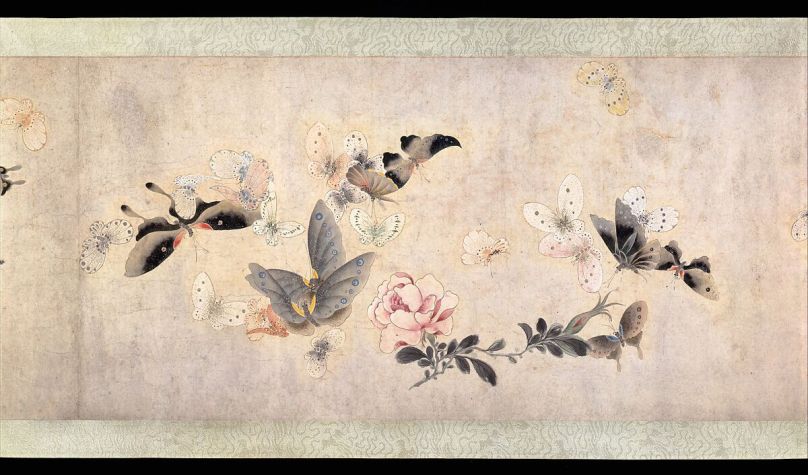
Chuang Tzu and the Butterfly

Chuang Tzu in dream became a butterfly,
And the butterfly became Chuang Tzu at waking.
Which was the real—the butterfly or the man ?
Who can tell the end of the endless changes of things?
The water that flows into the depth of the distant sea
Returns anon to the shallows of a transparent stream.
The man, raising melons outside the green gate of the city,
Was once the Prince of the East Hill.
So must rank and riches vanish.
You know it, still you toil and toil,—what for?

“I Have No Family To Say Farewell To”

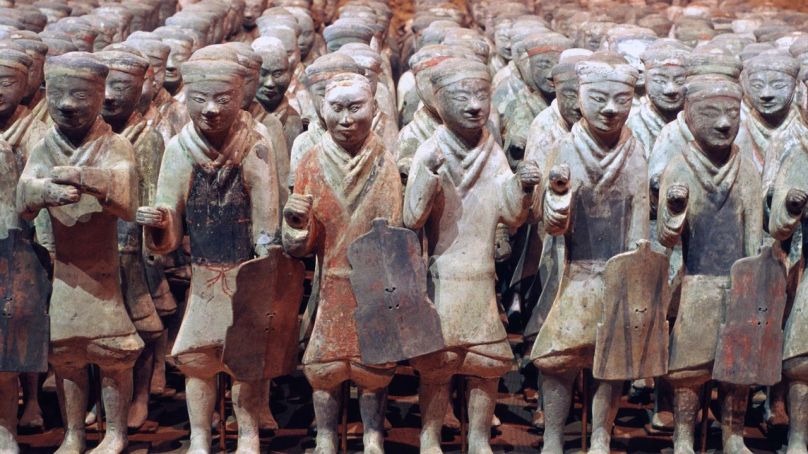
Chinese Soldiers Around Time of Tu Fu (8th Century)

Two of the greatest poets who have ever lived are Li Po and Tu Fu (a.k.a. Du Fu), who not only lived around the same time in China but who knew each other. Here is a heartbreaking poem by Tu Fu about coming back home after the wars to find his home has changed irrevocably.

A Homeless Man’s Departure

After the Rebellion of 755, all was silent wasteland,
gardens and cottages turned to grass and thorns.
My village had over a hundred households,
but the chaotic world scattered them east and west.
No information about the survivors;
the dead are dust and mud.
I, a humble soldier, was defeated in battle.
I ran back home to look for old roads
and walked a long time through the empty lanes.
The sun was thin, the air tragic and dismal.
I met only foxes and raccoons,
their hair on end as they snarled in rage.
Who remains in my neighborhood?
One or two old widows.
A returning bird loves its old branches,
how could I give up this poor nest?
In spring I carry my hoe all alone,
yet still water the land at sunset.
The county governor’s clerk heard I’d returned
and summoned me to practice the war-drum.
This military service won’t take me from my state.
I look around and have no one to worry about.
It’s just me alone and the journey is short,
but I will end up lost if I travel too far.
Since my village has been washed away,
near or far makes no difference.
I will forever feel pain for my long-sick mother.
I abandoned her in this valley five years ago.
She gave birth to me, yet I could not help her.
We cry sour sobs till our lives end.
In my life I have no family to say farewell to,
so how can I be called a human being?

Jade Flower Palace

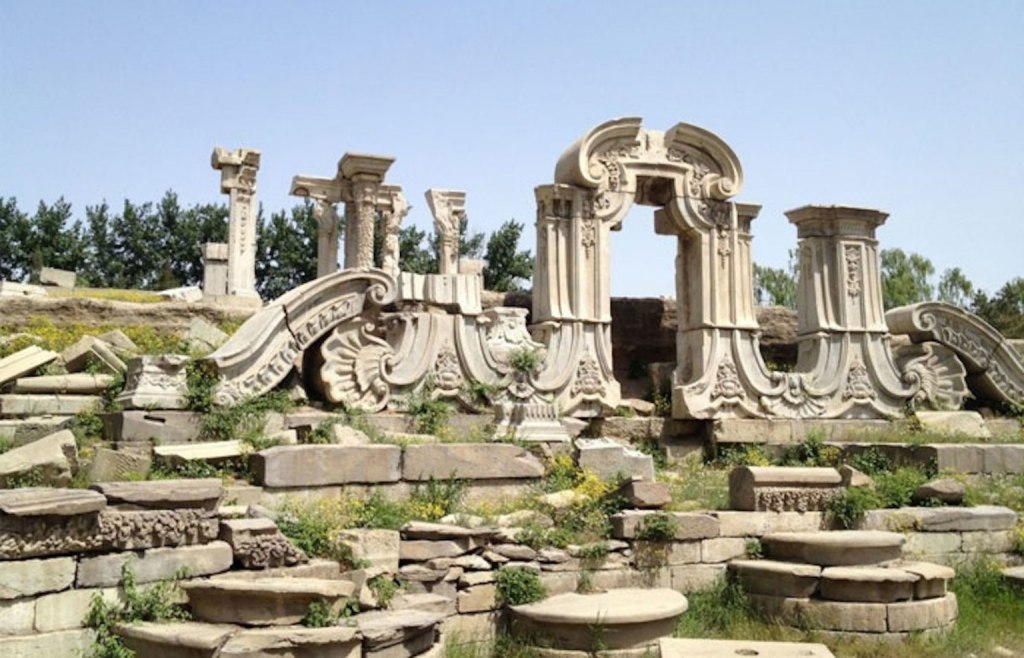
Beijing Palace Ruins

Du Fu (aka Tu Fu) was born in AD 712 and died in 770. The following poem is from Kenneth Rexroth’s One Hundred Poems from the Chinese. It is a great favorite of mine.

Jade Flower Palace

The stream swirls. The wind moans in
The pines. Grey rats scurry over
Broken tiles. What prince, long ago,
Built this palace, standing in
Ruins beside the cliffs? There are
Green ghost fires in the black rooms.
The shattered pavements are all
Washed away. Ten thousand organ
Pipes whistle and roar. The storm
Scatters the red autumn leaves.
His dancing girls are yellow dust.
Their painted cheeks have crumbled
Away. His gold chariots
And courtiers are gone. Only
A stone horse is left of his
Glory. I sit on the grass and
Start a poem, but the pathos of
It overcomes me. The future
Slips imperceptibly away.
Who can say what the years will bring?

Old Cypresses

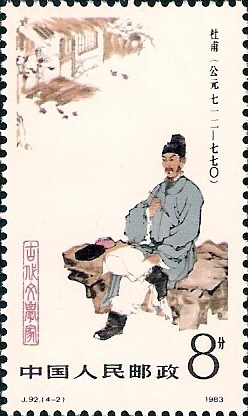
Stamp Commemorating the Chinese Poet Tu Fu

1983 Stamp Commemorating the Chinese Poet Tu Fu

It’s been a long time since I posted a blog about poetry. Today’s poem goes back over thirteen hundred years, from A.D. 766 to be exact. China’s Tang dynasty gave us two of the greatest poets who ever lived, Li Po and Tu Fu. The following is from the latter. It is called “Ballad of the Ancient Cypresses.”

Before Kongming’s shrine stands an ancient cypress,
Its branches are like green bronze, its roots just like stone.
The frosted bark, slippery with rain, is forty spans around,
Its blackness blends into the sky two thousand feet above.
Master and servant have each already reached their time’s end,
The tree, however, still remains, receiving men’s devotion.
Clouds come and bring the air of Wuxia gorge’s vastness,
The moon comes out, along with the cold of snowy mountain whiteness.

I think back to the winding road, east of Brocade Pavilion,
Where the military master and his lord of old share a hidden temple.
Towering that trunk, those branches, on the ancient plain,
Hidden paintings, red and black, doors and windows empty.
Spreading wide, coiling down, though it holds the earth,
In the dim and distant heights are many violent winds.
That which gives it its support must be heaven’s strength,
The reason for its uprightness, the creator’s skill.

If a great hall should teeter, wanting rafters and beams,
Ten thousand oxen would turn their heads towards its mountain’s weight.
Its potential unrevealed, the world’s already amazed,
Nothing would stop it being felled, but what man could handle it?
Its bitter heart cannot avoid the entry of the ants,
Its fragrant leaves have always given shelter to the phoenix.
Ambitious scholars, reclusive hermits—neither needs to sigh;
Always it’s the greatest timber that’s hardest to put to use.

Kongming (Zhuge Liang) was the chief minister of Liu Bei, one of the imperial claimants in the Three Kingdoms period. The poem shifts between the tree at the shrine to Kongming near Wuxia gorge (one of the Three Gorges); another tree at the shrine to Kongming and Liu Bei in Chengdu; and the allegorical equation of timber and talent – 材 and 才 (cái) – etymologically the same word. The Brocade Pavilion was built by Tu Fu near his house in Chengdu.

Ancient Chinese Cypress

Ancient Chinese Cypress

In talking about old trees, the poet is also talking about old age. I love the line “Its bitter heart cannot avoid the entry of the ants.”