Looking Past Uayeb

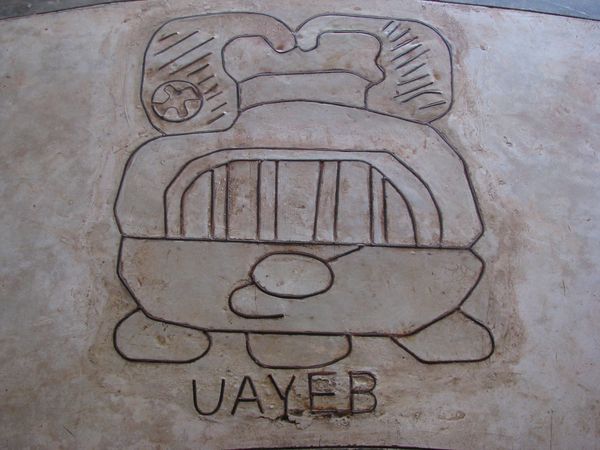
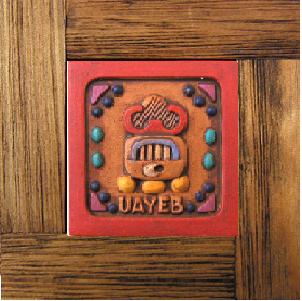
The Mayan Glyph for Uayeb

In the Mayan Haab calendar, there are eighteen months of twenty days each. Being extraordinary astronomers, the Mayans saw that they were five days short of a full year. They made up for it by adding a nineteenth month consisting of only five days. This period they called uayeb or wayeb.

According to La Vaca Independiente, this short month had some interesting features:

Despite the fact that these days share the calendar with 18 other periods lasting 20 days each, the Uayeb had a bad reputation among the Maya people. According to writings found during the colonial period, these days were considered black periods in which the universe had released dark forces and therefore they didn’t share in the blessings of time.

In the Songs of Dzibalche, a codex found in 1942, a series of allusions to the Uayeb were discovered. These expressed the discomfort the days caused the Maya people:

The days of weeping, the days of evil/ The devil is loose, hell is open/ There is no goodness, only evil… the month of nameless days has come/ Days of pain, days of evil, the black days.

Several theories describe how the Maya passed through such dark times. Some specialists maintain that during these periods they stayed in their homes and washed their hair. Others claim they undertook great processions in thanks for what they’d experienced during the year. One thing that’s certain is that the word Uayeb could be translated as “bewitched staircase.”

Of course, the ancient Mayan uayeb occurred during the summer, around July or August. But because our calendar year ends on December 31, I’ve moved it to the period between Christmas and New Years Eve, where it seeme to make more sense.

I don’t know how you plan to celebrate it, but for myself, I’m going to wash my hair while I still have some left.

A Poem for Boxing Day

The period between Christmas and New Years Day has always been strange. Even among the ancient Mayans, the last five days of the 365-day Haab calendar were called Uayeb, just to fill out the remainder of the year after the 18 months of 20 days each had transpired.

In much of the English-speaking world—but not the United States—today is Boxing Day. It has nothing to do with pugilism and is more a commemoration of certain Victorian practices regarding gifting servants.

It’s also Kwanzaa, a made-up holiday for African-Americans to celebrate their origins and serve as an alternative to that White persons’ holiday known as Christmas.

I was delighted to find a Scottish poem that also celebrates (or debunks) this period. It is “The Daft Days” by Robert Fergusson (1750-1774), written in a broad Scots dialect:

The Daft Days

Now mirk December’s dowie face
Glowrs owr the rigs wi sour grimace,
While, thro’ his minimum of space,
The bleer-ey’d sun,
Wi blinkin light and stealing pace,
His race doth run.

From naked groves nae birdie sings,
To shepherd’s pipe nae hillock rings,
The breeze nae od’rous flavour brings
From Borean cave,
And dwyning nature droops her wings,
Wi visage grave.

Mankind but scanty pleasure glean
Frae snawy hill or barren plain,
Whan winter, ‘midst his nipping train,
Wi frozen spear,
Sends drift owr a’ his bleak domain,
And guides the weir.

Auld Reikie! thou’rt the canty hole,
A bield for many caldrife soul,
Wha snugly at thine ingle loll,
Baith warm and couth,
While round they gar the bicker roll
To weet their mouth.

When merry Yule-day comes, I trou,
You’ll scantlins find a hungry mou;
Sma are our cares, our stamacks fou
O’ gusty gear,
And kickshaws, strangers to our view,
Sin fairn-year.

Ye browster wives, now busk ye braw,
And fling your sorrows far awa;
Then come and gie’s the tither blaw
Of reaming ale,
Mair precious than the well of Spa,
Our hearts to heal.

Then, tho’ at odds wi a’ the warl’,
Amang oursels we’ll never quarrel;
Tho’ Discord gie a canker’d snarl
To spoil our glee,
As lang’s there’s pith into the barrel
We’ll drink and ‘gree.

Fidlers, your pins in temper fix,
And roset weel your fiddle-sticks;
But banish vile Italian tricks
Frae out your quorum,
Not fortes wi pianos mix –
Gie’s Tulloch Gorum.

For nought can cheer the heart sae weel
As can a canty Highland reel;
It even vivifies the heel
To skip and dance:
Lifeless is he wha canna feel
Its influence.

Let mirth abound, let social cheer
Invest the dawning of the year;
Let blithesome innocence appear
To crown our joy;
Nor envy wi sarcastic sneer
Our bliss destroy.

And thou, great god of Aqua Vitae!
Wha sways the empire of this city,
When fou we’re sometimes capernoity,
Be thou prepar’d
To hedge us frae that black banditti,
The City Guard.

Return to Uayeb Yet Again Part Deux

To date, I have written five posts about the Maya “month” of Uayeb or Wayeb, which consists of the last five days of the Haab Calendar of 365 days. The Haab calendar has twenty months of eighteen days each, which isn’t quite enough to make up the full complement, so the Maya added a short stub of a month containing the five “nameless days.”

There is also a Maya god named Uayeb, who is the god of misfortune. That sounds about right.

The Cartoonist Scott Stantis Has an Intuitive Understanding of Uayeb

Here is a link to my previous posts on the subject:

Below is the Maya glyph for the “month” of Uayeb, or Wayeb (kind of looks like a tiny-headed god flexing his muscles, doesn’t it?)

In his comments to last year’s post, my friend Mudpuddle noted that “the glyph looks like a surfer headed for muscle beach!”

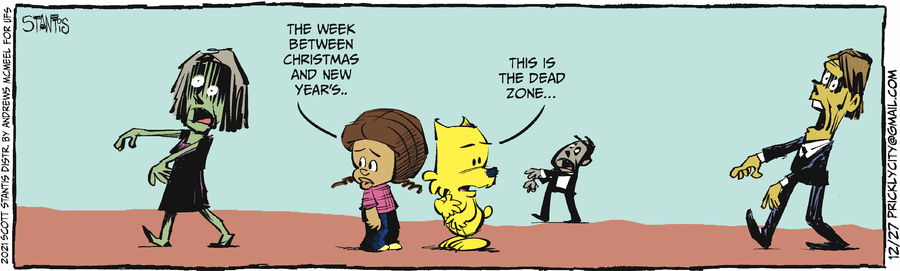
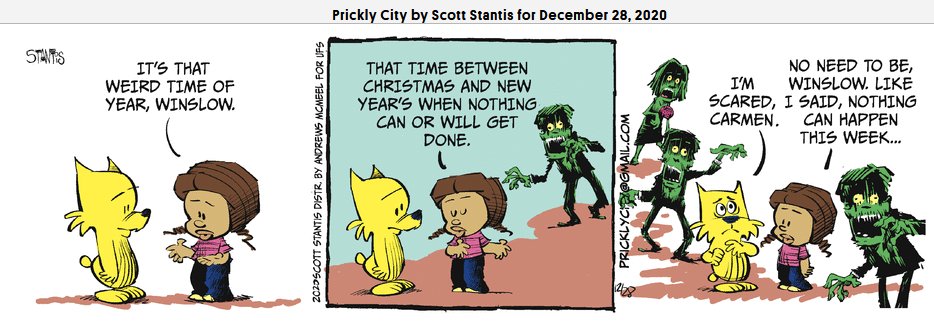
I am amused by how well a Maya calendrical belief fits in so well with our civilization, in which the days between Christmas and New Year and almost universally considered as dead time.

So don’t make any big plans until the New Year. But you kind of knew that anyway, no?

On the Bewitched Staircase

If you want to see a happy post, don’t catch me between Christmas and New Year. It is no accident that all my posts this week are unusually dark. My lone adherence to the Maya religion is my belief in the Uayeb, the unlucky five days that follow the 360 day Haab calendar to bring the total up to 365. According to an interesting website about the Uayeb:

Despite the fact that these days share the calendar with 18 other periods lasting 20 days each, the Uayeb had a bad reputation among the Maya people. According to writings found during the colonial period, these days were considered black periods in which the universe had released dark forces and therefore they didn’t share in the blessings of time.

In the Songs of Dzibalche, a codex found in 1942, a series of allusions to the Uayeb were discovered. These expressed the discomfort the days caused the Maya people:

The days of weeping, the days of evil/ The devil is loose, hell is open/ There is no goodness, only evil… the month of nameless days has come/ Days of pain, days of evil, the black days.

Several theories describe how the Maya passed through such dark times. Some specialists maintain that during these periods they stayed in their homes and washed their hair. Others claim they undertook great processions in thanks for what they’d experienced during the year. One thing that’s certain is that the word Uayeb could be translated as “bewitched staircase.”

So let’s just say I am having a bad Uayeb.

Yet Again: Uayeb

That Weird Time Between Christmas and New Year

To date, I have written four posts about the Maya “month” of Uayeb or Wayeb, which consists of the last five days of the Haab Calendar of 365 days. The Haab calendar has twenty months of eighteen days each, which isn’t quite enough to make up the full complement, so the Maya added a short stub of a month containing the five “nameless days.”

There is also a Maya god named Uayeb, who is the god of misfortune. That sounds about right.

Scott Stantis Has an Intuitive Understanding of Uayeb in His Cartoon Strip

Here is a link to my previous posts on the subject:

Below is the Maya glyph for the “month” of Uayeb, or Wayeb (kind of looks like a tiny-headed god flexing his muscles, doesn’t it?):

I am amused by how well a Maya calendrical belief fits in so well with our civilization, in which the days between Christmas and New Year and almost universally considered as dead time.

So don’t make any big plans until the New Year. But you kind of knew that anyway, no?

It’s Uayeb Again, Folks!

Mayan Glyphs

This is a slightly edited reprint from my posting of December 31, 2012. As you may recall, there was widespread fear among New Age types that the Mayan calendar was coming to an end … and we would all be doomed! We were: Trumpf got elected in 2016.

We’ve been hearing a lot about the Mayan Calendar lately, mostly in connection with The End of the World back in 2013. Well, it didn’t quite end; and the Mayan Calendar just went on into a new baktun.

In the Haab’, or Mayan Solar Calendar, there are eighteen months of twenty days each. Where does that leave the other 5.25 days? To account for the difference, the Mayans created an intercalary five-day month referred to as the uayeb. Unlike other days in the Solar Calendar, the five days of the uayeb are thought to be a dangerous time.

The Mayan Glyph for Uayeb

According to Lynn Foster in Handbook to Life in the Ancient Mayan World, “During Wayeb, portals between the mortal realm and the Underworld dissolved. No boundaries prevented the ill-intending deities from causing disasters.” It was a time of fasting with abstention from sex and all celebrations. People avoided washing their hair or even leaving their huts during this time.

As we in the United States come to the end of another uayeb, I hope we are ready for what 2018 brings. Because, ready or not, here it comes….


A Dangerous Time

It’s the Least Wonderful Time of the Year

It’s the Least Wonderful Time of the Year

I am a great believer in the Mayan calendar—not, mind you, of the many misconceptions relating to the end of the world and such. The Mayans were, in the long run, optimists. Their calendar begins with the creation of the world of humans on August 11, 3114 B.C. and just keeps chugging along. Whenever we come to the end of a baktun, as we may (or may not) have done in December 2012, when a bunch of nattering fools predicted the end of the world, we just move on to the next baktun. As Kurt Vonnegut would have said, “So it goes.”

In the meantime, the last five days of the Mayan 365-day year were called the uayeb, about which I wrote a year ago:

In the Haab’, or Mayan Solar Calendar, there are eighteen months of twenty days each. Where does that leave the other 5.25 days? To account for the difference, the Mayans created an intercalary five-day month referred to as the uayeb. Unlike other days in the Solar Calendar, the five days of the uayeb are thought to be a dangerous time….

According to Lynn Foster in Handbook to Life in the Ancient Mayan World, “During Wayeb, portals between the mortal realm and the Underworld dissolved. No boundaries prevented the ill-intending deities from causing disasters.” It was a time of fasting with abstention from sex and all celebrations. People avoided washing their hair or even leaving their huts during this time.

This being a Saturday, I will probably violate the spirit of Uayeb by going out for lunch and getting together with friends. There are other ways of honoring the Mayan gods, probably by not making any major decisions during this time unless I absolutely have to.

Uayeb

It’s the Shortest Month of the Year

It’s the Shortest Month of the Year

We’ve been hearing a lot about the Mayan Calendar lately, mostly in connection with The End of the World last week. Well, it didn’t end; and the Mayan Calendar goes on into a new baktun.

In the Haab’, or Mayan Solar Calendar, there are eighteen months of twenty days each. Where does that leave the other 5.25 days? To account for the difference, the Mayans created an intercalary five-day month referred to as the uayeb. Unlike other days in the Solar Calendar, the five days of the uayeb are thought to be a dangerous time (and so they are with the so called “Fiscal Cliff” looming).

According to Lynn Foster in Handbook to Life in the Ancient Mayan World, “During Wayeb, portals between the mortal realm and the Underworld dissolved. No boundaries prevented the ill-intending deities from causing disasters.” It was a time of fasting with abstention from sex and all celebrations. People avoided washing their hair or even leaving their huts during this time.

As we in the United States come to the end of another uayeb, I hope we are ready for what 2013 brings. Because, ready or not, here it comes….