
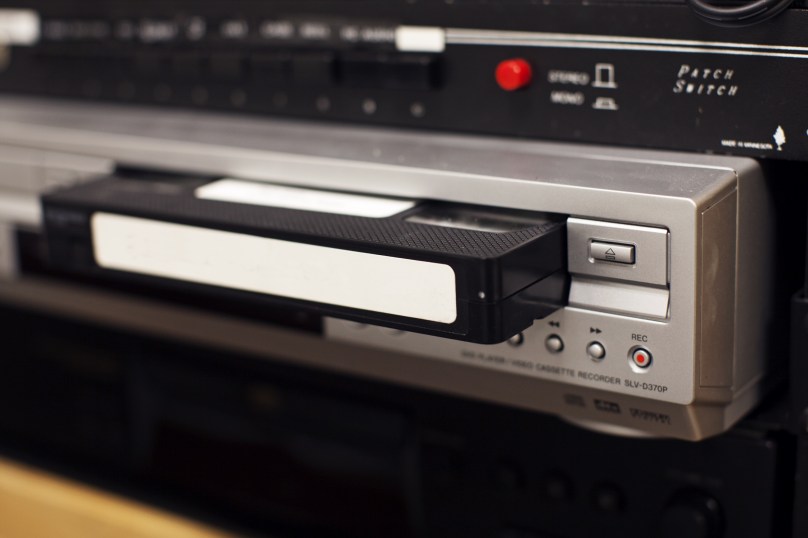
When I bought my first video cassette recorder (VCR) in the 1980s, I thought I had it made. I had a great cable television setup near a neighborhood where many film industry moguls lived, and I could record films that were being broadcast on the many channels to which I had access. Eventually, I had a library of several hundred films that any film fanatic would be proud to own.
But then, little by little, they started to go bad. The VCR units had a hard time rewinding. And, of course, you couldn’t view a film until you rewound the reel. The tapes got stretched and started to go blooey. And rewinding became more and more of a chore.
When the DVD players first came out, I thought that was the way to go. I mean the laser didn’t even make contact with the surface of the DVD the way a VCR did with a videotape cassette.
One of my friends even suggested I convert all my videocassettes to DVD. I quickly pointed out that it would take years to accomplish this feat, during which my cassettes would continue to deteriorate.
Then I found out about a thing called “laser rot.” Even DVDs were not immune. After all, there was this metallic coating on a thin plastic disk. And plastic, as we know, won’t last forever.
In the age of streaming, people don’t keep the films they see: They just play them while downloading them. After viewing the film, it is gonzo!

 Tarnmoor
You must be logged in to post a comment.