Bad Weather Ahead

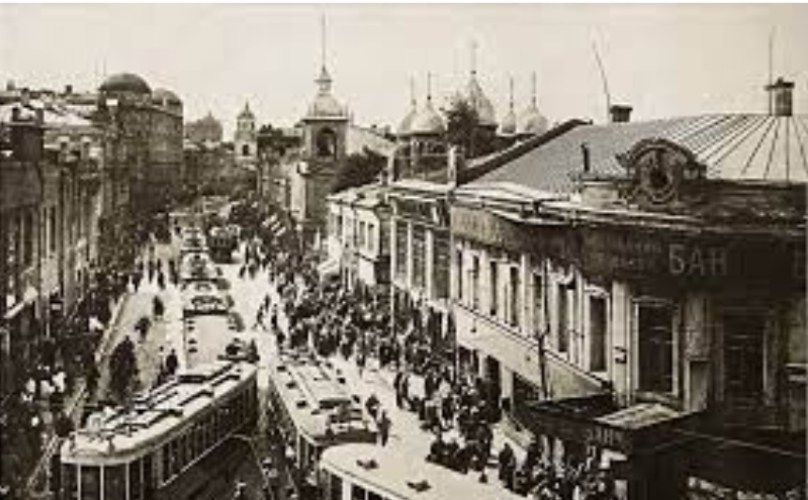
Moscow in the 1920s

Sigizmund Krzhizhanovsky (1887-1950) was a Soviet writer who, in his own words, was “known for being unknown.” Hopefully, that will no longer be true as New York Review Books releases more of his stories. I have just finished reading his Autobiography of a Corpse, which contains a prescient 1939 story titled “Yellow Coal.” Tell me if the first paragraph of the story, quoted below, reminds you of our present situation:

The economic barometer at Harvard University had continually pointed to bad weather. But even its exact readings could not have predicted such a swift deepening of the crisis. Wars and the elements had turned the earth into a waster of its energies. Oil wells were running dry. The energy-producing effect of black, white and brown coal was diminishing yearly. An unprecedented drought had swaddled the sere earth in what felt like a dozen equators. Crops burned to their roots. Forests caught fire in the infernal heat. The selvas of South America and the jungles of India blazed with smoky flames. Agrarian countries were ravaged first. True, forests reduced to ashes had given place to ashy boles of factory smoke. But their days too were numbered. Fuellessness was threatening machines with motionlessness. Even glacier snow-caps, melted by the perennial summer, could not provide an adequate supply of waterpower; the beds of shrinking rivers lay exposed, and soon the turbine-generators would stop.

I Didn’t Like L.A. at First …

Downtown Los Angeles 2011

It took a few years for me to get to like Los Angeles. I had grown up in Cleveland, Ohio—nobody’s idea of a beautiful city. I was used to red brick buildings overlaid with grime, along with hot humid summers and unrelievedly grim winters. My first opinion of Southern California was, “This place just isn’t real!”

Oh, it was real all right. After enduring earthquakes and floods and smog and wildfires, I saw that L.A. had its own demons, which were more intermittent. (In Cleveland, they were pretty constant.)

When I was in college trying to decide where to go to grad school to study film history and criticism, I remember reading a snide book (whose title I forget) about a state whose residents were called Procals (short for Pro-California) whose residents endlessly plugged their state as “God’s country.”

The part that sticks in my mind was the description of the Pacific Coast Highway as it followed the coast north from Santa Monica. Anyhow, the highway was always being covered with destructive landslides. Well, now I live a scant two miles from that road. It is incredibly beautiful, but I haven’t the heart to drive it ever since the January wildfire that destroyed Pacific Palisades. Too many of my favorite places have been burned to a crisp.

Am I a Procal? No, not at all. There are too many people in Southern California. Too many of the recent arrivals are homeless people who live in tents pitched any which way on sidewalks, surrounded by piles of trash. They have taken a lot of the shine off Los Angeles. I still love the place, but I am all to conscious that no place ever remains the same over the decades.

Send Us Rain, But Not Too Much!

Finally Some Rain to Put Down the Wildfires

Just within the last half hour it has started to rain. It has provoked some strange news stories in which the hope is expressed that there won’t be too much. Yes, if there is “too much” rain, there will be mudslides. But then it is all part of the cycle of wind, wildfires, mudslides, and earthquakes that has formed (and will continue to form) the Southern California landscape.

I’m just happy that the air will be more breathable and that the increased humidity will relieve us from painful peeling hangnails. If there are mudslides, that will just be part of the cost we will have to bear for living in this strange and beautiful place.

The rains are expected to last for the next couple of days.

A Fond Farewell to Will Rogers SHP

The Will Rogers Ranch House—Gone Forever

One of my favorite places in the Los Angeles area was the Will Rogers Sate Historical Park in Pacific Palisades. It was the home of Will Rogers for many years. On the grounds was a polo field where in the summer polo games were played. There were also hiking trails and a horse barn.

Now all are gone, burned in the Palisades Fire. Martine and I will no longer be able to relax in the shade of the oak trees in rustic rocking chairs or tour the ranch house to see the western memorabilia of one of my favorite actors.

Will Rogers was a genuinely good person as well as one of the most popular actors of the 1930s. There was not a contentious bone in his body. What the political divided United States needed was another Will Rogers, but alas it is unlikely we will ever find one.

Leapfrogging Embers

Flying Embers Being Carried by Wind Gusts

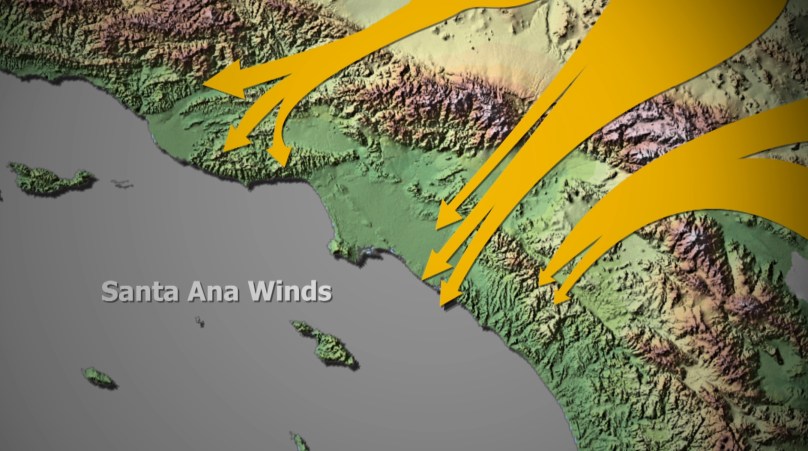
One of the reasons this week’s Southern California wildfires were so devastating is that the wind gusts were so powerful that flaming embers were being carried up to five miles by the winds. And some of those gusts approached the velocity of a category 2 hurricane (up to 100 miles per hour or 161 km per hour) without benefit of the moisture that usually accompanies a hurricane.

Typically, January is a wet month in Los Angeles. This year, the relative humidity levels were frequently 10% or even less.

One of the reasons the Palisades Fire was so devastating was that the wind gusts would send flaming embers leapfrogging over the hills and valleys and starting new fires. This is what happened along the Pacific Coast Highway (Route 1) where dozens of beachfront homes burned down as the waves of the Pacific Ocean gently lapped over the ruins.

Martine and I remain sick at heart following the news and seeing nothing but devastation everywhere.

Back to … This?

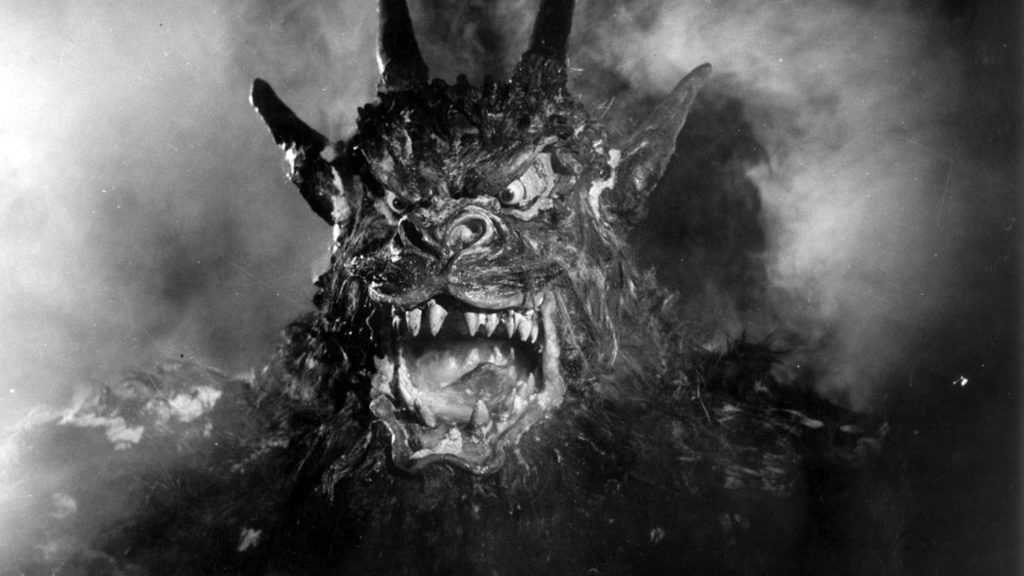
Still from Jacques Tourneur’s Night of the Demon (1949)

I was in the hospital until a few days ago—and that wasn’t even the worst thing that happened at the start of this inauspicious New Year. What affects me more are the wildfires that are destroying the city of Los Angeles.

One of my best friends has lost his house, his church, and his neighborhood from the Eaton Fire in Altadena. To this point, I have not been affected, but in the nearby city of Santa Monica, just two miles to the northwest, residents are being warned they may have to evacuate.

The hurricane-force winds buffeting the area are sending flaming embers for miles, each one of which is capable of burning down a house, place of business, school, apartment building, or church. I have never experienced such powerful wind gusts in the sixty years that I have lived in Southern California.

First Responders at the Palisades Fire

Over the decades, I have come to love Los Angeles. What is happening to it now is tearing me apart.

Earth’s Answer

Hurricane Seen from Above

If global warming was some sort of challenge to us, then I would say we lost. There are still multitudes that will think nothing of denying it until their own asses catch fire. Re-reading J. R. R. Tolkien’s The Lord of the Rings, I am conscious of a kind of Celtic sadness as the Barbarians stagger up to the gates and unthinkingly push back against anything that will help our world as we knew it survive into the future.

There are just too many Barbarians, and they delight in making grimaces at us Libtards. We are to be pwned at all events. It as as Sly says in Shakespeare’s The Taming of the Shrew: “Therefore, paucas pallabris, let the world slide. Sessa!”

Well we some some indications of what the world’s “slide” will entail. There are hurricanes, tornadoes, overheated oceans that cook the fish, floods, droughts, record heat. And that°s just the start.

Face it, we humans are toxic to the earth. So we can expect that the earth will just up the ante and make it impossible for us to live as we have done into the future. I can think of no better symbol for our future than the floods at Burning Man near Nevada’s Black Rock City:

Perhaps to come are cacti growing in the Amazon Basin, Hurricanes in Southern California (hey, we had one last week!), trees growing the northern Alaskan bush, accelerated extinction of plant and animal species, ever fiercer and more widespread wild fires, food shortages, water shortages, the disappearance of green lawns—and that’s just the beginning.

So continue to say there is no such thing as global warming, and get ready to run for your life.

Protective Detachment

Brush Fire About Five Miles from My Front Door

There I was, siting and reading the essays in Joan Didion’s After Henry, when I suddenly found a perfect phrase to summarize the sang-froid Californians feel about earthquakes and wildfires:

The notion that land will be worth more tomorrow than it is worth today has been a real part of the California experience, and remains deeply embedded in the California mentality, but this seemed extreme, and it occurred to me that the buying and selling of houses was perhaps one more area in which the local capacity for protective detachment had come into play, that people capable of compartmentalizing the Big One [that is, earthquake] might be less inclined than others to worry about getting their money out of [a real estate investment].

People in other parts of the country have told me scores of times that California is going to “fall into the ocean,” as if we were all living on a thin shelf of unsteady earth stretched out over the Pacific Ocean. In actuality, our part of the state will, instead of falling into the ocean, slowly head north to Alaska—over a period of millions of years. No matter, I won’t be around to have to buy heavy parkas.

When growing up in Cleveland, I had a deathly fear of tornadoes. They frequently featured in my nightmares. Finally, on June 8, 1953, a large tornado tore through the West Side. As an eight-year-old, we visited a family friend whose two-story house was half a block from utter devastation. At the time, we lived on the East Side and suffered no damage; but that didn’t help my dreams any.

Freeway Damage from the Northridge Quake of 1994

Because I live on a large heavily populated plain just south of the Santa Monica Mountains, I have no reason to fear wildfires. But earthquakes are a different matter. The Sylmar Quake of 1971 scared the Bejeezus out of me, and the Northridge Quake of 1994 didn’t help matters. Perhaps I don’t feel Didion’s protective detachment because I wasn’t born in California as she was.

It’s Already Here

Lone Fire Fighter in Midst of Rapidly Growing Brush Fire

We have become used to talking about climate change as something that’ll take place in the future. Sorry, but it’s here already. It’s not like the Cold War, when we were constantly afraid of a nuclear holocaust that never happened, because both sides acted fairly reasonably.

But this is not the same America any more. Half the voting population is cray-cray, thinking that Democrats eat babies in the nonexistent basements of pizza parlors (as qAnon believes). Yes, and water flows uphill; the earth is flat; and the sun revolves around the earth. Vladimir Putin looked and acted more reasonable than our last president, who sounds more and more demented every time he opens his mouth.

Who would ever have thought that we, as a country, could become a victim of Alzheimer’s? Yet, it appears that we have.

So what am I going to do about it? I will continue to vote reasonably even if the others won’t. They are accumulating very bad juju and will eventually pay the price for it. I have some faith that the world will eventually right itself even if we continue to make disastrous mistakes.

I guess that makes me an optimist. Who would have thunk it?

Along the Paraná

Vacation Homes Along the Delta of the Paraná

I was talking to my friend Bill Korn a few minutes ago. When he happened to mention that there were massive fires in the delta of the Paraná River, I was shocked. I was familiar with the Paraná Delta, having taken a boat tour of the area in 2006 and 2015. I pulled up an article The Guardian, which described parts of the delta upriver from Tigre, around the city of Rosario: The area with which I was familiar was where the river feeds into the Rio de la Plata. It is an a weekend getaway for the residents of Buenos Aires that is densely vegetated, very pretty, but full of mosquitoes.

The Drainage Area of the River Paraná

The Paraná is the second longest river in South America. Its drainage area includes Argentina, all of Paraguay, and parts of Brazil and Bolivia. As you can see from the above map, Rosario is not far from Rosario, a city I went through on a night bus on the way to Puerto Iguazu, where the boundaries of Brazil, Paraguay, and Argentina meet, The river is some 3,030 miles (4,800 km) long and is navigable for much of its length with several deep water ports along its length. In Puerto Iguazu, I dined on surubi, a fresh water fish caught on the river.

View from a Boat Ride on the Delta

I have been to Argentina three times and fallen in love with the country. I hope that, what with Argentina mired in the coronavirus, they manage to save some of the beautiful places I have seen. It is along the river that much of Argentina’s Yerba Mate crop is grown. I remember from that bus ride passing through almost a hundred miles of fields where the tea leaves are grown.