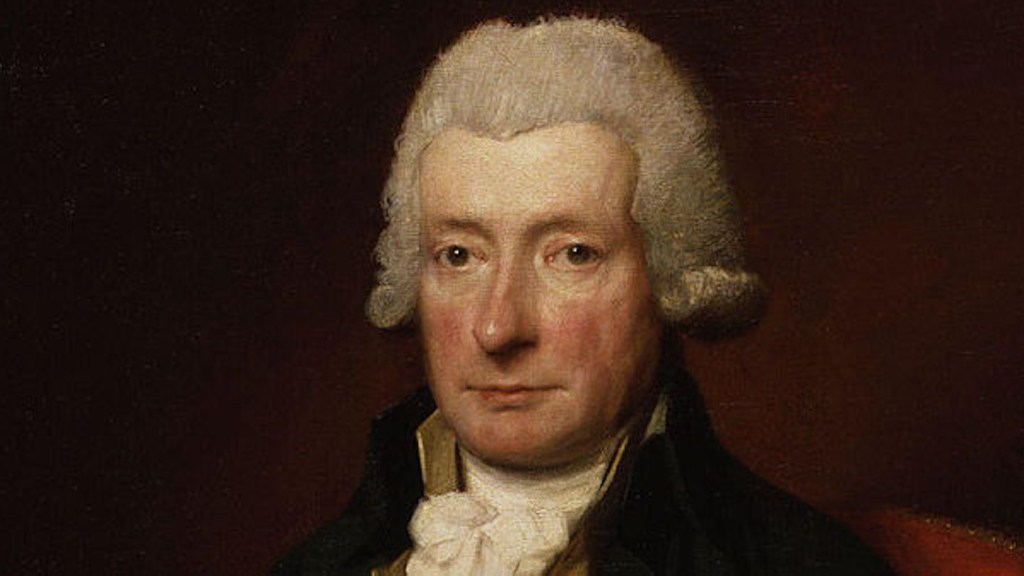
This is perhaps the most famous poem by William Cowper (his last name is pronounced as if it were “Cooper”). It is simple, perhaps a touch too pious for our time. But it is a magnificent statement of a faith that is rare in the 21st century.
Light Shining Out of Darkness
1
God moves in a mysterious way,
His wonders to perform;
He plants his footsteps in the sea,
And rides upon the storm.

2
Deep in unfathomable mines
Of never-failing skill,
He treasures up his bright designs,
And works his sov'reign will.

3
Ye fearful saints, fresh courage take,
The clouds ye so much dread
Are big with mercy, and shall break
In blessings on your head.

4
Judge not the Lord by feeble sense,
But trust him for his grace;
Behind a frowning providence
He hides a smiling face.

5
His purposes will ripen fast,
Unfolding ev'ry hour;
The bud may have a bitter taste,
But sweet will be the flow'r.

6
Blind unbelief is sure to err,
And scan his work in vain;
God is his own interpreter,
And he will make it plain.
It was the last poem Cowper (which he pronounced “Cooper”) ever wrote, shortly after he read the tale of Commodore George Anson’s circumnavigation of the globe, as described in his A Voyage Round the World in 1740-4. Cowper’s 1799 poem tells of one of Anson’s crewmen washed overboard and drowning within full view of his shipmates during an awful storm.\
Curiously, I discovered the poem as a resulting of reading Charlotte Bronte’s Shirley, which discusses the poem at some length. Here it is in its entirety:
The Castaway
Obscurest night involv’d the sky,
         Th’ Atlantic billows roar’d,
When such a destin’d wretch as I,
         Wash’d headlong from on board,
Of friends, of hope, of all bereft,
His floating home for ever left.

No braver chief could Albion boast
         Than he with whom he went,
Nor ever ship left Albion’s coast,
         With warmer wishes sent.
He lov’d them both, but both in vain,
Nor him beheld, nor her again.

Not long beneath the whelming brine,
         Expert to swim, he lay;
Nor soon he felt his strength decline,
         Or courage die away;
But wag’d with death a lasting strife,
Supported by despair of life.

He shouted: nor his friends had fail’d
         To check the vessel’s course,
But so the furious blast prevail’d,
         That, pitiless perforce,
They left their outcast mate behind,
And scudded still before the wind.

Some succour yet they could afford;
         And, such as storms allow,
The cask, the coop, the floated cord,
         Delay’d not to bestow.
But he (they knew) nor ship, nor shore,
Whate’er they gave, should visit more.

Nor, cruel as it seem’d, could he
         Their haste himself condemn,
Aware that flight, in such a sea,
         Alone could rescue them;
Yet bitter felt it still to die
Deserted, and his friends so nigh.

He long survives, who lives an hour
         In ocean, self-upheld;
And so long he, with unspent pow’r,
         His destiny repell’d;
And ever, as the minutes flew,
Entreated help, or cried—Adieu!

At length, his transient respite past,
         His comrades, who before
Had heard his voice in ev’ry blast,
         Could catch the sound no more.
For then, by toil subdued, he drank
The stifling wave, and then he sank.

No poet wept him: but the page
         Of narrative sincere;
That tells his name, his worth, his age,
         Is wet with Anson’s tear.
And tears by bards or heroes shed
Alike immortalize the dead.

I therefore purpose not, or dream,
         Descanting on his fate,
To give the melancholy theme
         A more enduring date:
But misery still delights to trace
   Its semblance in another’s case.

No voice divine the storm allay’d,
         No light propitious shone;
When, snatch’d from all effectual aid,
         We perish’d, each alone:
But I beneath a rougher sea,
And whelm’d in deeper gulfs than he.


 Tarnmoor
You must be logged in to post a comment.