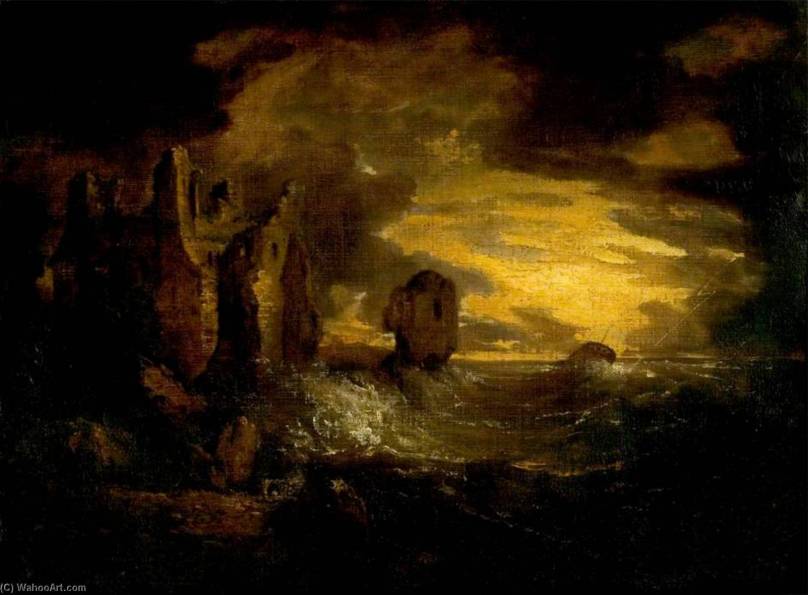
Peele Castle in a Storm

George Howland Beaumont: “Peele Castle in a Storm, Cumbria, 1800”

William Wordsworth is and always has been one of my favorite poets. The Beaumont named in the poem is the painter George Howland Beaumont (1753-1827), creator of the above painting.

Elegiac Stanzas Suggested by a Picture of Peele Castle in a Storm, Painted by Sir George Beaumont

I was thy neighbour once, thou rugged Pile!
Four summer weeks I dwelt in sight of thee:
I saw thee every day; and all the while
Thy Form was sleeping on a glassy sea.

So pure the sky, so quiet was the air!
So like, so very like, was day to day!
Whene’er I looked, thy Image still was there;
It trembled, but it never passed away.

How perfect was the calm! it seemed no sleep;
No mood, which season takes away, or brings:
I could have fancied that the mighty Deep
Was even the gentlest of all gentle things.

Ah! then, if mine had been the Painter’s hand,
To express what then I saw; and add the gleam,
The light that never was, on sea or land,
The consecration, and the Poet’s dream;

I would have planted thee, thou hoary Pile
mid a world how different from this!
Beside a sea that could not cease to smile;
On tranquil land, beneath a sky of bliss.

Thou shouldst have seemed a treasure-house divine
Of peaceful years; a chronicle of heaven;—
Of all the sunbeams that did ever shine
The very sweetest had to thee been given.

A Picture had it been of lasting ease,
Elysian quiet, without toil or strife;
No motion but the moving tide, a breeze,
Or merely silent Nature’s breathing life.

Such, in the fond illusion of my heart,
Such Picture would I at that time have made:
And seen the soul of truth in every part,
A steadfast peace that might not be betrayed.

So once it would have been,—’tis so no more;
I have submitted to a new control:
A power is gone, which nothing can restore;
A deep distress hath humanised my Soul.

Not for a moment could I now behold
A smiling sea, and be what I have been:
The feeling of my loss will ne’er be old;
This, which I know, I speak with mind serene.

Then, Beaumont, Friend! who would have been the Friend,
If he had lived, of Him whom I deplore,
This work of thine I blame not, but commend;
This sea in anger, and that dismal shore.

O ’tis a passionate Work!—yet wise and well,
Well chosen is the spirit that is here;
That Hulk which labours in the deadly swell,
This rueful sky, this pageantry of fear!

And this huge Castle, standing here sublime,
I love to see the look with which it braves,
Cased in the unfeeling armour of old time,
The lightning, the fierce wind, the trampling waves.

Farewell, farewell the heart that lives alone,
Housed in a dream, at distance from the Kind!
Such happiness, wherever it be known,
Is to be pitied; for ’tis surely blind.

But welcome fortitude, and patient cheer,
And frequent sights of what is to be borne!
Such sights, or worse, as are before me here.—
Not without hope we suffer and we mourn.

“Too Much Liberty”

Nun’s Cell at Santa Catalina Convent in Arequipa, Peru

There is nothing I have ever seen quite like Santa Catalina Convent in Arequipa, Peru. It occupies virtually a square mile with numerous chapels, nuns’ cells, narrow winding streets. One could easily spend a whole day here, as I did. It reminds me of one of Wordsworth’s sonnets:

“Nuns Fret Not at Their Convent’s Narrow Room”

Nuns fret not at their convent’s narrow room;
And hermits are contented with their cells;
And students with their pensive citadels;
Maids at the wheel, the weaver at his loom,
Sit blithe and happy; bees that soar for bloom,
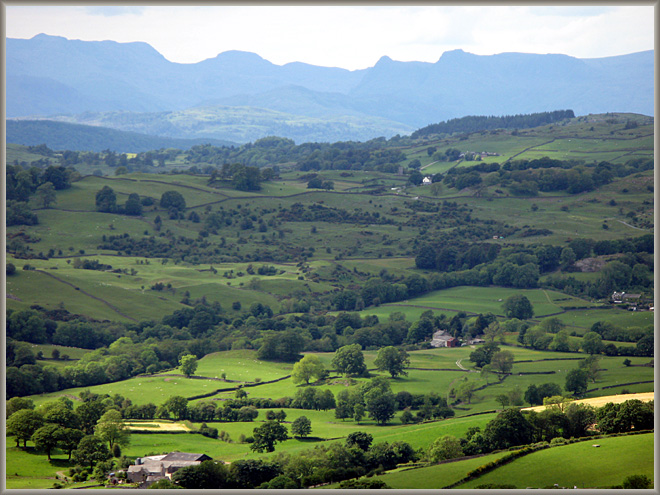
High as the Peak of Furness-fells,
Will murmur by the hour in foxglove bells;
In truth the prison, unto which we doom
Ourselves, no prison is; and hence for me,
In sundry moods, ’twas pastime to be bound
Within the sonnet’s scanty plot of ground;
Pleased if some Souls (for such there needs must be)
Who have felt the weight of too much liberty,
Should find brief solace there, as I have found.


Furness Fells in Lancashire, England

I love what Wordsworth does here, comparing the sonnet’s “scanty plot of ground” with the constricted quarters of a nun, hermit, scholar, or weaver. If I remember, tomorrow I will show some pictures I took at Santa Catalina in Peru, a place that impressed me even more than Machu Picchu.


“On the Extinction of the Venetian Republic”

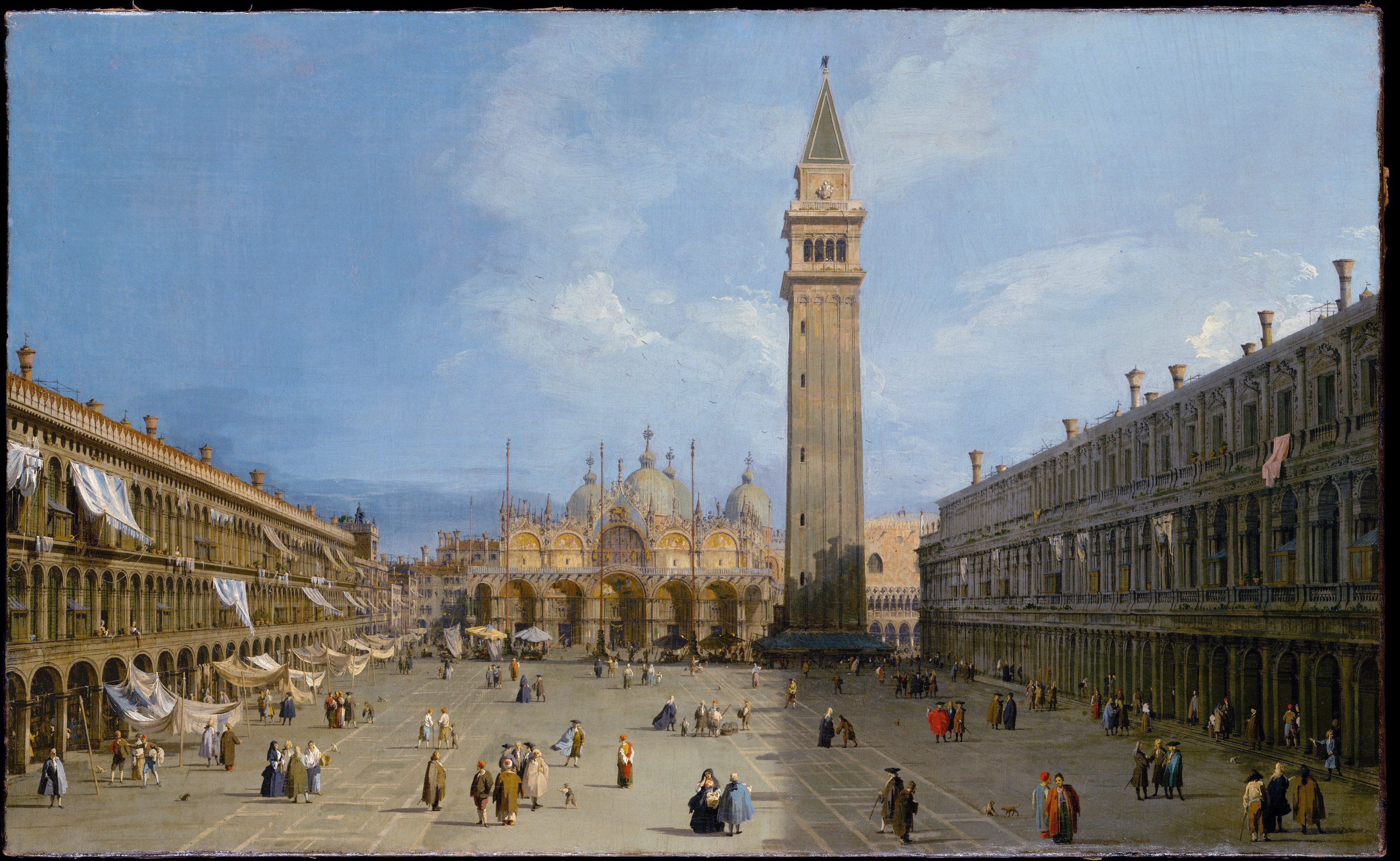
St Marks Square in Venice by Canaletto

I cannot read this sonnet by Wordsworth without thinking of the plight of the United States, which has fallen so low after its postwar high. In 1797, Napoleon took Venice and apportioned her territory between Austria and France, putting an end to a once-powerful empire that had lasted almost a thousand years.

On the Extinction of the Venetian Republic

Once did She hold the gorgeous east in fee;
And was the safeguard of the west: the worth
Of Venice did not fall below her birth,
Venice, the eldest Child of Liberty.
She was a maiden City, bright and free;
No guile seduced, no force could violate;
And, when she took unto herself a Mate,
She must espouse the everlasting Sea.
And what if she had seen those glories fade,
Those titles vanish, and that strength decay;
Yet shall some tribute of regret be paid
When her long life hath reached its final day:
Men are we, and must grieve when even the Shade
Of that which once was great is passed away.

That final couplet packs a real punch.

Serendipity: Dreams of Prisons

One of Giambattista Piranesi’s Carceri Prints

One of Giambattista Piranesi’s Carceri, or Prison Etchings

I am currently reading Thomas De Quincey’s Confessions of an English Opium-Eater (1822). Although I remember starting it some twenty years ago, I never finished it. Turning to it once again, I am delighted by his elegant prose combined with his large-scale surrealistic dreams as a result of ingesting opium. At the same time, I love what he has to say about Giambattista Piranesi (1720-1778), whose etchings of vast imagined prisons are among my favorite prints.

When I started at UCLA in 1967 as a graduate student in the film program, I rented one of the originals of the above print for three months as part of a special program. (I can’t imagine anything so valuable being rented out to students under present circumstances.)

Here is what De Quincey wrote:

Many years ago, when I was looking over Piranesi’s, Antiquities of Rome, Mr. Coleridge, who was standing by, described to me a set of plates by that artist, called his Dreams, and which record the scenery of his own visions during the delirium of a fever.  Some of them (I describe only from memory of Mr. Coleridge’s account) represented vast Gothic halls, on the floor of which stood all sorts of engines and machinery, wheels, cables, pulleys, levers, catapults, &c. &c., expressive of enormous power put forth and resistance overcome.  Creeping along the sides of the walls you perceived a staircase; and upon it, groping his way upwards, was Piranesi himself: follow the stairs a little further and you perceive it come to a sudden and abrupt termination without any balustrade, and allowing no step onwards to him who had reached the extremity except into the depths below.  Whatever is to become of poor Piranesi, you suppose at least that his labours must in some way terminate here.  But raise your eyes, and behold a second flight of stairs still higher, on which again Piranesi is perceived, but this time standing on the very brink of the abyss.  Again elevate your eye, and a still more aërial flight of stairs is beheld, and again is poor Piranesi busy on his aspiring labours; and so on, until the unfinished stairs and Piranesi both are lost in the upper gloom of the hall.  With the same power of endless growth and self-reproduction did my architecture proceed in dreams.  In the early stage of my malady the splendours of my dreams were indeed chiefly architectural; and I beheld such pomp of cities and palaces as was never yet beheld by the waking eye unless in the clouds.  From a great modern poet I cite part of a passage which describes, as an appearance actually beheld in the clouds, what in many of its circumstances I saw frequently in sleep:

The appearance, instantaneously disclosed,
Was of a mighty city—boldly say
A wilderness of building, sinking far
And self-withdrawn into a wondrous depth,
Far sinking into splendour—without end!
Fabric it seem’d of diamond, and of gold,
With alabaster domes, and silver spires,
And blazing terrace upon terrace, high
Uplifted; here, serene pavilions bright
In avenues disposed; there towers begirt
With battlements that on their restless fronts
Bore stars—illumination of all gems!
By earthly nature had the effect been wrought
Upon the dark materials of the storm
Now pacified; on them, and on the coves,
And mountain-steeps and summits, whereunto
The vapours had receded,—taking there
Their station under a cerulean sky.  &c. &c.

The quoted poem is from William Wordsworth’s “The Excursion.”


Aldous Huxley Foresees the Future

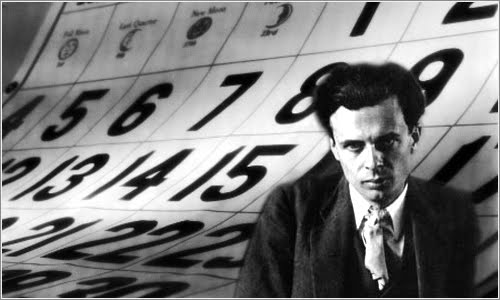
The Young Aldous Huxley

The Young Aldous Huxley

The Twentieth Century gave us two dystopias to consider: George Orwell’s 1984 and Aldous Huxley’s Brave New World. It is interesting to note, years after the fact, whose vision is closer to the reality. My vote goes to Aldous Huxley, as does the writer of this website, which compares the two point by point using comics to make their point.

In 1949, right after 1984 came out, Huxley wrote a letter to Orwell in which he doubts the latter’s vision would ever come true:

The philosophy of the ruling minority in Nineteen Eighty-Four is a sadism which has been carried to its logical conclusion by going beyond sex and denying it.

Whether in actual fact the policy of the boot-on-the-face can go on indefinitely seems doubtful.

My own belief is that the ruling oligarchy will find less arduous and wasteful ways of governing and of satisfying its lust for power, and these ways will resemble those which I described in Brave New World.

Corybantic Dancers on Reverse of Coin

Corybantic Dancers on Reverse of Greek Coin

Last night, I saw a DVD containing what my friend Lee Sanders claims is the only filmed interview with Huxley, shortly before his death in 1963. Considering the extent to which Huxley has been one of my gurus over the last half century, it is no surprise that I found it fascinating. During the interview, Huxley repeatedly made the point that our own intellectualism was over-rigorous. He brings up the point that the Ancient Greeks needed the frenzied Corybantic Dances to maintain their lives on an even keel.

He also quoted two related poems by William Wordsworth entitled “Expostulation and Reply” and “The Tables Turned.” The the former, a visitor, thought to be Hazlitt, remonstrates with the poet, who appears to be sitting and doing nothing:

‘The eye—it cannot choose but see;
We cannot bid the ear be still;
Our bodies feel, where’er they be,
Against or with our will.

’Nor less I deem that there are Powers
Which of themselves our minds impress;
That we can feed this mind of ours
In a wise passiveness.

’Think you, ’mid all this mighty sum
Of things for ever speaking,
That nothing of itself will come,
But we must still be seeking?

’—Then ask not wherefore, here, alone,
Conversing as I may,
I sit upon this old grey stone,
And dream my time away.’

In “The Tables Turned,” Wordsworth goes on the offensive:

Sweet is the lore which Nature brings;
Our meddling intellect
Mis-shapes the beauteous forms of things:—
We murder to dissect.

Enough of Science and of Art;
Close up those barren leaves;
Come forth, and bring with you a heart
That watches and receives.

Significantly, Huxley wrote a novel entitled Those Barren Leaves (1925), which I have not yet read.

Whether we fling our clothes off and engage in wild corybantic dances, or we sit still and let the world communicate with us in its own time, we are in the process sharpening and shaping our minds using all of our faculties, rather than just a few.