Where Reading Is Honored

Yes, It Really Was That Crowded

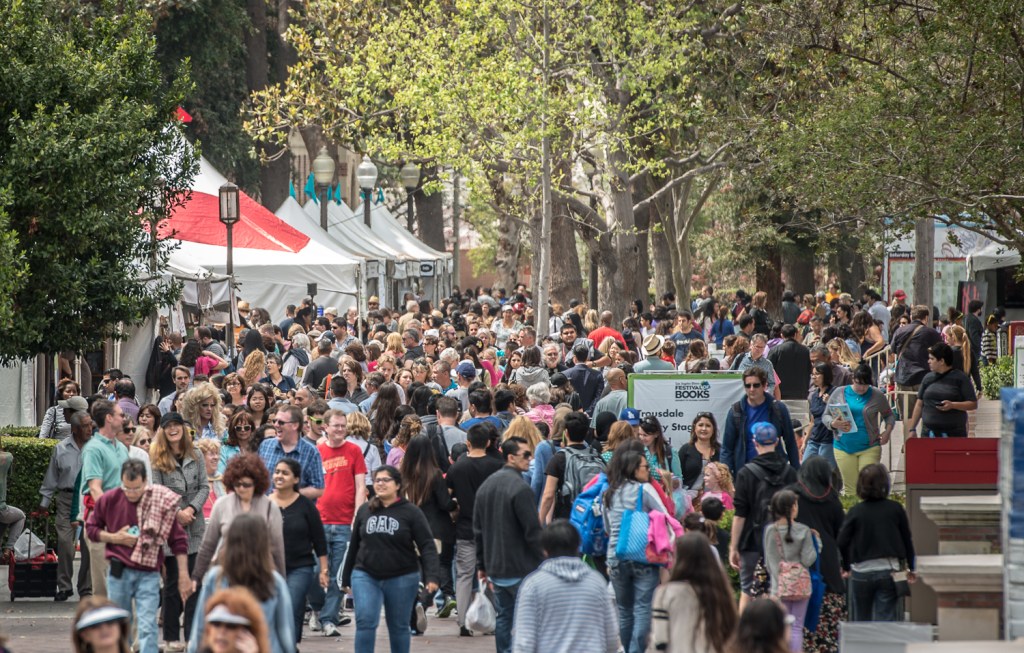
After several consecutive wet weekends, this last weekend was ideal for a big get-together. And that’s exactly what happened at the campus of the University of Southern California (USC) where the 2024 edition of the Los Angeles Times Book Festival took place. I do not recall being in such a crowd scene for decades. In fact, it was so crowded that I couldn’t buy more than three books because the booths that interested me the most were jammed with people.

The only reason I could tolerate the crowds is that they were there honoring books and reading, which are sacred to me. Never mind that most of them read nothing but crap. The important thing is that they were coming together to honor an activity that is disappearing from our anti-intellectual culture.

This time I noticed for the first time that so many of the booths related to self-publishing. And, since no one ever heard of these authors, their booths were, for the most part, unvisited. Well, they are part of the publishing world, too, and with luck a handful of them may make it to the big time.

As with last year, I spent most of my time at the Poetry Stage, where there was a different poetry reading every twenty minutes. There, I made the acquaintance of three women poets I will be discussing later this week.

The one that got away, however, was the Salvadorean poet Yesika Salgado, who spoke at the Latinidad Stage in Spanish, English, and Spanglish. She was magnificent. I couldn’t buy her book because the line to buy a copy and have the poet sign it was approximately a hundred persons long; and I was by that time exhausted and ready to return home.

I guess I should have spent more time at the Latinidad Stage. Even though my Spanish is pretty punk, the people in attendance were into their poets in a big way, and Yesika is a real force on the L.A. literary scene, as this YouTube video will show:
Report: Januarius 2024

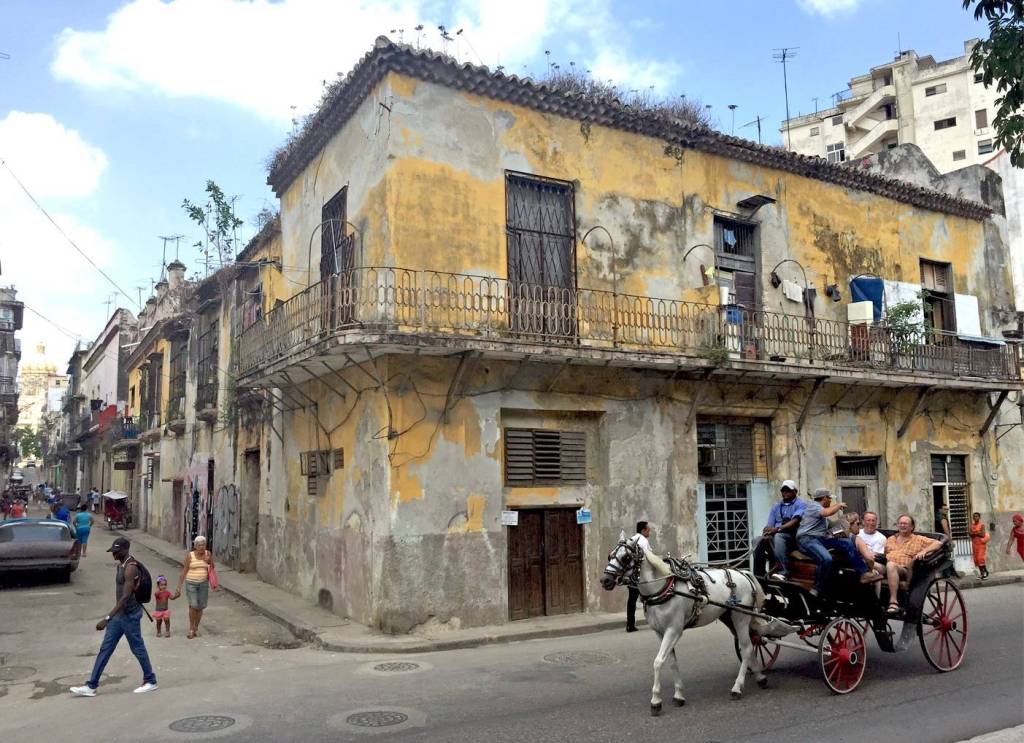
Havana Street Scene

As I mentioned at the beginning of January, I typically read books in this first month of the year written by authors I have not read before. Well, last month’s total was eleven books:

  • Maxim Osipov: Rock, Paper, Scissors and Other Stories (Russia)
  • Dorothy Parker: “Men I’m Not Married To” (USA) – short story
  • Llewelyn Powys: Earth Memories (Britain)
  • George MacDonald: The Princess and Curdie (Scotland)
  • Alejo Carpentier: Explosion in a Cathedral (Cuba)
  • Olga Tokarczuk: House of Day, House of Night (Poland)
  • Joseph Joubert: Notebooks of Joseph Joubert (France)
  • Pedro Juan Gutiérrez: Dirty Havana Trilogy (Cuba)
  • Fleur Jaeggy: Sweet Days of Discipline (Switzerland)
  • Luis Vaz de Camoens: The Lusiads (Portugal)
  • Leonardo Padura: Havana Red (Cuba)

Three of the books were by Cuban authors, and I enjoyed all three of them. Only three were originally published in English. Three of the authors were women, most particularly Olga Tokarczuk, whose House of Day, House of Night was by far the best book I read last month. Second best was Carpentier’s Explosion in a Cathedral, followed by Powys’s Earth Memories.

Were there any clunkers? I am pleased to say “No, not a one!”

Currer, Ellis, and Acton

The Brontë Sisters as Painted by Their Brother Patrick

When the Brontë sisters began publishing their novels in the early 19th century, they did not use their original names. They figured they would find greater acceptance if they used men’s names. Consequently, Charlotte published under the name Currer Bell; Emily, under the name Ellis Bell; and Anne, under the name Acton Bell.

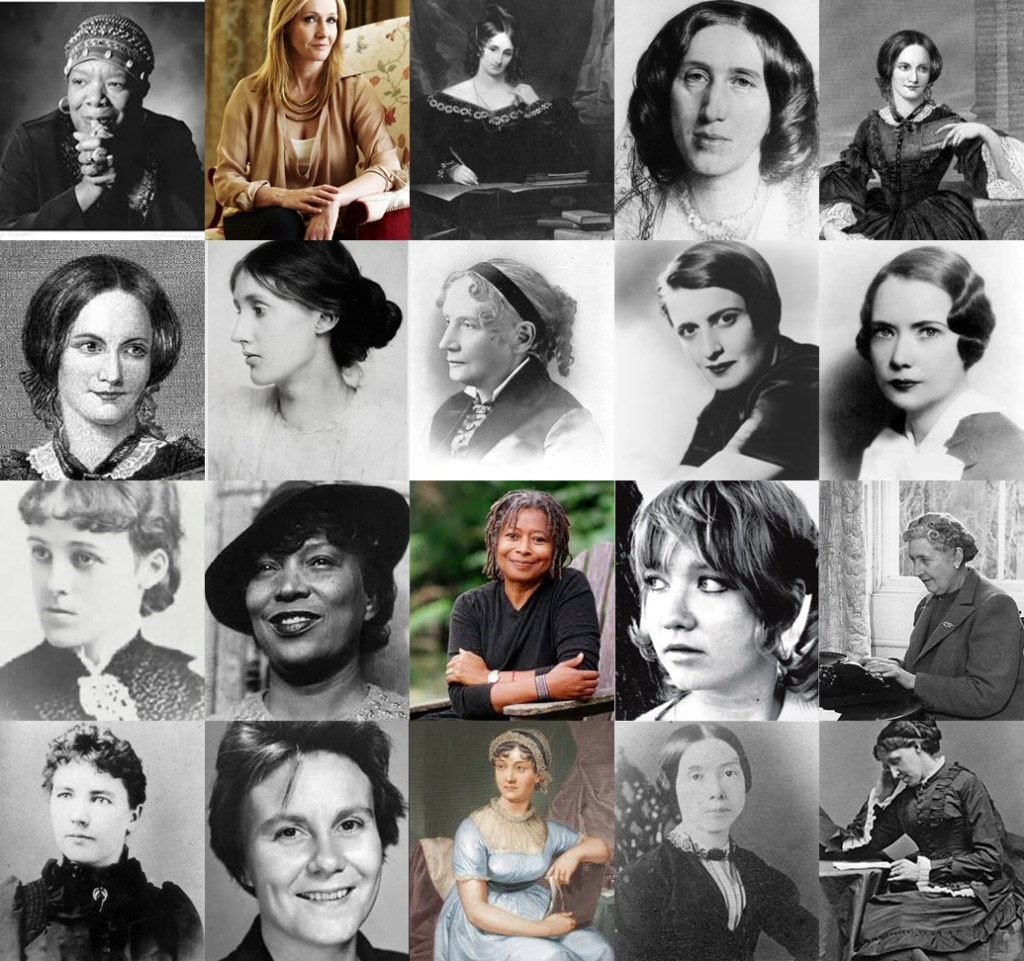
For most of history, there have been precious few women writers whom we know by name. Among the ancient Greeks of the 6th Century BCE, there was Sappho of Lesbos. Then we have to skip forward to the Middle Ages to find Christine de Pizan. In the 17th and 18th centuries, there were a handful of names, including Aphra Behn, Mary Shelley, Jane Austen, Anne Radcliffe, Charlotte Lennox, and Charlotte Smith in England as well as Mme. de Lafayette and Mme. de Staël in France.

In the first thirty years of the Nobel Prize in Literature, there were only three women: Selma Lagerlöf, Grazia Deledda, and Sigrid Undset. More recently, the distribution of Nobels is more equitable. Partly, that is because good literature is becoming increasingly female. I am currently reading Polish author Olga Tokarczuk’s House of Day, House of Night. In the recent past, I have enjoyed the work of Wisława Szymborska (Poland), Svetlana Alexievich (Belarus), Annie Ernaux (France), and Toni Morrison (U.S.A.)—all winners of the Nobel Prize.

No doubt about it, the future of literature is looking ever more female.

Januarius/Gennaro

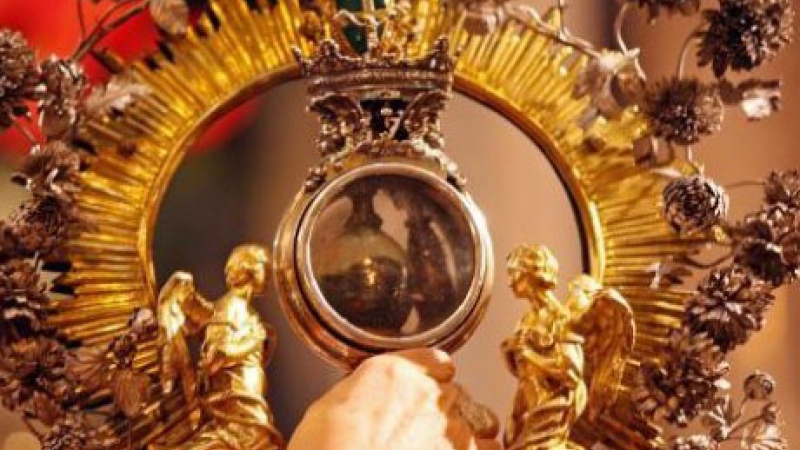
The Dried Blood of St Januarius (AKA San Gennaro)

He is the patron saint of Naples. At the church named for him, the dried blood of Saint Januarius (or Gennaro) is supposed to liquefy three times a year:

  • September 19, the saint’s feast day
  • December 16
  • The first Saturday in May

When the miracle fails to occur, it portends “imminent disaster including war, famine or disease,” according to one website. Apparently, the miracle occurred again in September, but I have not been able to find whether the December 16 miracle occurred on schedule.

Januarius was a third century bishop of Benevento, Italy, who was martyred during the persecutions of the Emperor Diocletian.

For a number of years, I have pre-empted the name of Januarius to refer to my practice of using the first month of the year to read only authors I have never read before. My reasoning for this is to constantly broaden my horizons. For example, this year I plan to read several Cuban novels.

One result of my Januarius project is also that I read more women authors, which I had not done so much heretofore.

I will report back to you probably in early February if I have made any finds worth noting. (I probably will.)

Short Story

Although I still read more novels by far, I have found myself increasingly drawn to the medium of the short story. This evening, I decided to take a quick look at my reading long during the past twelve years. As the period progressed, I noticed myself reading more and more short story collections.

I was surprised to find that there were relatively few women writers whom I thought had mastered the genre. In fact, the only ones who impressed me were Virginia Woolf (no surprise there!), the Argentinian Silvina Ocampo, and—closer to home—Joyce Carol Oates and Shirley Jackson. Why this is I do not know. It could be that they are out there, but to date I am not familiar with their work.

Another surprise was that the United States was well represented, what with writers like Faulkner, Hemingway, Fitzgerald, Poe, Hawthorne, Melville, Stephen Crane, Henry James, J. D. Salinger, Barry Gifford, Philip K. Dick, and Ray Bradbury.

Latin America has some outstanding representatives. Topping the list are Argentina’s Jorge Luis Borges and Mexico’s Juan Rulfo. Not far behind are Roberto Bolaño and Francisco Coloane from Chile, Gabriel García Márquez from Colombia, Adolfo Bioy Casares and Silvina Ocampo (who were married to each other) from Argentina.

Britain gave us Somerset Maugham, George Mackay Brown, G. K. Chesterton, and Graham Greene. In France, there was Guy de Maupassant. From Central Europe there was Franz Kafka and Bohumil Hrabal (Czechoslovakia) and Bruno Schulz (Poland).

The greatest Russian short story writer was Anton Chekhov, but there was also Leo Tolstoy, Varlam Shalamov, and Andrei Platanov.

I have just finished Barry Gifford’s The Cuban Club: Stories, and I find several other story collections in my TBR (To Be Read) pile. I guess I’m hooked.

Baker’s Dozen

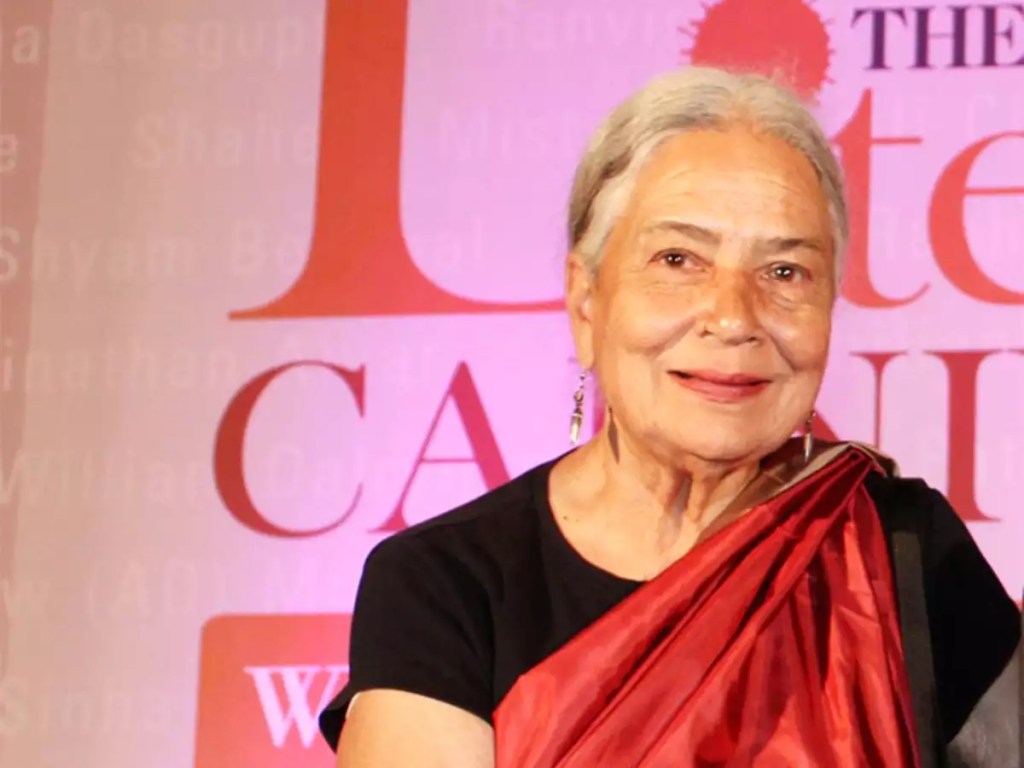
Indian Novelist Anita Desai (Born 1937)

On this last day of November, I am happy to report that my month of reading only books by women authors was both highly successful and satisfying. In a post I made at the beginning of November, I wrote:

For the month of November, I will be reading only women writers, both fiction and non-fiction. Some of the authors will be new to me; some of the books will be re-reads.I began by reading a short story collection entitled Dead-End Memories by the Japanese author Banana Yoshimoto.When I finish, I will re-read Joan Didion’s Salvador.

From there, a number of possibilities present themselves, including Virginia Woolf, Edwige Danticat, Joyce Carol Oates, Wisława Szymborska, Dorothy B. Hughes, Patricia Highsmith, Freya Stark, Norah Lange, Dawn Powell, and Elizabeth Hardwick.I’ll just see where the spirit moves me. At the end of the month, I will summarize the discoveries I have made.

In the end, I came pretty close to my aim. Here is the final list:

  • Banana Yoshimoto, Dead-End Memories (short stories)
  • Joan Didion, Salvador (travel/history) – reread
  • Virginia Woolf, Jacob’s Room (fiction)
  • Jane Austen, Northanger Abbey (fiction) – reread
  • Freya Stark, Rome on the Euphrates: The Story of a Frontier (history)
  • Anita Desai, Journey to Ithaca (fiction)
  • Mary Austin, One-Smoke Stories (short stories)
  • Patricia Highsmith, Found in the Street (fiction)
  • Joyce Carol Oates, Wild Nights! Stories About the Last Days of Poe, Dickinson, Twain, James, and Hemingway (short stories)
  • Elizabeth Hardwick, Sleepless Nights (autobiography/fiction)
  • Norah Lange, The People in the Room (fiction) – reread
  • Edwidge Danticat, Create Dangerously: The Immigrant Artist at Work (autobiography/essays)
  • Dorothy B. Hughes, In a Lonely Place (noir fiction)

That makes a full baker’s dozen of thirteen books.

The best three were Jacob’s Room, Northanger Abbey, and Sleepless Nights. Writers I had never read before included Banana Yoshimoto, Elizabeth Hardwick (a real find!), and Edwidge Danticat.

I may well do this again next year. Too long I have been ignoring the real talent of great women authors.

Life Itself

Billie Holiday in Concert

In this month of reading only works by women authors, I have made an interesting discovery. The only works I have read this month that have the feeling of life itself are Virginia Woolf’s Jacob’s Room (1922) and Elizabeth Hardwick’s Sleepless Nights (1979). 1920s London and Postwar Manhattan come alive in these books in a way that even James Joyce’s Dublin in Ulysses failed to with all the literary allusions.

Woolf and Hardwick make us feel present in a simple and direct fashion. It is almost as if they were writing their own autobiographies as they lived their lives. Sleepless Nights even reads like an autobiography. For instance, she knew Billie Holiday and writes about her as if she were a close friend:

A genuine nihilism; genuine, look twice. Infatuated glances saying, Beautiful black star, can you love me? The answer: No.

Somehow she had retrieved from darkness the miracle of pure style. That was it. Only a fool imagined that it was necessary to love a man, love anyone, love life. Her own people, those around her, feared her. And perhaps she was often ashamed of the heavy weight of her own spirit, one never tempted to the relief of sentimentality.

She goes on for several pages about the singer, all of them more real and vivid than anything I have read about any performing artist.

In the same way, Virginia Woolf in Jacob’s Room and Mrs. Dalloway (1925) make the reader feel he or she is walking the streets of the London of George V. One does not feel one is in the past: She makes the past feel like the present.

Even Marcel Proust, whose description of the states of mind of his characters is without peer, cannot put the reader on the street running for a trolley and registering the sights and sounds of the city.

I am not sure I have expressed myself properly. I will have to investigate the matter more deeply. Stay tuned.

“Wise and Most Possible”

It was one of the most meaningful Twitter posts ever written when Maya Angelou said, “‎The desire to reach the stars is ambitious. The desire to reach hearts is wise and most possible.”

For the month of November, I will be reading only women writers, both fiction and non-fiction. Some of the authors will be new to me; some of the books will be re-reads.I began by reading a short story collection entitled Dead-End Memories by the Japanese author Banana Yoshimoto.When I finish, I will re-read Joan Didion’s Salvador.

From there, a number of possibilities present themselves, including Virginia Woolf, Edwige Danticat, Joyce Carol Oates, Wisława Szymborska, Dorothy B. Hughes, Patricia Highsmith, Freya Stark, Norah Lange, Dawn Powell, and Elizabeth Hardwick.I’ll just see where the spirit moves me. At the end of the month, I will summarize the discoveries I have made.

And there are sure to be discoveries. Already I love Banana Yoshimoto’s stories, which deal with subjects that men feel uncomfortable with. And that where the Maya Angelou quote comes into play.

The Januarius Project 2022

Near the beginning of every year, I set aside a month dedicated to reading authors I have never read before. The reason is to keep my book choices from becoming stale as I stick to the same set of “canonical” writers. So far this month, I have completed four books:

  • Pete Beatty’s Cuyahoga, a tall tale of Cleveland, Ohio (the city of my birth) set in 1837.
  • Angela Carter’s The Sadeian Woman and the Ideology of Pornography, a study of how the Marquis de Sade’s fiction morphed into modern-day porn.
  • Martha Gellhorn’s Travels with Myself and Another, a travel classic by a famed war correspondent and former wife of Ernest Hemingway.
  • Nic Pizzolatto’s Galveston, a superb, but bleak neo-noir novel about a hit man on the run to a city about which he has fond memories due to an early relationship.

It’s still early in January. I am currently reading Megan Abbott’s Die a Little and have plans to read works by George Meredith, William Beckford, Walter Kempinksi, Sam Wasson, Lászlo Földényi, Ben Loory, Elizabeth Hardwick, among others. According to past experiences doing this sort of thing, I will end up liking about half of the Januarius finds enough to read other works by them.

One result is that I find myself reading more books by women authors, which is a good thing.

The Month of Reading Dangerously

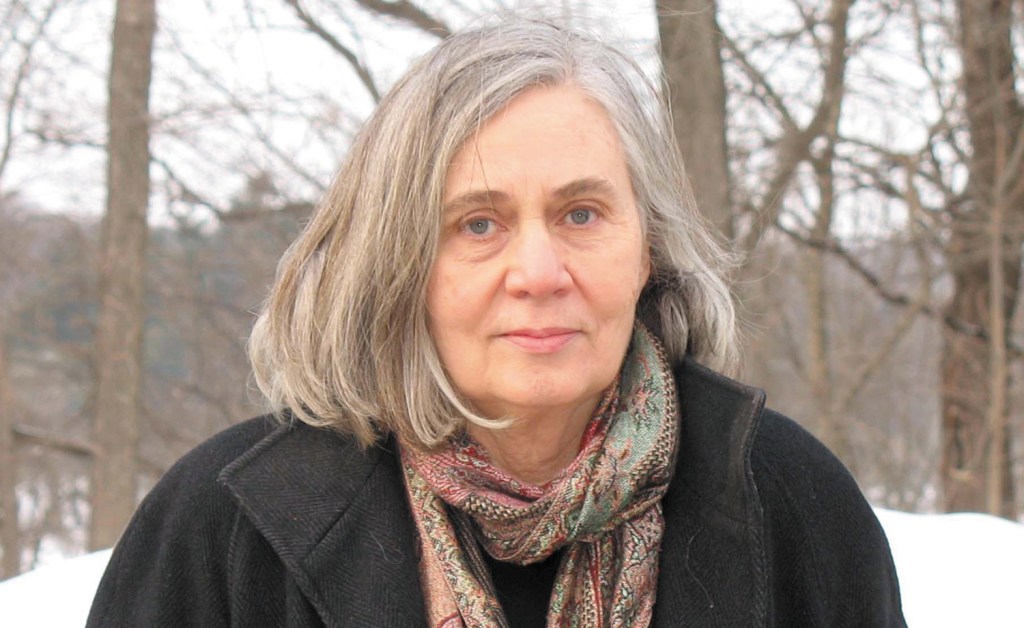
Author Marilynne Robinson (Born 1943)

I dedicated last month to reading books only written by women. On March 5, I posted a TBR (To Be Read) list from which I would choose the titles I would undertake to read and review. As was typical, I wound up reading about half the books on the list, adding to them some last-minute choices. Here is the list of what I read:

  • Celeste Ng (United States), Little Fires Everywhere **** †
  • Joyce Carol Oates (United States), The Man Without a Shadow ****
  • Virginia Woolf (Britain), The Waves *****
  • Marilynne Robinson (United States), Gilead ***** †
  • Ludmilla Petrushevskaya (Russia), The Time: Night ****
  • Patricia Highsmith (United States), The Black House (Short Stories) *****
  • Silvia Moreno-Garcia (Mexico), Gods of Jade and Shadow ***** †
  • Colette (France), The Pure and the Impure ****
  • Eve Babitz (United States), L.A. Woman ****
  • Sofi Oksanen (Finland/Estonia), The Purge **** †
  • Rosario Santos—Editor (Bolivia), The Fat Man from La Paz (Short Stories) **** †
  • Clarice Lispector (Brazil), The Hour of the Star *****

There wasn’t a stinker in the bunch, and four of the choices were superb (Woolf, Moreno-Garcia, Highsmith, and Lispector). Five of the books marked with a dagger [†] were by authors I had never read before (Ng, Robinson, Moreno-Garcia, and Santos). On my original TBR list, I thought I had never read any Ludmilla Petrushevskaya before, but I was mistaken.

I will continue to read more books by women authors than I have in the past, though I may not repeat the intensity of March’s reading project. It was an interesting experiment, as all the choices were pretty high quality.